


Montenegro · 25 May 2026
Tivat and Porto Montenegro: how money remade a bay
The former Yugoslav naval base that became one of the Adriatic's most exclusive superyacht marinas. The price of transformation.
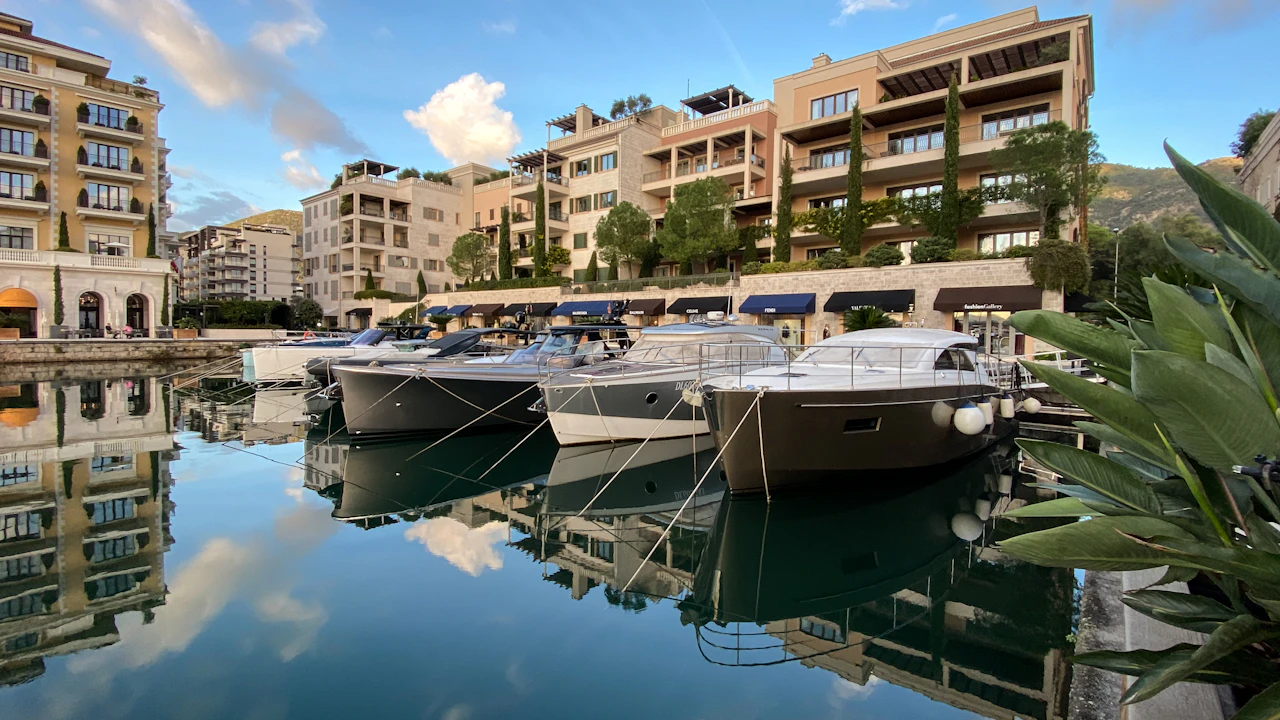
In 1945, the engineers of Tito’s Yugoslav Navy chose Tivat for one of the most strategically important naval bases on the eastern Adriatic. The Bay of Kotor — a Mediterranean fjord with deep water and a mouth that could be controlled from land — was ideal for concealing and maintaining submarines. For four decades, the Arsenal of Tivat was a closed military perimeter, invisible to civilians, central to the defence doctrine of a state that distrusted both Cold War blocs with equal suspicion.
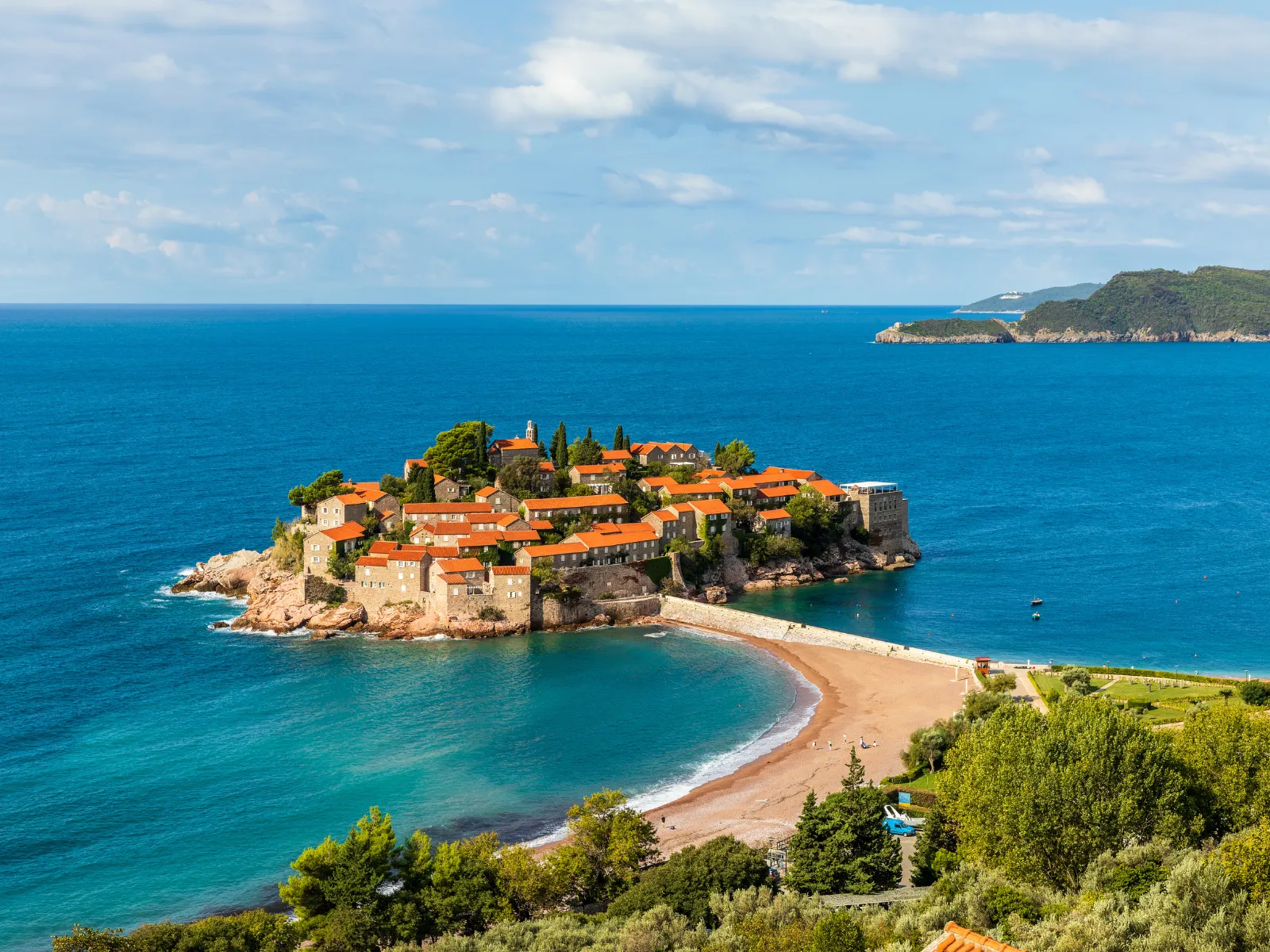
In 2006, Montenegro became independent. In 2009, Peter Munk — the Hungarian-born Canadian billionaire who founded Barrick Gold — opened Porto Montenegro. What had been a military secret became a superyacht marina that is now among the most exclusive in the Mediterranean. The transformation is so complete that it is difficult to imagine submarines beneath the turquoise water where vessels of thirty, fifty, a hundred metres now align along the quays.
The man behind the project
Peter Munk was eighty years old when Porto Montenegro opened. It was not his first project radically repositioning a place: he had transformed properties in Canada and Europe, but Montenegro was different. It was a new state with fragile institutions, without an established luxury travel middle class, without the infrastructure that Porto Montenegro’s target clients took for granted in Saint-Tropez or Portofino.
What Montenegro had was price. The Arsenal concession was negotiated under conditions that would have been impossible anywhere in the western Mediterranean. The land, the history of the site, the extraordinary bay — listed as UNESCO World Heritage alongside the walled city of Kotor — and the absence of direct competition on the eastern Adriatic did the rest. Munk brought Canadian and Arab capital (Abu Dhabi’s investment fund entered later as a partner), European architects and the concept of a marina-village: not only berths for boats, but boutiques, restaurants, apartments, hotels.
What was built and what it cost
Porto Montenegro today is a complex of roughly forty-five hectares on the northern shore of Tivat Bay. It has more than six hundred berths capable of accommodating yachts up to one hundred and twenty metres — what nautical parlance calls a megayacht and what in practical terms is a vessel as large as a five-storey apartment block lying on its side on the water. In high season, from June to September, the harbour fills with craft whose aggregate value easily exceeds one billion euros.
On land, the design mimics the architectural language of Mediterranean coastal towns: stone, arches, cobbled pedestrian streets. The result has the impeccable perfection of something built from scratch to look old. The shops are Dior, Rolex, Riva. The restaurants offer tasting menus with Adriatic seafood and curated Montenegrin wines. The apartments — sold, not rented — range from five hundred thousand euros to several million for the seafront villas.
There is also a naval museum dedicated to the Arsenal that is worth a visit: it preserves some of the original Yugoslav submarines and tells the history of the base with honesty about what was erased to build what now exists.
The contrast with the Tivat that was
Before Porto Montenegro, Tivat was an ordinary Montenegrin town of around thirteen thousand people: bureaucratic, quiet, with a small airport serving mainly locals and the Yugoslav tourists who came to the coast. It had reasonable beaches, unpretentious fish restaurants, a neighbourhood life that had nothing to offer anyone looking for anything else.
That Tivat still exists, parallel to Porto Montenegro and largely ignored by its visitors. Five minutes’ walk from the luxury marina there are streets with supermarkets, cafés where coffee costs one euro, eighties apartment blocks where people live who work in the resort’s hotels and restaurants. The contrast is so sharp it is almost instructive: here is the development model Montenegro has chosen for its integration into European luxury tourism, and here is its social price.
The debate about the model
The question Montenegrins ask — and which outside analysts have posed more freely — is whether Porto Montenegro has benefited Montenegro or primarily its investors and the megayacht owners who stop there. The arguments in favour are real: employment, international visibility, development of Tivat airport’s infrastructure (now the country’s second airport), attraction of further investment projects. Luxury tourism generates revenues that mass tourism does not.
The arguments against are equally real: the property speculation that has displaced local residents from certain areas, the ecological debt of a marina of that size in a UNESCO-listed bay, the dependence on a model that only works when superyachts have somewhere to spend. The Bay of Kotor is a fragile ecosystem; the acoustic and chemical pollution from hundreds of boat engines has documented effects.
Tivat airport, three kilometres from town, is the most practical entry point for anyone wanting to visit the Bay of Kotor without going through Podgorica. It has direct flights from a dozen European cities in summer. That the airport grew partly thanks to Porto Montenegro is undeniable. That this growth has benefited all Montenegrins equally is, at minimum, debatable.
The complete Far Guides Montenegro guide includes detailed routes, interactive maps and all the practical information you need to plan your independent trip.
More on Montenegro
Keep reading.
Other pieces from the same destination.
Next step
Ready for Montenegro?
The guide is for travelling.
Interactive maps & itineraries and everything that doesn't fit in an article. Always the latest published version.
Get the Montenegro guide