Understand
Before you arrive: the country, its history and its codes.
- Introduction to Albania
- Illyria, Rome and Byzantium
- Ottomans and Skanderbeg
- Independence and interwar Albania
- Enver Hoxha and total isolation
- and 1 more
Choose by region. Each guide is a travel essay, not a brochure.
Europe
Mediterranean · Balkans · North
Asia
Silk Road · Southeast
Americas
Latin America
Africa & Middle East
North Africa
Guide to Albania · Balkans · Mediterranean
Mountains, bunkers and the most transparent coast in the Mediterranean
34 places explained one by one: why they are there, what to look at and how to fit them into your day. With maps, itineraries, a travel passport and a library of Alex's videos and podcasts.
€14.99One-time payment · permanent access · ES / EN

22 chapters34 places3 itineraries34 map points
What is inside
Organised the way you travel: first understand the country, then travel it place by place and, finally, plan it all.
Before you arrive: the country, its history and its codes.
On the road: every place, in geographical order.
To organise it: routes, transport, money and seasons.
Travel
 Skanderbeg Square A square far too big for its city, where every regime left its building and where Albania pulled down its bronze dictator.
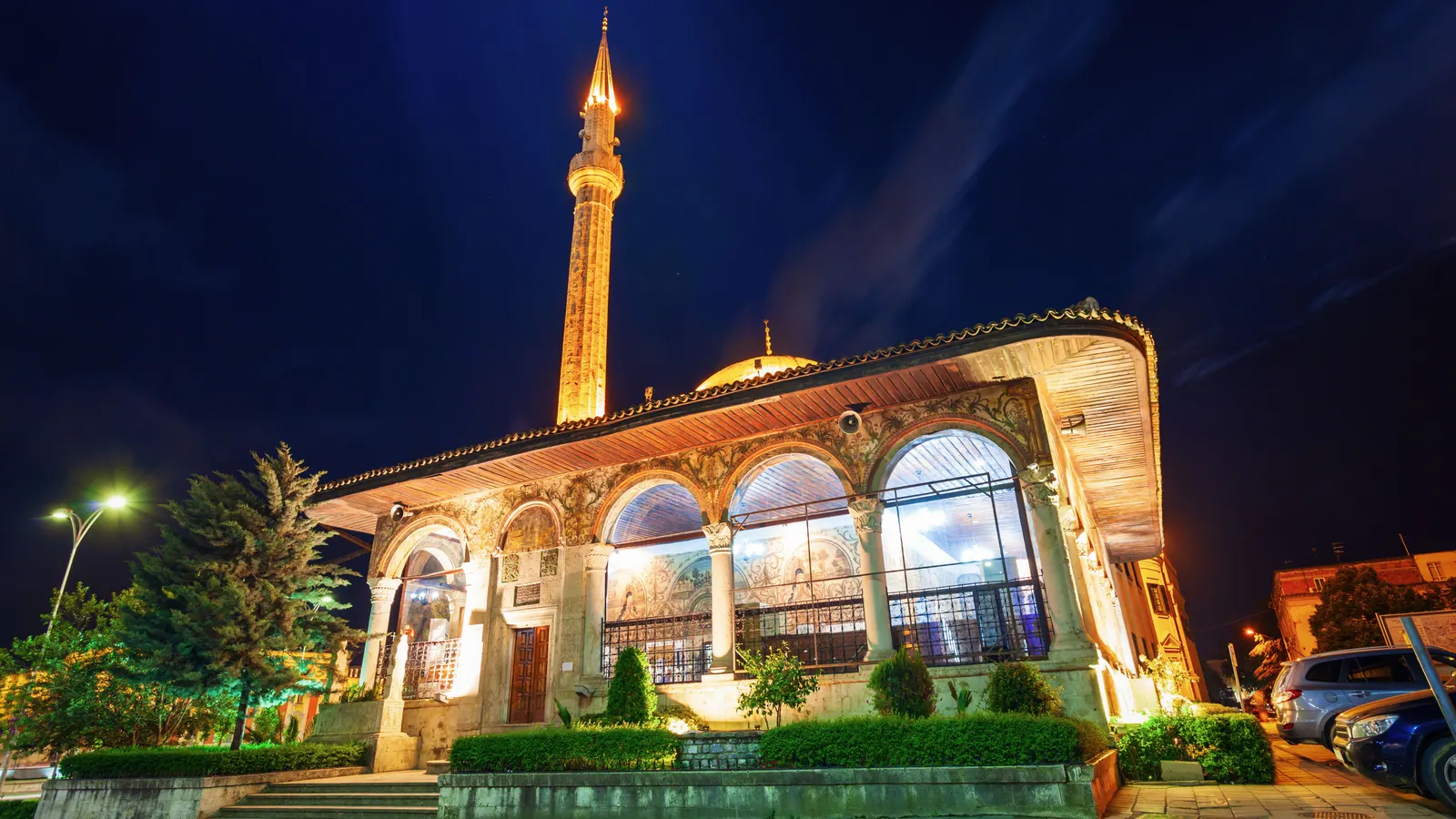 Et'hem Bey Mosque A small mosque painted with trees and waterfalls that survived the world's only officially atheist state, and where that state began to end.
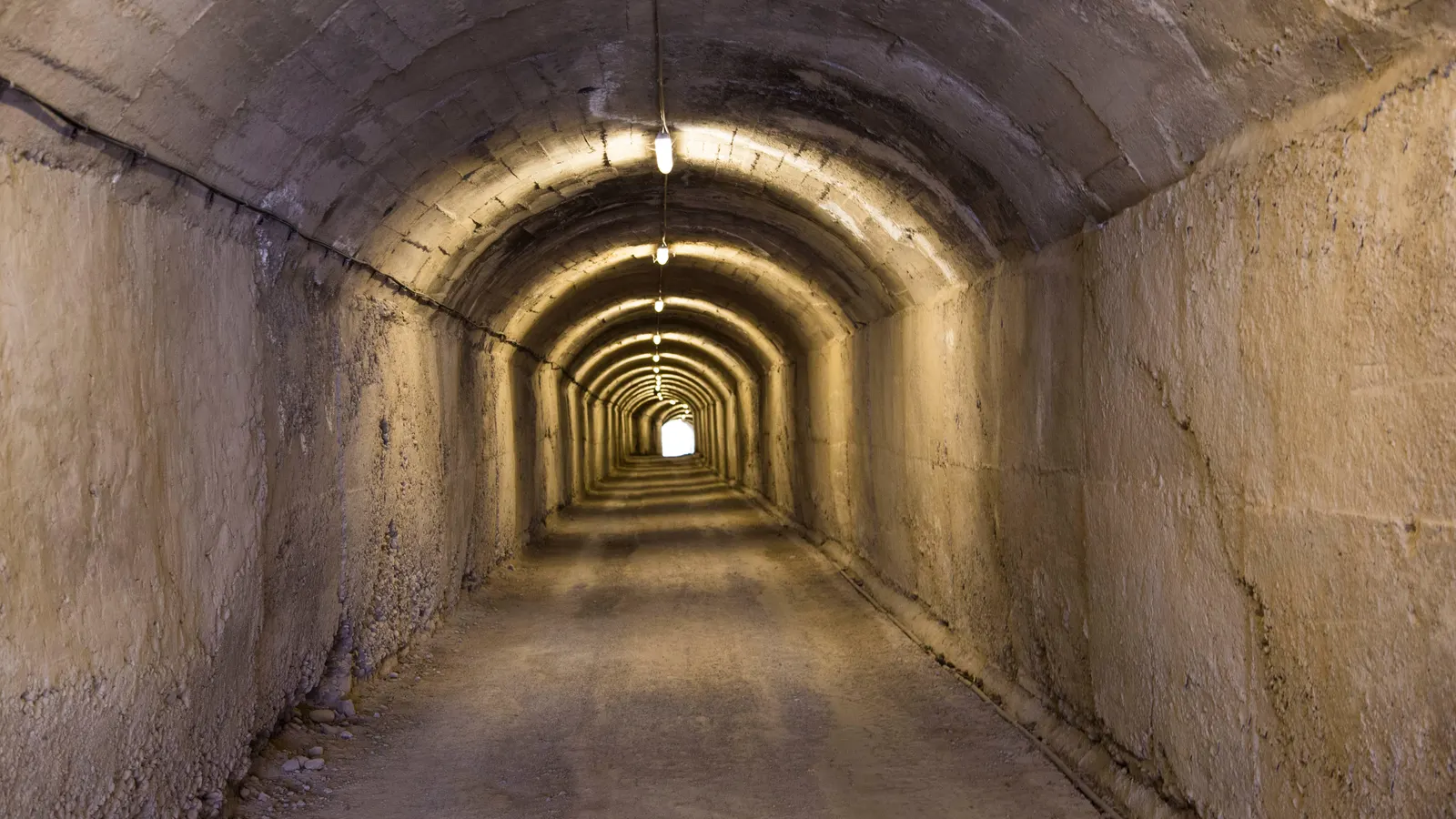 Bunk'Art 1 & 2 Two of Hoxha's bunkers turned into museums: one built to survive a nuclear war, the other to tell what the political police did in peacetime.
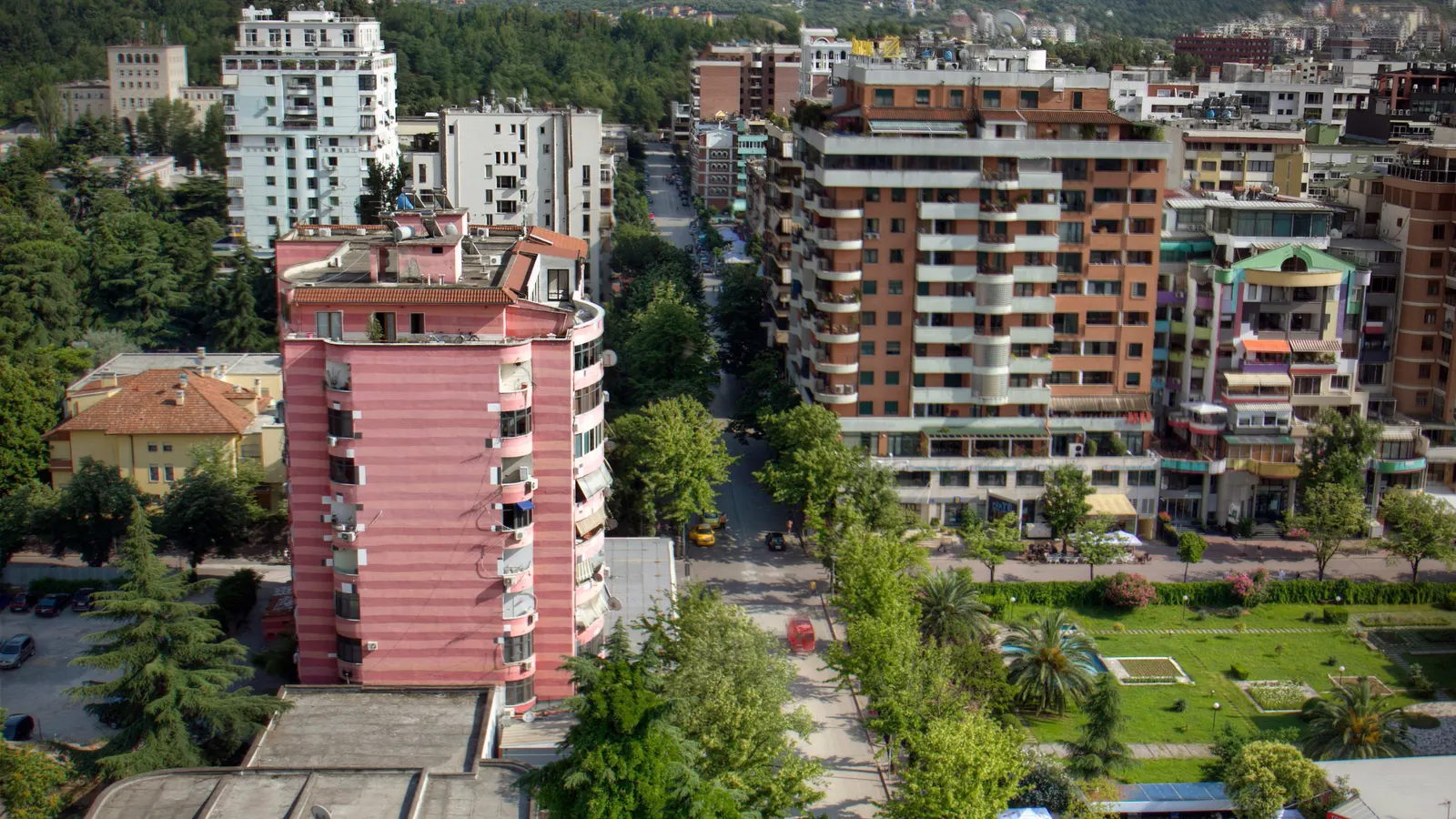 Blloku The closed quarter where the regime's leadership lived is now Tirana's liveliest: the same grid of streets, with its meaning exactly reversed.
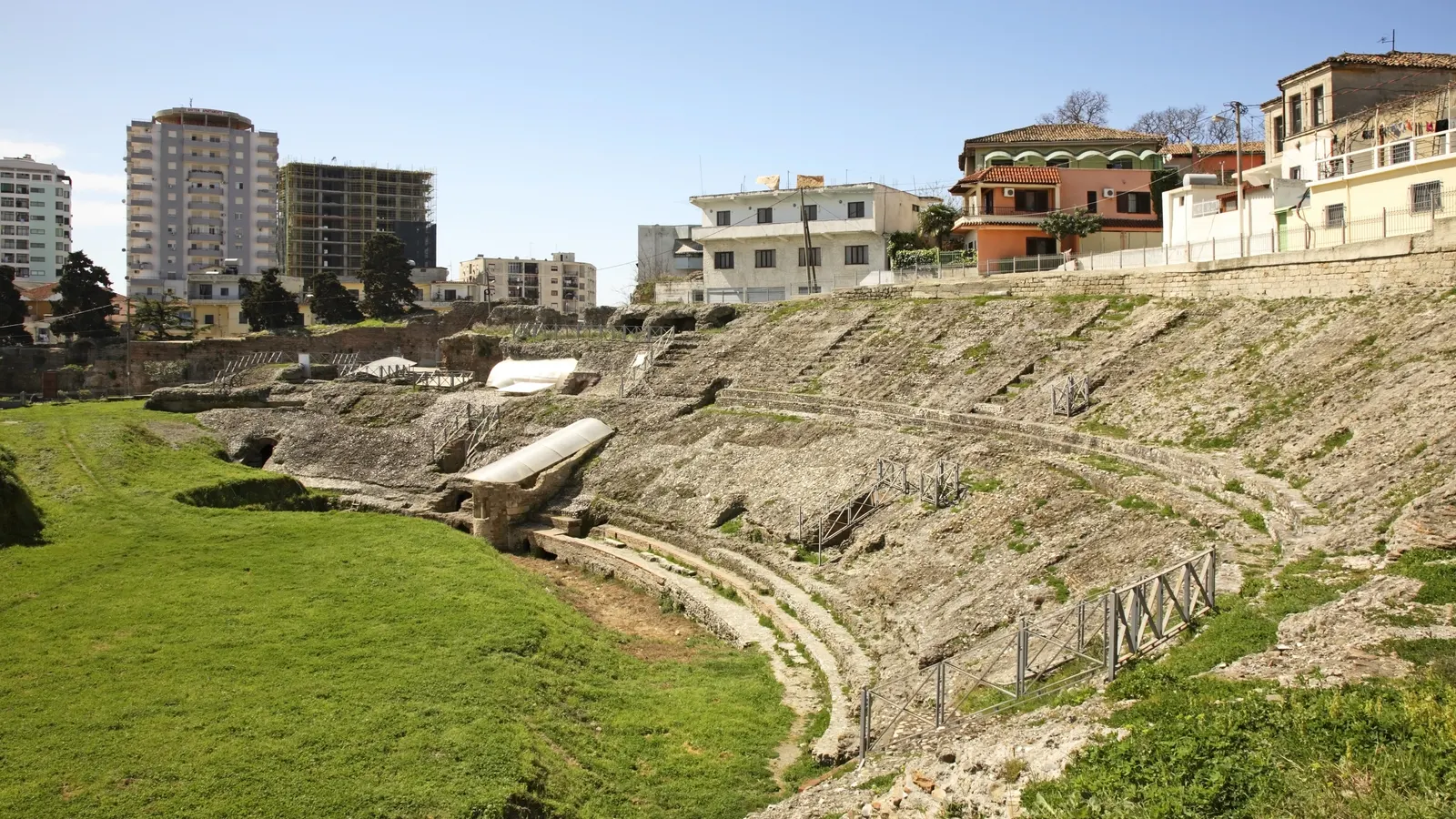 Durrës Roman Amphitheatre The largest amphitheatre in the Balkans lay buried beneath houses for centuries, and the houses still lean over its tiers.
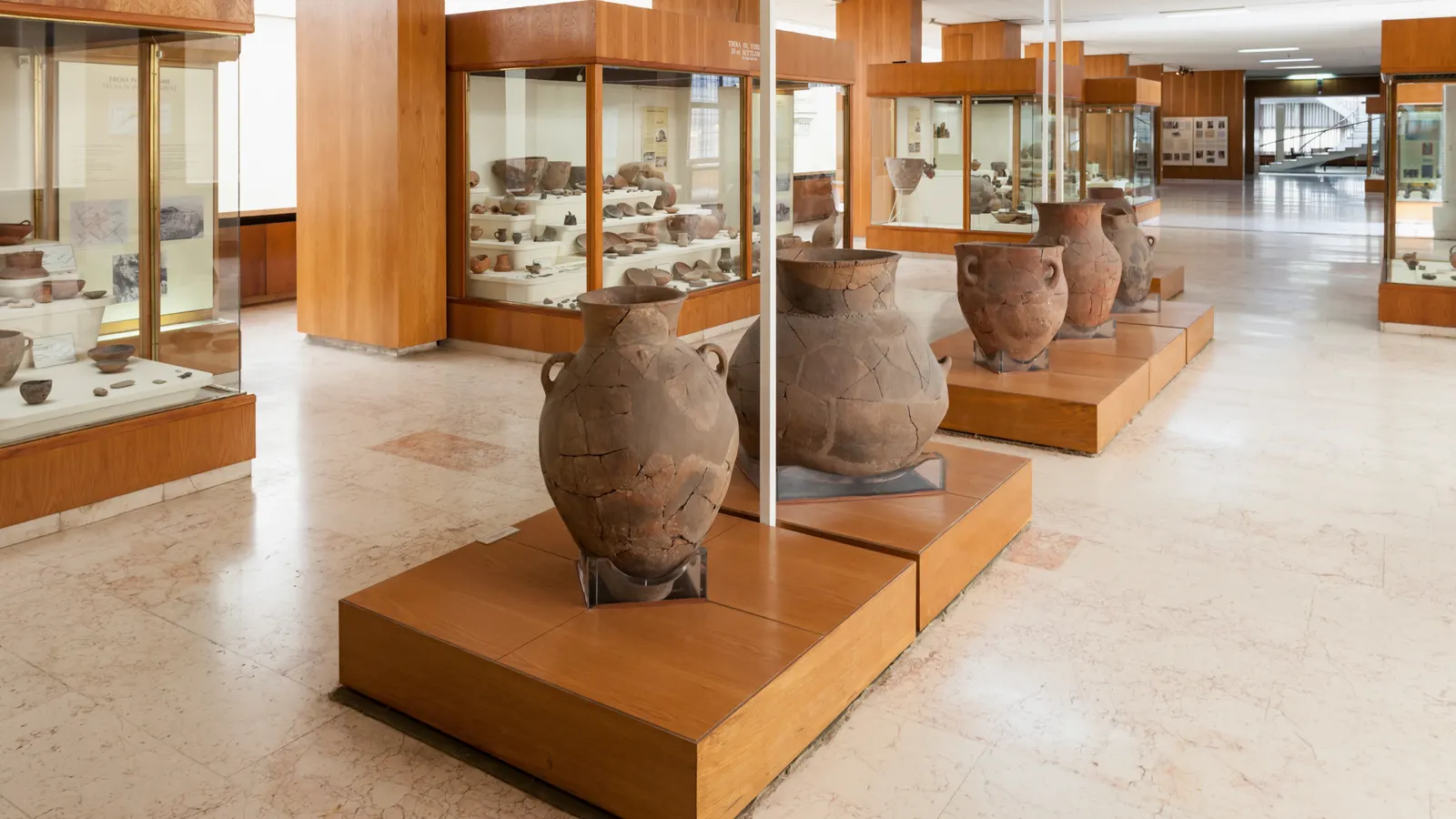 Durrës Archaeological Museum A few rooms by the sea where classical Albania stops being an abstraction: gravestones, gods and portraits of the people who lived in Epidamnos and Dyrrachium.
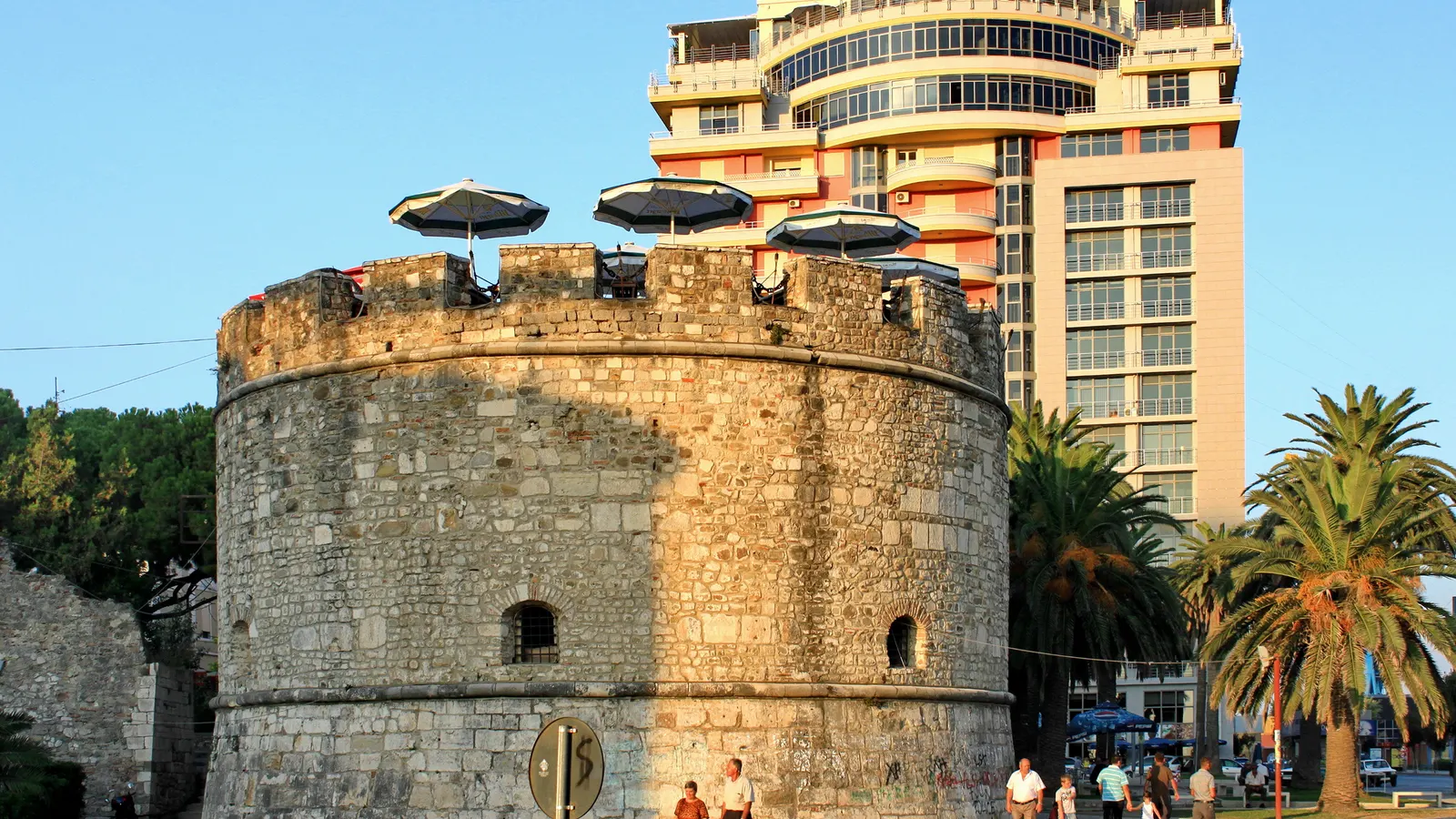 Byzantine Walls and Venetian Tower Scattered stretches of an imperial wall and a round tower turned into a bar: what remains of the city that guarded the gate between Rome and Byzantium.
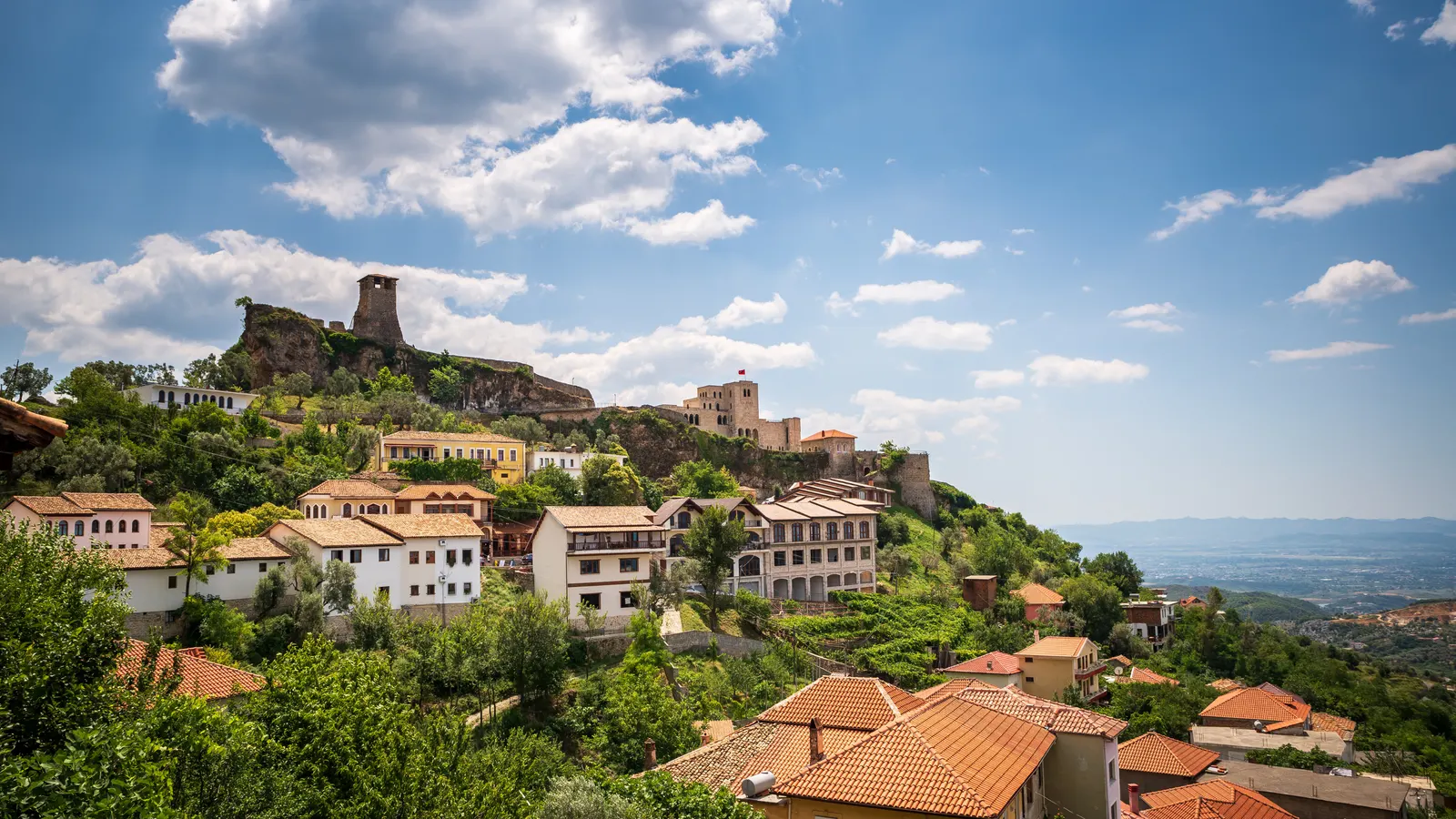 Krujë Castle A fortress clinging to the mountain from which Skanderbeg held off the Ottoman Empire for twenty-five years: the place where Albania locates its founding myth.
 Skanderbeg Museum A stone castle built by the communist regime to tell the story of the medieval hero: less a history museum than a staging of the national myth.
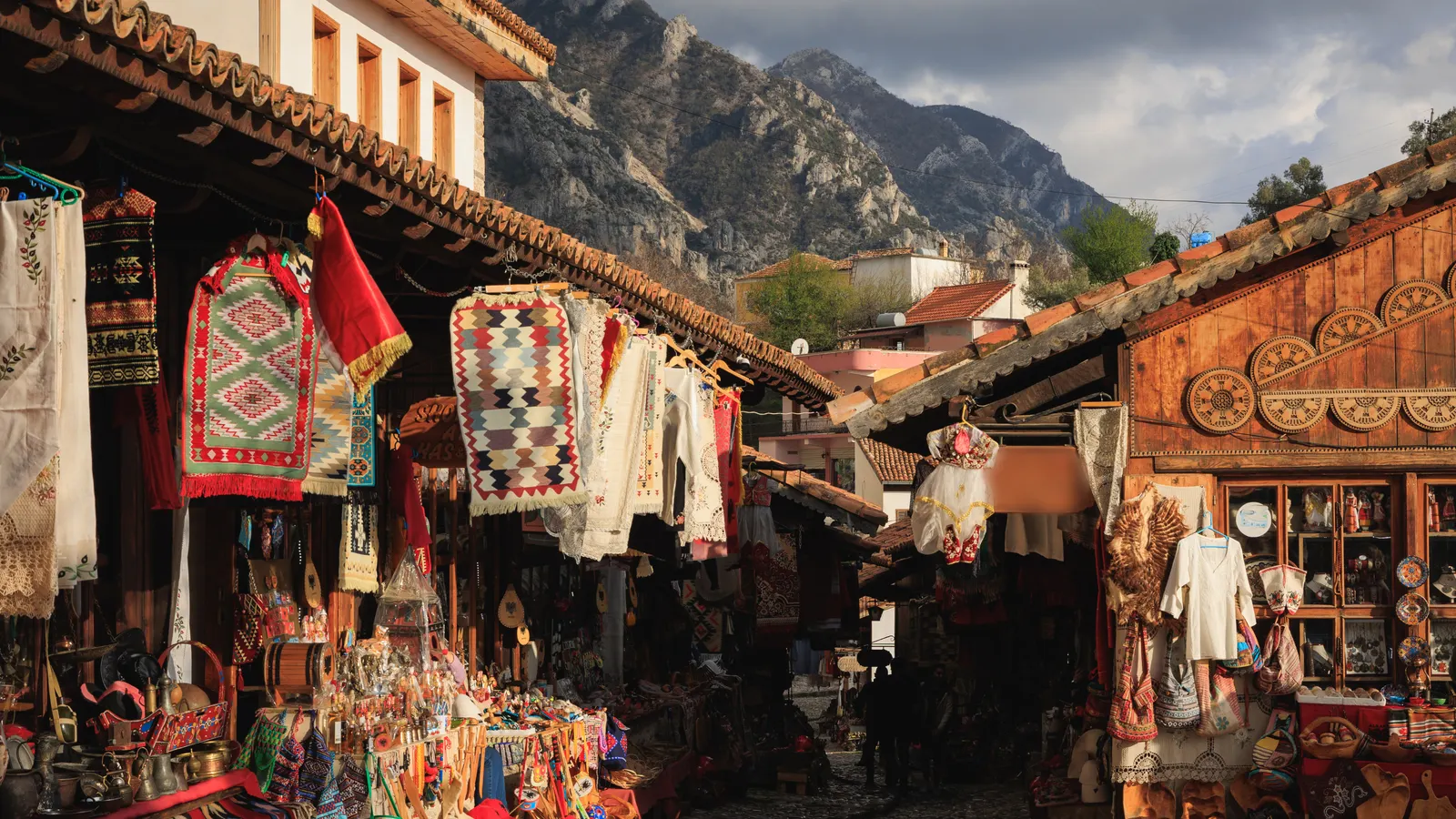 Krujë Bazaar A cobbled street of wooden shops at the foot of the castle, where Albanian crafts are still genuinely sold among the Skanderbeg souvenirs.
 Rozafa Castle A hill above the meeting of three rivers, fought over by Illyrians, Romans, Venetians and Ottomans, and held up, legend says, by a woman walled in alive.
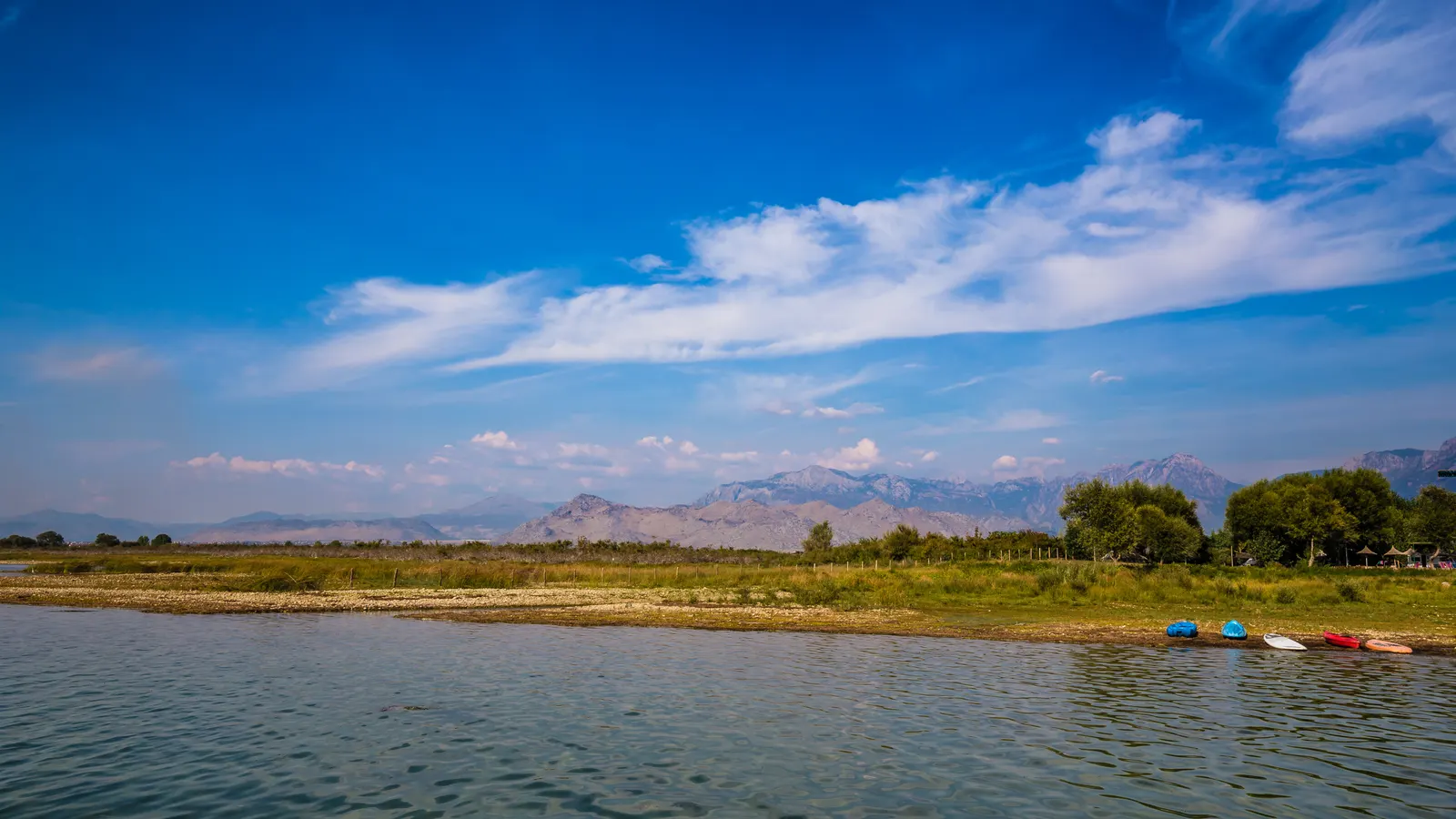 Lake Shkodra (Albanian shore) The largest lake in the Balkans, shared with Montenegro, seen from its quietest shore: fishing villages, grilled carp and mountains in the water.
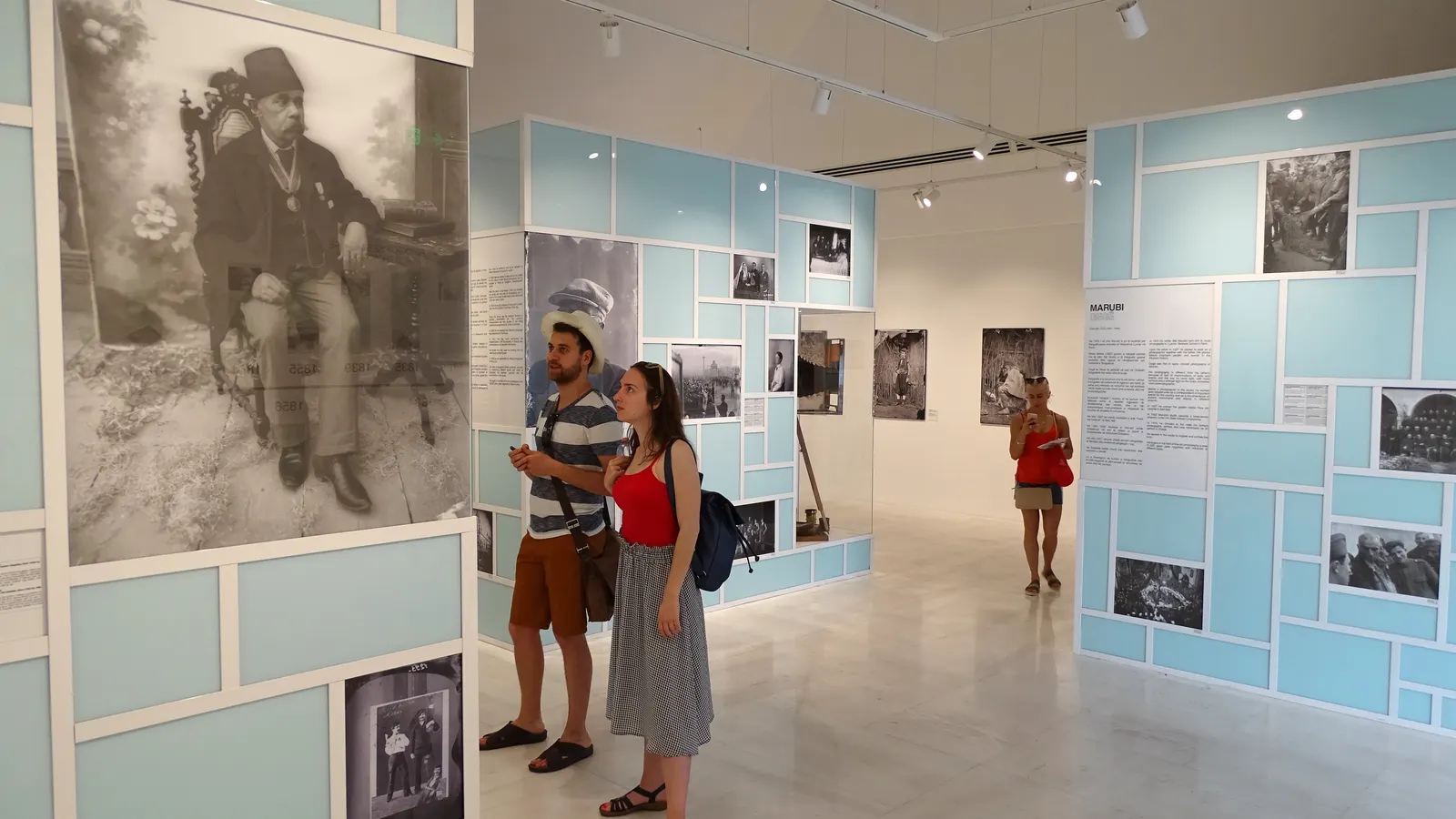 Marubi National Museum of Photography A hundred and fifty years of Albania on glass plates: the archive of a family of photographers who portrayed a country before anyone else did.
 Theth A closed valley between walls of rock where, until very recently, the law was the Kanun: sacred hospitality, blood feud and towers to lock yourself in.
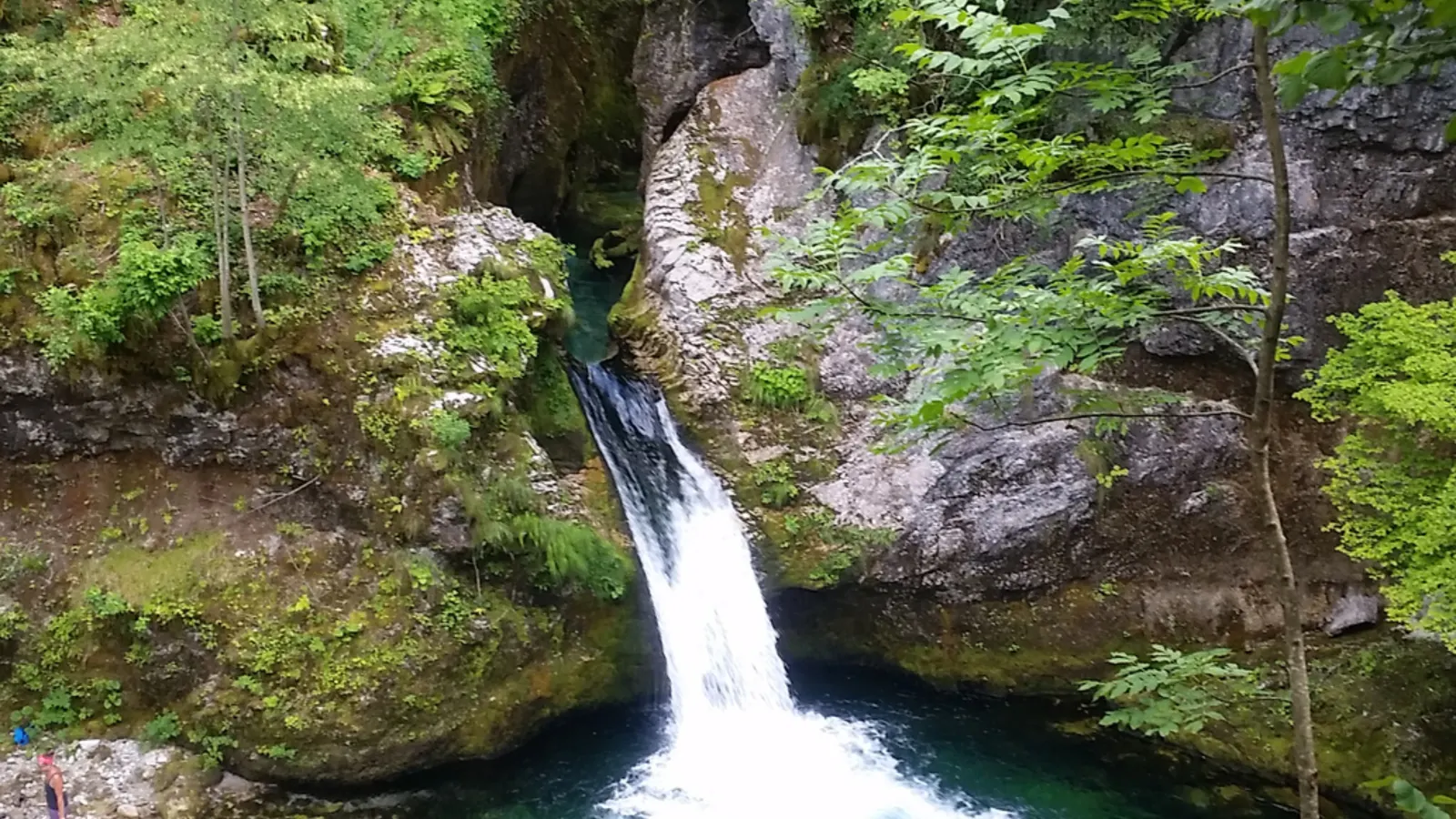 Blue Eye of Theth A pool of icy turquoise water beneath a waterfall, at the end of a forest trail: the reward for a morning's walk in the Theth valley.
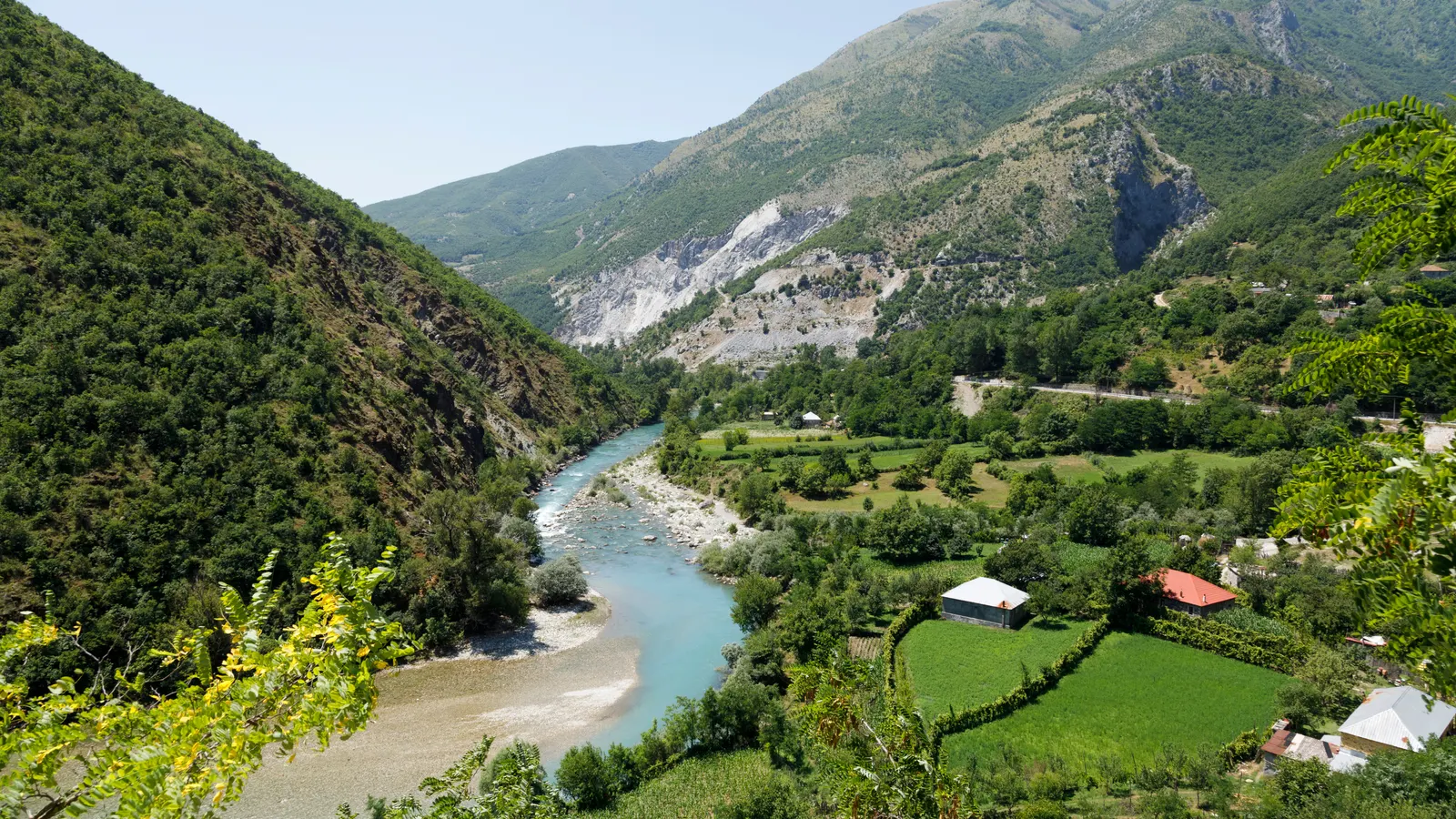 Valbona Valley The broad, sunny valley of the Albanian Alps, where the Koman ferry ends and the country's most famous trek begins.
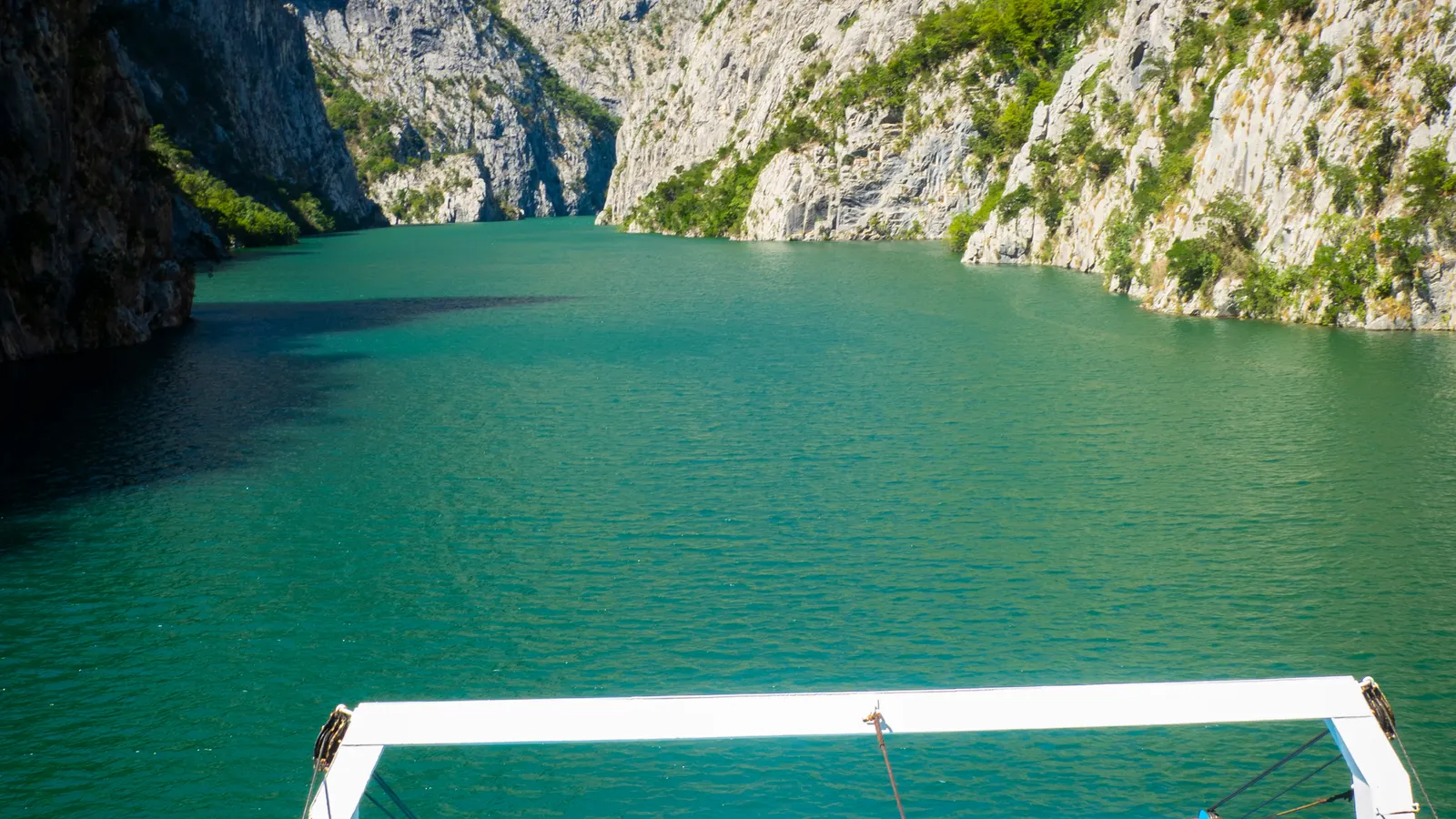 Lake Koman Ferry A communist reservoir turned into one of Europe's most beautiful boat journeys: two and a half hours of fjord between mountains, stopping to pick up the locals.
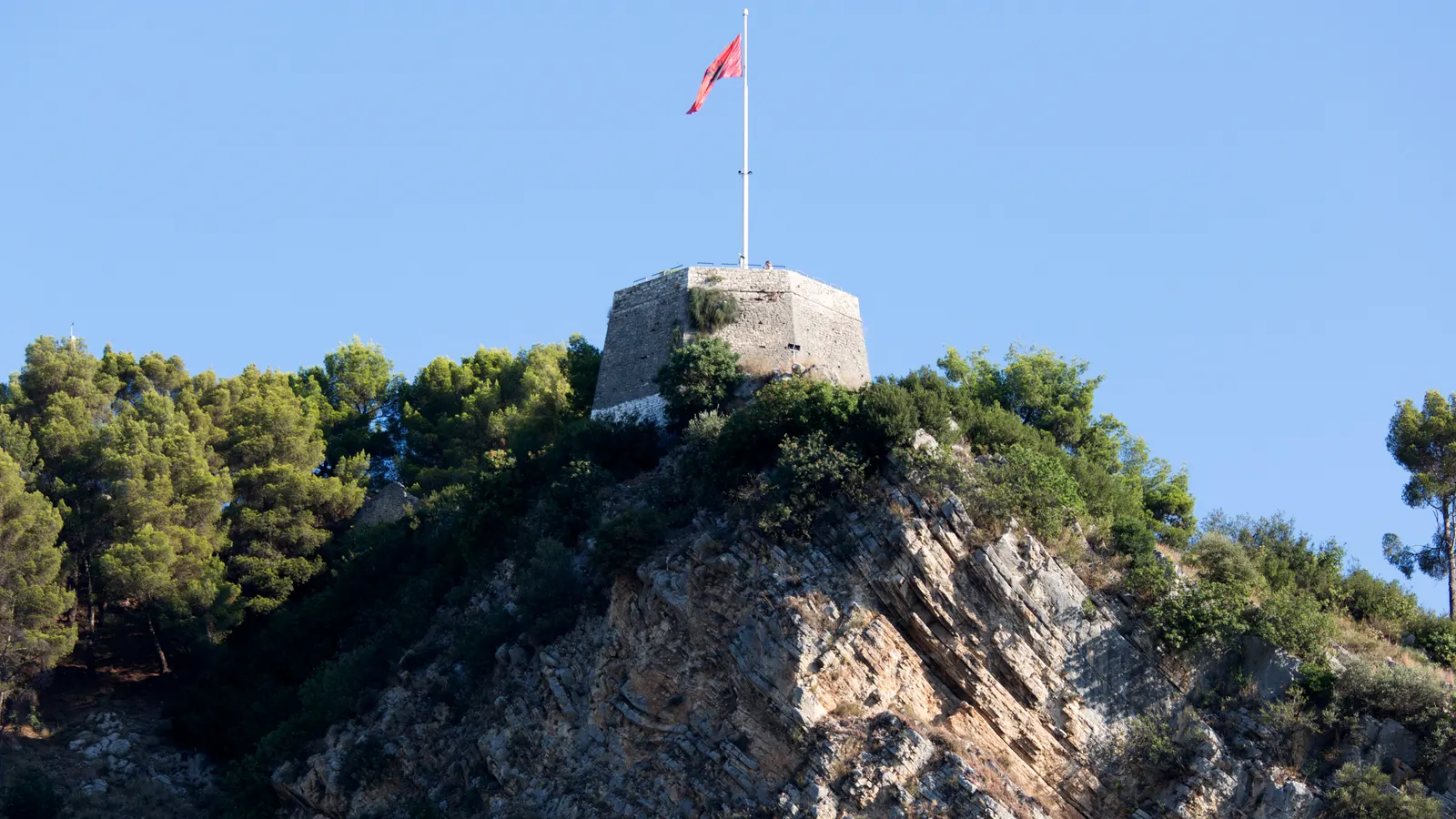 Berat Castle (Kalaja) A citadel above the Osum where people still live among Byzantine churches and ruined mosques: not a preserved monument but a neighbourhood with walls.
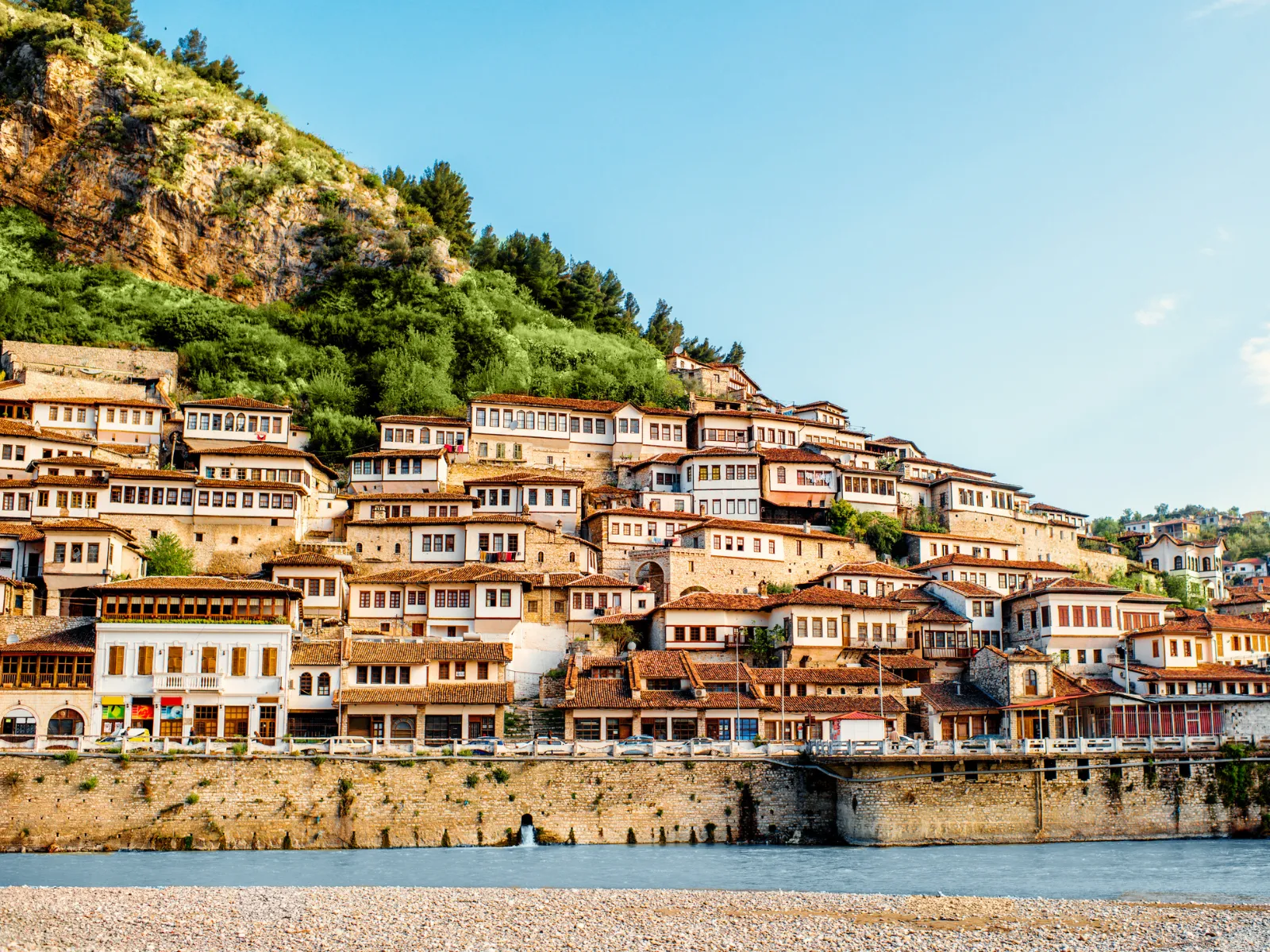
 Mangalem The quarter of a thousand windows: white houses climbing the hillside, all facing the river, in Albania's most recognisable image.
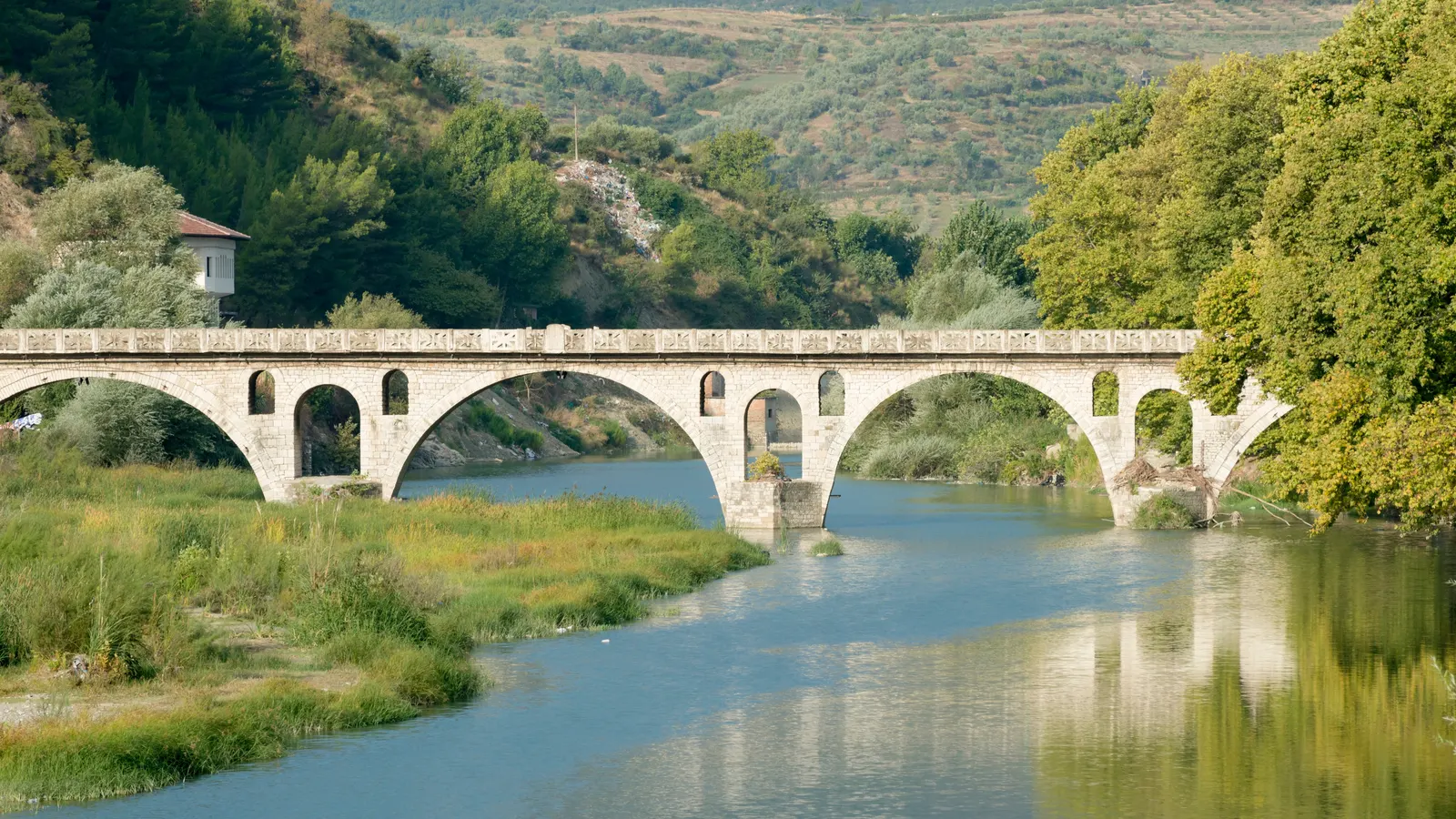 Gorica The Christian quarter on the far bank, joined to Mangalem by a stone bridge: less postcard, more life, and the best view of the thousand windows.
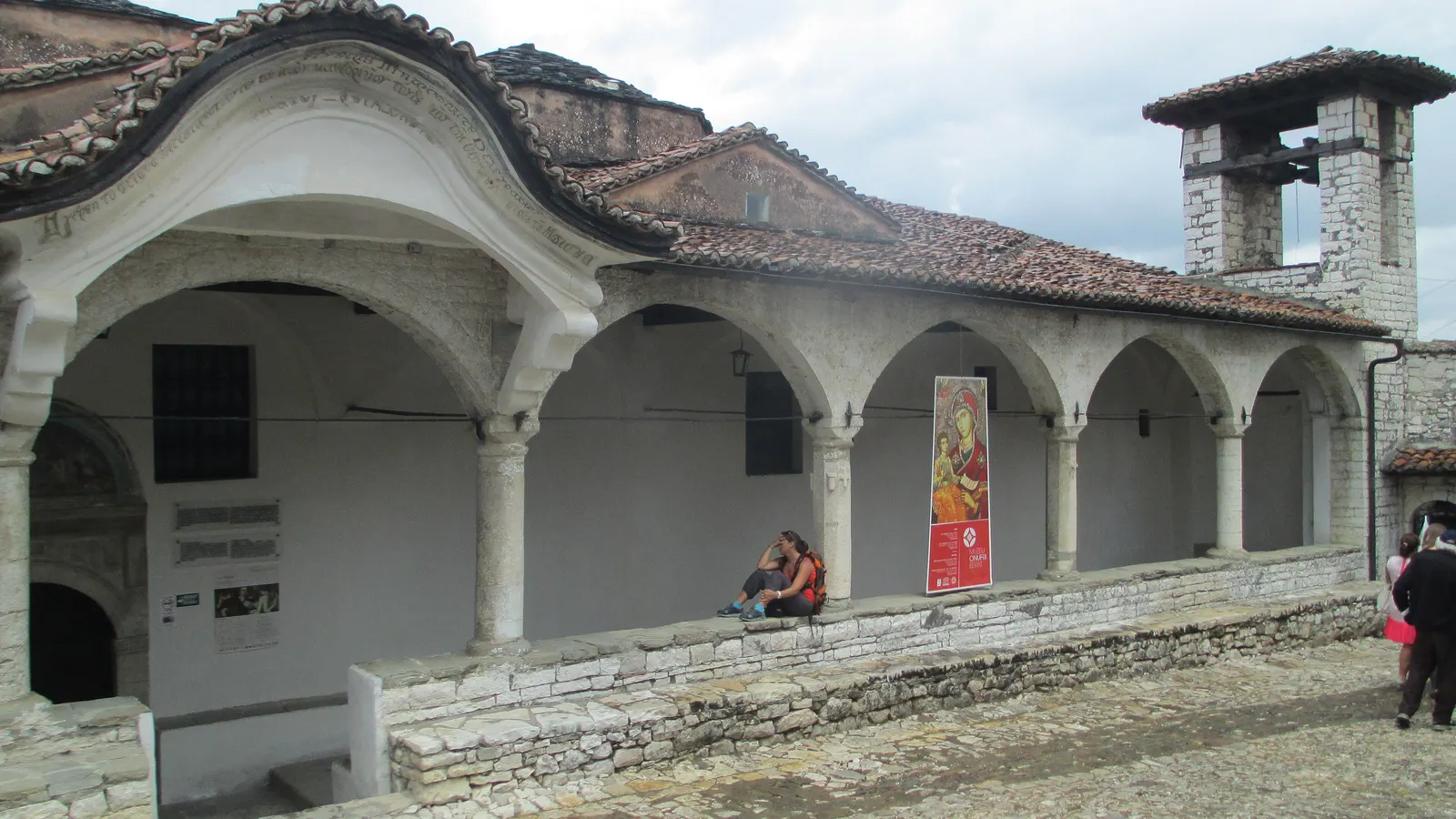 Onufri Museum Icons by the painter who invented a red, in a cathedral inside a citadel: the best place in Albania to understand its Byzantine tradition.
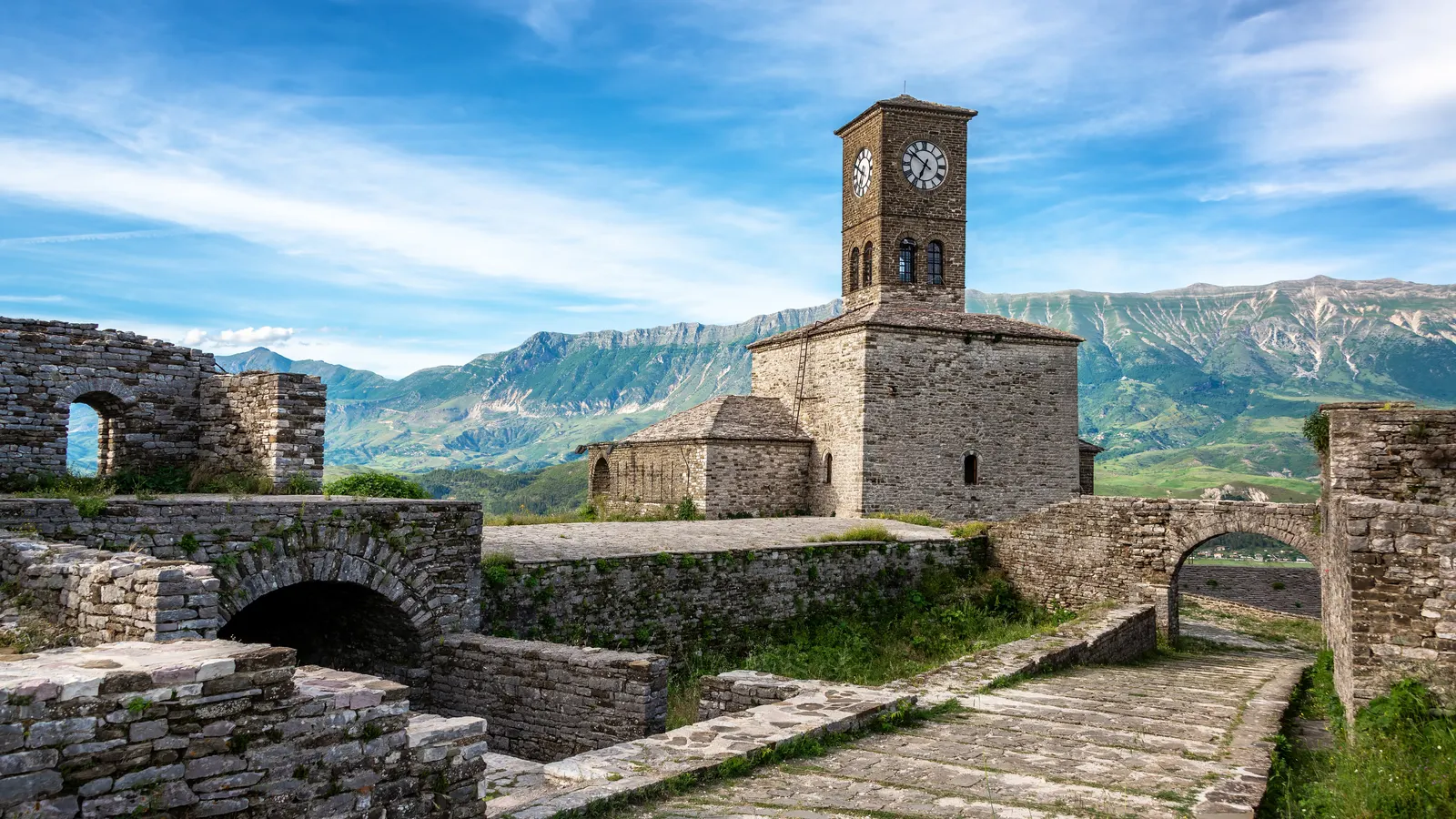 Gjirokastra Castle A huge fortress above the stone city, once Ali Pasha's stronghold and the prison of two regimes, that now holds cannons, a festival and an American plane.
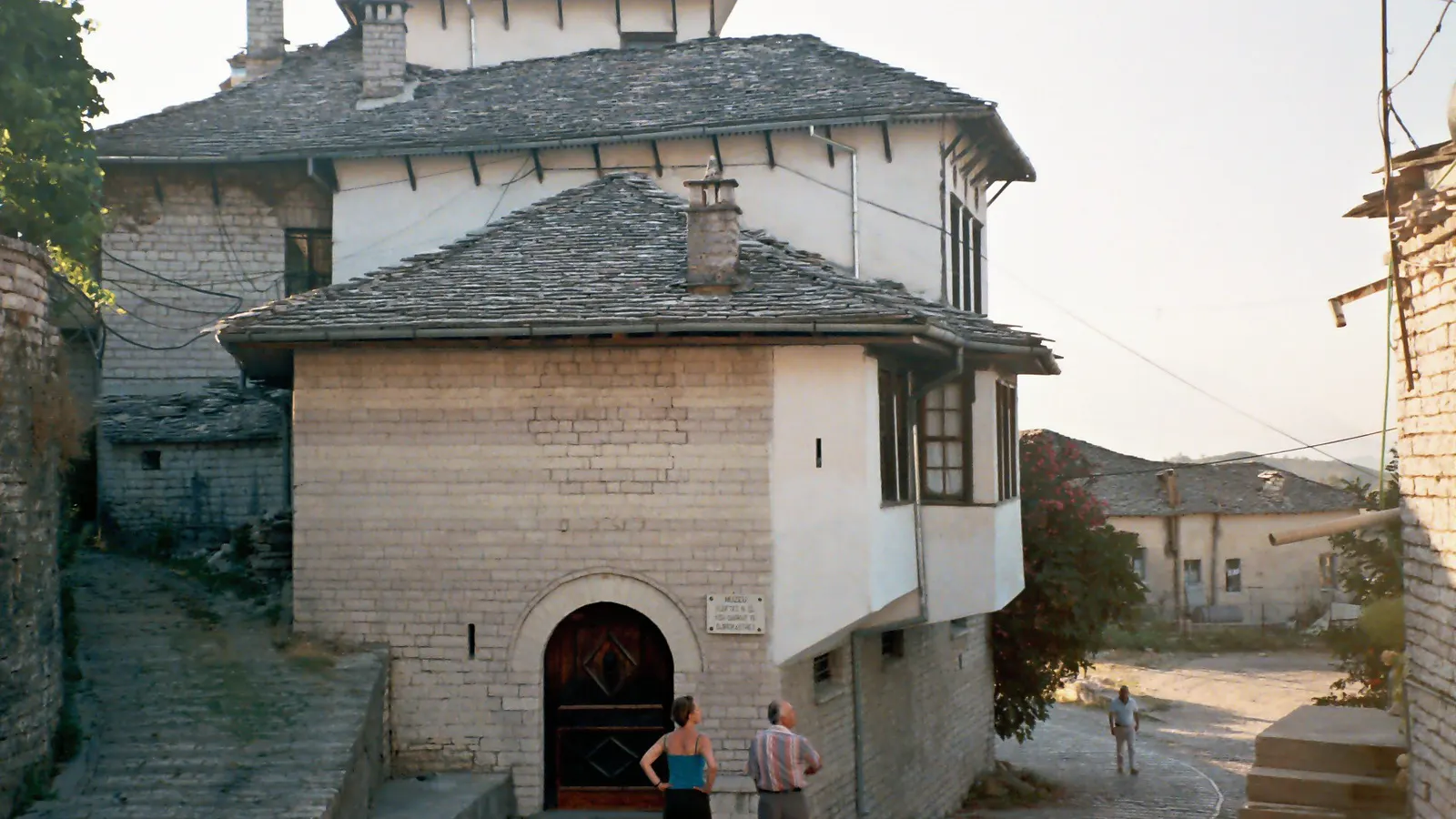 Enver Hoxha's Birthplace The house where the dictator was born is now an ethnographic museum, and his name barely appears: the silence of a city that still does not know what to do with him.
 Gjirokastra Bazaar The crossroads of cobbled streets below the castle where the stone city shows itself whole: tower houses, slate roofs and shops that are still open.
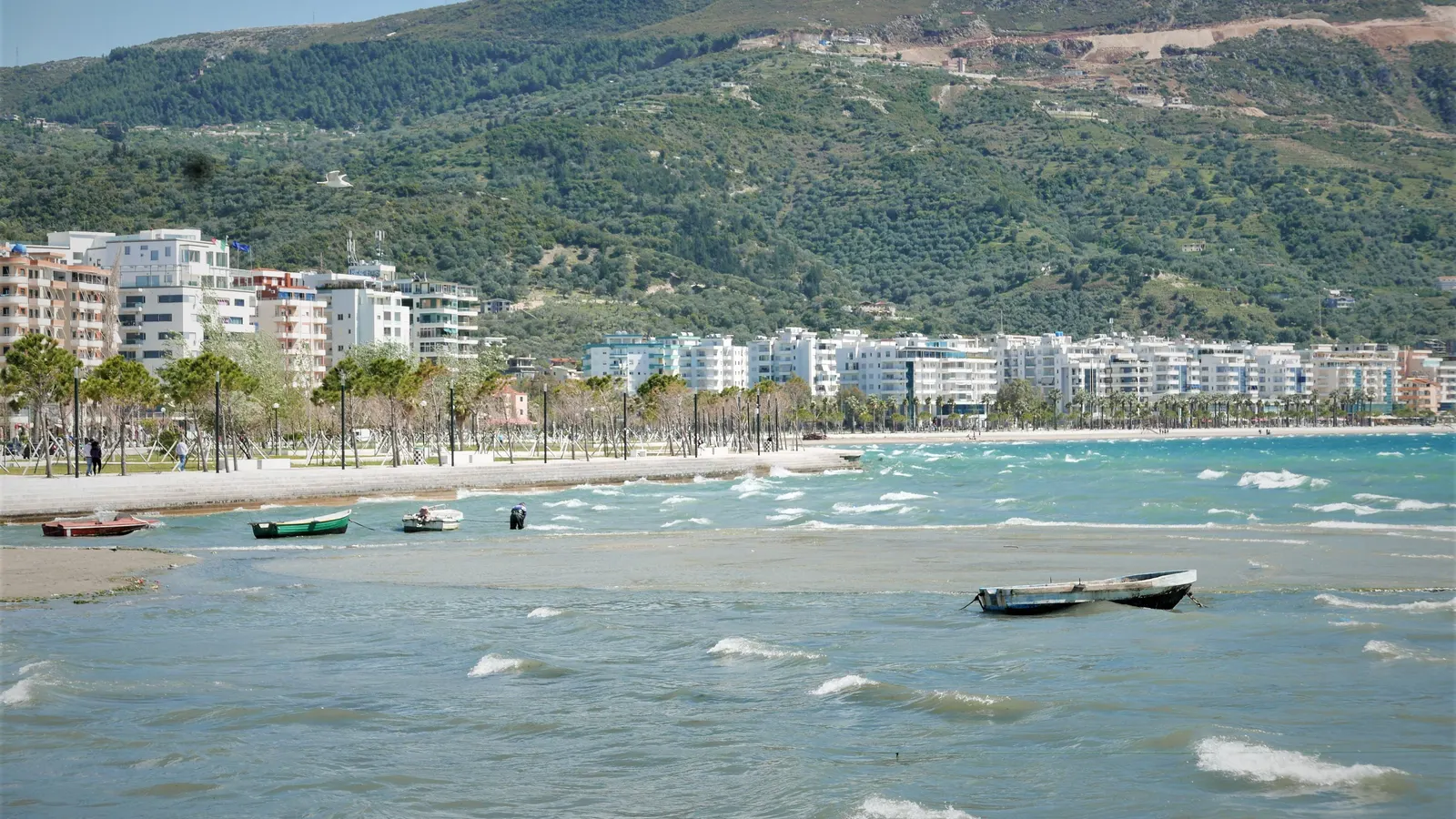 Vlorë The city where Albania declared its independence, where the Adriatic becomes the Ionian: more threshold than destination, but a threshold with history.
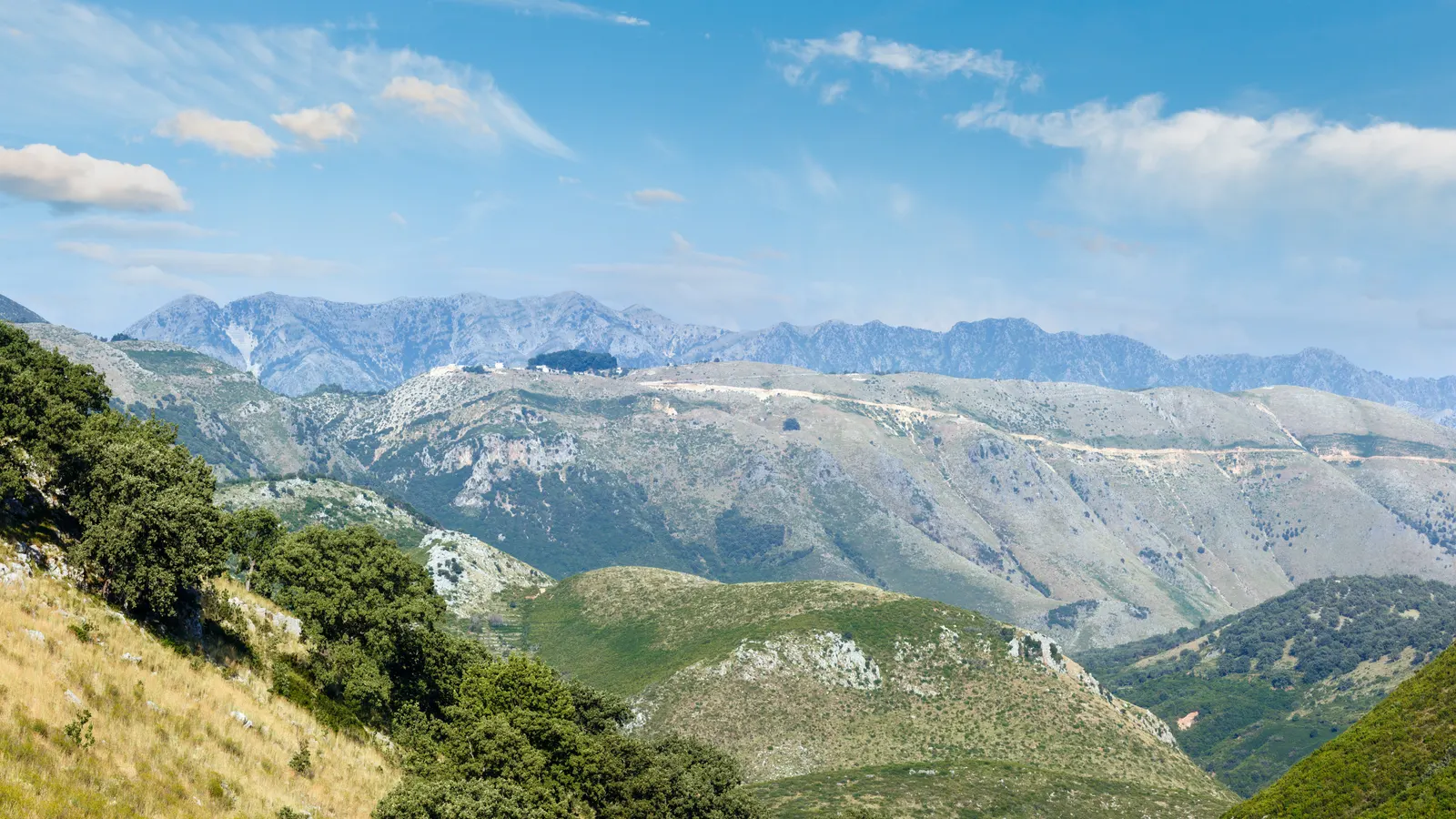 Llogara Pass The road that climbs between wind-bent pines and, after the last bend, suddenly drops the whole Ionian into view: the gateway to the Riviera.
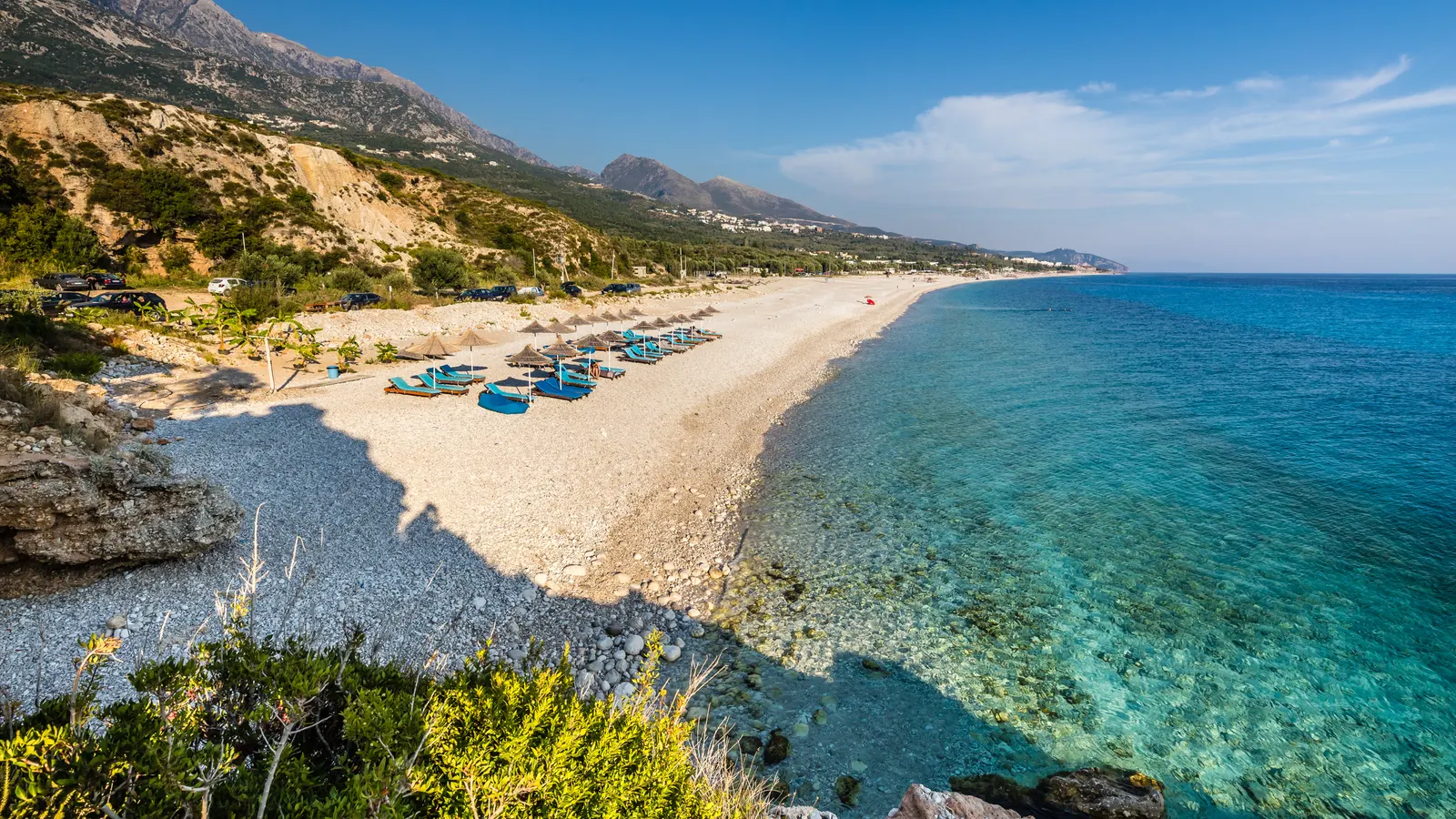 Dhërmi The first Ionian village after the mountain: stone houses and churches clinging to the slope, and below them water of a disconcerting clarity.
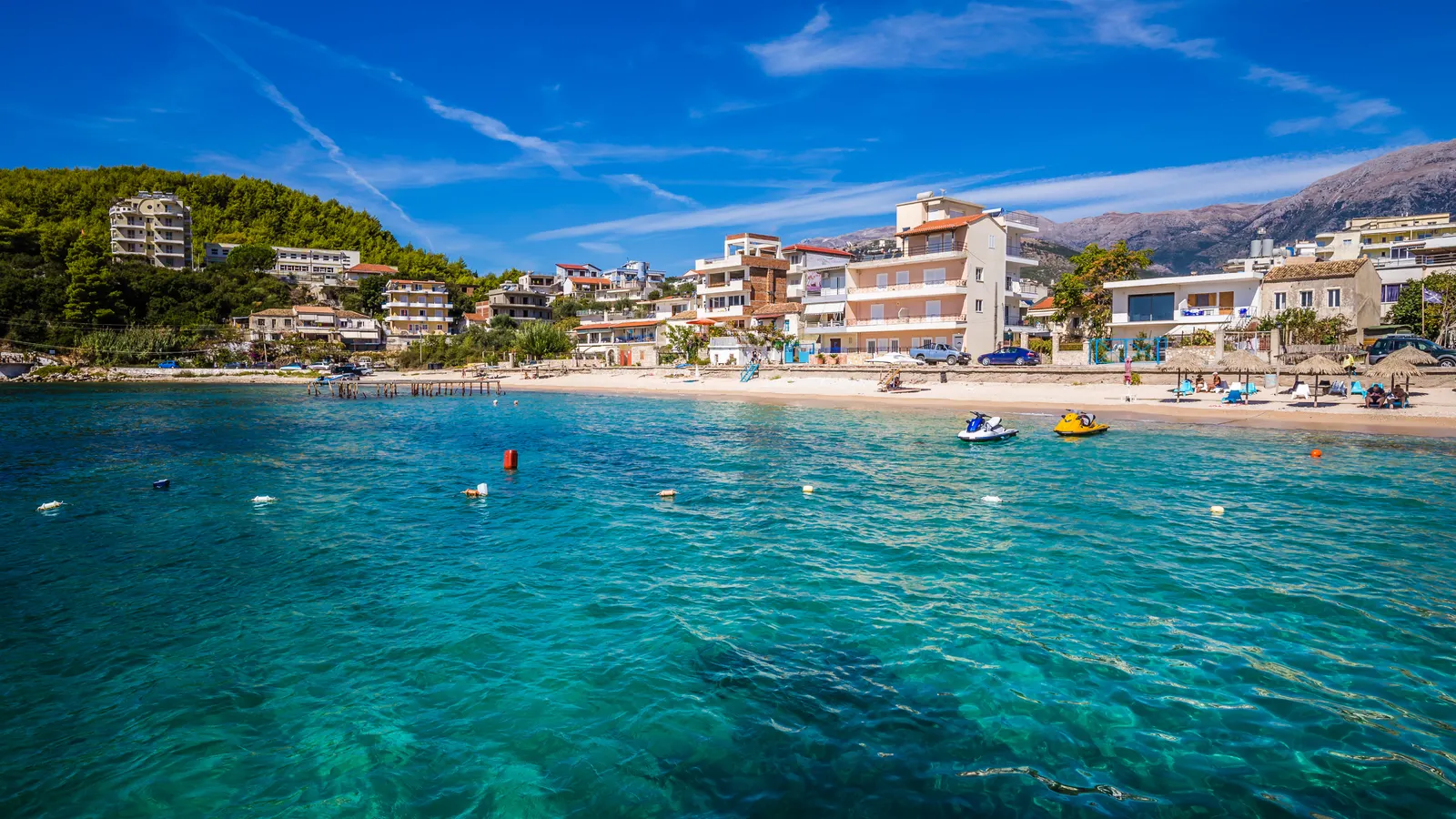 Himarë A fishing town with an inhabited castle on the hill and a life of its own that has withstood the coastal boom: the Riviera without the stage set.
YOUR ALBANIA PASSPORT
Every visited place earns 10 points: from Rozafa to Butrint, the passport keeps your own route through the country.
Progress is saved on this device and updates throughout the guide.
Free sample · Gjirokastra
A huge fortress above the stone city, once Ali Pasha's stronghold and the prison of two regimes, that now holds cannons, a festival and an American plane.
Gjirokastra Castle does not crown the city: it towers over it. It occupies the whole crest of the hill, with long walls and immense vaulted galleries, and from below it looks bigger than the old town itself. Inside, the layers of Albanian history pile up, from Ottoman power to communist paranoia.
Gjirokastra hangs from the eastern slope of the Drinos valley, above a fertile plain and on the route between southern Albania and Greek Epirus. The crest of the hill was the perfect site for a fortress, and there are records of one at least since the Middle Ages.
Its present form is largely the work of Ali Pasha of Tepelena, the Ottoman governor of Albanian origin who in the late eighteenth and early nineteenth centuries built an almost independent power from Ioannina. Ali Pasha enlarged and strengthened the castle as part of his network of fortresses. Later the fortress served as a prison, first under King Zog and then under the communist regime, which held political prisoners here.
The galleries, first. They are enormous vaulted stone halls, cool even in midsummer, displaying a collection of artillery and weapons: Ottoman cannons, Italian and German pieces from the Second World War, tanks captured by the partisans. The effect, in the half-light, is striking.
Then, high on the walls, the plane. It is a US Air Force T-33 training jet that was forced to land in Albania in 1957 and was displayed by the regime as a Cold War trophy; propaganda presented it as a spy plane shot down. That it is more legend than fact makes it all the more interesting.
Notice too the clock tower, the old prison cells and the large open space where the National Folk Festival is held, one of the country’s great cultural events. And the view: from the walls you see the city’s slate roofs and the whole valley.
You walk up from the bazaar along steep cobbled streets in ten or fifteen minutes. Entry costs 400 LEK and a full visit takes about two hours. The ground is uneven: wear comfortable shoes.
Go up at midday, when the galleries are a refuge from the heat, or in mid-afternoon, then walk down through the old town in the best light. Near the castle is the entrance to the Cold War tunnel, a bunker dug beneath the city that completes the story of the twentieth century.

Who writes it
Plans
No surprise subscriptions. No fine print. One payment, permanent access.
€14.99one-time payment
€30one-time purchase
Not sure yet? Explore free → · Secure payment with Stripe · Instant access
No. Citizens of the EU, UK, US and many other countries can enter visa-free for up to 90 days.
Yes. Shkodra is 1h from the Montenegrin border, Sarandë 30 min by ferry from Corfu, and Kukës connects to Kosovo. The guide explains how to combine Albania with its neighbours.
Minimum one week for the essentials (Tirana, Berat, Gjirokastra, Riviera). 10-14 days if you add the northern Alps and the Theth-Valbona trek.
Yes. Albania is one of the safest countries in the Balkans. The guide covers practical specifics: road conditions, night driving, and areas to avoid.
Yes. The online edition reflects the latest published version. Content updates are included for 1 year from the date of purchase.
Access to your purchased edition is indefinite. Content updates are included for 1 year from the date of purchase.
Yes. From inside the guide, you can download a complete copy with its images for offline use. Interactive maps require a connection. When you are back online, you can update the downloaded copy if a new edition is available.
No passwords needed. Go to /en/access, enter the email you used to purchase and we'll send you an instant access link. Works on any device.
Yes. The guide is available in both Spanish and English. You can switch languages at any time from the navigation menu.
It's designed mobile-first. You can install it as an app (PWA) on iOS and Android without going through any app store.
It's not a PDF. It's an interactive website, organised by destination and attraction — not by day. Read it in any order and jump directly to whatever interests you.
One-time payment · Instant access