
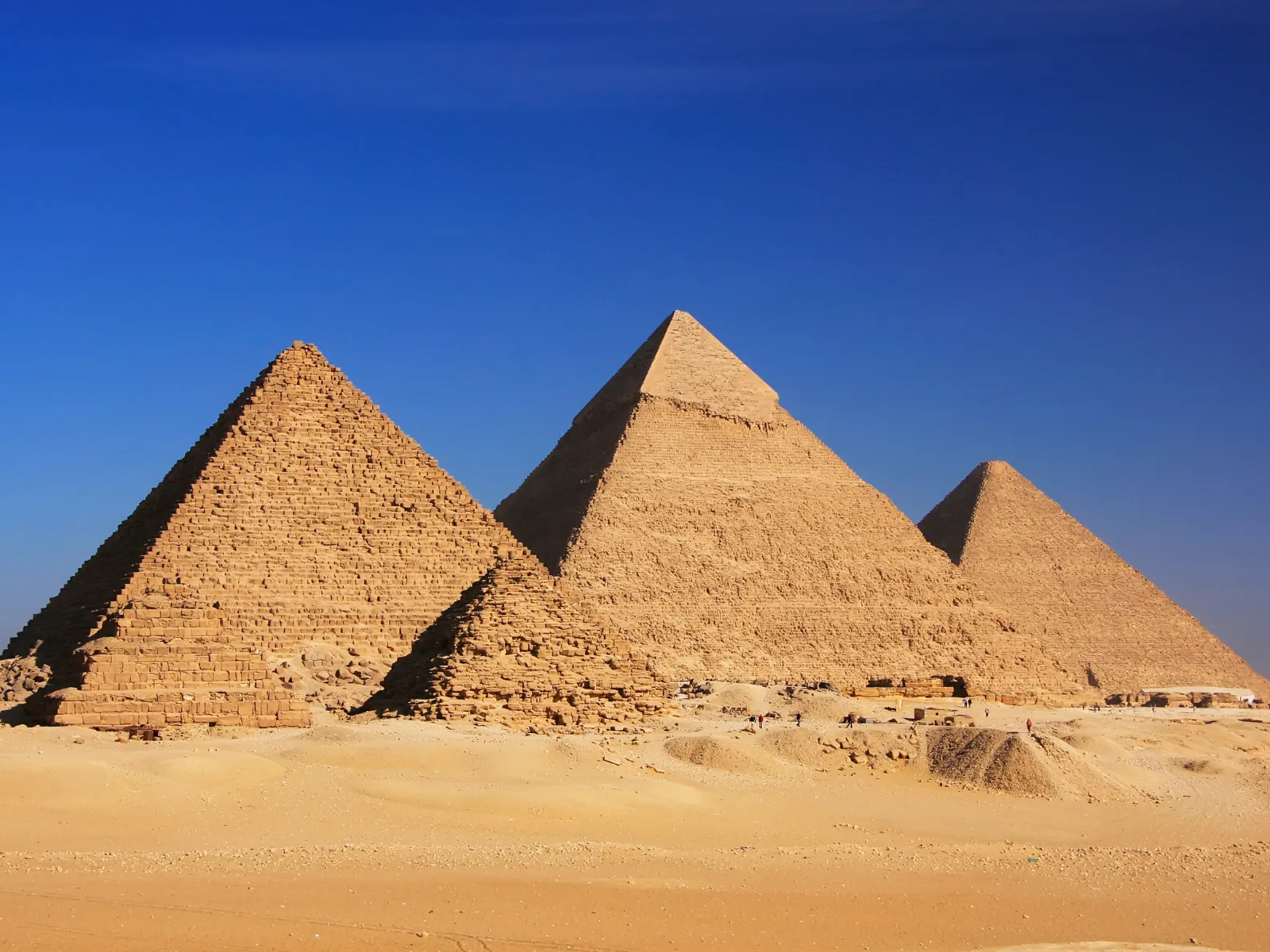
Understand
Before you arrive: the country, its history and its codes.
- Introduction to Vietnam
- The Hung kings and Van Lang
- A thousand years under China (111 BC – 938 AD)
- Independent dynasties (938–1858)
- French Indochina (1858–1954)
- and 5 more
Choose by region. Each guide is a travel essay, not a brochure.
Europe
Mediterranean · Balkans · North
Asia
Silk Road · Southeast
Americas
Latin America
Africa & Middle East
North Africa
Guide to Vietnam · Indochina · Southeast Asia
From Hanoi to Saigon: a thousand years of empires, wars and street food
66 places explained one by one: why they are there, what to look at and how to fit them into your day. With maps, itineraries, a travel passport and a library of Alex's videos and podcasts.
€14.99One-time payment · permanent access · ES / EN
27 chapters66 places3 itineraries66 map points
What is inside
Organised the way you travel: first understand the country, then travel it place by place and, finally, plan it all.
Before you arrive: the country, its history and its codes.
On the road: every place, in geographical order.
To organise it: routes, transport, money and seasons.
Travel
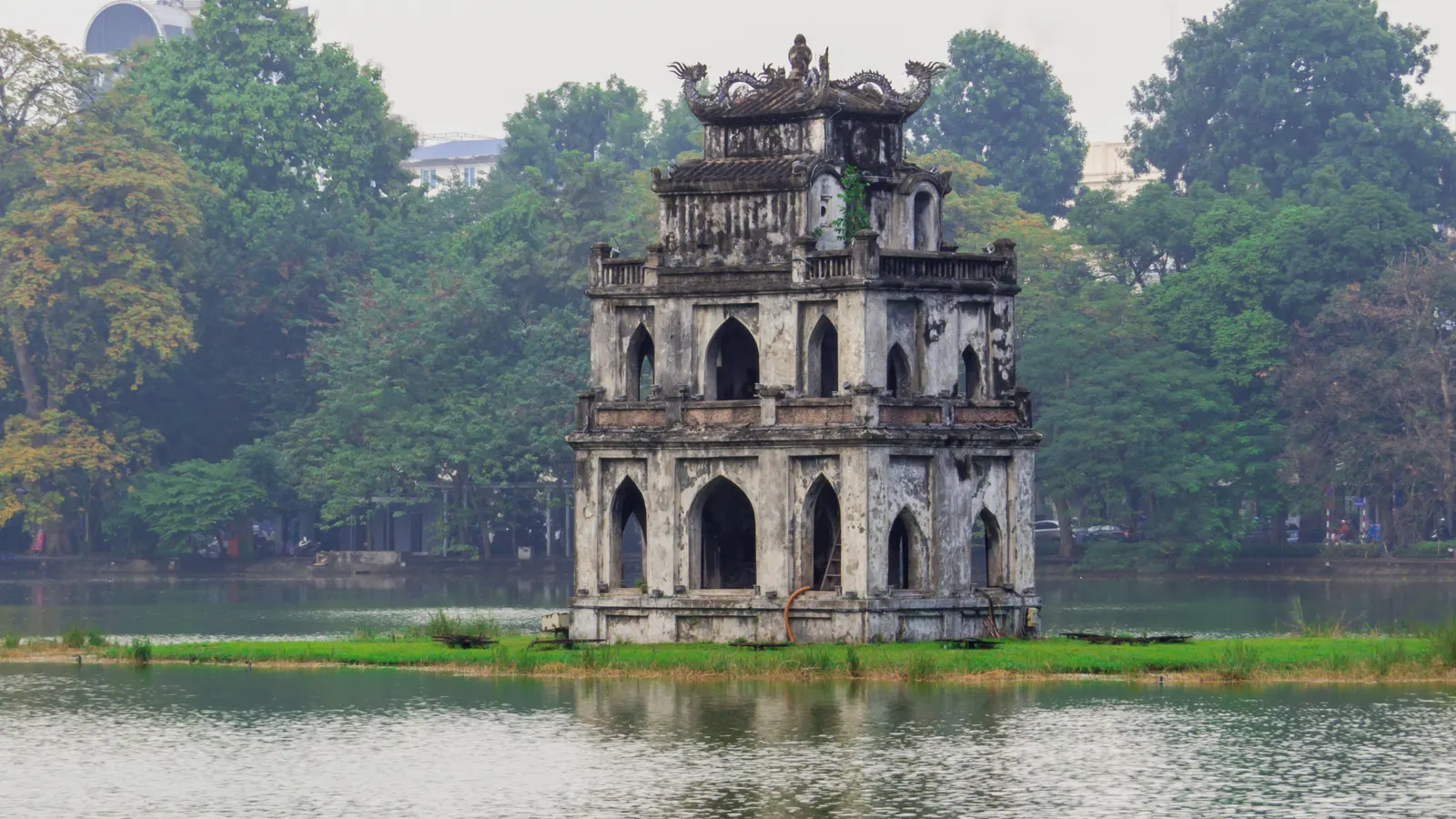 Hoan Kiem Lake The lake of the returned sword: a legend of independence that became Hanoi's main square.
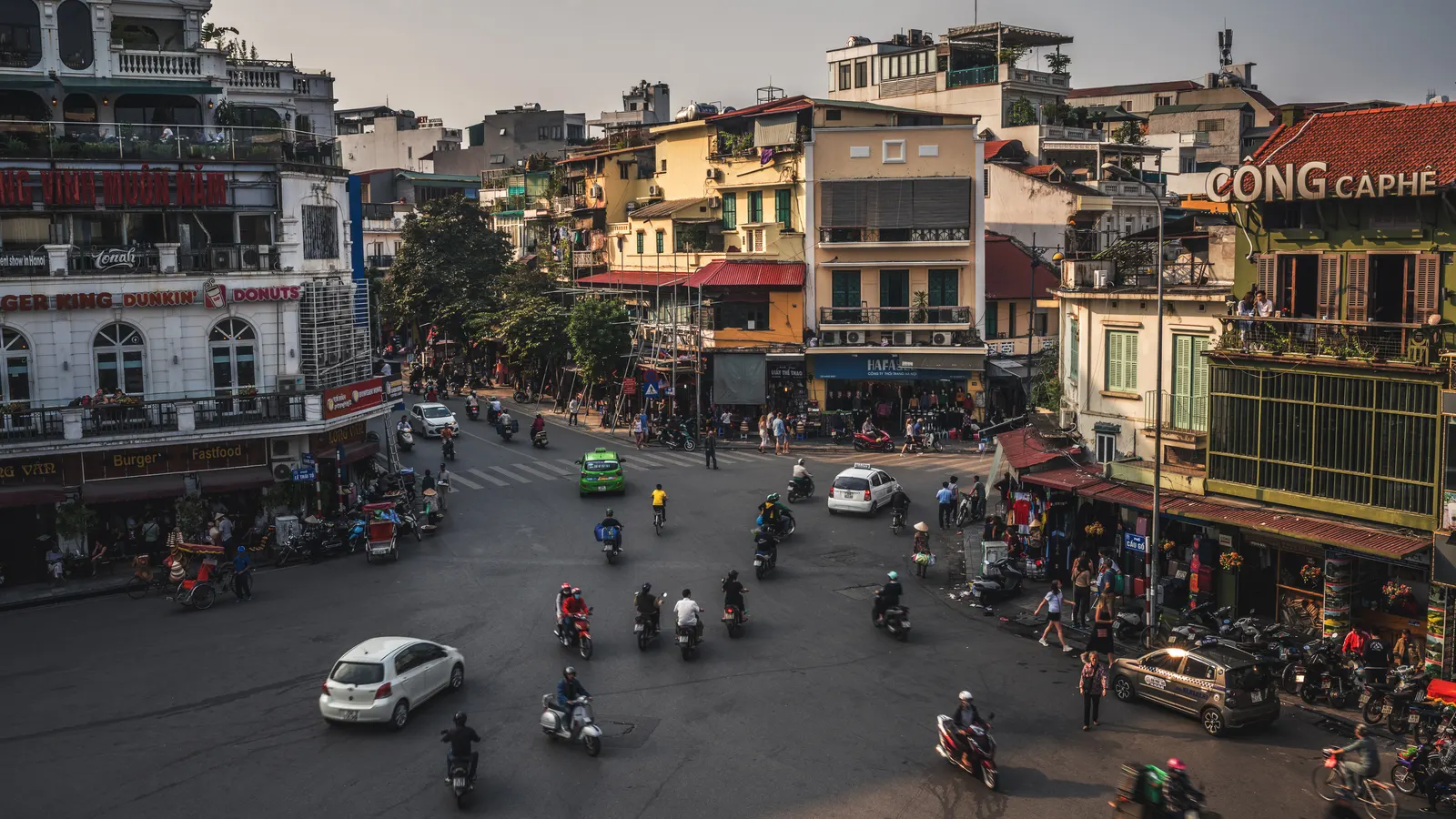 Old Quarter (36 streets) The guild quarter: a seven-century-old market where each street was named after what was sold in it.
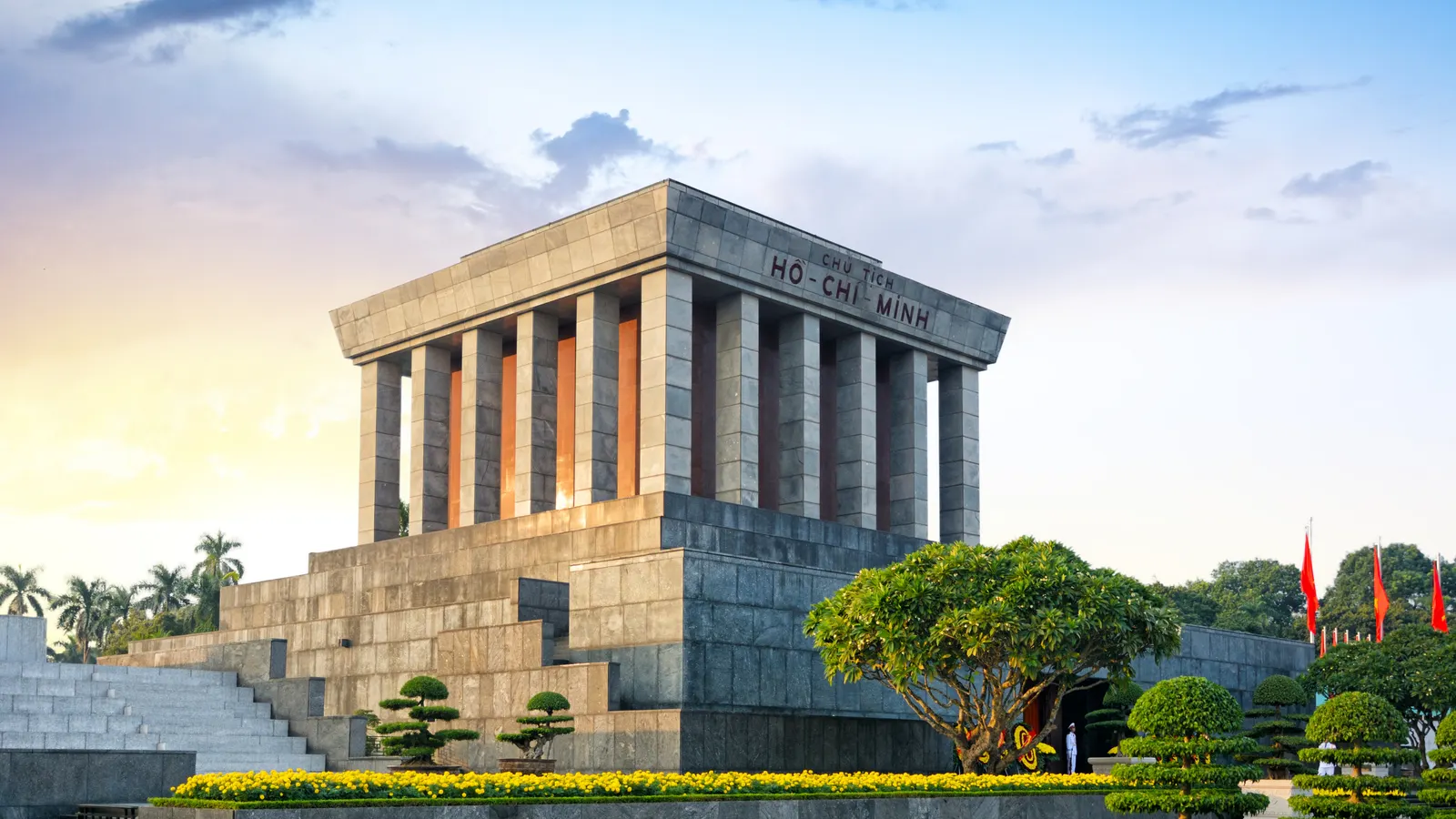 Ho Chi Minh Mausoleum The embalmed body of a man who asked to be cremated: the monument in which the Vietnamese state looks at itself.
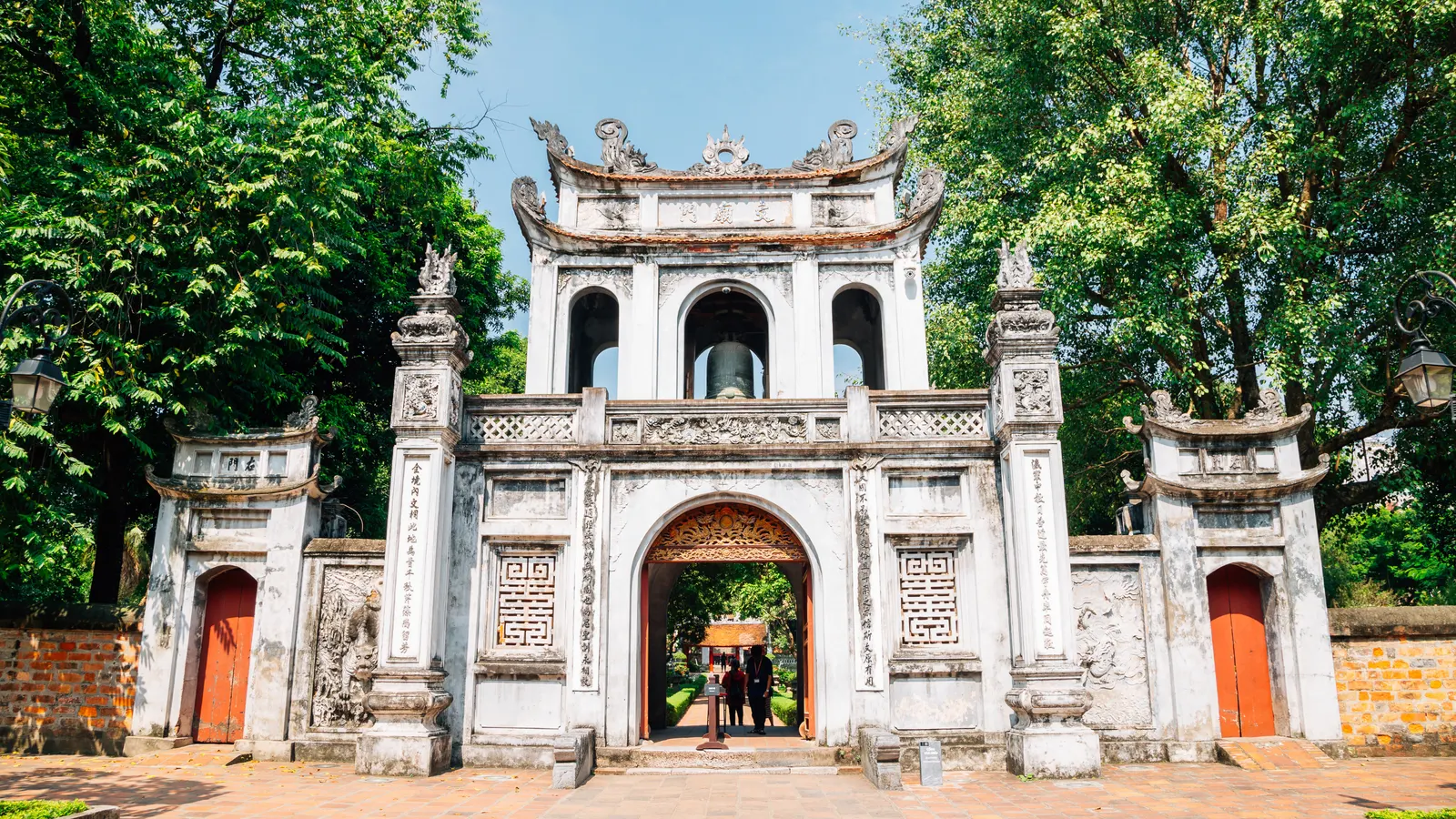 Temple of Literature (Van Mieu) Vietnam's first university: five courtyards for understanding how Confucianism shaped the state and its officials.
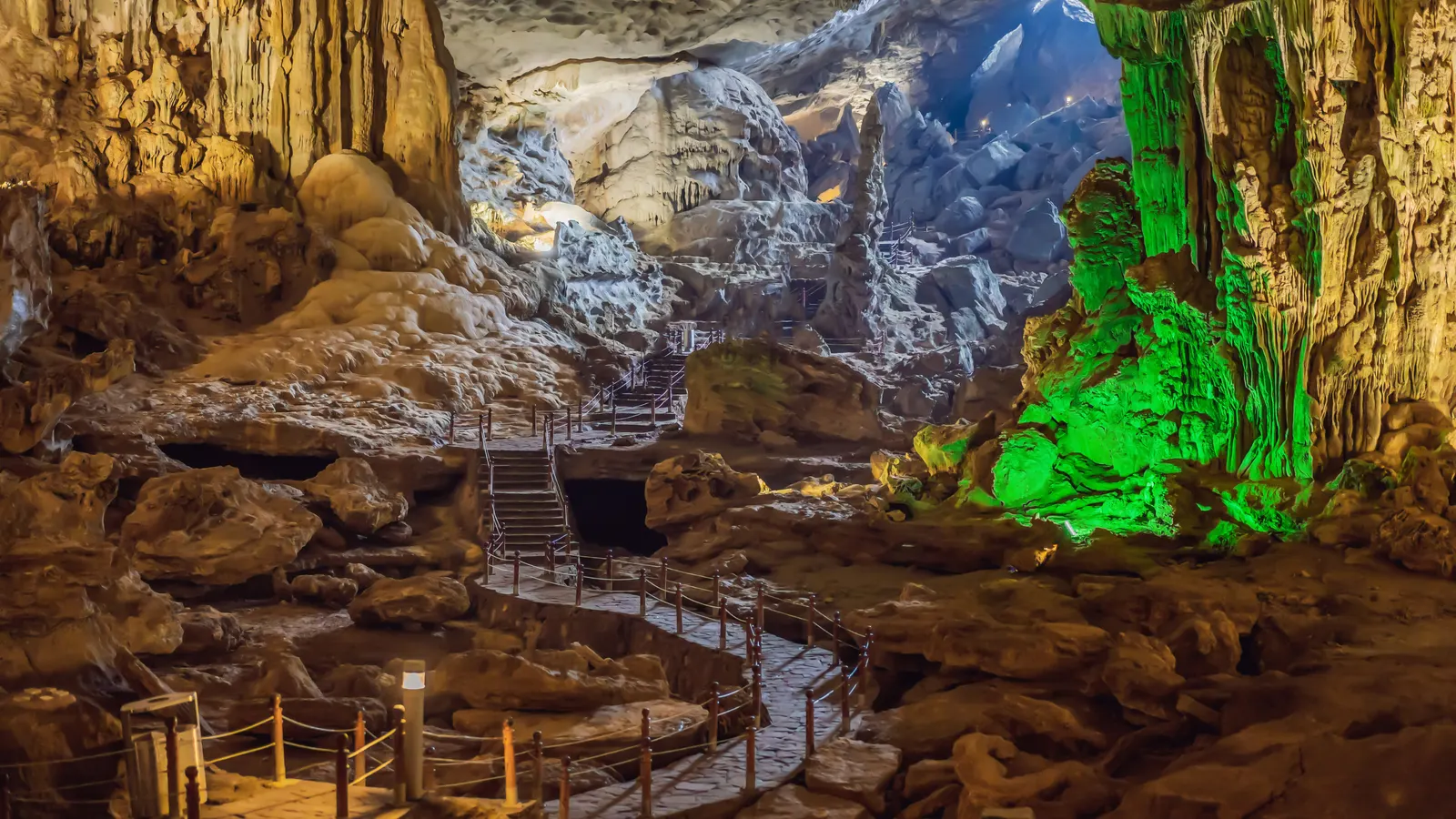 Sung Sot Cave (Surprise Cave) The largest cave in central Ha Long: the hollow interior of a limestone mountain, lit like a stage set.
 Ti Top Island An island named after a Soviet cosmonaut, with a viewpoint that sums up the bay in a single glance.
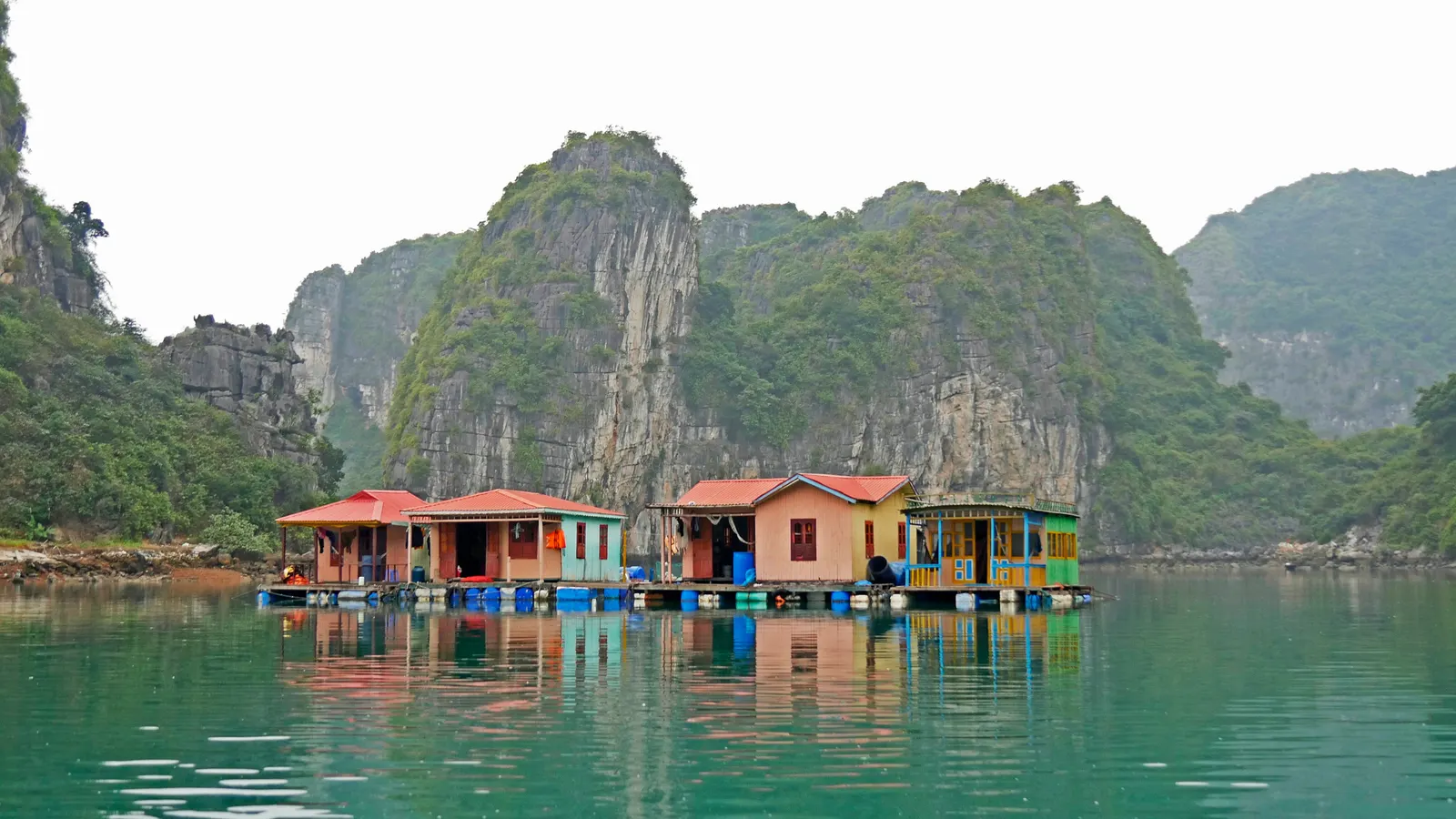 Vung Vieng Floating Village Houses on the water in Bai Tu Long Bay: what remains of a fishing community that always lived at sea.
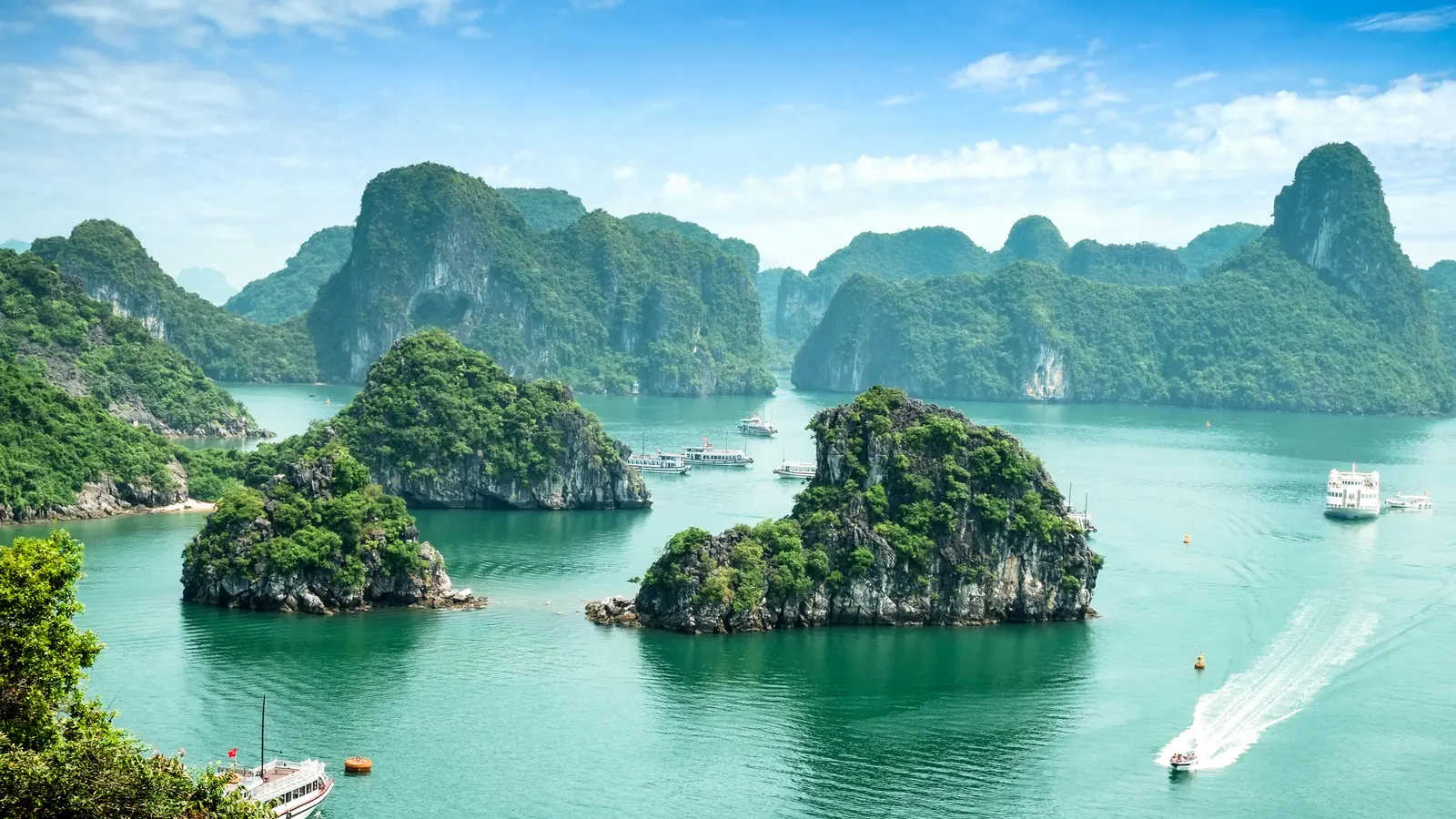 Lan Ha Bay The same landscape as Ha Long with a third of the boats: the sister bay where you can still paddle in silence.
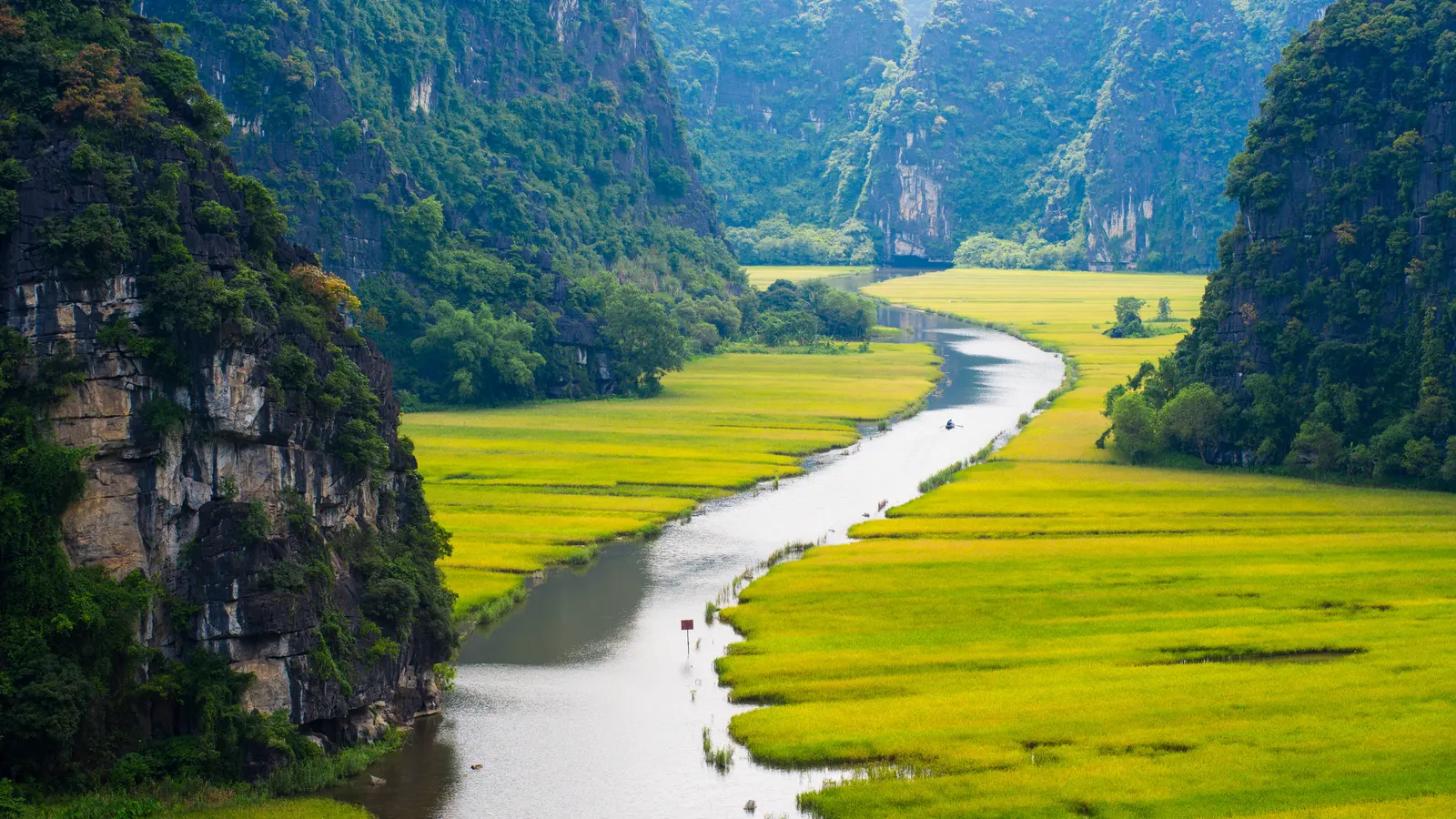 Tam Coc Three caves crossed by rowing boat: the landscape of rice fields between limestone walls that has been called Ha Long on land.
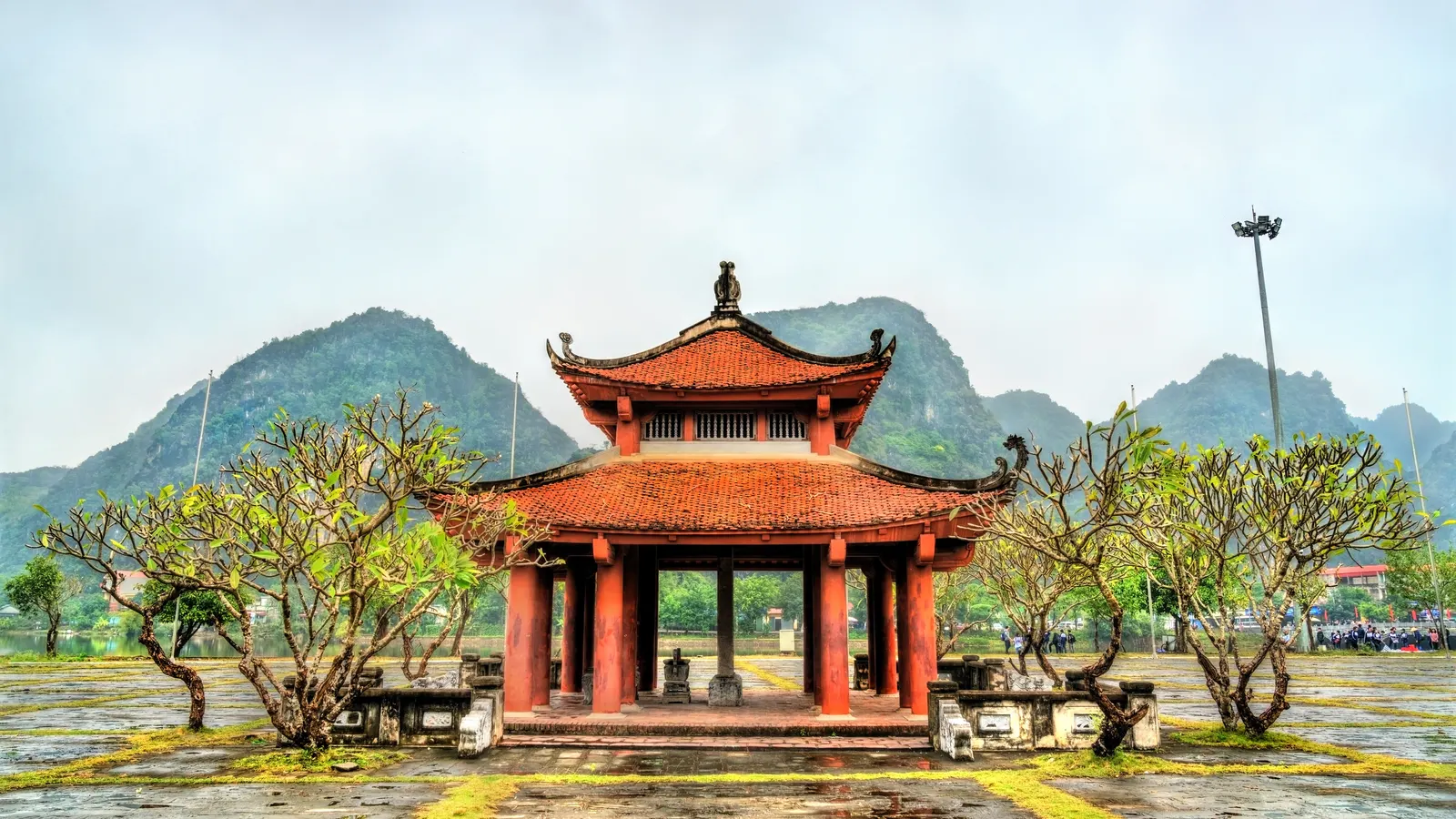 Hoa Lu The forgotten capital of the first independent Vietnam, hidden among mountains that served as walls.
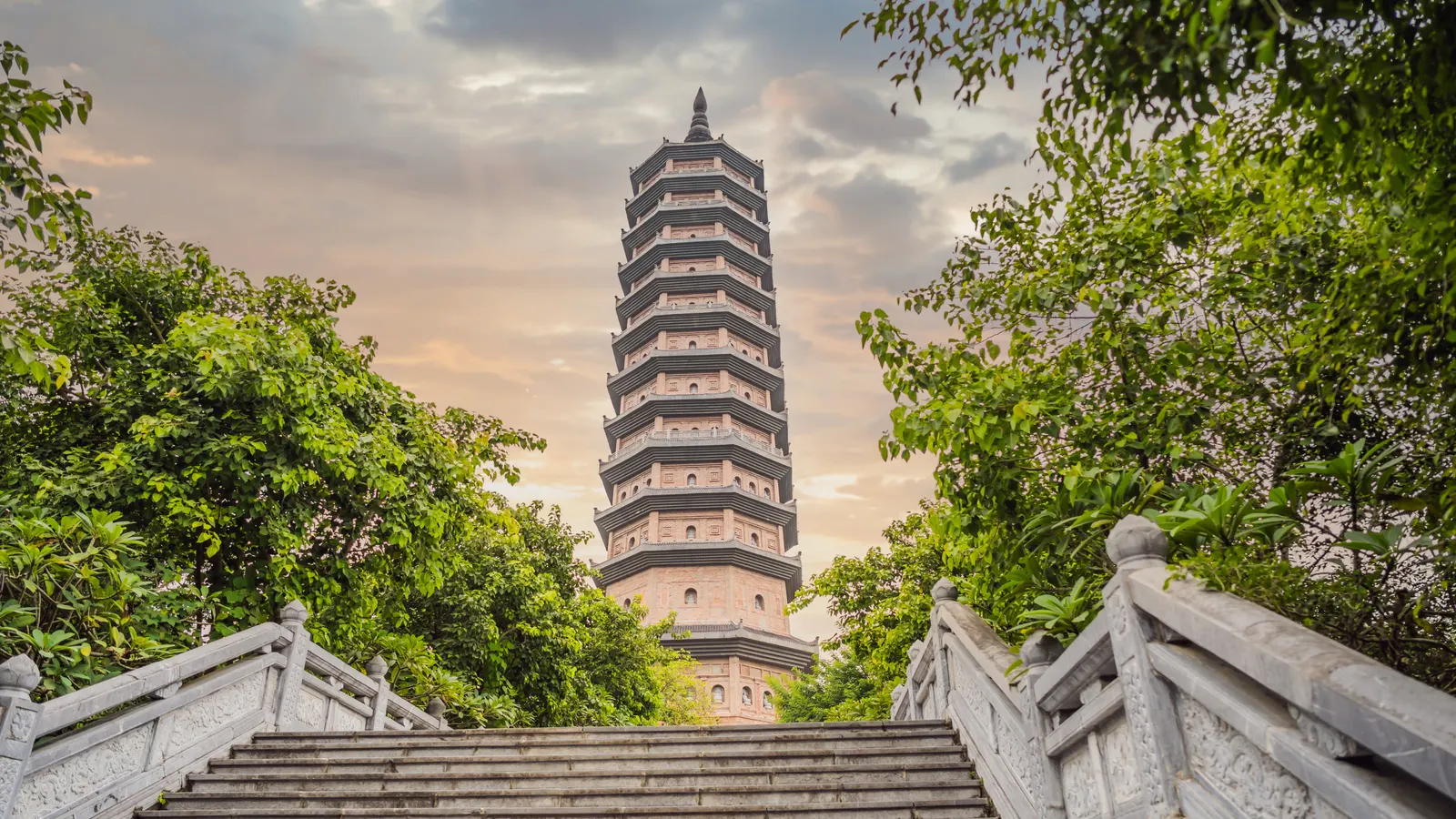 Bai Dinh Buddhist Complex An old temple on the mountain and, below it, the country's largest modern Buddhist complex: devotion and spectacle in the same grounds.
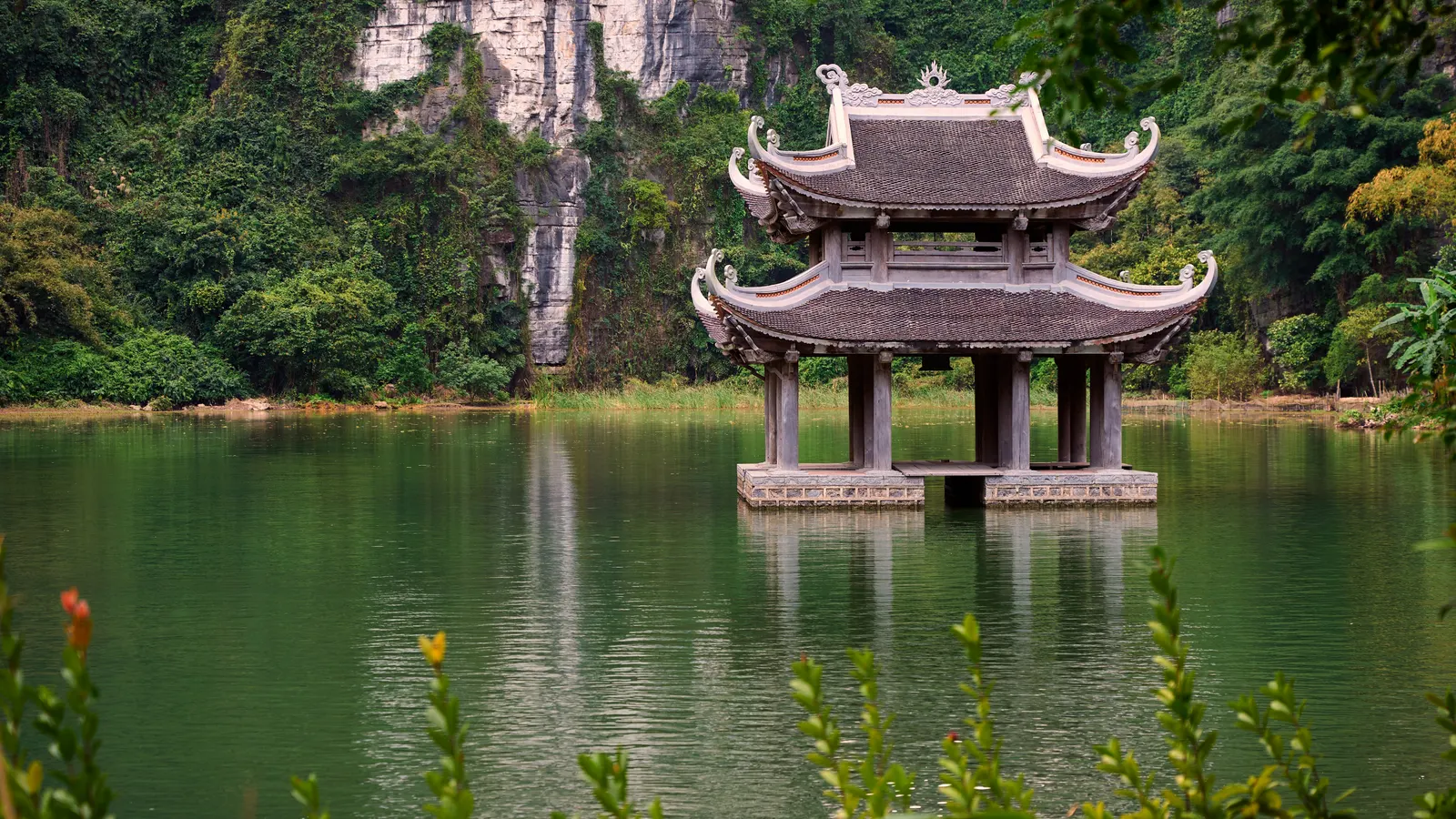 Trang An A flooded karst landscape crossed by rivers and caves: the place UNESCO protects as natural and cultural heritage at once.
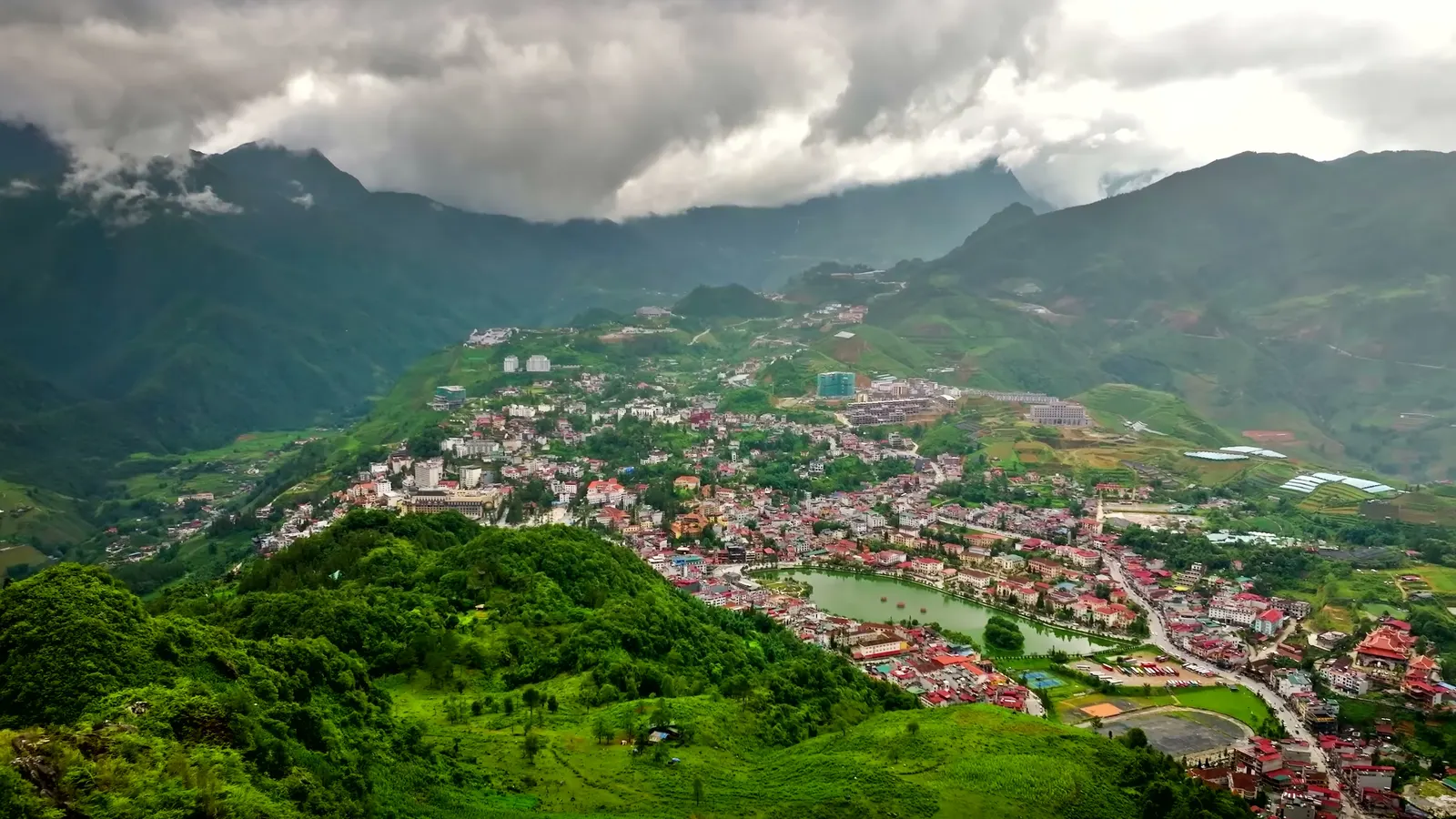 Sapa Town A former French hill station turned tourist base: the starting point, not the destination.
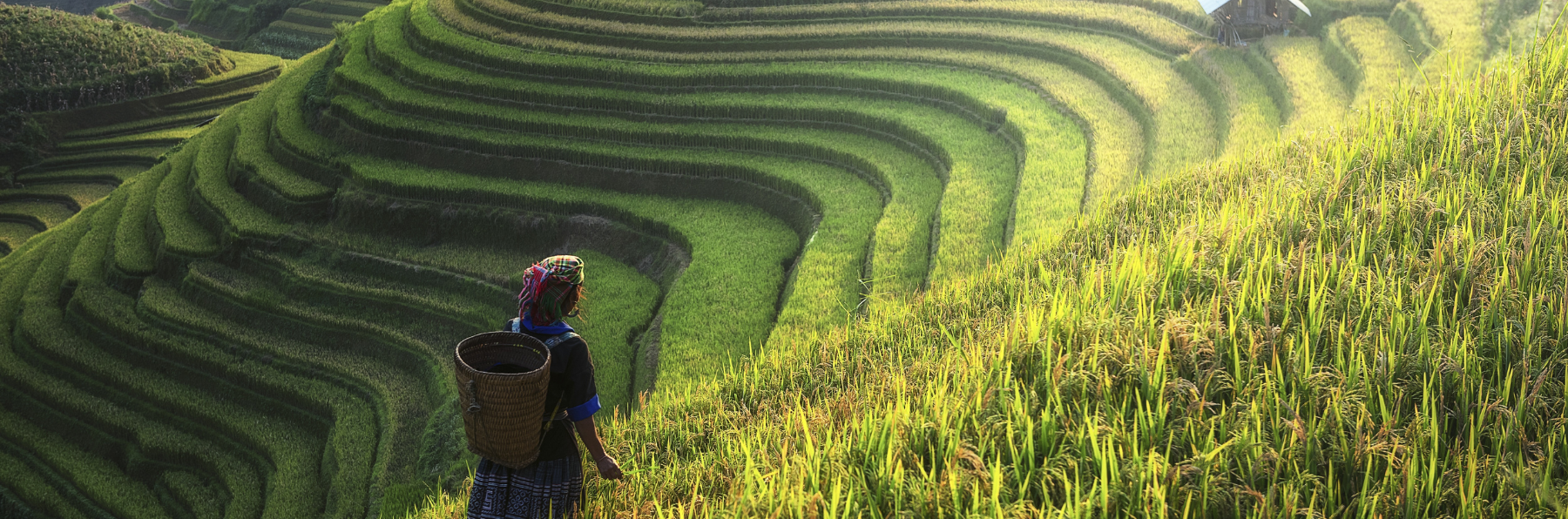
 Muong Hoa Valley A valley sculpted into rice terraces by generations of Hmong and Dao families: the landscape that justifies the trip to Sapa.
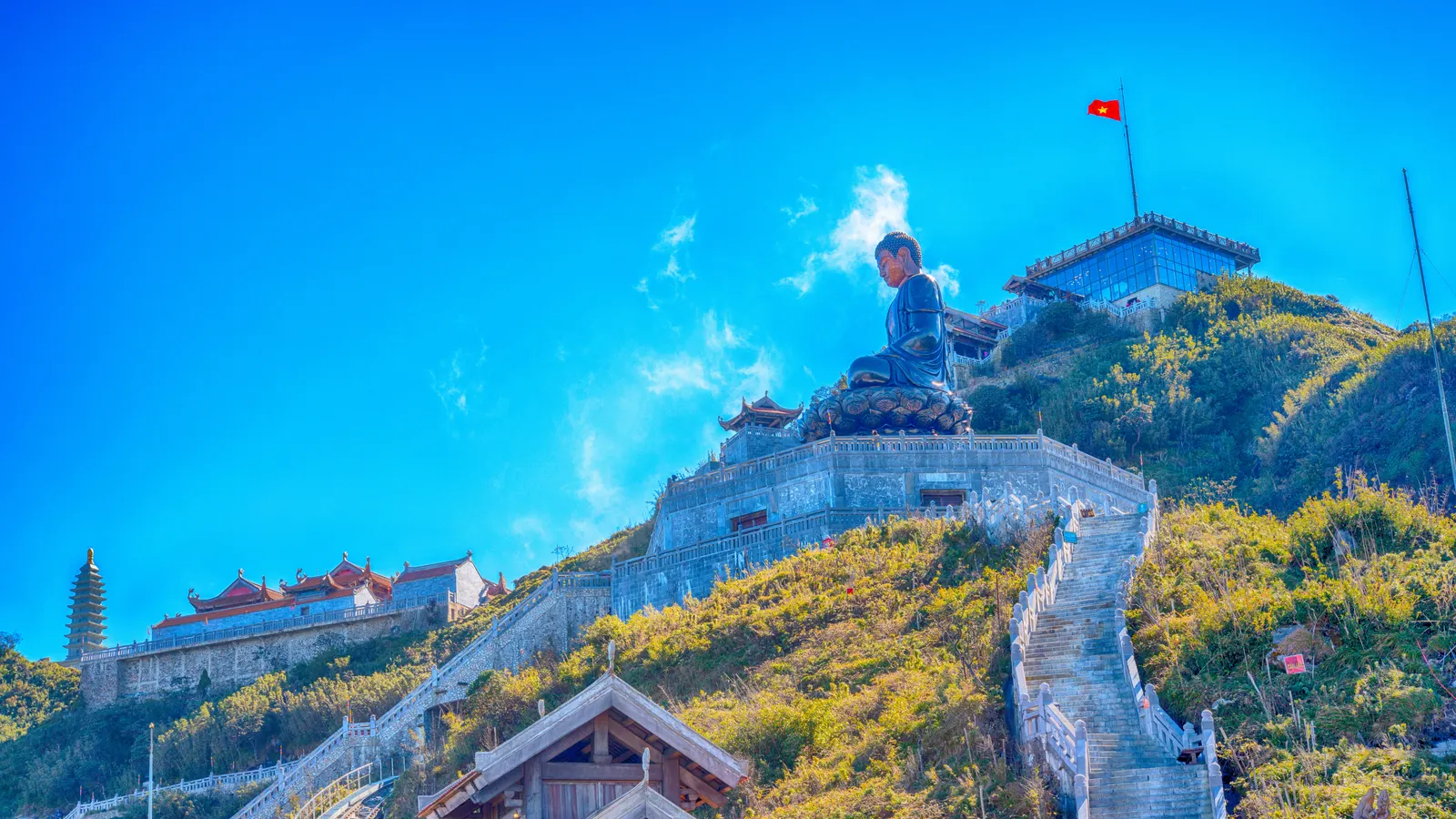 Fansipan The roof of Indochina turned theme park: Vietnam's highest mountain, fifteen minutes away by cable car.
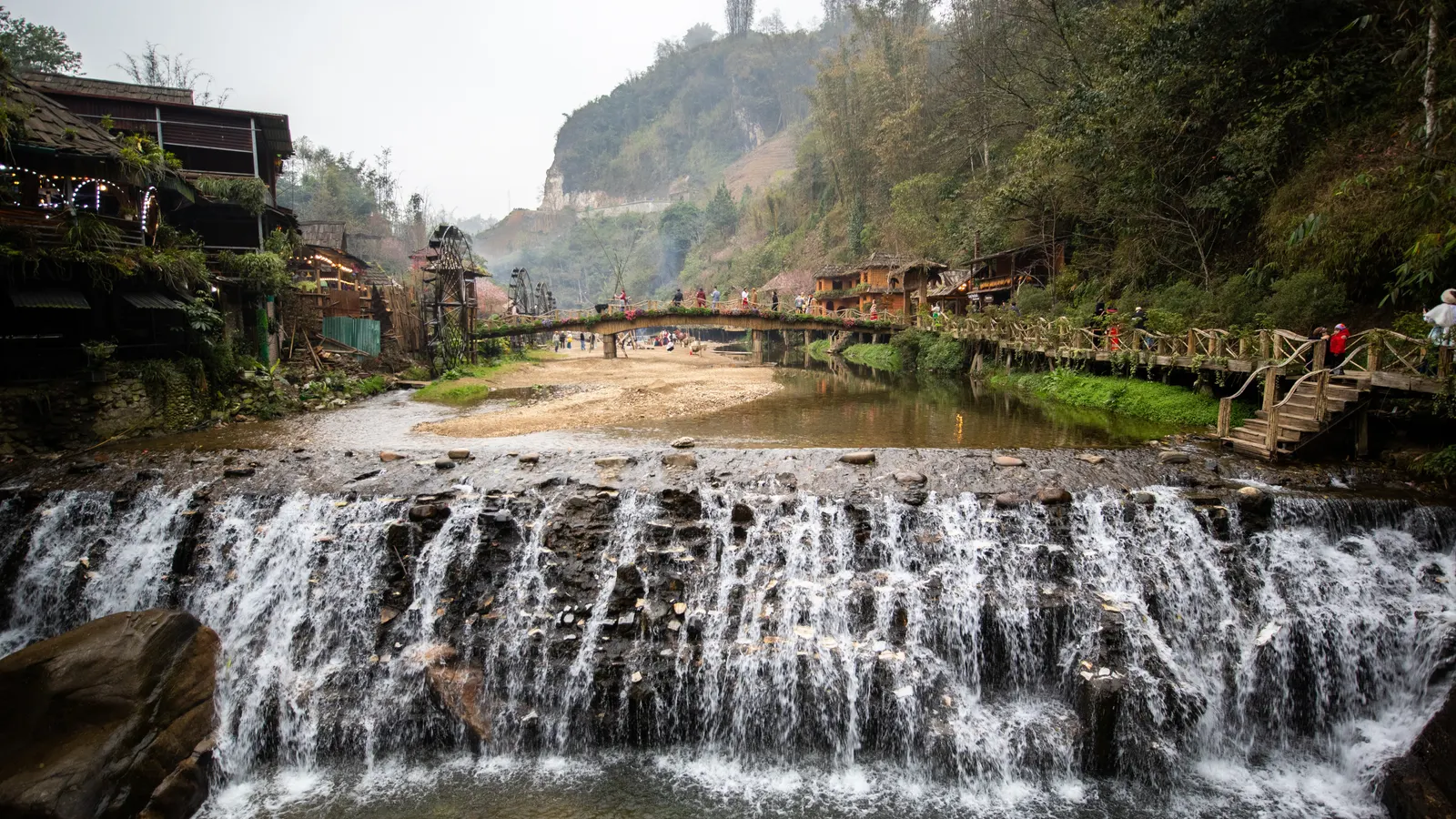 Cat Cat Village The Hmong village closest to Sapa, turned showcase: a place to understand what happens when culture becomes an attraction.
 Hue Imperial Citadel The capital of Vietnam's last dynasty: a compound conceived as a reflection of Beijing and marked, above all, by what is missing.
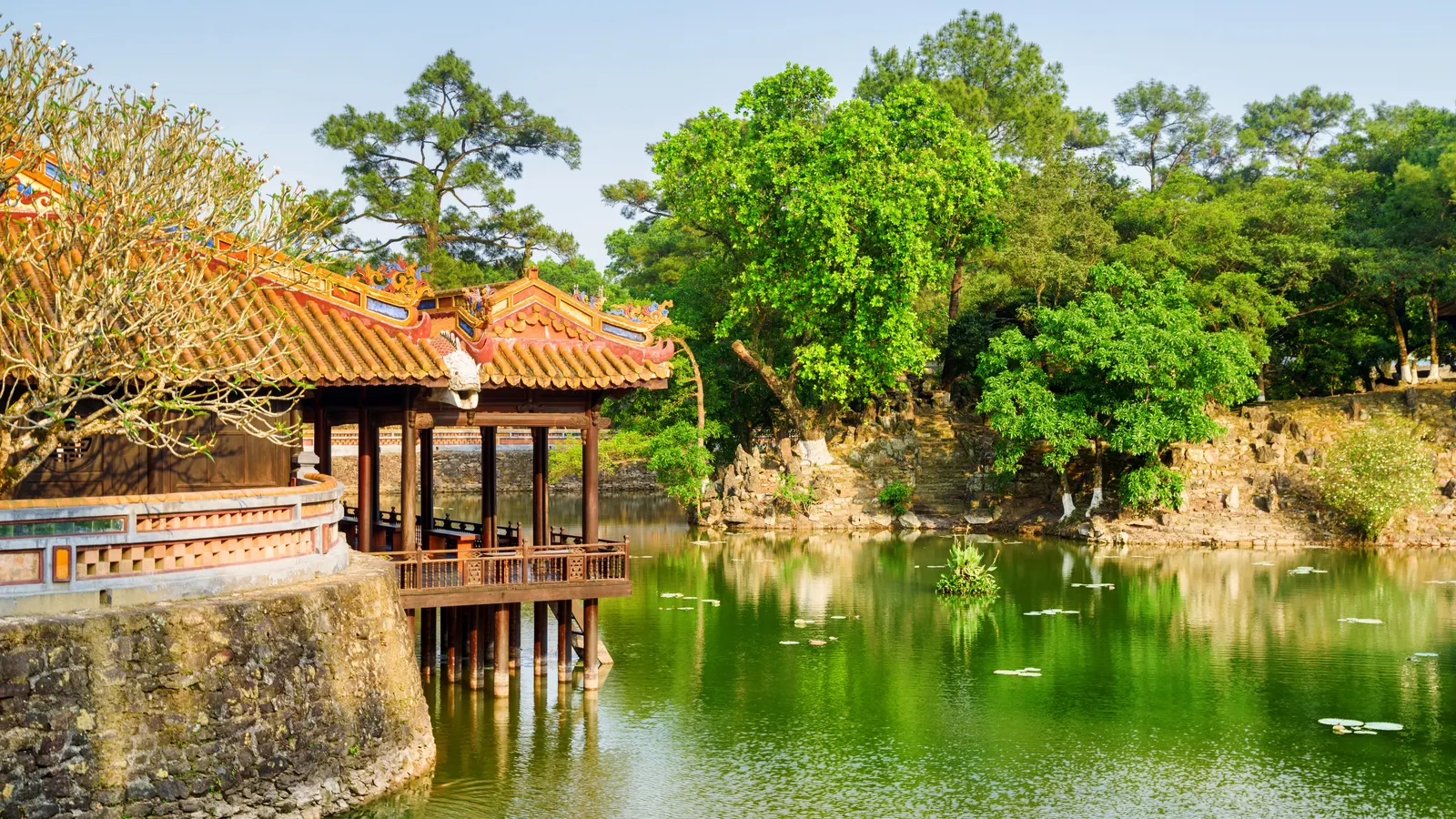 Tomb of Tu Duc The retreat of a poet emperor: lakes, pavilions and an empty tomb for a reign marked by loss.
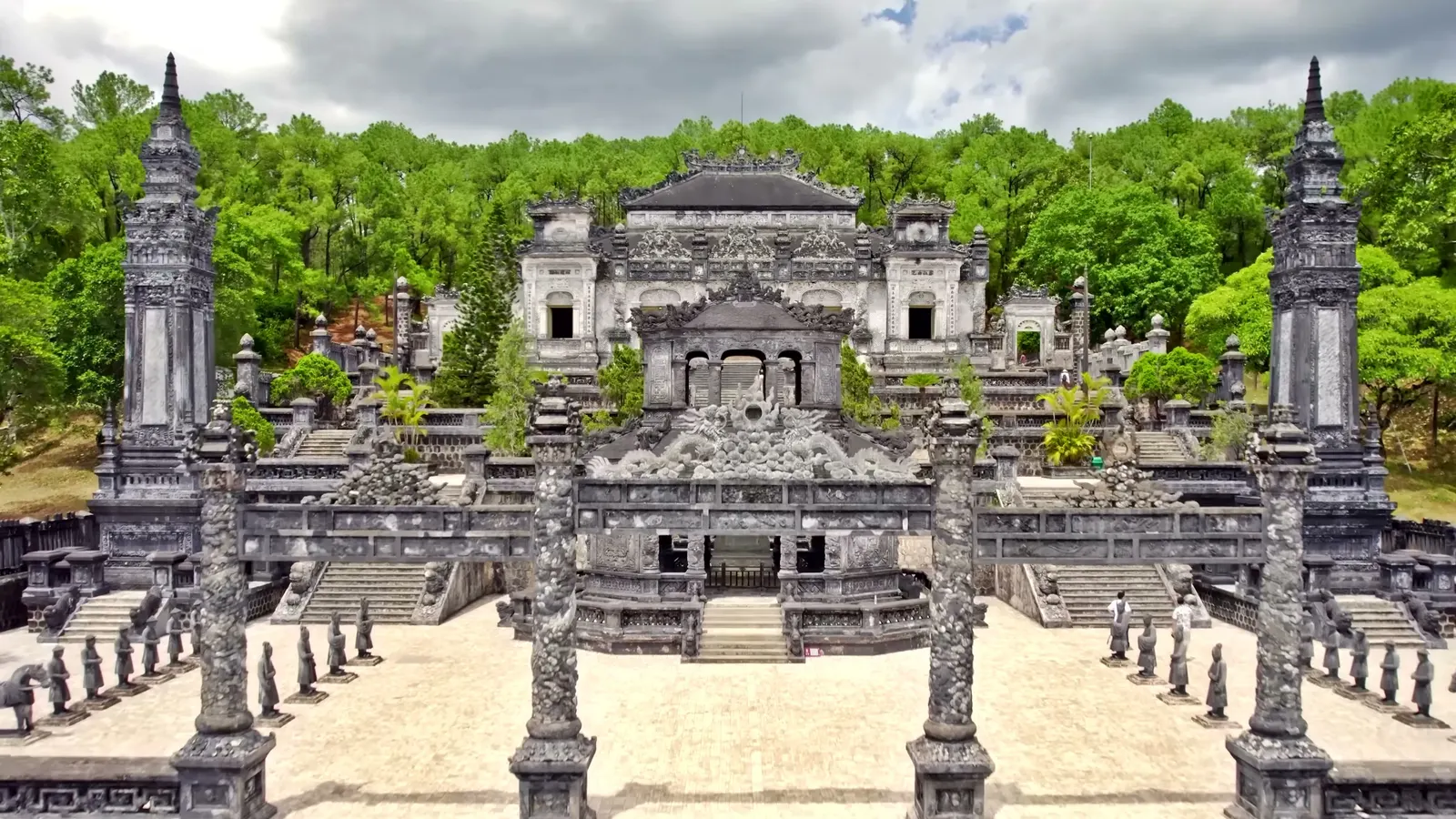 Tomb of Khai Dinh The tomb of an emperor subject to France, covered in porcelain mosaics: the architecture of a dynasty that had become mere décor.
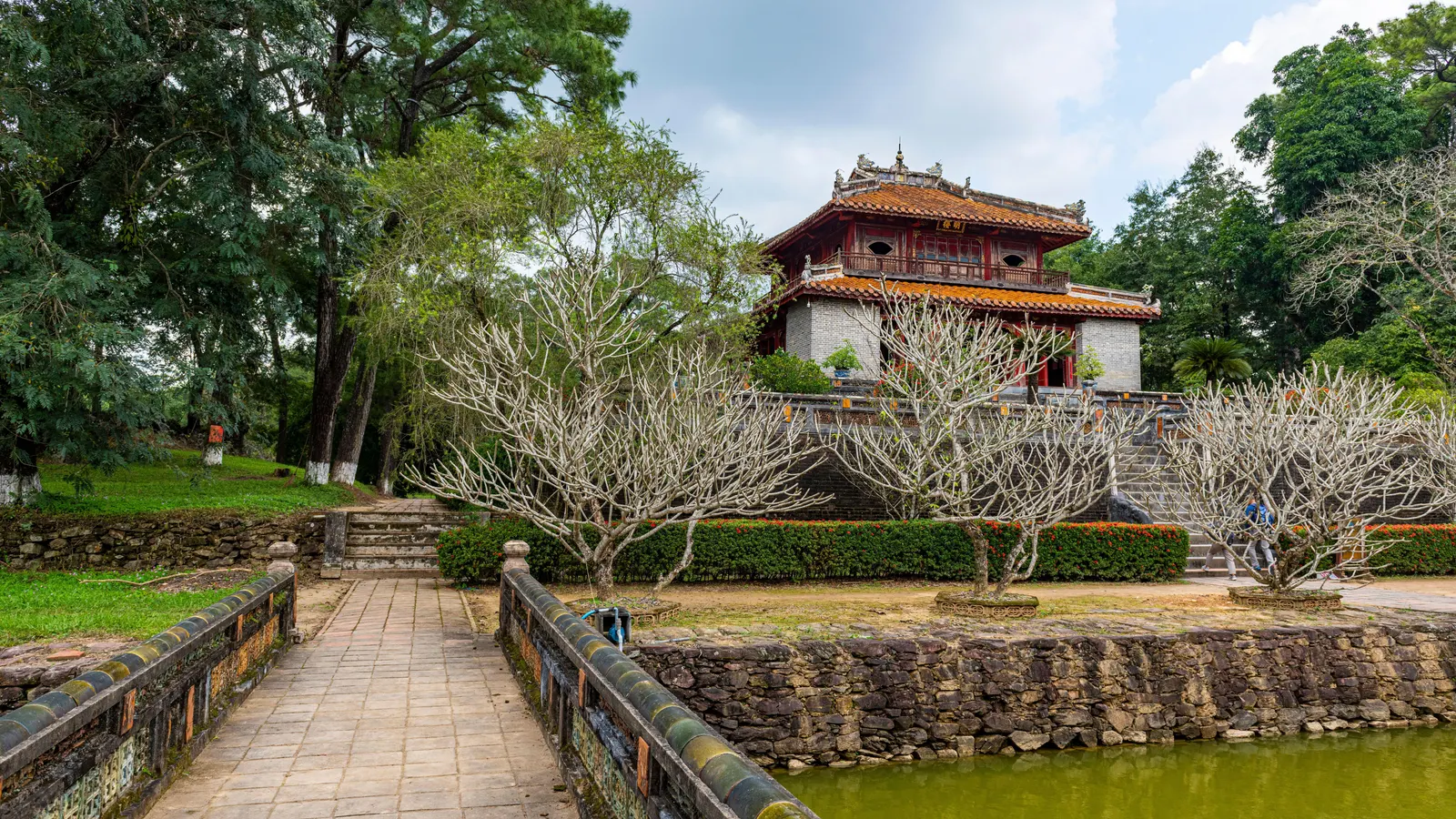 Tomb of Minh Mang The most harmonious of the imperial tombs: an axis of some seven hundred metres that translates Confucian order into landscape.
 Hoi An Old Town A port abandoned by its river and forgotten by history: the trading town that survived intact because it stopped mattering.
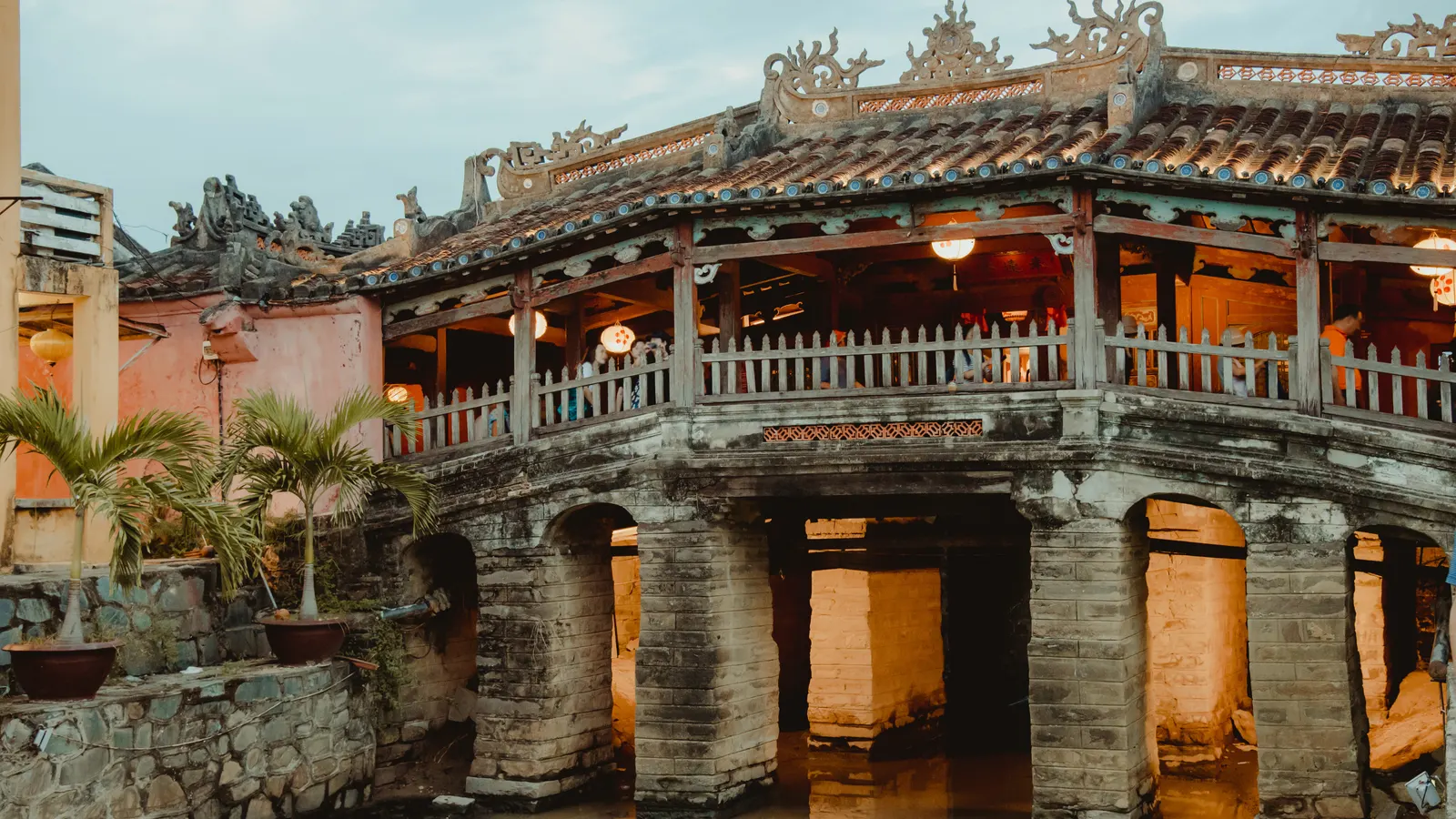 Japanese Covered Bridge A bridge with a temple built by Japanese merchants: the symbol of a town made by communities from elsewhere.
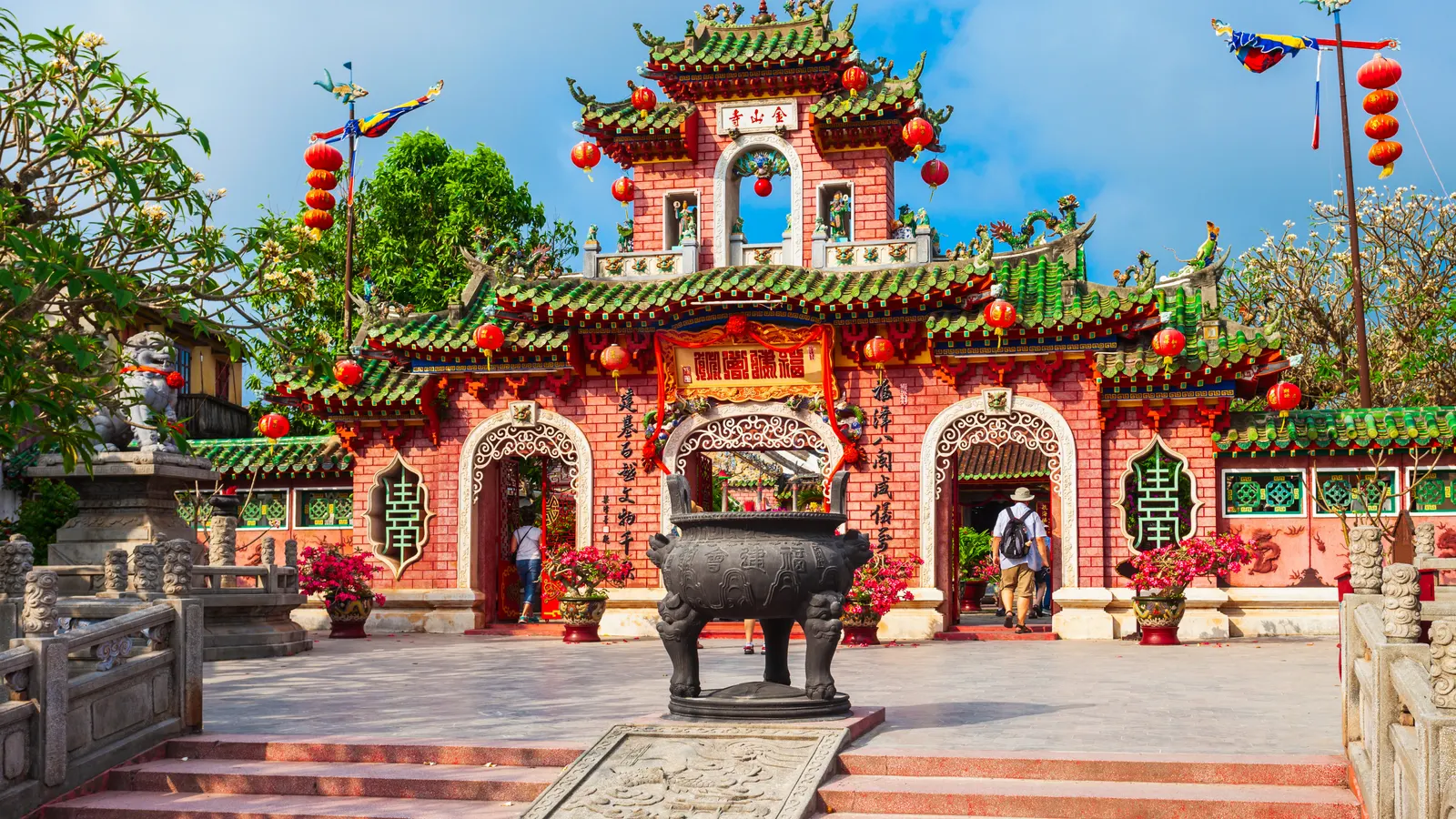 Fujian Assembly Hall The common house of the Fujian merchants: temple, meeting place and proof of the strength of the Chinese diaspora.
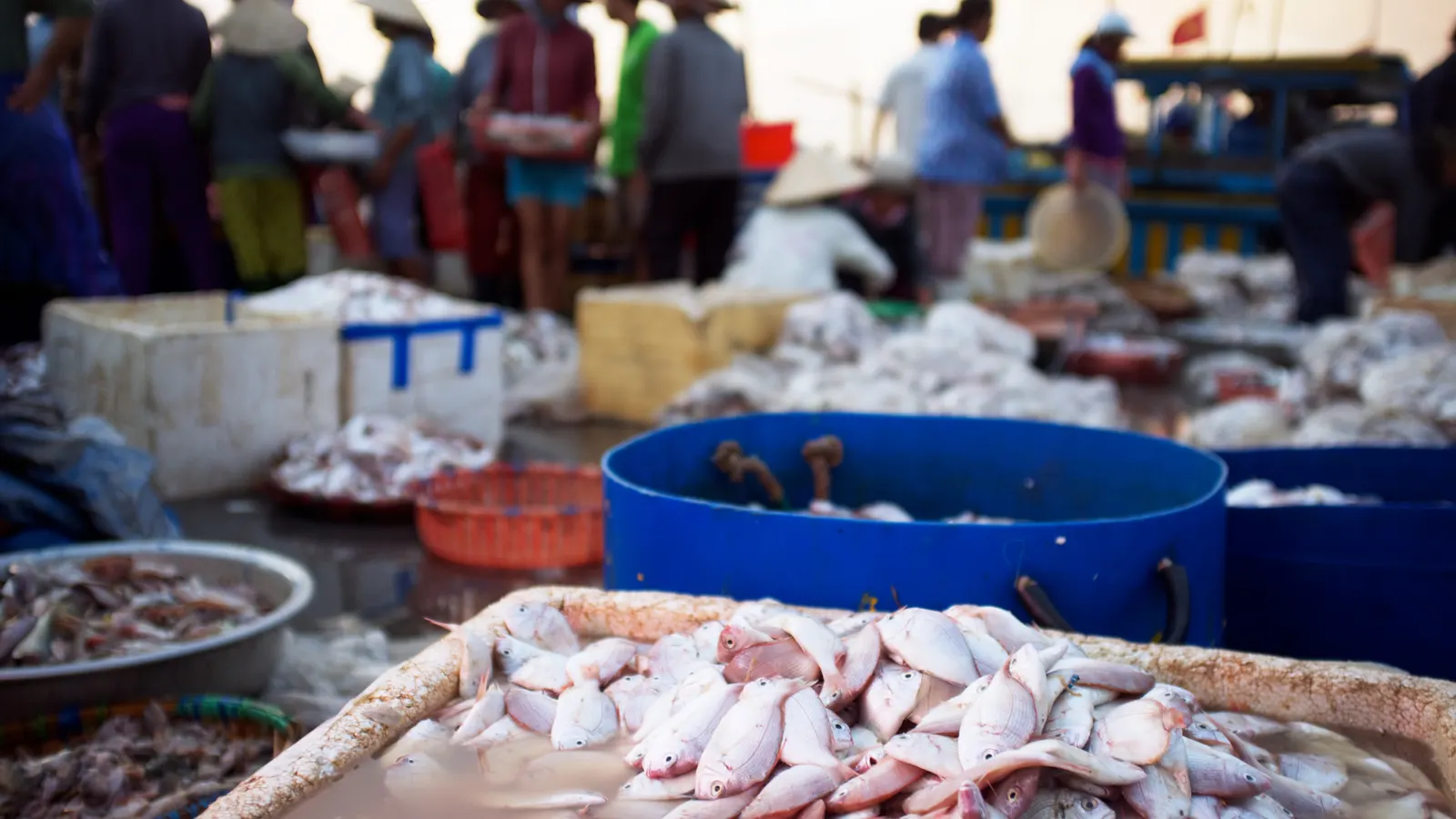 Hoi An Central Market The market on the Thu Bồn where the tourist town becomes a town again: fish at dawn, cao lầu at midday.
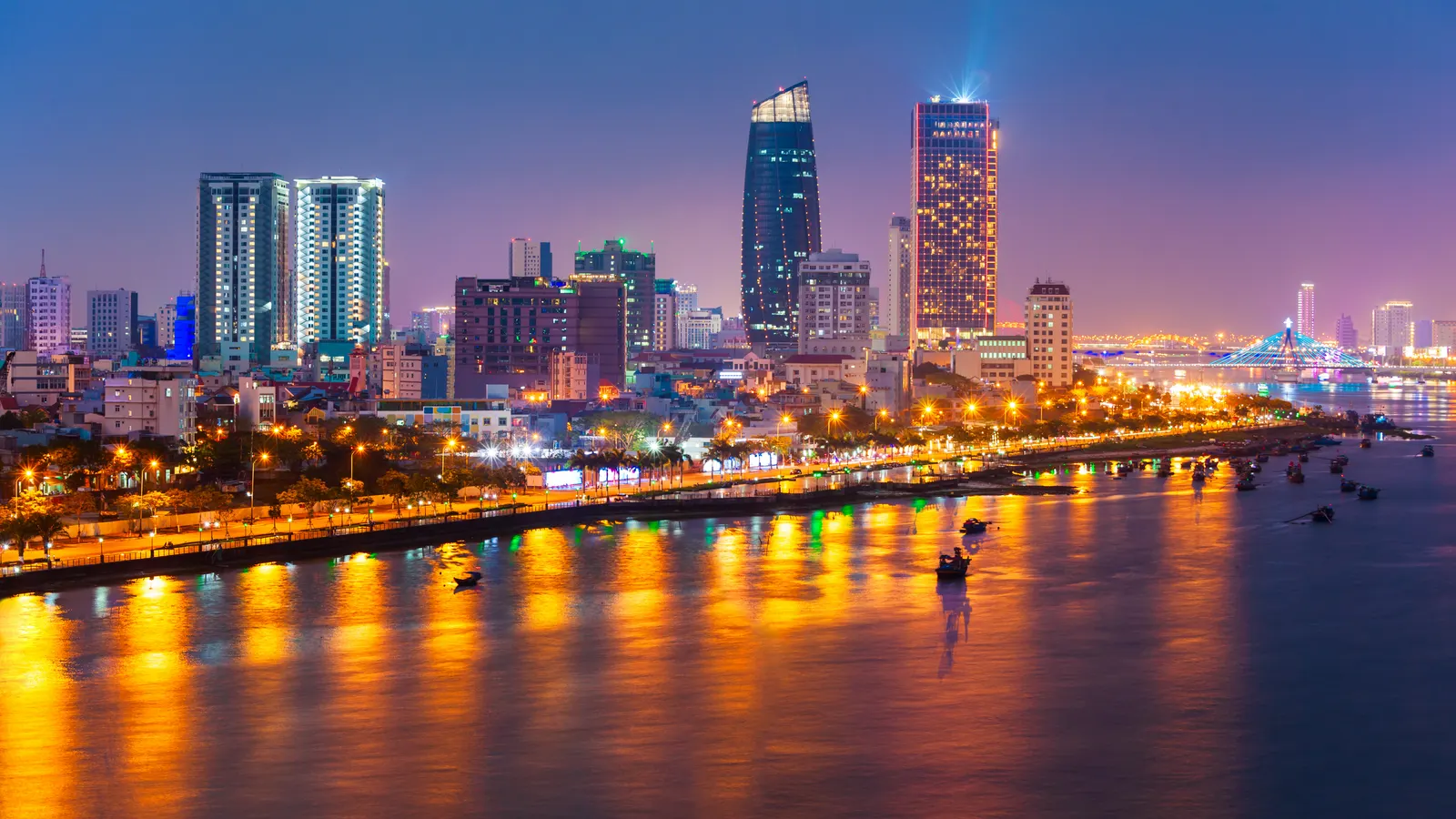 Da Nang (centre) The country's third city, new and planned: the Vietnam that looks to the future, between a long beach and a river of bridges.
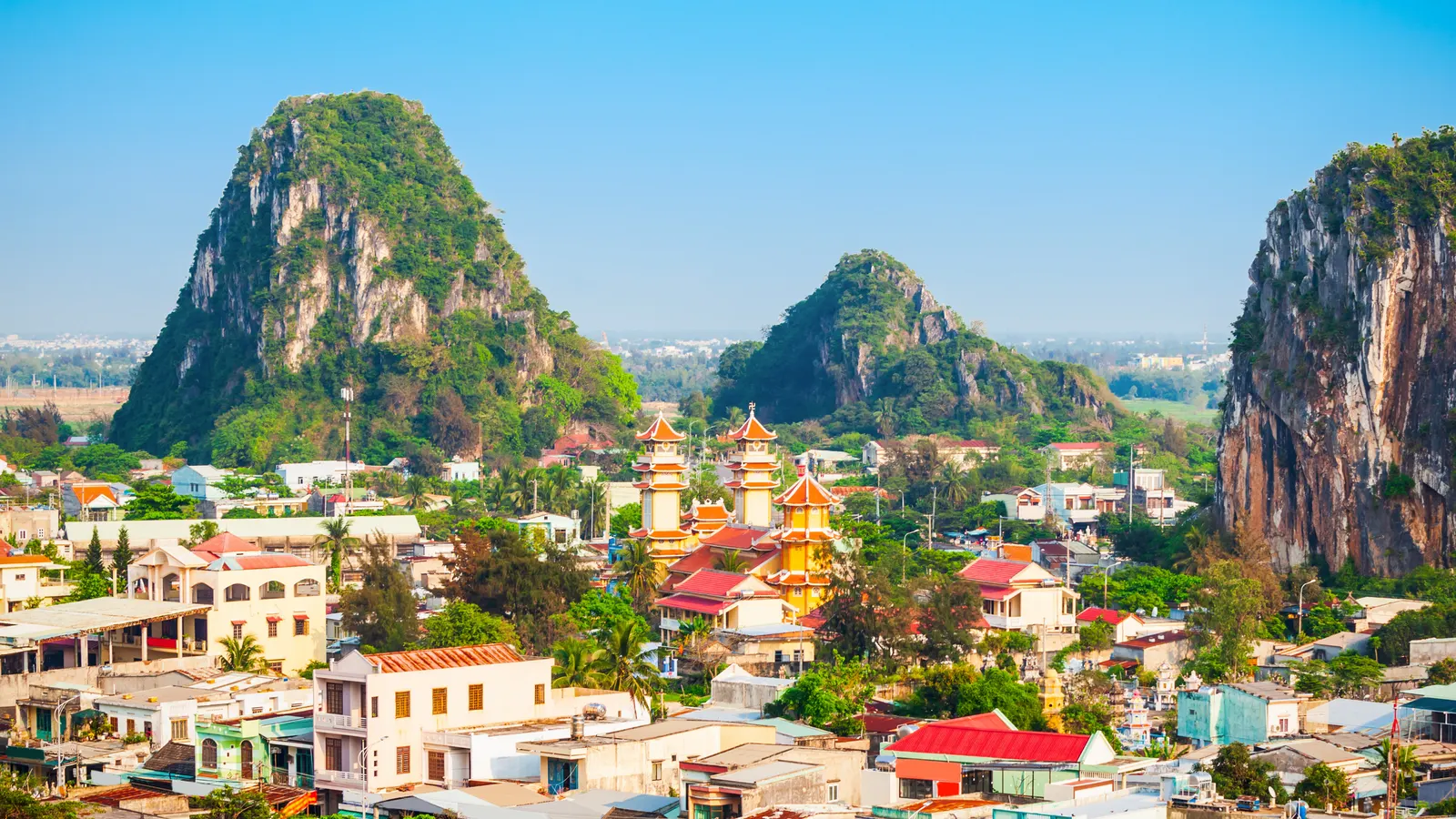 Marble Mountains Five hills named after the five elements, with caves turned into shrines: geology in the service of religion.
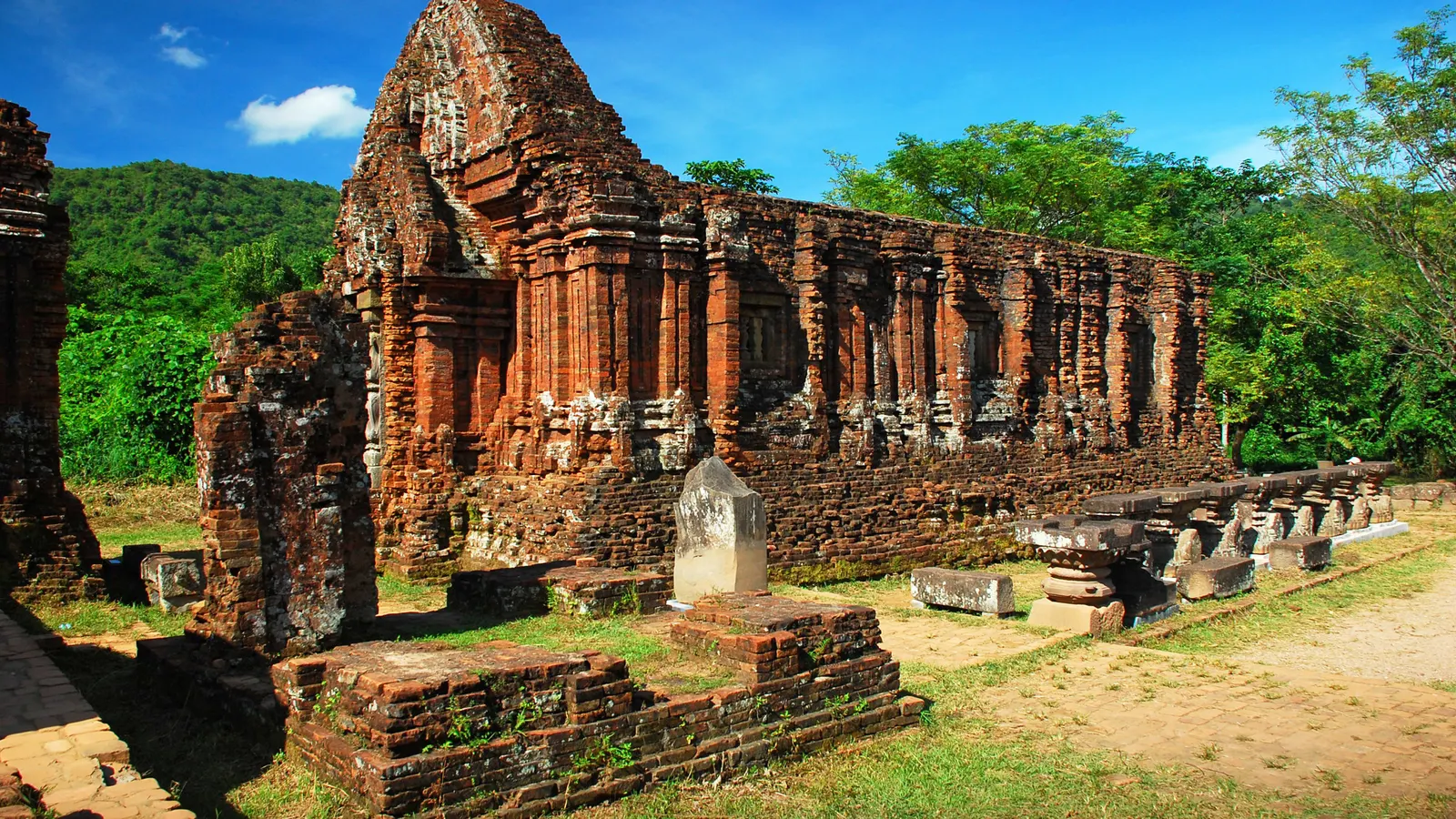 My Son Sanctuary The religious heart of the kingdom of Champa: brick towers for Shiva in an enclosed valley, wounded by war.
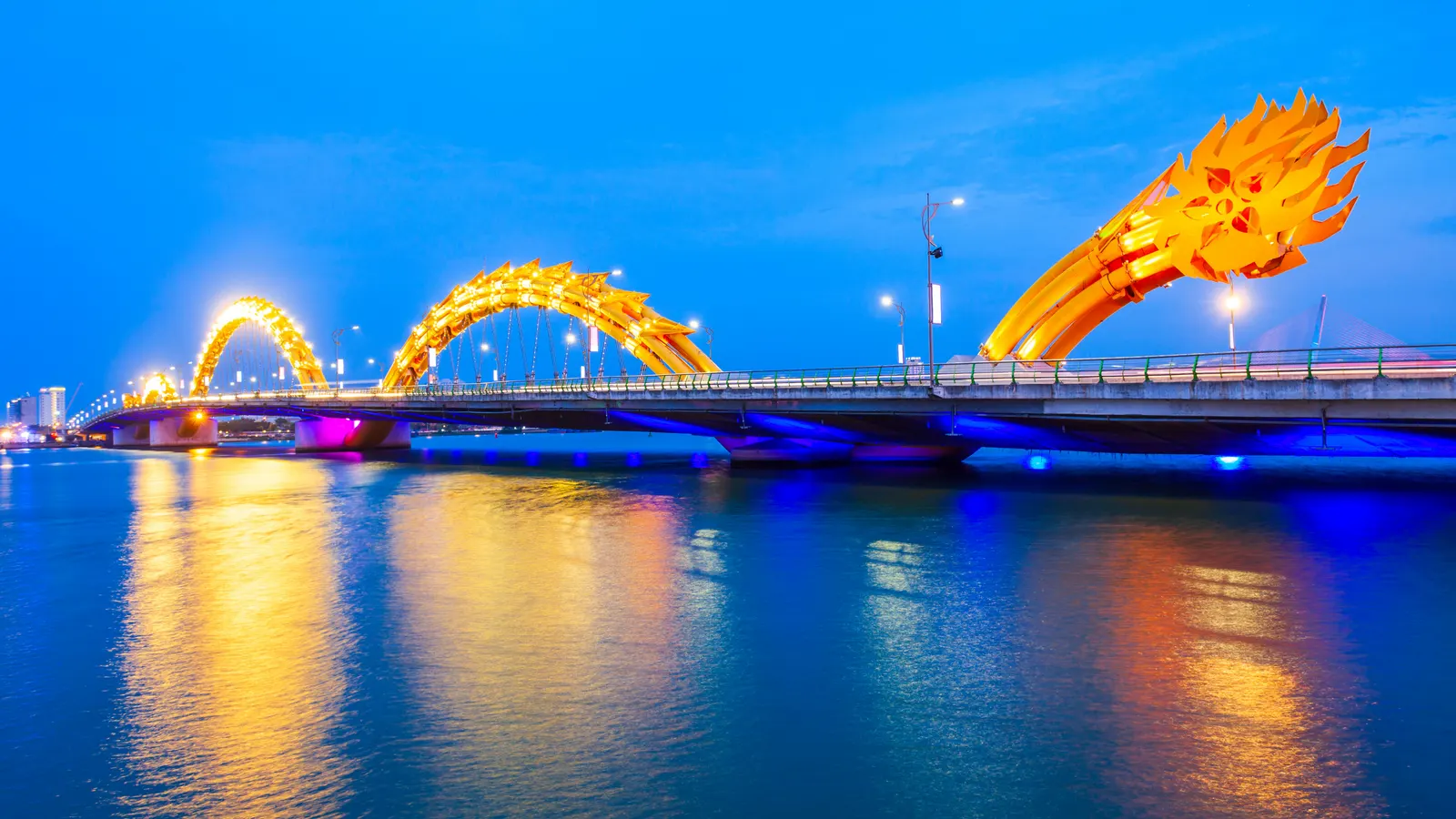 Dragon Bridge A dragon-shaped bridge that breathes fire at weekends: the symbol of the new Da Nang.
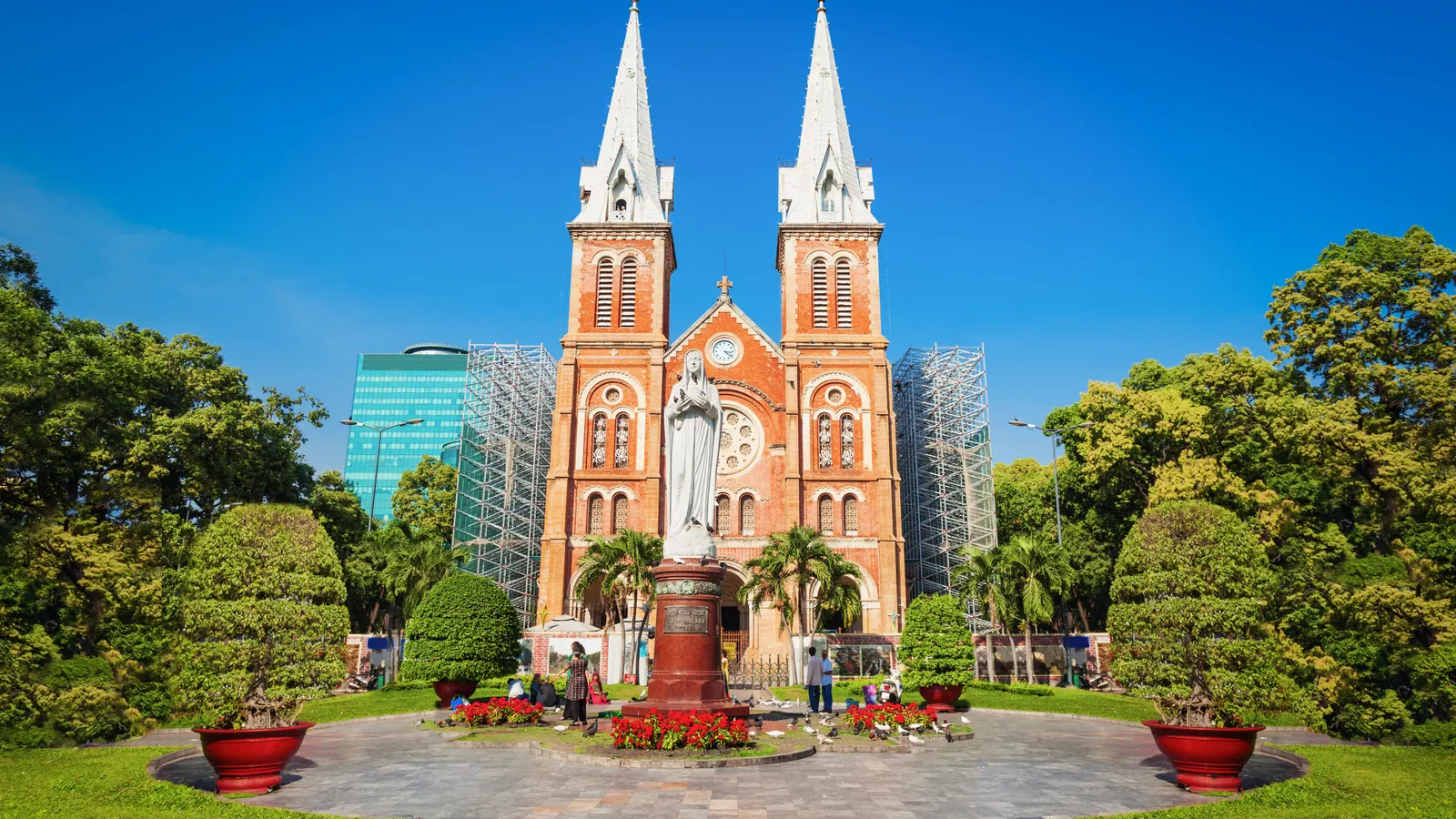 Saigon Notre-Dame Cathedral A cathedral of red brick brought from France: the cornerstone of the city the colonists wanted to build in their own image.
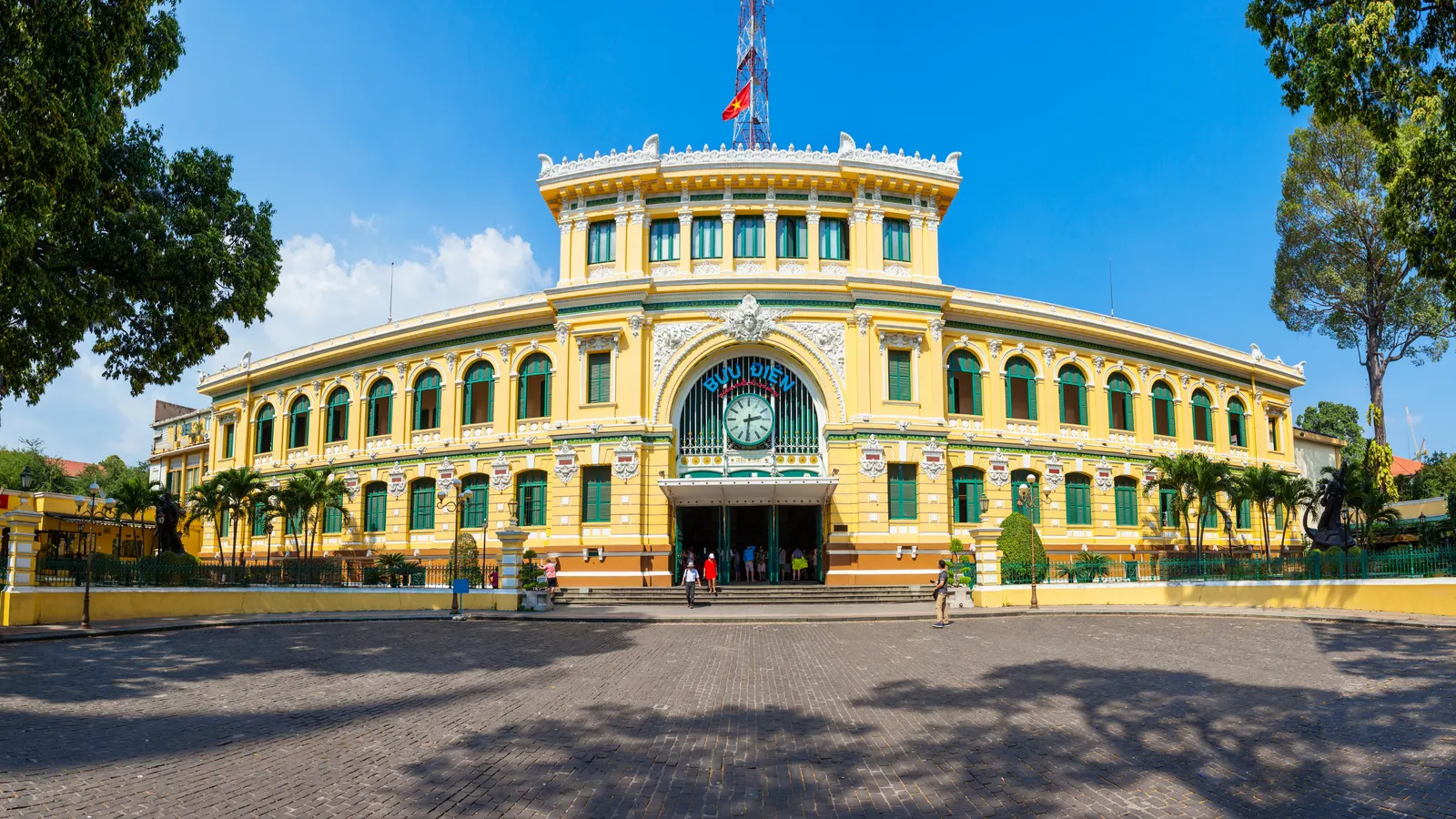 Central Post Office An iron-and-glass hall where letters are still sent: Saigon's most elegant colonial building.
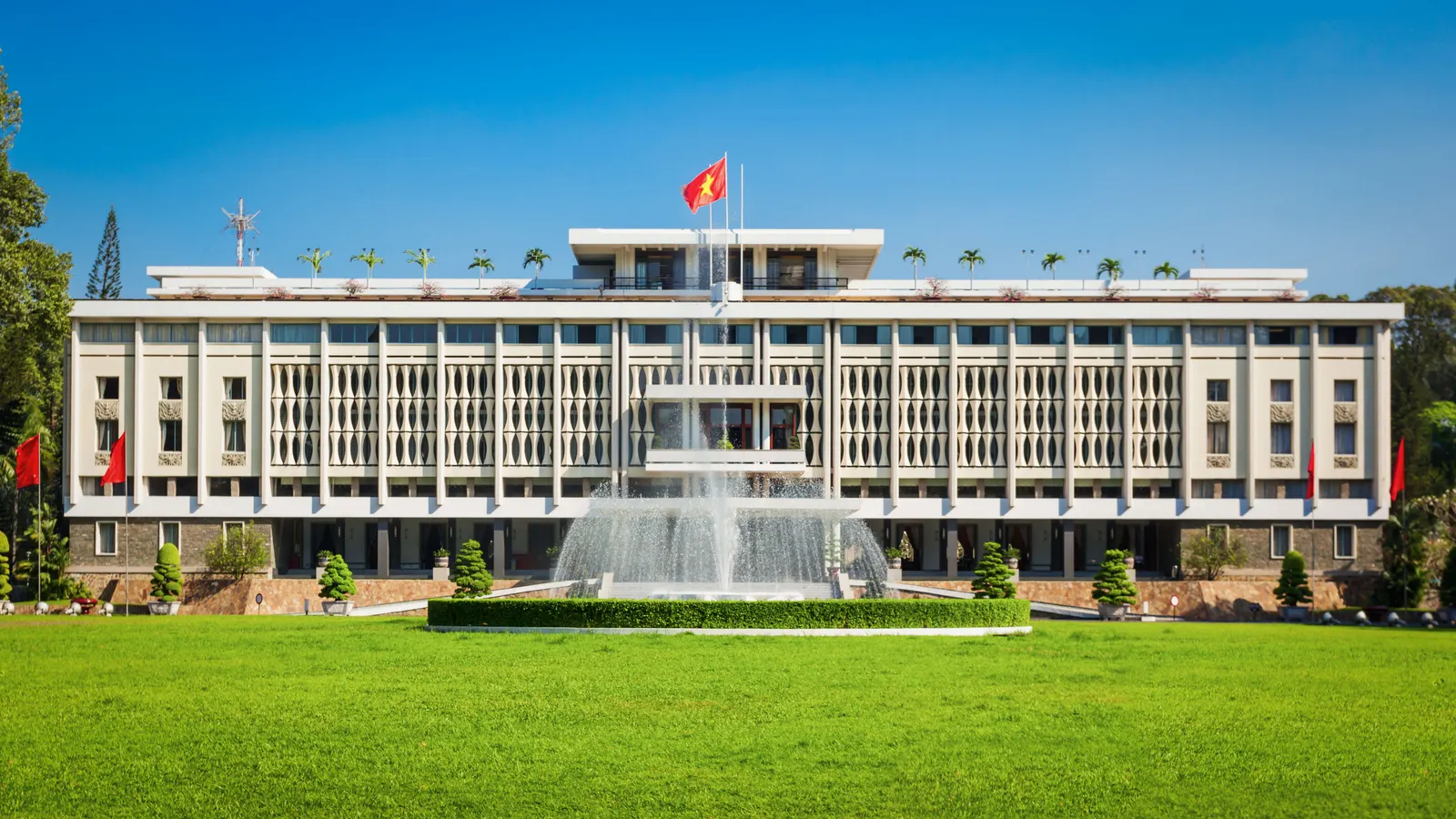 Reunification Palace South Vietnam's presidential palace, frozen in April 1975: the exact place where the war ended.
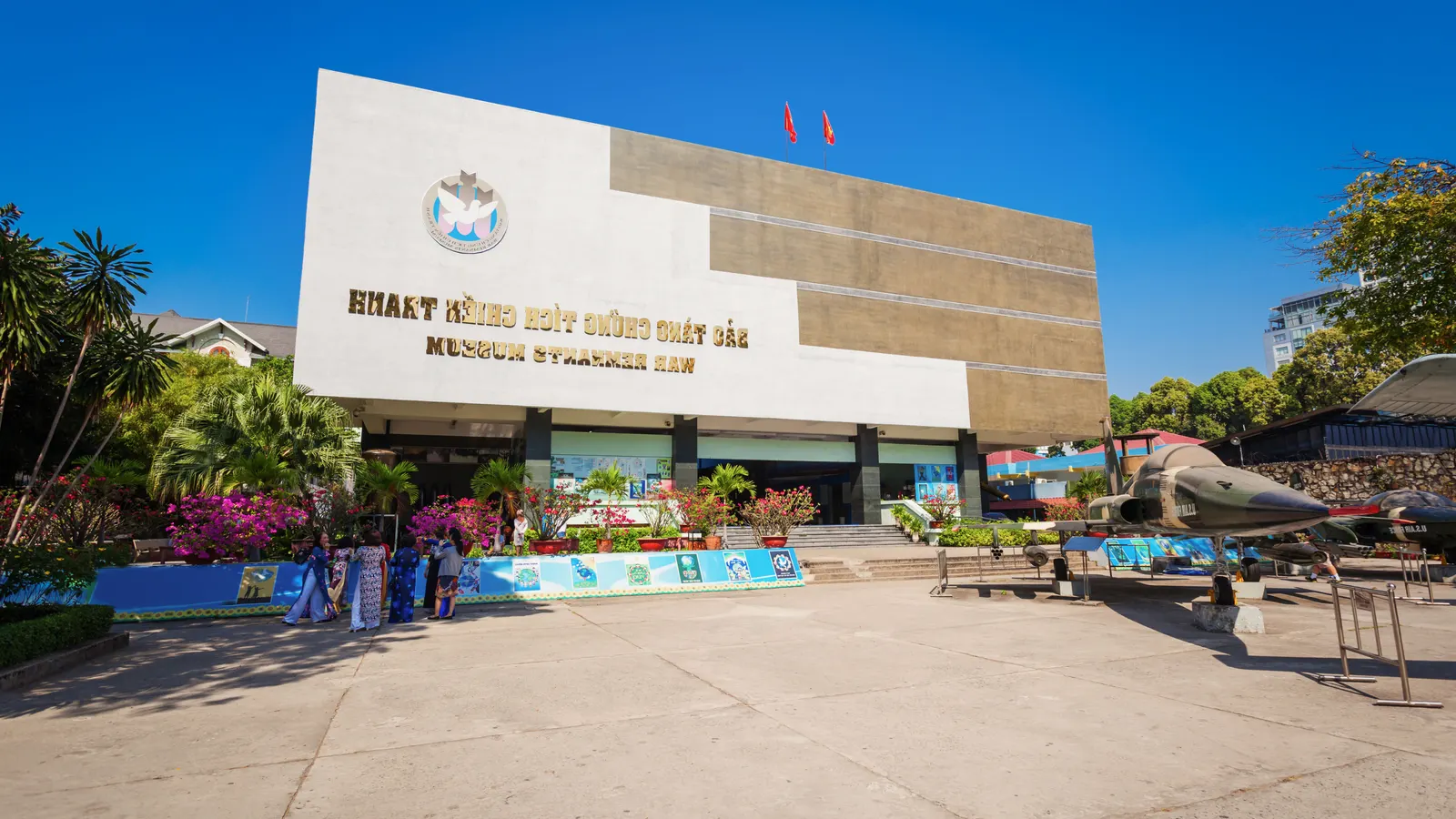 War Remnants Museum The war told by the victors and by its victims: Vietnam's hardest museum and one of its most visited.
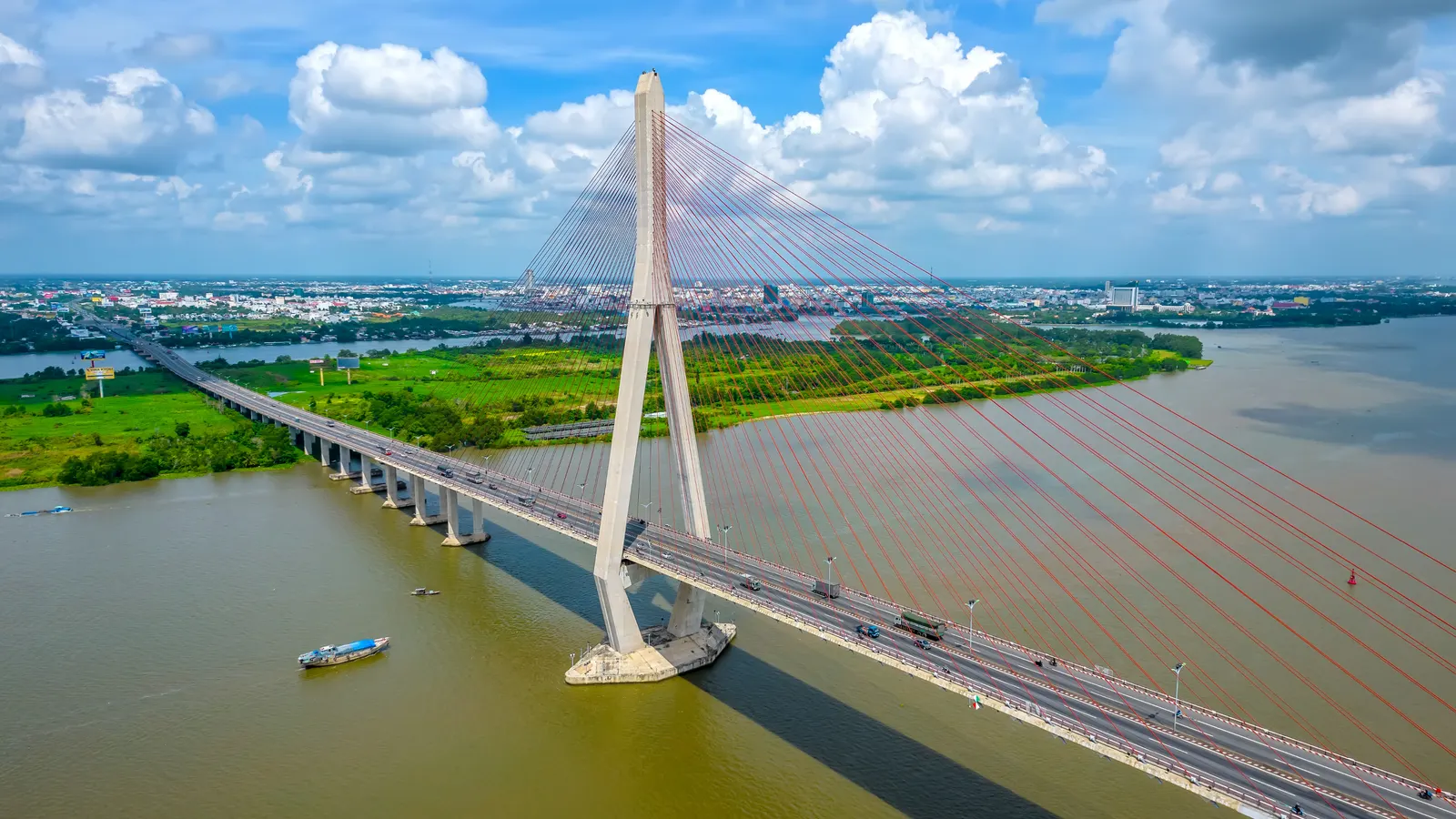 Can Tho The capital of the delta, on the Hậu: the base for seeing the Mekong at dawn, which is when it works.
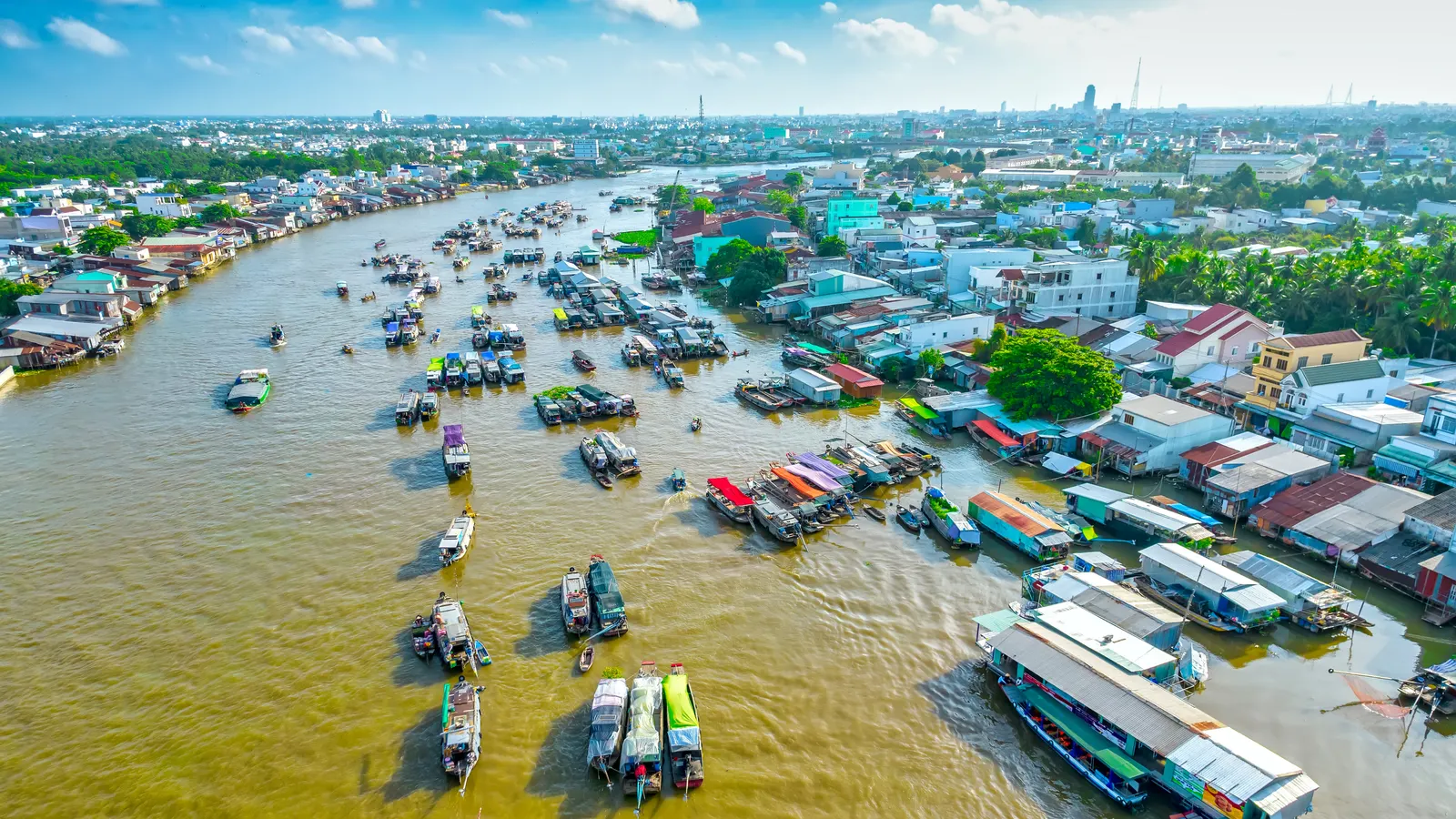 Cai Rang Floating Market The delta's largest floating market: a wholesale market on the river that only really exists at dawn.
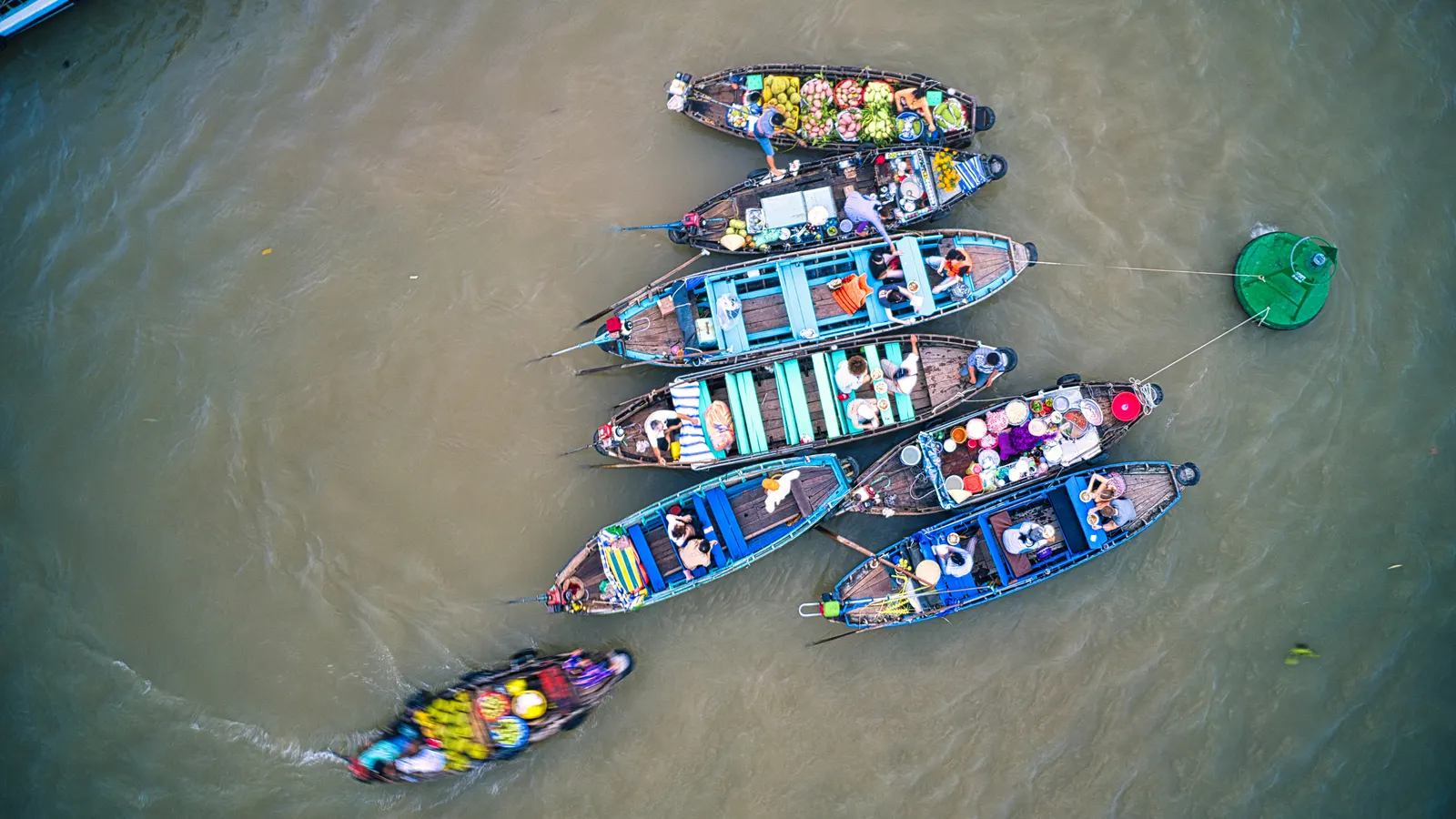 Phong Dien Floating Market A small growers' floating market: the delta on a neighbourhood scale, more fruit and fewer tourists.
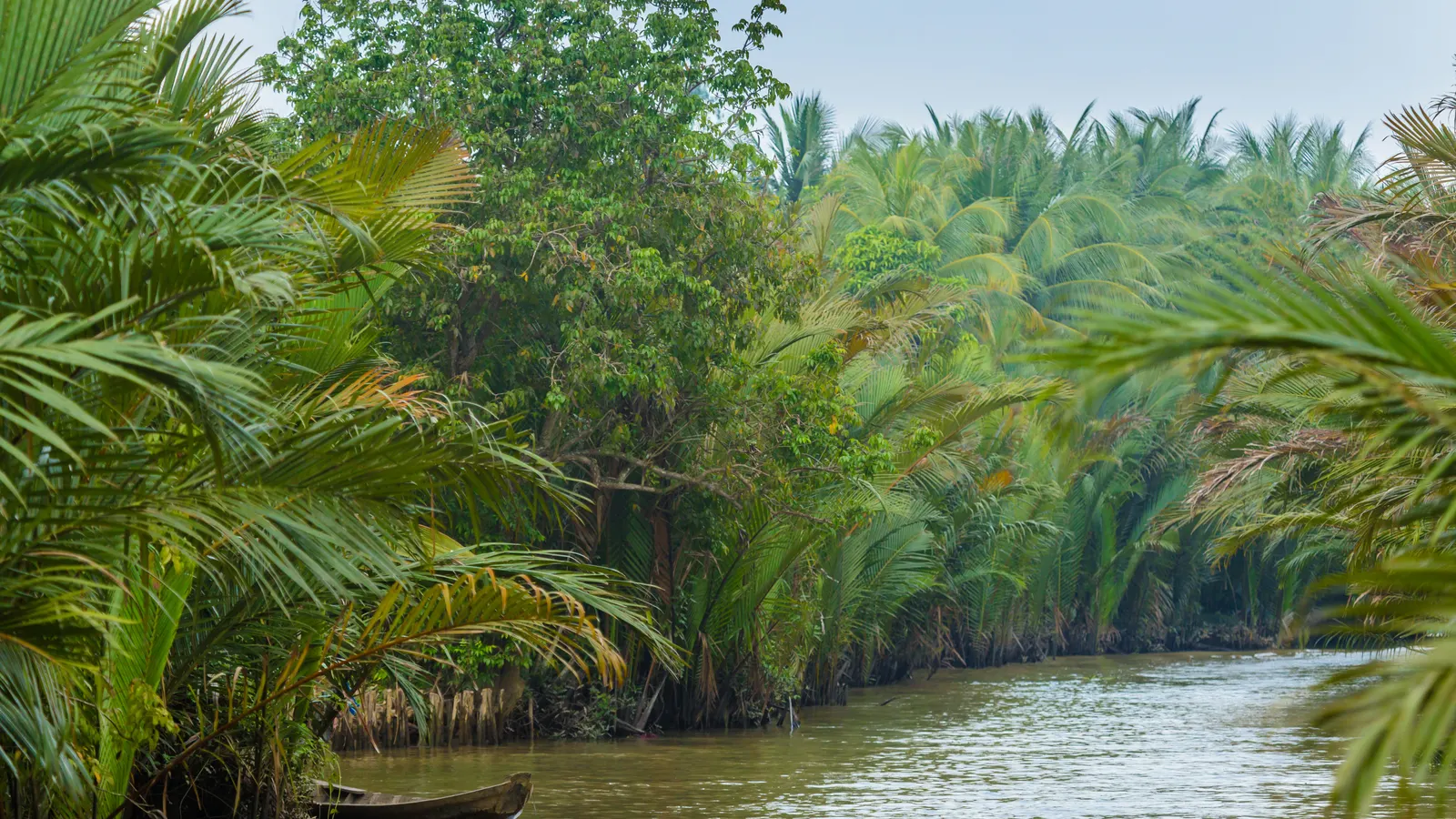 Ben Tre The coconut province: narrow canals between palm groves, where the delta is explored by boat in the shade.
YOUR VIETNAM PASSPORT
Every visited place earns 10 points: from the Temple of Literature to the floating markets of Cai Rang, the passport keeps your own route through the country.
Progress is saved on this device and updates throughout the guide.
Free sample · Hoi An
A bridge with a temple built by Japanese merchants: the symbol of a town made by communities from elsewhere.
The Japanese Bridge is less than twenty metres long and takes a minute to cross, but it distils the history of Hoi An: a foreign community built it, those who came after transformed it, and today it is the emblem of the town.
At the end of the sixteenth century the Japanese merchants, settled in Hoi An with the Nguyen lords’ permission, built a bridge over a small canal separating their quarter from the Chinese one. It was a covered bridge of wood and tile, sheltering from sun and rain. Soon afterwards a small temple was added on one side, dedicated to a god protecting sailors and guarding against floods.
In the seventeenth century, when Japan closed its borders, the Japanese community gradually faded, but the bridge remained. It was restored several times, and in one of those renovations a Nguyen lord gave it the official name “bridge for welcoming travellers from afar”. Its latest restoration finished in 2024.
Notice the structure: a wooden bridge with a tiled roof, resting on stone piers, with a gentle arch. At one end stand two statues of monkeys and, at the other, two of dogs. According to tradition they mark the years of the monkey and the dog in which construction began and ended.
On the north side is the small temple, the Chùa Cầu, with its altar, which is why the bridge is also known as the “bridge pagoda”. Notice the lacquered, decorated beams and the view of the canal and houses from inside.
Crossing the bridge and entering the temple costs one coupon from the old town pass. The visit takes fifteen minutes. Go first thing, around seven, before the groups; at night, lit up, it is very photogenic from outside.
The bridge is at the western end of the old town, at the end of Trần Phú street. A few steps away is Tan Ky House, another pass visit.

Who writes it
Plans
No surprise subscriptions. No fine print. One payment, permanent access.
€14.99one-time payment
€30one-time purchase
Not sure yet? Explore free → · Secure payment with Stripe · Instant access
Most EU citizens can apply for the e-visa online (90 days). Spain, France, Germany, Italy and the UK also have a 45-day exemption.
Minimum two weeks. 21 days is the sweet spot: Hanoi, Halong, Hue, Hoi An, Ho Chi Minh plus Ninh Binh, Sapa and the delta without rushing.
Oct-Apr: north→south (dry north, warm south). May-Sep: south→north avoids typhoons in Halong.
Avoid day-trips from Hanoi. A 2-night cruise in Lan Ha (neighboring, less crowded) costs €150-300 and is worth it.
Yes, Vietnam is one of the easiest countries in Southeast Asia for independent travel.
Yes. The online edition reflects the latest published version. Content updates are included for 1 year from the date of purchase.
Access to your purchased edition is indefinite. Content updates are included for 1 year from the date of purchase.
Yes. From inside the guide, you can download a complete copy with its images for offline use. Interactive maps require a connection. When you are back online, you can update the downloaded copy if a new edition is available.
No passwords needed. Go to /en/access, enter the email you used to purchase and we'll send you an instant access link. Works on any device.
Yes. The guide is available in both Spanish and English. You can switch languages at any time from the navigation menu.
It's designed mobile-first. You can install it as an app (PWA) on iOS and Android without going through any app store.
It's not a PDF. It's an interactive website, organised by destination and attraction — not by day. Read it in any order and jump directly to whatever interests you.
One-time payment · Instant access