
Introduction to Vietnam
The country that fits no cliché: 1,650 km of coast, three imperial inheritances and one single language holding them all together.
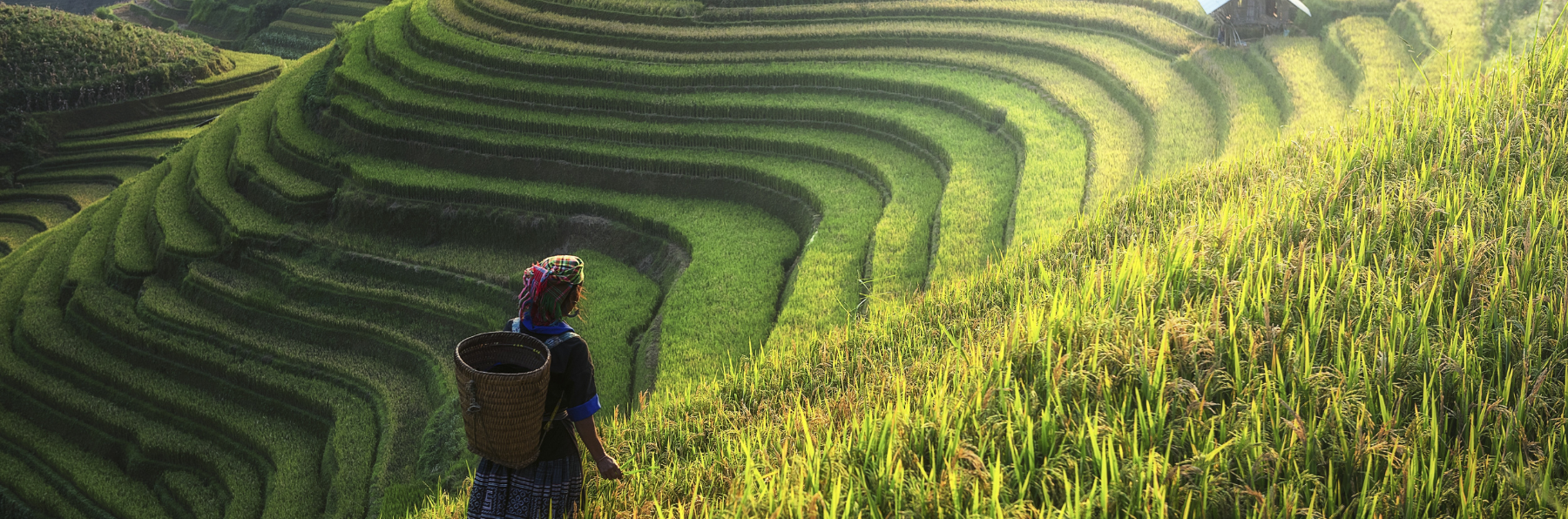
Vietnam is one of those countries the traveller thinks they know before arriving, and that unravels entirely in the first forty-eight hours on the ground. The words most people pack in the suitcase — war, rice, conical hat, Ho Chi Minh — are three colonial labels and one Anglo-Saxon addition that explain nothing. What you find on foot is another country: a very long 1,650-km strip between China and the South China Sea, with three distinct historical cultures stacked along the coast, and one tonal language that, against all odds, is written in Latin script.
This chapter is an entry point to that mismatch. Vietnam is not the generic Southeast Asia shared with Thailand, Cambodia and Laos: it has more in common with southern China than its tourist brochures admit, and at the same time it has spent eighty years erasing that inheritance to build an identity of its own. Understanding that is the difference between travelling the country like a theme park — pagoda, halong, saigon, photo, done — and reading it like a text.
Geography of a vertical S
Vietnam is shaped like a stretched S. From Lang Son on the Chinese border to Ca Mau at the far tip of the Mekong Delta, it runs 1,650 km in a straight line. Its waist, between Vinh and Hue, narrows to just 50 km between the sea and the Truong Son range that marks the border with Laos for nearly its entire length. This geography explains almost everything: why the north, centre and south have distinct cultures; why invasions have always come from the land to the north, never from the sea; and why the Reunification train from Hanoi to Saigon takes 33 hours to cover what a plane does in two.
- Area 331,212 km²
- Population 100 million
- Length 1,650 km N–S
- Language Vietnamese (tonal, Latin alphabet)
- Currency dong (VND)
The country splits into three historical regions that are always present. Bac Bo (the north), with Hanoi at its centre, is historical Vietnam: the cradle of the Van Lang kingdom in the 7th century BC, the heart of the thousand-year resistance against China, and the political core of the country to this day. Trung Bo (the centre), with Hue, Hoi An and Da Nang, is the land of the Nguyen dynasty, the last to unify the country, and the one that suffered most in the war of the 60s. Nam Bo (the south), with Saigon and the Mekong, is the late frontier: lands taken from the Khmer between the 17th and 19th centuries, colonised by the French more intensely than the rest, and occupied by the Americans from ‘54 to ‘75.
Why travel Vietnam slowly
Two weeks is the minimum. Three is the comfortable format. Vietnam punishes the traveller who tries to do it fast: distances are large, trains are slow, night buses are cheap but uncomfortable, and the cultural density of the country demands decompression time between one city and the next. Hanoi and Saigon in the same week confuse more than they illuminate — they are two countries under the same flag.
The guide is designed for 15-to-21-day trips. The classic order is north to south — Hanoi, Halong, Ninh Binh, Sapa, night train, Hue, Hoi An, flight, Saigon, delta — and works in the dry season of the north (October to April). In summer, when typhoons hit the northern coast, the reverse makes more sense. The When to go section details the climatic nuances month by month, because Vietnam, contrary to what many think, does not have a single high season: every region has its own calendar.
The difference with generic Southeast Asia
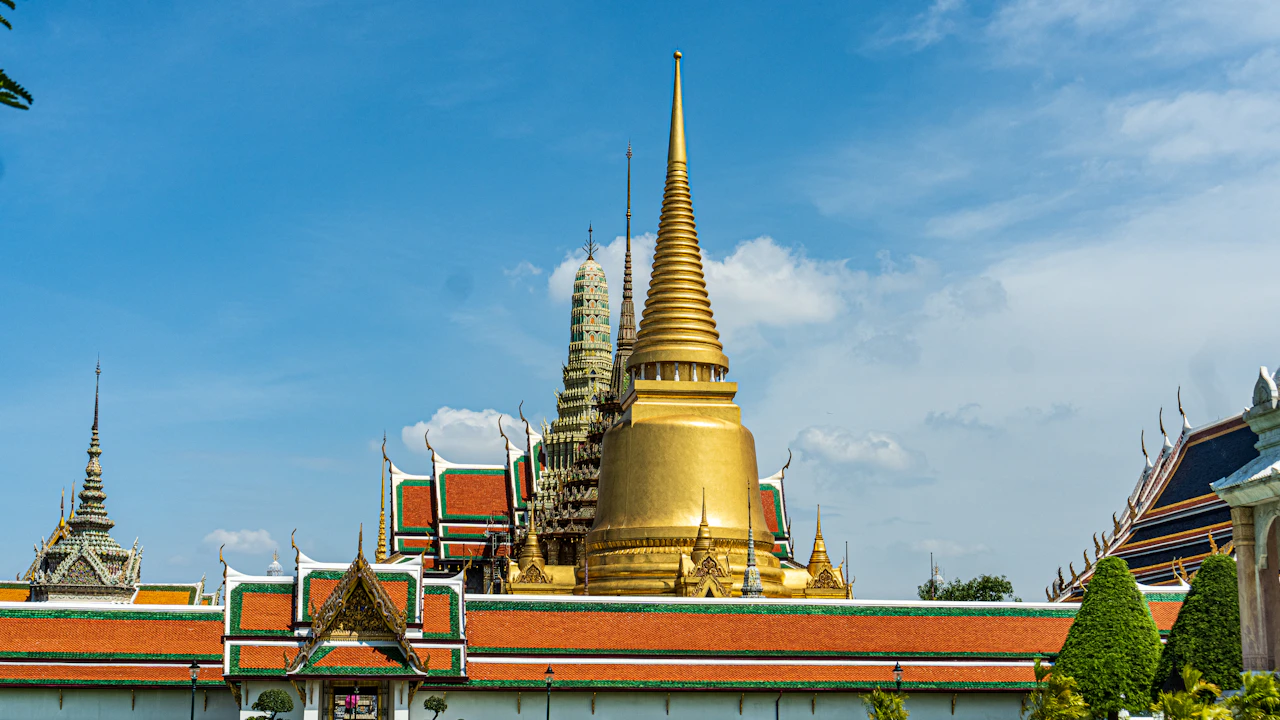
Anyone arriving from Thailand or Cambodia notices it within a day. Vietnam is not majority Buddhist in the Thai sense: the Mahayana Buddhism that dominates in the north came from China and coexists with Confucianism and Taoism, not as separate religions but as stacked layers in every temple and every house. The architecture has none of Bangkok’s gilded gopuras or the Khmer prasat: low undulating roofs, inner courtyards, ancestral altars in every shop. The food is different — more broths, fewer curries, far more fermented fish rather than coconut — and the language, tonal with six tones, is one of the hardest in the world for a Westerner. But the people, especially in the north, are less immediately friendly and more loyal in the medium term than the visitor expects.
More on the relationship with China
Vietnam spent a thousand years under direct Chinese rule (111 BC – 938 AD) and another thousand under intense cultural influence. Result: 70% of educated Vietnamese vocabulary comes from Chinese, the imperial exams were taken in classical Chinese until 1919, and Hanoi's temples copy those of Xi'an almost literally. At the same time, Vietnamese national historiography is the history of 18 wars of resistance against China, and the relationship remains tense today: in 2014, the installation of a Chinese oil rig in the South China Sea triggered anti-Chinese riots in which Taiwanese and Korean factories burned. Travellers who do not understand this double movement — cultural dependence, political rejection — do not understand Vietnam.
What Vietnam is not
It is not a war museum. Vietnamese people talk about it — they call it Kháng chiến chống Mỹ, the war of resistance against America — when asked, and most temples in the south have an altar with photos of the fallen, but the country has looked forward with a determination that surprises visitors. Per capita income has multiplied twentyfold since 1990, Hanoi and Saigon are two of the most heavily under-construction cities on the continent, and the average age is 32: three out of four Vietnamese were born after the war.
Nor is it the cheap country it was twenty years ago. Vietnam is still affordable, but an independent trip in 2026 costs between €35 and €70 a day depending on pace, not the €15–20 of the previous decade. Prices have risen in the main cities, and Halong cruises, internal flights and Hoi An dinners have converged on regional standards.