Montenegro · 14 April 2026
Best time to visit Montenegro: a month-by-month guide
Every season offers a different Montenegro. Coast in summer, mountains in winter, and two perfect windows in the shoulder months.
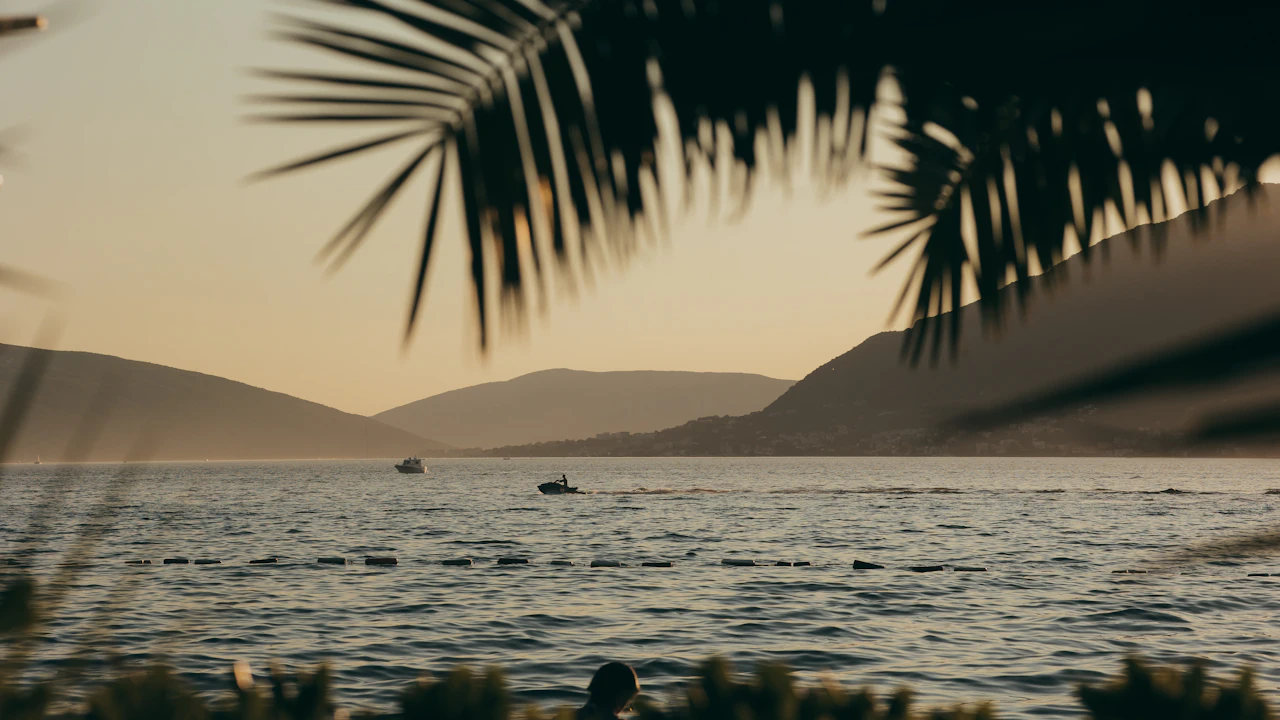
Montenegro has a geographical problem that is, at the same time, its greatest attraction: it is a country that in fifty kilometres goes from the Adriatic to mountains over two thousand metres high. That abrupt transition, between the Mediterranean coast and the continental interior of the Balkans, means that Montenegro does not have one climate but several. The Riviera has dry, hot summers with mild winters. Durmitor, the mountain massif in the north, accumulates snow for five months of the year and sees temperatures that in January can drop to fifteen degrees below zero.
Understanding this is the key to choosing when to go. There is no “best time for Montenegro” in the abstract: there is the best time for the type of trip you want to make.
January and February: winter in two worlds
On the coast, January and February are quiet, grey months. Kotor receives frequent rain — it is one of the cities with the highest rainfall in Europe, a direct consequence of the orographic effect of the mountains that trap Adriatic clouds — the beach hotels are closed, and activity concentrates in the bars and restaurants of Kotor’s old town or in the small centre of Budva. Temperatures hover around ten degrees. It is not inhospitable, but it is not summer either.
In the interior, the scene is different. Žabljak, the highest village in the Balkans at 1,450 metres above sea level, is in January the gateway to Durmitor’s ski slopes. Montenegro’s ski runs do not have the infrastructure or the scale of the Alps, and anyone arriving in search of Val d’Isère will be disappointed. But anyone arriving in search of a human-scale ski resort, without queues, with accommodation in wooden chalets and prices that make Central European skiing look like an obscene luxury, will find something genuine in Durmitor. Day passes cost between twelve and eighteen euros. Accommodation in Žabljak in January rarely exceeds forty euros a night for a double room.
Lake Skadar, the largest lake in the Balkans, has its most photogenic moment in winter: hundreds of thousands of cormorants, pelicans and ducks use the lake as their winter quarters, and the misty mornings over the water, with the snow-covered mountains in the background, have a quiet, almost unreal beauty.
March and April: the uncertain awakening
March is a transitional month where there are no guarantees. The coast begins to stir but cautiously: some restaurants open, the weather improves, but there are rainy and windy days that remind you that summer has not yet arrived. Temperatures gradually climb towards fifteen or sixteen degrees in the Bay of Kotor.
April is better. Vegetation bursts into life — Montenegro is an extraordinarily green country in spring, with meadows that look painted and mountains that change colour week by week as the snow retreats — and prices remain at off-season levels. April is the month to visit the interior: the gorges of the Tara and the Morača carry maximum flow with the snowmelt, the green is intense, and the contrast between the lush vegetation of the valleys and the persistent snow on the peaks is one of the most impressive natural spectacles in the country.
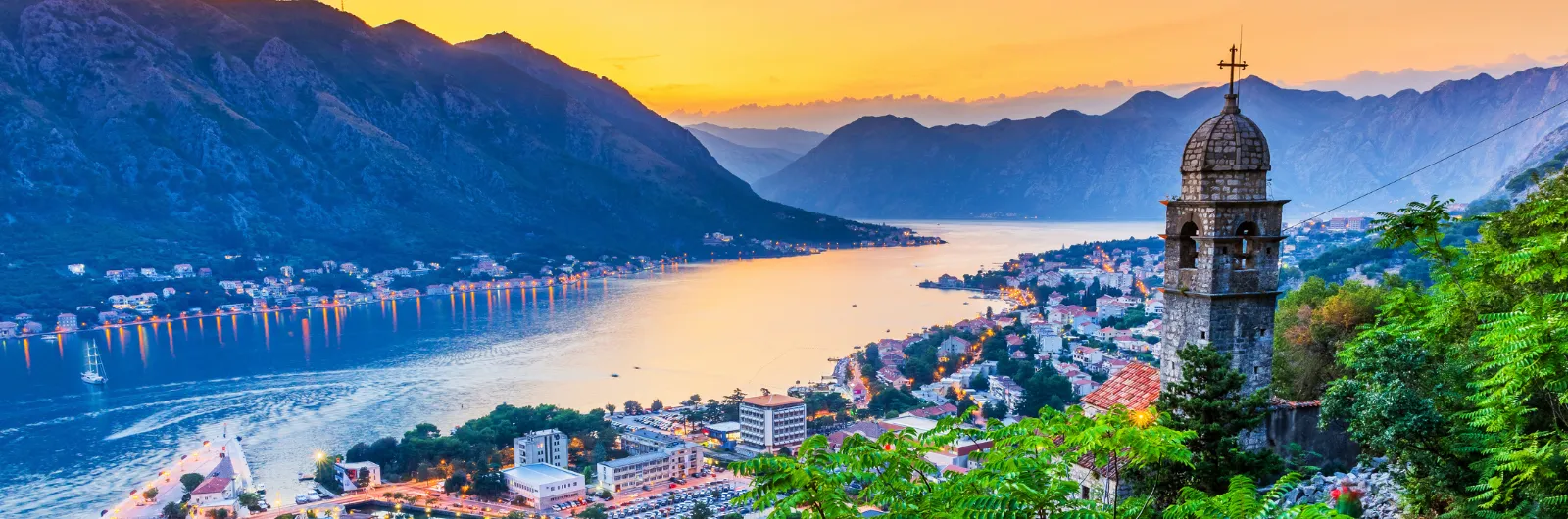
On the coast, April is when establishments reopen calmly. The Adriatic water in April is around seventeen degrees — too cold for most, though the more determined do swim — and the beaches belong to the travellers who know this is a fine window to be here. Kotor in April, with its bougainvillea flowers just beginning to show and none of the summer’s tourist pressure, is probably the most pleasant version of the city.
May and June: the perfect window
If there are two months that concentrate the best conditions for travelling to Montenegro, they are May and June. The reasons accumulate without argument:
The weather is excellent: temperatures of twenty-three to twenty-eight degrees on the coast, sun most days, cool nights that allow you to sleep without air conditioning. The Adriatic water reaches twenty-two degrees in June, perfectly swimmable. In the interior, hiking conditions are optimal: the Durmitor trails are passable, the snow has retreated to the highest zones and the landscape is at its most alive.
Prices are reasonable: half or less of what you will pay in August. Crowds are manageable: there are travellers, yes, but the cruise ships are not flooding Kotor at every dawn and the beaches of Budva have space. Establishments are open, hours are complete, but the feeling that you have been sold a destination that no longer exists — which is what Budva in August can provoke — is absent.
June in particular has an additional advantage: the water temperature is already completely pleasant and prices have not yet risen to July levels. The end of June — when school holidays begin in much of Europe — is the exact moment when prices on the coast make their jump. Before that point, Montenegro on the coast is a first-rate European destination at second-tier prices.
Lake Skadar in May, with water lilies in flower across the surface and the shore covered in vegetation, is one of the most singular landscapes in the entire eastern Mediterranean. Boat excursions from Virpazar allow you to navigate among the lilies and see the medieval fortresses that rise from artificial islands. In May, when the lake level is still high after winter, the experience is different — and more spectacular — than in summer.
July and August: real summer, difficult summer
There is no point denying that July and August have their reasons. Summer on the Montenegrin coast is genuinely good: the water is perfect (twenty-five or twenty-six degrees), the days are long, the atmosphere is festive, and some parts of the coast — especially outside the main centres — have a beach-bar-and-sun scene that works exactly as it should.
But you have to go in with your eyes open. Budva in August is one of the most overcrowded cities on the Adriatic relative to its size. The main beaches are packed from ten in the morning. Prices have doubled or tripled. Traffic on the coastal road can make a twenty-kilometre journey take an hour. And temperatures in the Bay of Kotor, with the funnel effect of the mountains, regularly reach forty degrees: climbing the walls of Kotor on a Tuesday in August at midday is an exercise in physical endurance.
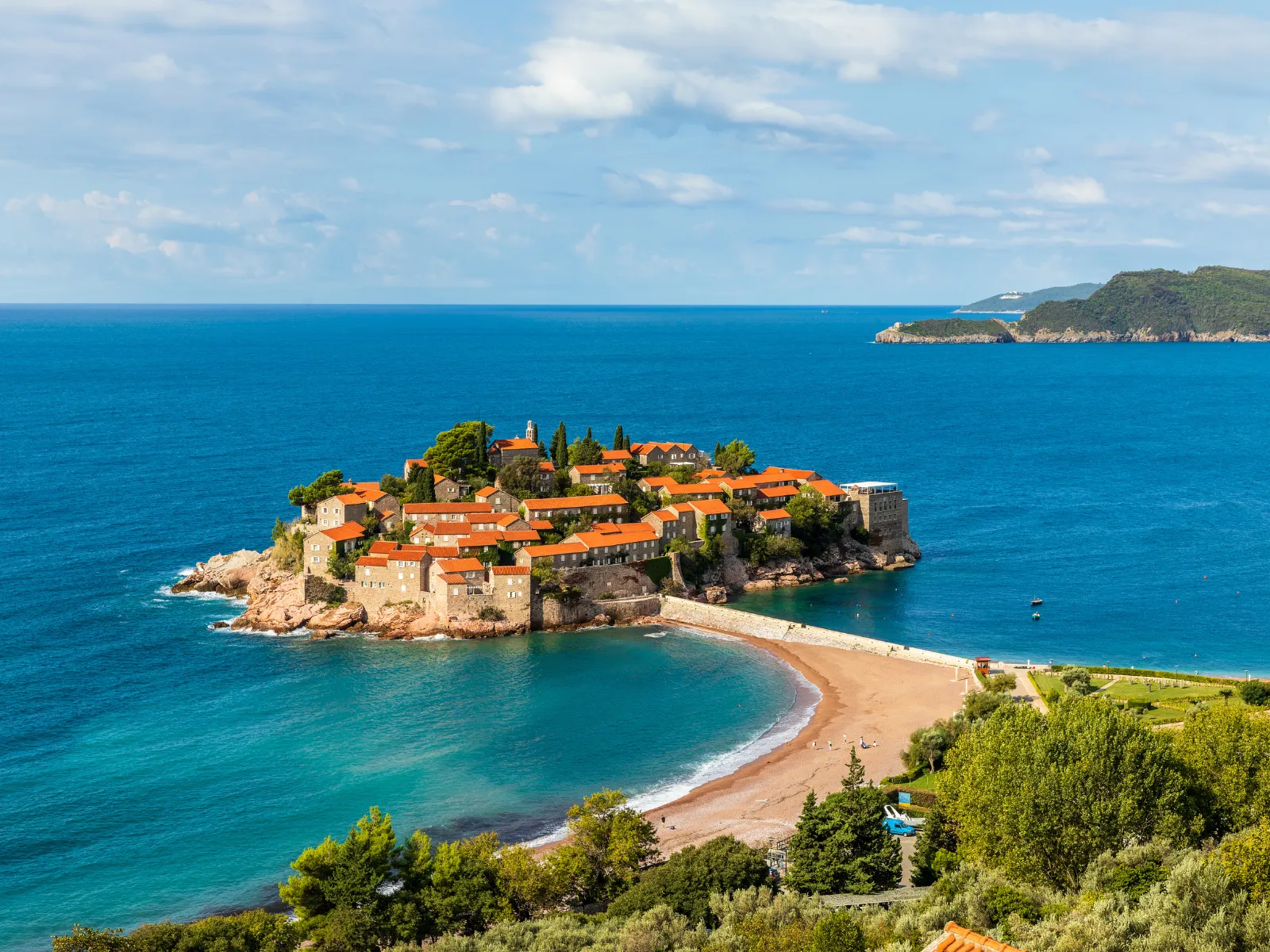
Those who decide to go in summer do well to focus on three strategies: move in the early morning and late afternoon; look for beaches away from the main centres (the beaches between Sveti Stefan and Bar are under less pressure than those of Budva); and combine coast with interior, where temperatures are ten degrees lower and the overcrowding disappears.
The water in July–August is at its warmest. If the main objective of the trip is swimming, these are the months. If the objective is to explore, walk, visit medieval cities and understand the country, there are better moments.
September: the second window
September is the other excellent month. In fact, for many experienced travellers, September is better than May or June because the water is still warm (twenty-four degrees at the start of the month), daytime temperatures are perfect (twenty-two to twenty-five degrees) and overcrowding has dropped dramatically. Cruise ships are still arriving but in smaller numbers. Hotels lower their prices. The beaches have space.
The countryside in September has a different quality of light from summer: more golden, more horizontal, with that end-of-season character that makes landscapes seem more real and less like postcards. The grapes are ripening in the vineyards around Lake Skadar — Montenegro produces its own red wine, the Vranac, a deep-coloured and full-bodied variety that drinks well in local taverns without any need to spend a fortune — and the village markets have their final explosion of fruits and vegetables of the year.
The last week of September and the first of October mark the end of the coastal season. Establishments begin to close, prices fall further, and those who arrive then have the advantage of finding the coast almost empty with weather that is still reasonable.
October and November: the end of the season
October is unpredictable. It can be entirely pleasant — twenty-two-degree days and a calm sea — or it can bring the first autumn storms arriving from the Adriatic with heavy rain and wind. The statistics favour more good days than bad, but variability is high.
What October does offer with certainty is the Montenegrin interior in autumn colours, which are extraordinary: the beech and chestnut forests of Durmitor turn shades of red, orange and yellow against the backdrop of already snow-covered peaks. It is not a landscape that many people travel specifically to see, but anyone who is there in that two or three week window in October has an experience that is truly rare.
November closes the coastal season definitively. Most of the coast’s hotels are shut. The interior keeps running but with reduced services. It is not a month for planning a trip, unless you want a radically quiet experience in Kotor or Cetinje, cities that maintain their own life all year round.
The events calendar
The Bar Music Festival takes place in July. The Kotor Carnival has its best-known edition in February, a Venetian-tradition celebration with elaborate costumes and parades that fill the old town. The Perast fašinada — the ceremony of throwing stones into the sea to keep alive the artificial island of Our Lady of the Rocks — takes place on 22nd July and is one of the most singular coastal rituals on the Adriatic.
Summer in general is the season for the electronic music festivals that proliferate along the coast, some of them with a degree of international reputation. Budva in particular has in July and August a nightlife that attracts a very specific type of traveller. Those who are not that type of traveller have additional reasons to prefer the shoulder months.
In summary, without the qualifications that confuse
For those who want beach and coast: June or September. For those who want mountain hiking: July and August in Durmitor, with manageable temperatures. For those who want skiing or a mountain winter: January or February in Žabljak. For those who want medieval cities without crowds: April, May or September. For those who want nature, Lake Skadar and wildflowers: May or early June. For those who want minimum prices: November to March (with the service limitations that implies).
Montenegro rewards the traveller who does not follow the most obvious calendar. The country that fills Instagram feeds in August is real and beautiful. But the country of May, with the Bay of Kotor free of cruise ships and the interior meadows still damp from the last spring rain, is the one you remember.
Far Guides’ complete Montenegro guide includes detailed information on mountain routes, beaches by season and everything needed to plan your trip according to your dates and priorities.
More on Montenegro
Keep reading.
Other pieces from the same destination.
Next step
Ready for Montenegro?
The guide is for travelling.
Interactive maps & itineraries and everything that doesn't fit in an article. Always the latest published version.
Get the Montenegro guide