Montenegro · 14 October 2026
Montenegro's history: from the Kingdom of Zeta to independence
The only Balkan territory never fully conquered by the Ottomans. A history of mountain resistance that explains who Montenegro is today.
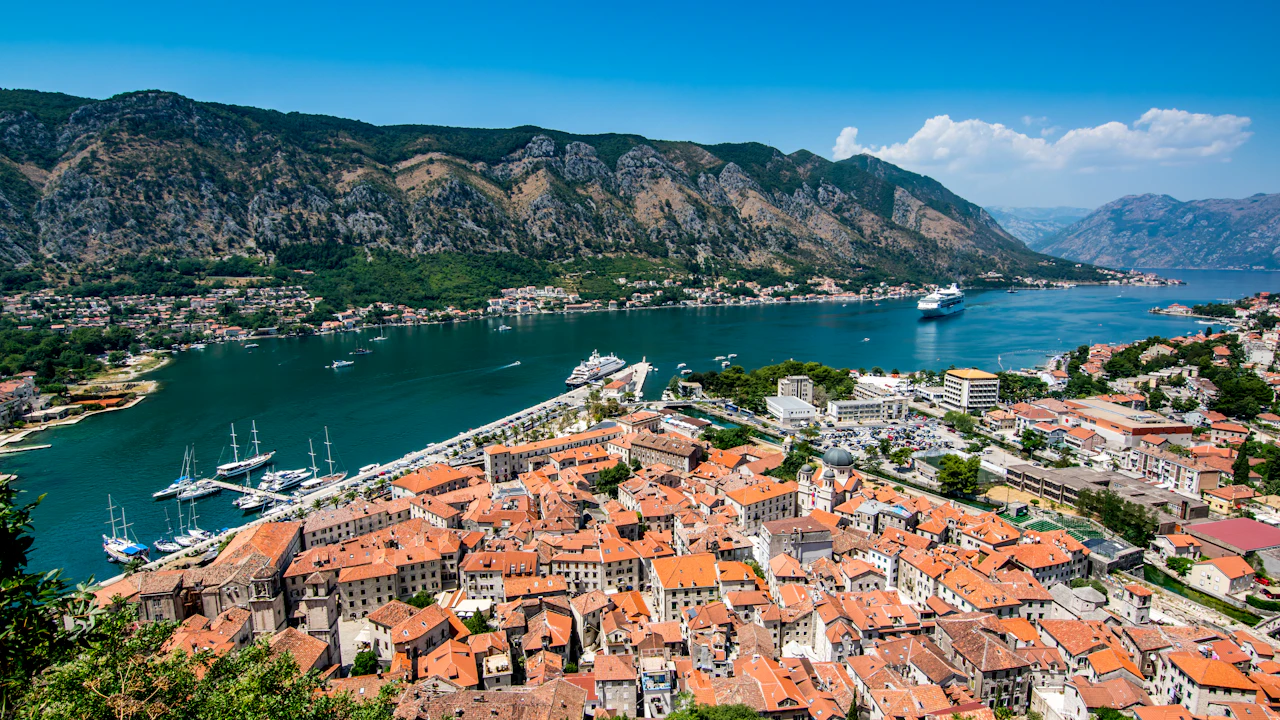
In 2006, in Montenegro’s independence referendum, 55.5% of citizens voted to separate from the union with Serbia. The threshold required by the European Union to recognise the result was 55%. Montenegro became independent by 0.5 percentage points, with barely two thousand four hundred votes above the necessary minimum. It was the end of a process that had taken, depending on where you start counting, between fifteen years and several centuries.
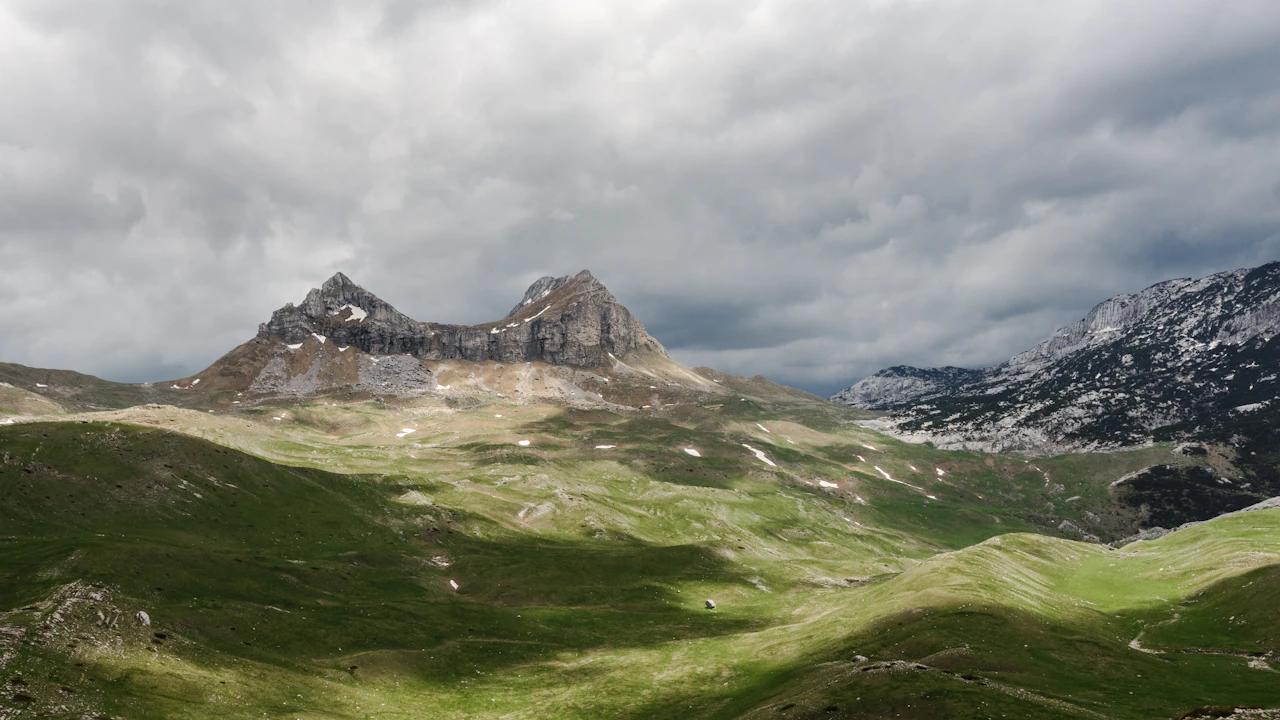
To tell Montenegro’s history is to tell the story of a territory that built its identity around an extraordinarily simple and extraordinarily difficult idea: resistance. The name says it all. Black Mountain. The dark mountain — dark with pine forests — that Venetian navigators saw from the sea, and that nobody — not the Romans, not the Byzantines, not the Ottomans — managed to fully control.
The Kingdom of Zeta
Before Montenegro there was Zeta, the medieval principality whose territory corresponds roughly to modern Montenegro. Zeta reached its greatest extent in the fifteenth century under the Balšić family and then under the Crnojević, whose name — meaning “of the black ones”, after Mount Lovćen — would eventually give rise to the country’s name.
The fall of Constantinople in 1453 and the Ottoman advance through the Balkans transformed the regional map radically. The medieval Balkan states fell one by one: Serbia in 1459, Bosnia in 1463, Herzegovina in 1482. Zeta held on, partially. The lord Ivan Crnojević moved the capital to Cetinje in 1482 and built there the first monastery that would serve as the seat of spiritual and political power. The Ottomans controlled the plains and the coast; the interior mountains remained a zone of intermittent resistance.
Mountain resistance and the vladike
What followed during the next three centuries is difficult to summarise without falling into the hagiography that Montenegrin nationalism has constructed around that period. The historical reality is that Montenegro was never fully conquered, but was also not a state in any modern sense: it was a collection of clans with unstable loyalties, governed by prince-bishops called vladike, who combined Orthodox religious authority with military and political leadership.
The vladika office was hereditary within the Petrović-Njegoš family, transmitted from uncle to nephew to circumvent monastic celibacy. This pragmatic solution to the contradiction between hereditary power and monastic rules says something about the pragmatism that characterised the Montenegrin state: rules existed to be adapted when survival required it.
The most celebrated of the vladike was Petar II Petrović-Njegoš (1813-1851), poet and statesman who wrote the Gorski vijenac (The Mountain Wreath), the epic poem considered the founding work of Montenegrin literature. Njegoš secured Russian recognition of Montenegro as a protected state, developed the principality’s first modern administrative structures, and left a cultural legacy the country still claims as its own.
Independence and the kingdom
The Congress of Berlin in 1878, convened to redistribute Balkan territories after the Russo-Turkish War, formally recognised Montenegro’s independence as a principality. Thirty-two years later, in 1910, Prince Nikola I proclaimed the kingdom and became king. Montenegro was at that point the smallest sovereign state in Europe — with barely two hundred and seventy thousand inhabitants — and one of the most singular: a mountain kingdom that had survived the great empires through the combination of geography and stubbornness.
The First World War ended the kingdom. Montenegro entered the war in 1914 on Serbia’s side and was occupied by Austria-Hungary in 1916. When the war ended, King Nikola I — who had fled into exile — was deposed and Montenegro was absorbed into the Kingdom of Serbs, Croats and Slovenes, which would later become Yugoslavia. The end of independence was traumatic, and the debate about its legitimacy still divides Montenegrins today.
Yugoslavia and the 2006 referendum
In Tito’s Yugoslavia, Montenegro was one of the six constituent republics. When the federation began to disintegrate in the early 1990s, Montenegro initially voted to remain united with Serbia in the 1992 referendum. Through the years of the Yugoslav wars and international sanctions, Montenegro gradually adopted a more autonomous position. The process culminated in the referendum of 21 May 2006.
Since then, Montenegro has pursued an accelerated path of Western integration: it joined NATO in 2017 and is an official candidate for European Union membership. The weight of that history — the resistance, the independence lost and regained, the smallness that has always had to prove its worth — is present in every conversation about what this country of six hundred thousand people in the heart of the Balkans is, and what it wants to become.
The complete Far Guides Montenegro guide includes detailed routes, interactive maps and all the practical information you need to plan your independent trip.
More on Montenegro
Keep reading.
Other pieces from the same destination.

Next step
Ready for Montenegro?
The guide is for travelling.
Interactive maps & itineraries and everything that doesn't fit in an article. Always the latest published version.
Get the Montenegro guide