

Montenegro · 31 August 2026
Montenegro in one week: independent travel without a rental car
What to see in Montenegro in 7 days using public transport and ferries. A realistic route that prioritises the coast and saves the interior for another trip.
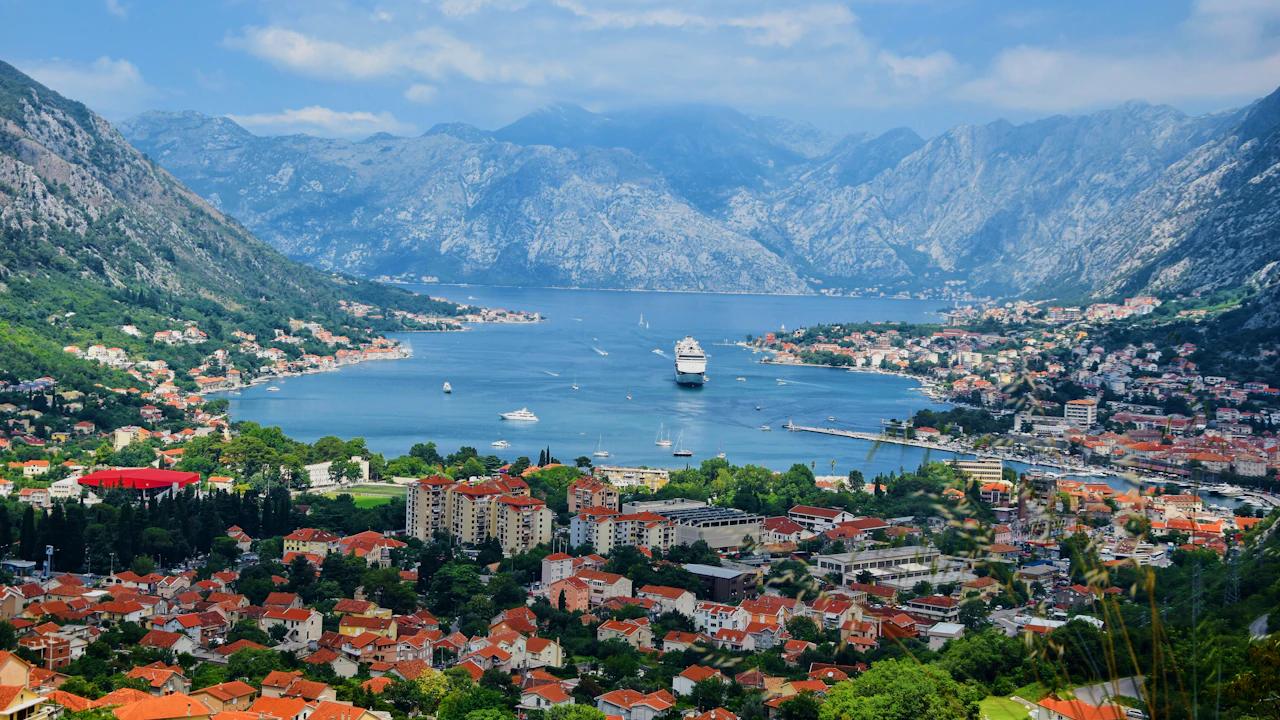
Montenegro without a car is a different country. Not necessarily worse, but different: smaller in what can be seen, slower in how it moves, more dependent on the coast and the villages with reasonable bus connections. The interior — Durmitor, the Tara Canyon, Biogradska Gora — is practically inaccessible without your own vehicle. Ostrog can be done on an organised excursion but there is no elegant way to get there independently. What does work is the coast and the Kotor-Budva-Cetinje-Skadar axis, which covers most of what many travellers want to see.
This route is for those who arrive without a car, accept that constraint and turn it into a deliberate choice: seven days that prioritise quality of experience over the number of destinations ticked on the map.
Days 1-3: Based in Kotor
Kotor is the ideal starting point because it is the coast’s most complete destination and the hub from which movements are organised. Tivat airport is fifteen kilometres away; the airport taxi or shuttle bus arrives in twenty minutes. Podgorica airport is eighty kilometres but has a direct bus connection.
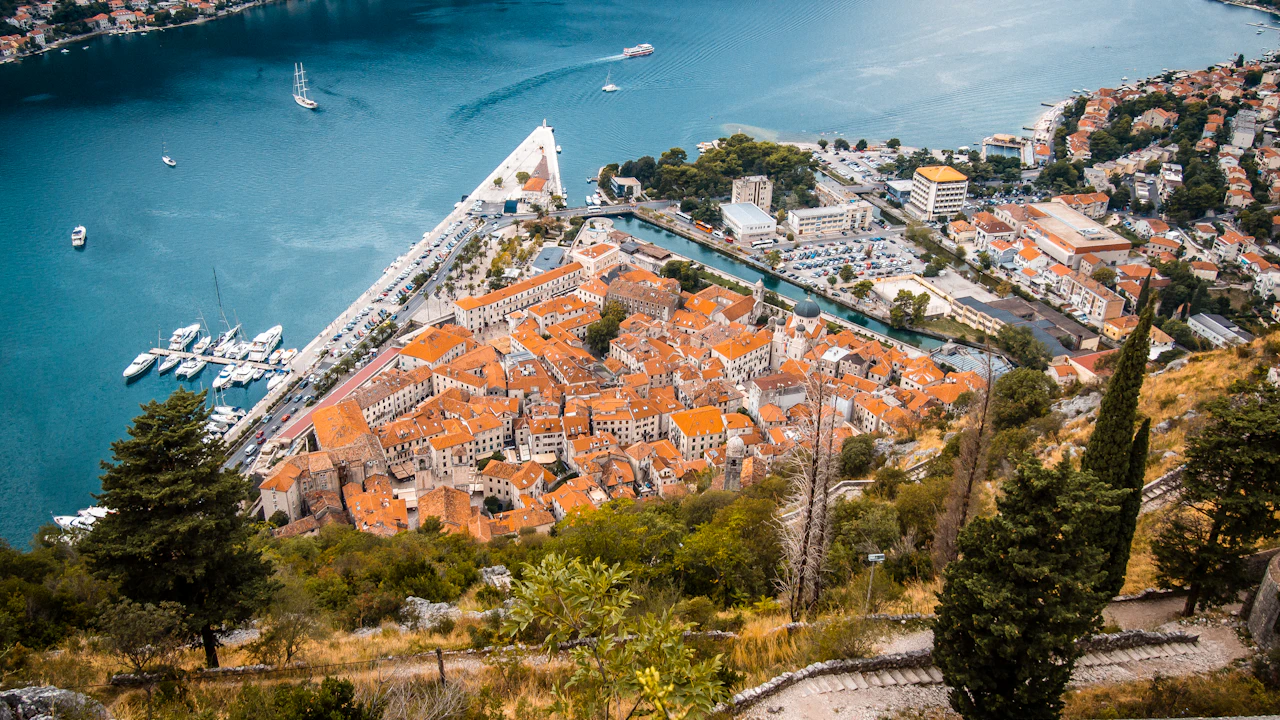
The first day is for the walled city: the circuit of the walls, the Cathedral of St Tryphon, the Boka Maritime Museum in the Grgurina Palace, the stairway to St John’s Fortress. The second day for the bay: the local bus to Perast (six kilometres, about twenty minutes, hourly frequency in season) and from there the boats to Gospa od Škrpjela island. The Kamenari-Lepetane ferry crosses in five minutes from the northern side of the bay; getting to Kamenari without a car requires a taxi or bus combination. Returning along the southern shore — Risan, Morinj, back to Kotor — closes the loop with the bay seen from the opposite bank.
The third day, kayaking in the bay. Operators at Kotor port organise two to four-hour excursions for around twenty-five to thirty euros. Seeing the walled city from the water is completely different from land and justifies the time.
Day 4: Budva
The bus from Kotor to Budva runs several times daily; the journey takes forty-five minutes and costs around three euros. Budva in a day allows for the old town — rebuilt but with its own character — and the Mogren beaches, ten minutes on foot from the historic centre. Returning to Kotor or staying in Budva for the following day depends on budget and preference. Budva has more variety of budget accommodation; Kotor has a better quality of atmosphere.
Day 5: Cetinje
The bus from Budva (or from Kotor with a connection) climbs to Cetinje in approximately one hour. The former capital is worth half a day: King Nikola’s Palace, the monastery with St John the Baptist’s hand, the old embassies. The afternoon return can stop at one of the viewpoints on the road descending to the coast, where the Bay of Kotor is seen from above in its full geometry.
Day 6: Lake Skadar
This is the most complicated day without a car. The most practical option is taking the bus from Podgorica (reachable from Budva or Kotor by bus) to Virpazar — about forty minutes from Podgorica — and from there booking a boat excursion with local operators. Prices are around twenty or thirty euros per person for a two or three-hour trip. The lake, the pelicans and the water lilies justify the logistical effort.
The alternative is an organised excursion from the coast, available from Budva and Kotor, which simplifies logistics but reduces control over timing.
Day 7: Podgorica and the flight
If the flight leaves from Podgorica, the final day in the capital allows for Stara Varoš, the Stari Most over the Ribnica and a walk along the Morača. If the flight leaves from Tivat, the journey from the coast is direct and the day makes sense for returning to Kotor unhurriedly, without the pace of excursions.
The real limitation of car-free travel is clear: Durmitor, Ostrog, the Tara Canyon and Morača Monastery are out of reach. To see them you need to rent a car for at least two or three days, or book organised excursions from the coast that cover Ostrog and Lake Skadar in day-trip format. Complete Montenegro requires your own wheels; partial but intense Montenegro is equally possible on foot and by bus.
The complete Far Guides Montenegro guide includes detailed routes, interactive maps and all the practical information you need to plan your independent trip.
More on Montenegro
Keep reading.
Other pieces from the same destination.

Next step
Ready for Montenegro?
The guide is for travelling.
Offline maps, itineraries and everything that doesn't fit in an article.
Get the Montenegro guide