


Montenegro · 17 August 2026
Montenegro in 10 days: the itinerary that actually works
The complete route for seeing Montenegro in 10 days: coast, interior, mountains and historic cities. With real timings, transport and what to prioritise.
Ten days is the minimum reasonable time to see Montenegro without sacrificing any of its three main dimensions: the coast, the mountainous interior and the historical heritage distributed across both. With less time you have to choose; with ten days you can put together a synthesis that leaves a complete picture of the country.
The essential condition is a car. Without your own vehicle, from day three onwards logistics become complicated, and some destinations (Ostrog, Durmitor) are practically impossible to reach by public transport. If the choice is between a cheaper flight without a car or a more expensive one with rental included, the second option usually pays off in Montenegro.
Days 1-2: Kotor and the bay
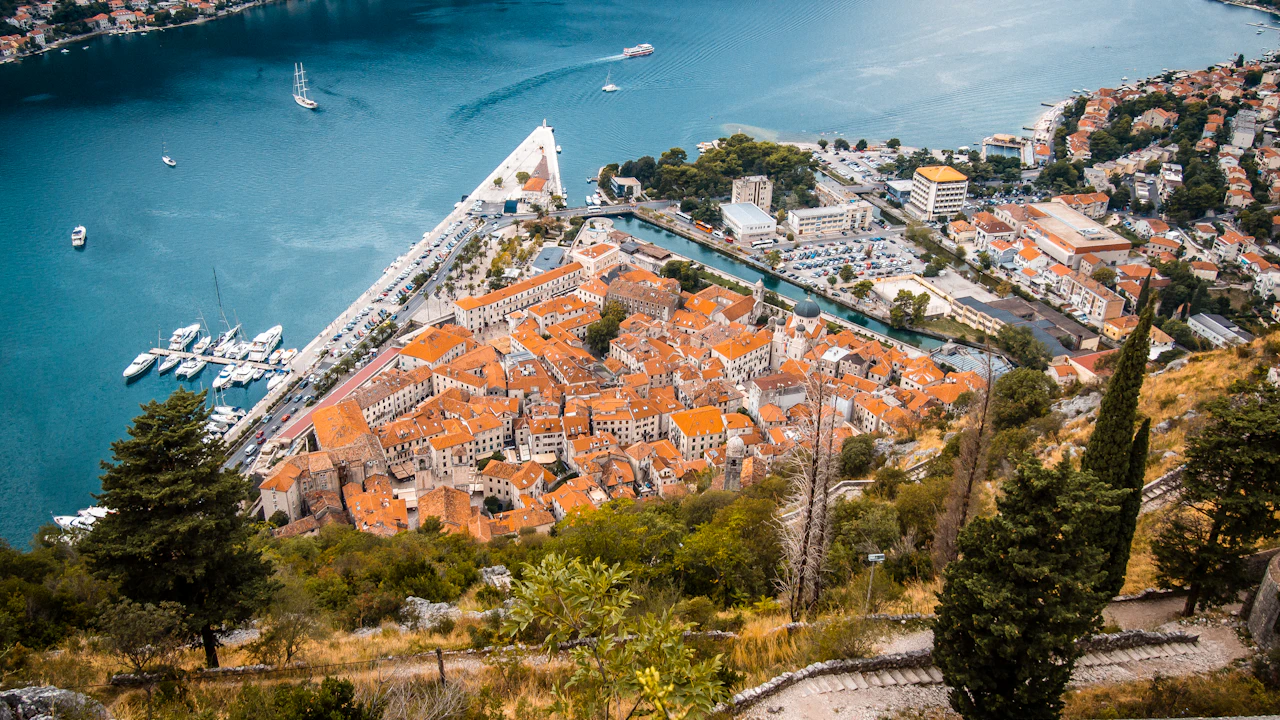
The first two days are based in Kotor, which is simultaneously the coast’s most complete destination and the logical starting point for the bay. The walled city needs half a day of unhurried exploration: the Sea Gate, the Arms Square, the Cathedral of St Tryphon (twelfth century, with a reformed interior but the Romanesque structure intact), the St John’s stairway climbing towards the fortress. The fortress takes between ninety minutes and two hours if you go all the way up: the 1,350 steps are vertical in some sections, but the views over the bay from the highest point justify the effort.
The second day is better spent leaving Kotor for the northern shore of the bay. The road circling the interior — through Prčanj, Dobrota and Perast — has a completely different scale to Kotor: fishing and sea captain villages with seventeenth-century palaces lined along the water. Perast deserves two or three hours: the two islands (St George and Gospa od Škrpjela, the man-made island), the Boka Maritime Museum. The Kamenari-Lepetane ferry crosses the bay’s mouth in five minutes and costs 4.50 euros per car; it is the most efficient way to close the loop.
Day 3: Lovćen and Cetinje
The twenty-five-hairpin road between Kotor and Lovćen National Park is one of the Mediterranean’s most dramatic drives. Each bend opens the panorama over the bay further; when you reach cloud level, the whole Bay of Kotor is visible, with the walled city unrecognisably small at the water’s edge.
The Njegoš Mausoleum, at the summit of Lovćen at 1,657 metres, requires climbing 461 steps from the car park. On clear days the views reach Lake Skadar, the Albanian coast, and in exceptional conditions the Italian coastline. The descent towards Cetinje on the inland side is gentler; the old city deserves the afternoon: King Nikola’s Palace, the monastery, the former embassies.
Day 4: Budva and Sveti Stefan
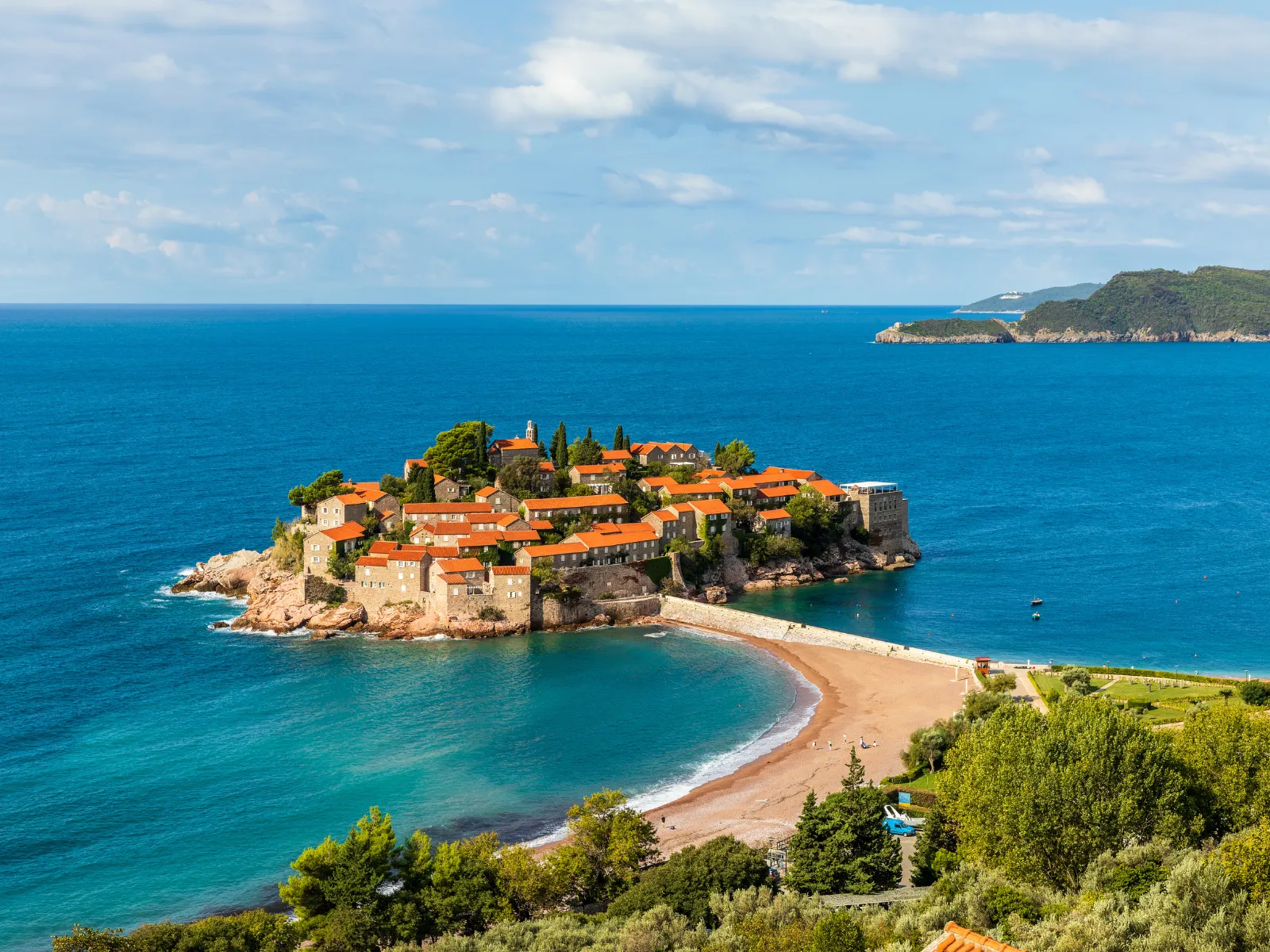
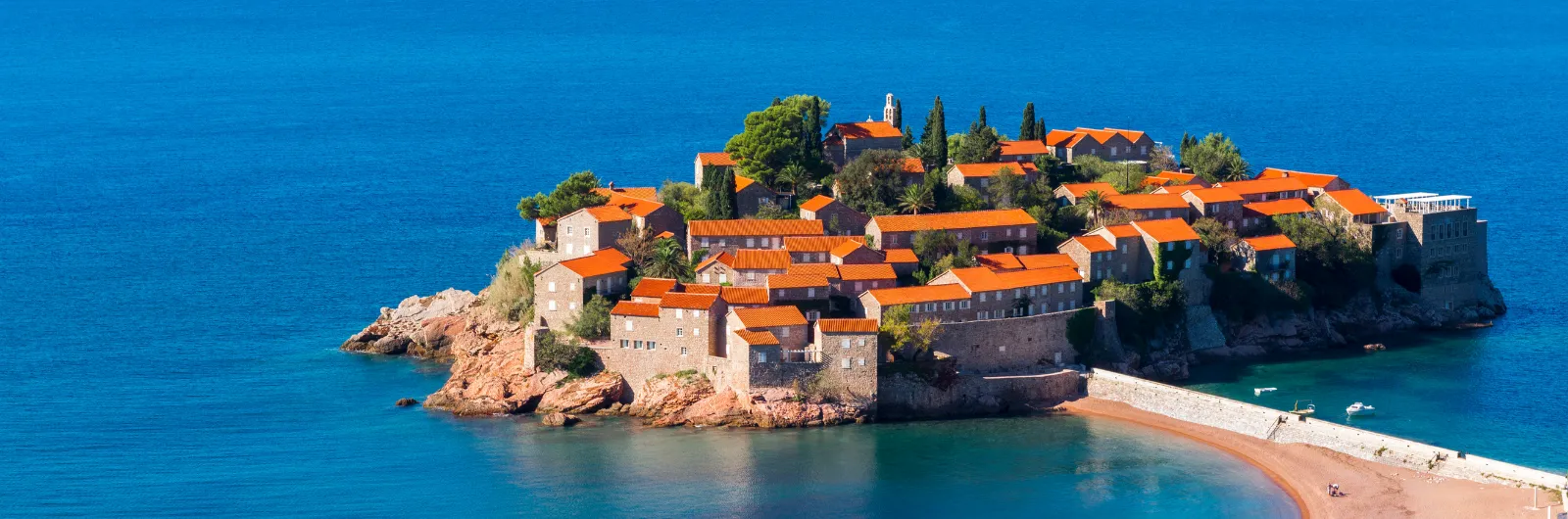
From Cetinje, the drop down to Budva is quick. The Budva old town — rebuilt after the 1979 earthquake — is most interesting in the early morning, before hotel tourists have emerged. In the afternoon, the road south offers viewpoints over Sveti Stefan. The beach in front of the island, with views of the hotel-island at sunset, is the natural end to the day.
Day 5: Ulcinj
Montenegro’s far south requires a full day of travel if starting from Budva or surroundings: it is about eighty kilometres along the E1 coastal road. Ulcinj deserves the morning in the old town — the citadel, the mosque, the museum — and the afternoon at Velika Plaza, the thirteen kilometres of sand stretching to the Albanian border. The return can pass through Bar and Stari Bar if there is time and energy for ruins.
Days 6-7: Lake Skadar and Virpazar
Lake Skadar is the Balkans’ largest lake and one of the most important for European ornithology: more than two hundred and eighty recorded bird species, including one of the few breeding colonies of Dalmatian pelican (Pelecanus crispus) in Europe. The village of Virpazar on the northern shore is the most comfortable base: small, quiet, with trout and carp restaurants at reasonable prices.
The boat excursion on the lake — available in Virpazar with local operators from thirty euros per person — is the best way to see the water lilies, pelicans and lakeside villages dotting the shore. The second day can be spent visiting Com Monastery (accessible by boat) and exploring the Crmnica wine region, where the most prized Vranac is produced.
Day 8: Ostrog and transit north
Ostrog is a mandatory stop even if it requires a detour from the E65 into the mountains above Nikšić. The access road is worth the effort, and the cliff monastery — with its relics and seventeenth-century frescoes — is one of those places that resembles nothing else in the Mediterranean. Visit time is two to three hours; overnight in Žabljak, another two and a half hours’ drive north.
Days 9-10: Durmitor and the Tara Canyon
Žabljak is the base for the final two days: Durmitor National Park and the Tara Canyon. Black Lake (Crno jezero, two kilometres from Žabljak centre) is the park’s most accessible excursion, with the massif reflected in the water and black pine forest along the shore. The Tara Canyon is thirty kilometres away: the Đurđevića Tara Bridge viewpoint, the descent to the river if time and energy allow. Rafting requires advance booking and at least half a day.
The complete Far Guides Montenegro guide includes detailed routes, interactive maps and all the practical information you need to plan your independent trip.
More on Montenegro
Keep reading.
Other pieces from the same destination.


Next step
Ready for Montenegro?
The guide is for travelling.
Offline maps, itineraries and everything that doesn't fit in an article.
Get the Montenegro guide