Montenegro · 10 April 2026
How much does it cost to travel in Montenegro: a real budget breakdown
A detailed cost breakdown for travelling in Montenegro in 2026 — accommodation, food, transport and extras with real prices.
Montenegro has a peculiar relationship with the traveller’s money, and it is worth understanding before you start planning. It is a small country — just over six hundred thousand inhabitants in a territory slightly smaller than Wales — with an economy of pronounced contrasts: the coast in summer operates at prices typical of a mid-to-high European tourist destination, while the interior maintains a far more restrained economy. And all of this using the euro, which is paradoxical: Montenegro is not a member of the European Union, never has been, but adopted the euro as its official currency in 2002, replacing the German mark it had used during the crises of the nineties. It has no formal agreement with the ECB and does not issue its own notes. It simply decided that using the euro suited it, and so it remains.
This simplifies life considerably for the European traveller, who arrives without the need for currency exchange and without exchange-rate surprises. But it does not simplify things enough to ignore the fact that prices vary enormously depending on the area, the time of year and the type of trip you are planning.
The time factor: everything changes in July
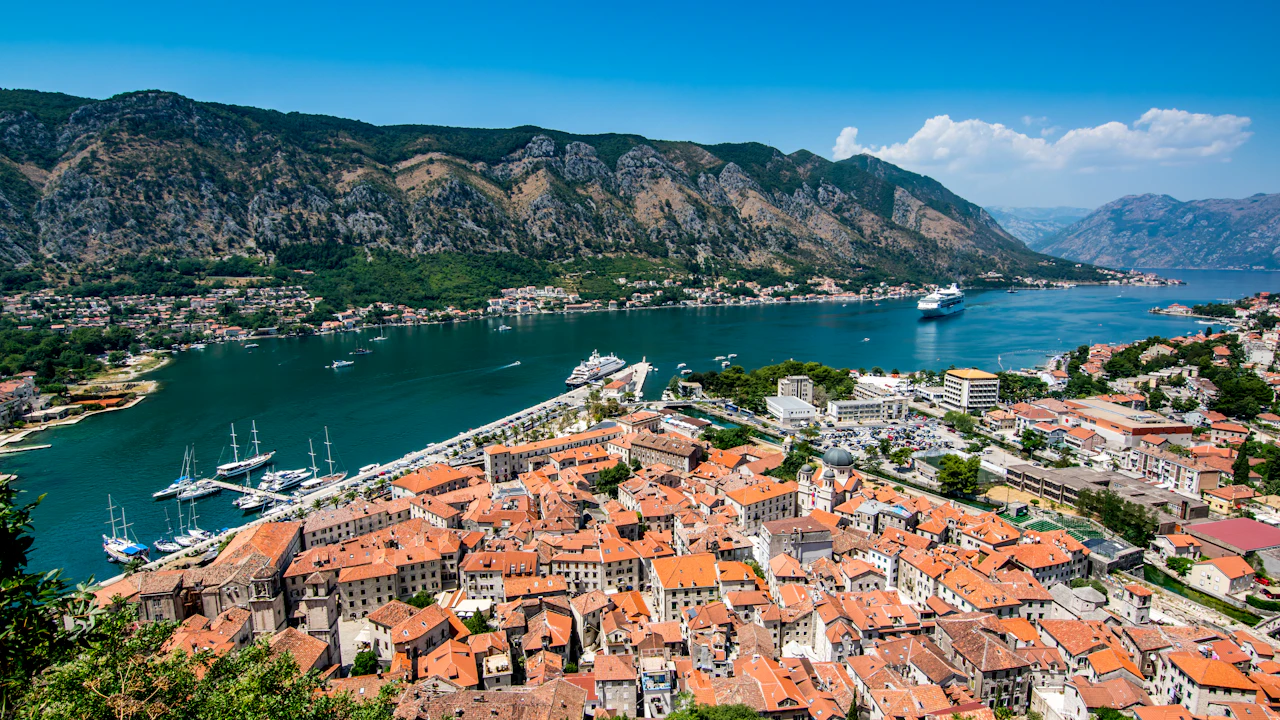
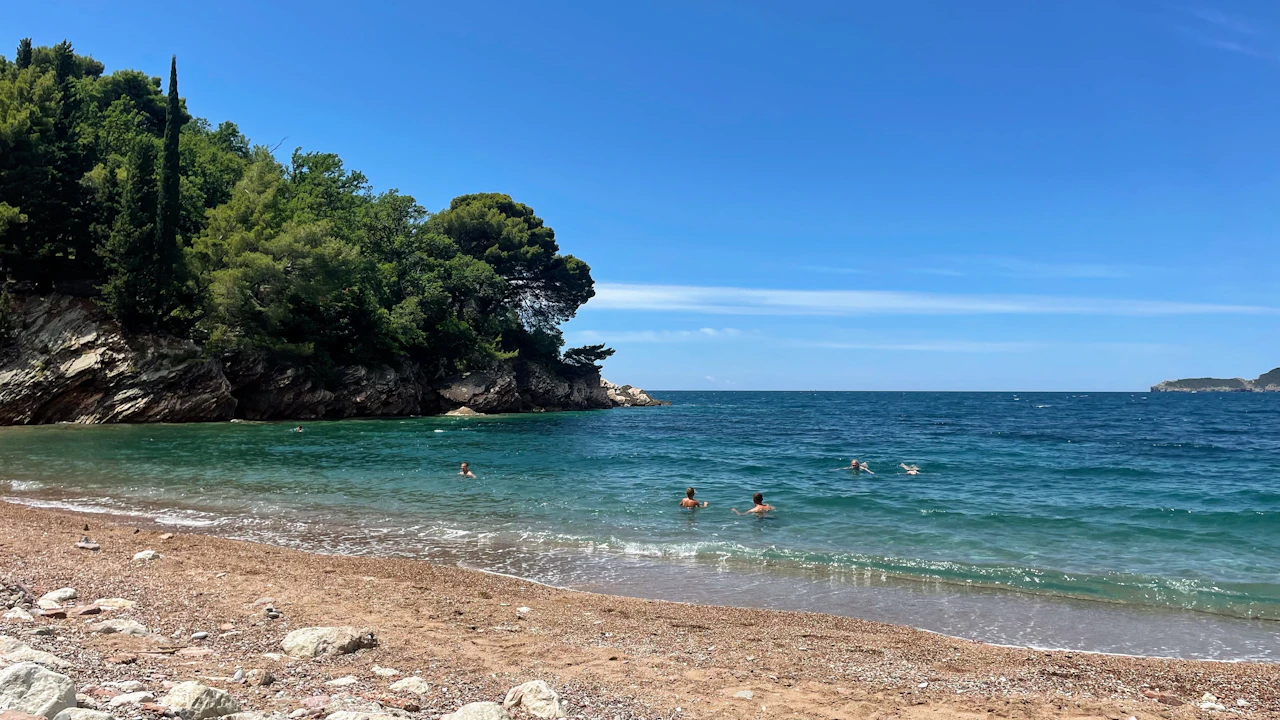
The most important variable in Montenegro is not how much you spend but when you go. The Montenegrin coast — Budva, Kotor, the Riviera — undergoes such a dramatic transformation between high and low season that it can feel like a different destination entirely. In July and August, accommodation prices on the coast can be three or four times what they are in May or September. An apartment that costs forty euros a night in June might be priced at a hundred and forty in August. This is not hyperbole: it is the norm.
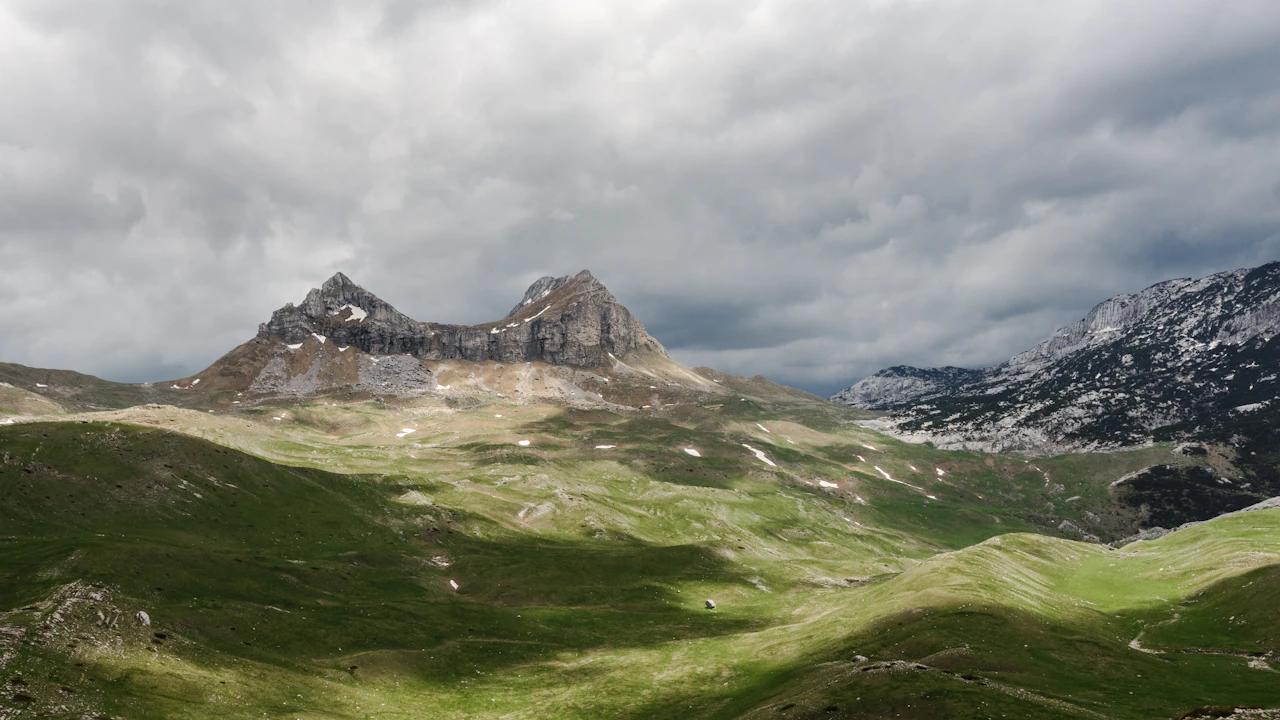
In the interior — Durmitor, the Tara canyon, Podgorica — seasonal variation is much smaller. The interior attracts fewer tourists and its economy does not depend on summer in the same way the coast does. Travelling with a combination of coast in the shoulder season and interior at any time is the strategy that best balances experience and budget.
The official high season is July and August. The mid-season is June and September, when prices are reasonable, the weather is good and the crowds have not yet reached the suffocating level of peak summer. Outside those dates, many establishments on the coast simply close.
Accommodation: the widest range in your budget
Accommodation is where your Montenegro budget stretches or compresses the most. The ranges are as follows:
Budget options (15–35 euros/night): Montenegro has a network of rooms in private homes and small guesthouses — the so-called privatni smještaj, private accommodation — offering basic but clean double rooms at contained prices. In the interior and in cities like Podgorica or Nikšić you will find options at the lower end. On the coast in high season these prices simply do not exist in central locations, but they do in villages twenty minutes from Budva or in smaller Bay of Kotor towns away from the centre.
Mid-range (40–80 euros/night): two- and three-star hotels, apartments with equipped kitchens, rural houses in the interior. This bracket works best for independent travellers: the apartment with a kitchen lets you save on food, and hotels in this category in Montenegro generally offer good value for money, except in the peak months. In Kotor, a double room in a hotel within the walled centre costs between sixty and ninety euros in May.
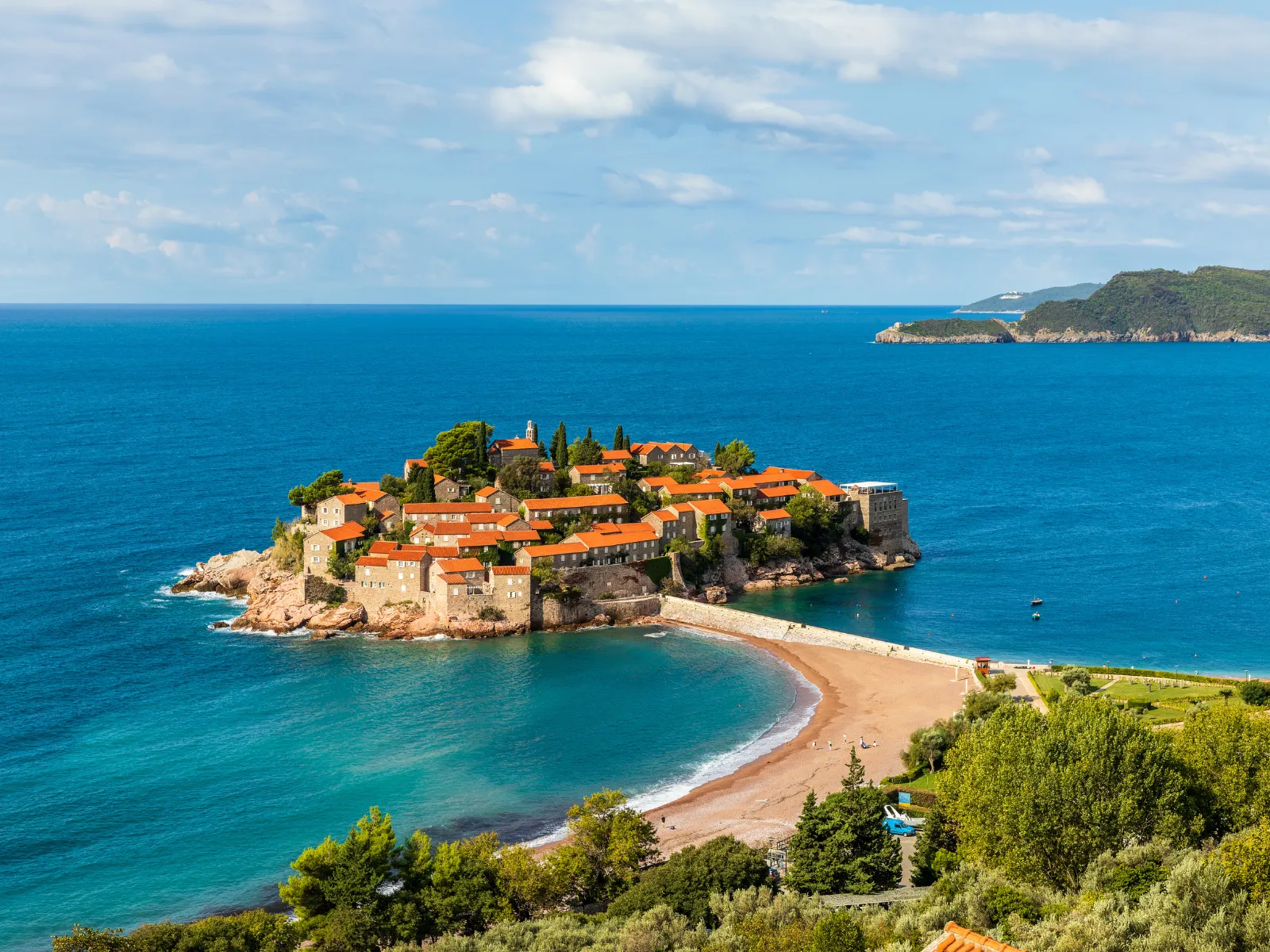
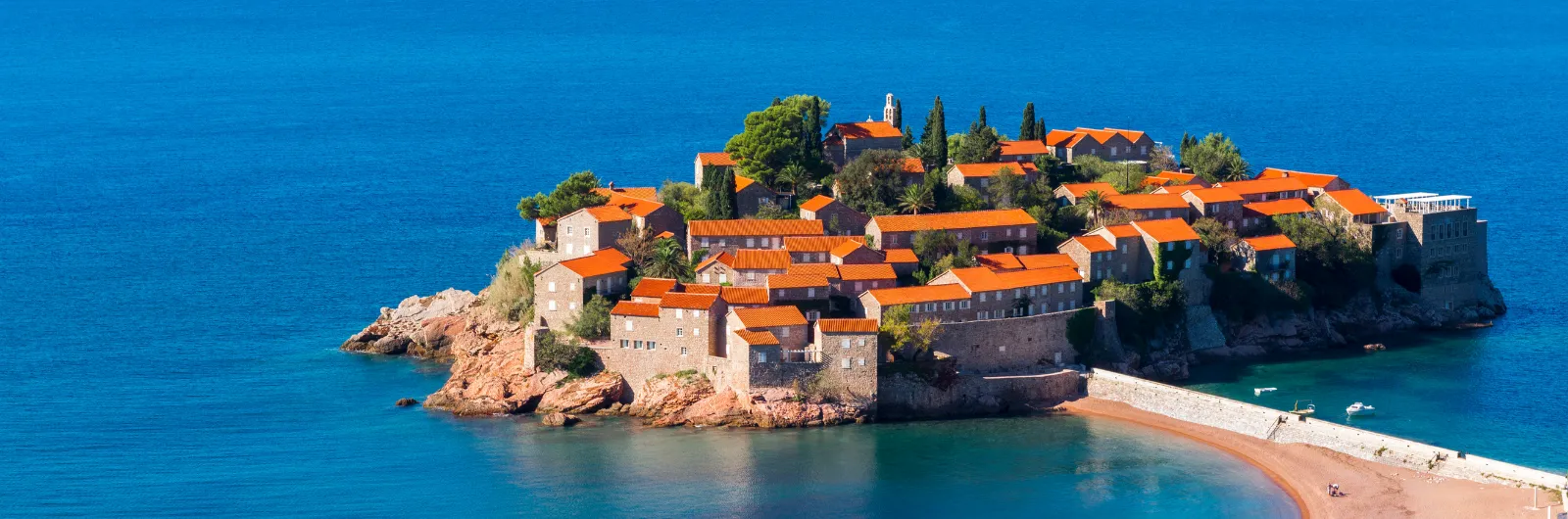
Upper range (80–200 euros/night): boutique hotels, villas with pools, chain hotels on the coast. The ceiling of this category in Montenegro is higher than one might expect: Sveti Stefan, the island-hotel turned Aman resort, has prices starting at eight hundred euros a night and rising from there. There is not much between the mid-range and extreme luxury; the market for genuinely good four-star boutique hotels is still small.
Camping (8–20 euros/night): Montenegro has a network of campsites — especially on the coast and near Durmitor — that is a serious option for travellers with more time than money. Some coastal campsites have their own strip of land facing the sea and are perfectly serviceable, especially with a tent or campervan.
Food: where the budget can breathe
Montenegrin food is the part of the trip where the budget can breathe most easily, because local cooking is generous, hearty and cheap when you step away from the tourist-oriented restaurants.
Montenegro’s gastronomy is deeply influenced by the traditions of the Balkans, with Mediterranean elements on the coast and a more robust mountain cooking style in the interior. The most iconic dish is ćevapi, minced meat sausages served in flatbread with onions and kajmak — a kind of fatty curdled cream that is more addictive than it should be. A plate of ćevapi with bread and a drink at a good local grill costs between four and six euros. It is a complete meal.
Eating well on a low budget (5–12 euros per person): local taverns away from the seafront promenade, bakeries selling burek — pastry filled with meat, cheese or spinach — fruit and vegetable markets. A cheese burek at a local bakery costs between one and two euros and makes a perfectly functional breakfast or snack.
Sit-down meal at a local restaurant (10–18 euros per person): a full menu — salad, main course of meat or fish, bread and a drink — at a restaurant not specifically aimed at tourists. Fish on the coast is excellent and prices, once you move away from the Budva seafront or the Kotor terraces, are honest. A trout from the Morača river or from Lake Skadar costs around ten euros as a main course.
Tourist restaurants on the coast in high season (20–35 euros per person): this is the range of the waterfront restaurants in Budva, the water-view terraces in Kotor, the places where the price includes the view. They are not necessarily bad, but the premium you pay for the location is real and considerable.
Supermarkets: Montenegrin supermarkets — Voli, Idea, Mercator — have normal European prices. A litre of milk costs around one euro, bread between one and one fifty, seasonal fruit at very reasonable prices. Cooking in the apartment is an effective strategy particularly for breakfasts and informal dinners.
Transport: the difference between coast and interior
Transport in Montenegro follows two completely different logics depending on the terrain.
On the coast: intercity buses connect the main towns at low prices. The Podgorica–Kotor journey costs around six euros. Kotor–Budva is about three euros. Budva–Bar is four euros. Services are frequent in high season and less so outside it. For moving between villages around the Bay of Kotor there are small ferries and water taxis whose prices vary according to distance and negotiation.
In the interior: public transport into the Montenegrin interior is notoriously limited. Durmitor, the Tara canyon, Lake Biograd or the Lovćen National Park have no practical bus connections for the independent traveller. You either go by hire car or book an organised excursion from the coast.
Car hire: this is the option that gives you the most freedom in Montenegro, especially for the interior. Rates in 2026 range between twenty-five and forty euros a day for a small car in mid-season, rising to forty to sixty in August. The roads in the Montenegrin interior are spectacular but demand attention: tight bends, steep gradients, sections without crash barriers. Petrol costs around 1.65 euros per litre. A car lets you do the Kotor–Lovćen–Cetinje–Virpazar–Kotor circuit in a single day, a journey that by public transport would require multiple transfers and a full day’s waiting.
Taxi: taxis operate mainly in the cities. From Podgorica airport to the city centre costs about eight euros. Within Podgorica, urban journeys rarely exceed five euros. On the coast, taxis have a reputation for not always having a functioning meter: it is worth agreeing on the price before getting in.
From the airport: Montenegro has two international airports, Podgorica and Tivat. Tivat is literally next to the Bay of Kotor and is the most convenient for anyone heading directly to the coast. The transfer from Tivat to the centre of Kotor costs about fifteen euros by taxi or can be done by bus for two euros, though the bus has limited timetables.
Entrance fees and activities
Admission fees to Montenegro’s main sites are, in general terms, cheap compared to the standard of western Europe.
Climbing the walls of Kotor: eight euros. Visiting the Ostrog Monastery, carved into the vertical rock of a mountain and one of the most important pilgrimage sites in the Orthodox world, is free, though a donation is appropriate. The Durmitor National Park has an entry fee of four euros per day. Kayaking or rafting excursions through the Tara canyon — one of the deepest canyons in Europe, with two hundred and fifty metres at its deepest point — cost between twenty-five and forty euros depending on the duration and the operator.
Adventure activities on the coast — parasailing, jet skiing, boat trips to sea caves — are the most expensive items in the catalogue, with prices starting at twenty euros and rising to eighty. They are not essential, but hiring a kayak by the hour to explore the coast between Budva and Sveti Stefan offers a reasonable value-for-experience ratio.
Three traveller profiles, three budgets
Backpacker profile (40–60 euros/day): shared or budget room, burek and ćevapi, intercity buses, no hire car. This is feasible in mid-season and in the interior, harder on the coast in July. It requires transport planning and accepting that some interior locations are out of reach without your own vehicle.
Comfortable independent traveller (80–120 euros/day): mid-range hotel or apartment, meals at local restaurants with the occasional treat, hire car shared between two people, entrance fees to all sites of interest. This is the range most independent travellers visiting Montenegro move within, and it allows you to enjoy the country without counting every euro. In mid-season, this budget gives substantial room in the interior and works well on the coast too.
Premium profile (150–250 euros/day): boutique hotels or villas, good restaurants, your own hire car, private excursions. This budget in Montenegro buys considerably more than it would in Croatia or Italy because the quality accommodation offer is still maturing. A rural villa in the interior with a pool and views over Lake Skadar can cost a hundred and twenty euros a night in mid-season, which in relative terms is extraordinarily cheap.
What people underestimate
The most common mistake in Montenegro is underestimating the cost of interior transport. Anyone who plans the trip around buses and does not factor in a car ends up cutting their itinerary short: Durmitor cannot be visited comfortably by public transport, Lake Skadar from Virpazar is reachable but flexibility on timetables disappears, and some of the most extraordinary landscapes in the country — the Sedlo pass in Durmitor, the view from Lovćen over the Bay of Kotor, the Tara river canyon — require your own vehicle or a booked excursion.
The second mistake is going to the coast in August without booking accommodation weeks in advance. Montenegro is a destination that has grown fast in recent years, particularly among travellers from Russia, Serbia and the Gulf countries, and availability in August in Budva or Kotor can be very limited if you leave it to the last moment.
And the third is ignoring the interior. The Montenegrin coast is beautiful but, unlike the interior, it is already on the established tourist circuits. Durmitor, Lake Skadar, the village of Žabljak, the Ostrog Monastery: that Montenegro exists with a scale and an authenticity that the coast has less and less of. And it costs less.
Far Guides’ complete Montenegro guide includes detailed interior routes, up-to-date accommodation recommendations and all the practical information to organise your independent trip.
More on Montenegro
Keep reading.
Other pieces from the same destination.
Next step
Ready for Montenegro?
The guide is for travelling.
Interactive maps & itineraries and everything that doesn't fit in an article. Always the latest published version.
Get the Montenegro guide