
Montenegro · 24 August 2026
Driving in Montenegro: everything you need to know
Montenegro's roads are spectacular and demand respect. Practical guide: car rental, insurance, mountain passes, road signs and what nobody warns you about.
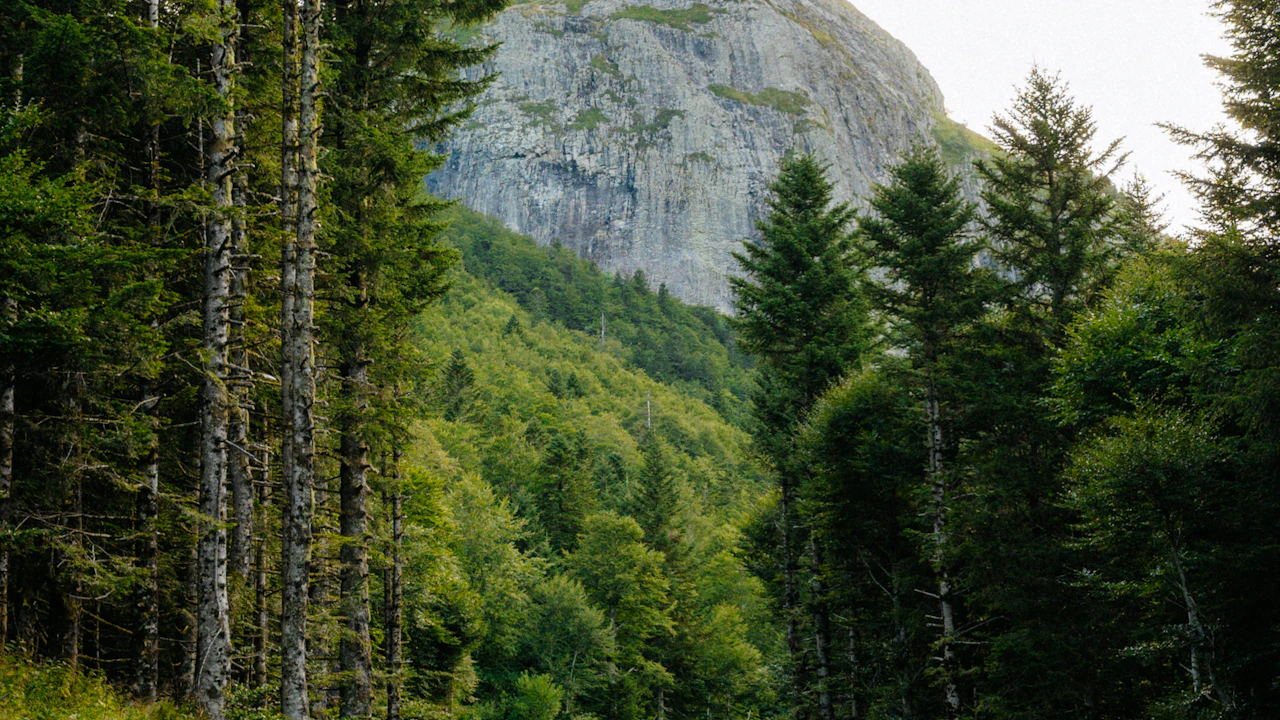
Montenegro has the most interesting relationship between surface area and mountain road density in Europe. The country is small — fourteen thousand square kilometres, roughly the size of Connecticut — but has three national parks, a mountain range exceeding 2,500 metres, seventy-three kilometres of coastline and exactly zero kilometres of motorway between the coast and the interior. What connects one to the other are mountain roads that are, depending on the day and the driver, either one of the most memorable experiences of a Balkan trip or a source of considerable stress.
Without a car, Montenegro can be visited. The coast works reasonably well with buses and ferries. But the interior — Durmitor, the Tara Canyon, Ostrog, Biogradska Gora — is practically inaccessible by public transport. Anyone who wants to see all of Montenegro needs a vehicle.
Documents and insurance
EU citizens can drive in Montenegro with a standard European driving licence. No international permit is required. However, the green card (international insurance certificate) is strongly recommended if you plan to cross land borders into Serbia, Bosnia, Albania or Kosovo. Major car rental companies’ insurance generally covers Montenegro but often excludes some neighbouring countries; it is worth checking before you rent if you plan to cross.
Documents to keep with you at all times: driving licence, passport or ID card, vehicle registration and insurance card. Montenegrin police carry out document checks with relative frequency, particularly at city entrances and exits and on national roads.
Speed limits and rules
Speed limits are 50 km/h in urban areas, 80 km/h on national roads and 100 km/h on fast roads (of which there are very few). Alcohol tolerance for all drivers is zero — no exceptions. Speeding fines are collected on the spot and are proportional to the excess recorded: exceeding the limit by more than 30 km/h can cost between 150 and 300 euros. Fixed speed cameras are signposted; mobile ones are not always.
Required equipment in the vehicle: reflective vest, warning triangle and basic first aid kit. Between November and March, winter tyres are mandatory on mountain roads (and sensible on any road, as passes can close without warning). Petrol costs approximately 1.65 euros per litre; diesel slightly less. Fuel stations are common on the coast and along the E65 but scarce inland: leave with a full tank.
The interior roads
The E65 — the coastal highway connecting Herceg Novi with Ulcinj via Budva and Bar — is the country’s best-maintained road, with two lanes for most of its length and few technical surprises. Everything else is a different matter.
The Kotor-Cetinje road, which climbs from sea level to 1,000 metres through twenty-five numbered and signposted hairpin bends, is Montenegro’s most photographed road. It is not technically very difficult if driven calmly, but the gradient and tight radius turns demand constant attention. In season, tourist coach traffic creates hold-ups on the narrowest sections.
The Sedlo Pass in Durmitor National Park reaches 1,907 metres and remains closed for several months each year due to snow. When open, it offers views over the Durmitor massif and the Tara Canyon that justify any detour, but the access road — narrow, unsealed in sections — is not for every vehicle. A four-wheel drive or a vehicle with good ground clearance helps; a low-slung standard car may struggle.
The Ostrog road has its own reputation: four kilometres of very tight bends with unprotected drops. It is not the most technically demanding road in the country, but it has the most psychologically demanding profile: the combination of a sharp curve, rock immediately to the right and a void to the left tests drivers who are not accustomed to mountain roads.
Where to rent
The best options for renting a car are the airports at Tivat and Podgorica, where international chains (Europcar, Hertz, Sixt, Avis) and several local agencies are present. Tivat airport is most convenient for anyone starting the trip with the coast and Bay of Kotor. Podgorica for those who prefer to arrive at the capital and move from there.
Off-season prices are reasonable: from forty euros a day for a compact vehicle. In July and August prices double or more, and availability can be limited if you have not booked in advance. Avoid the lowest ground-clearance vehicles if you plan to visit Ostrog or any unsealed road in the interior.
The complete Far Guides Montenegro guide includes detailed routes, interactive maps and all the practical information you need to plan your independent trip.
More on Montenegro
Keep reading.
Other pieces from the same destination.

Next step
Ready for Montenegro?
The guide is for travelling.
Interactive maps & itineraries and everything that doesn't fit in an article. Always the latest published version.
Get the Montenegro guide