
Montenegro · 3 August 2026
Entering Montenegro: visas, borders and entry requirements
EU, UK and US citizens don't need a visa for Montenegro. What they do need to know: entry registration, land borders and travel insurance.
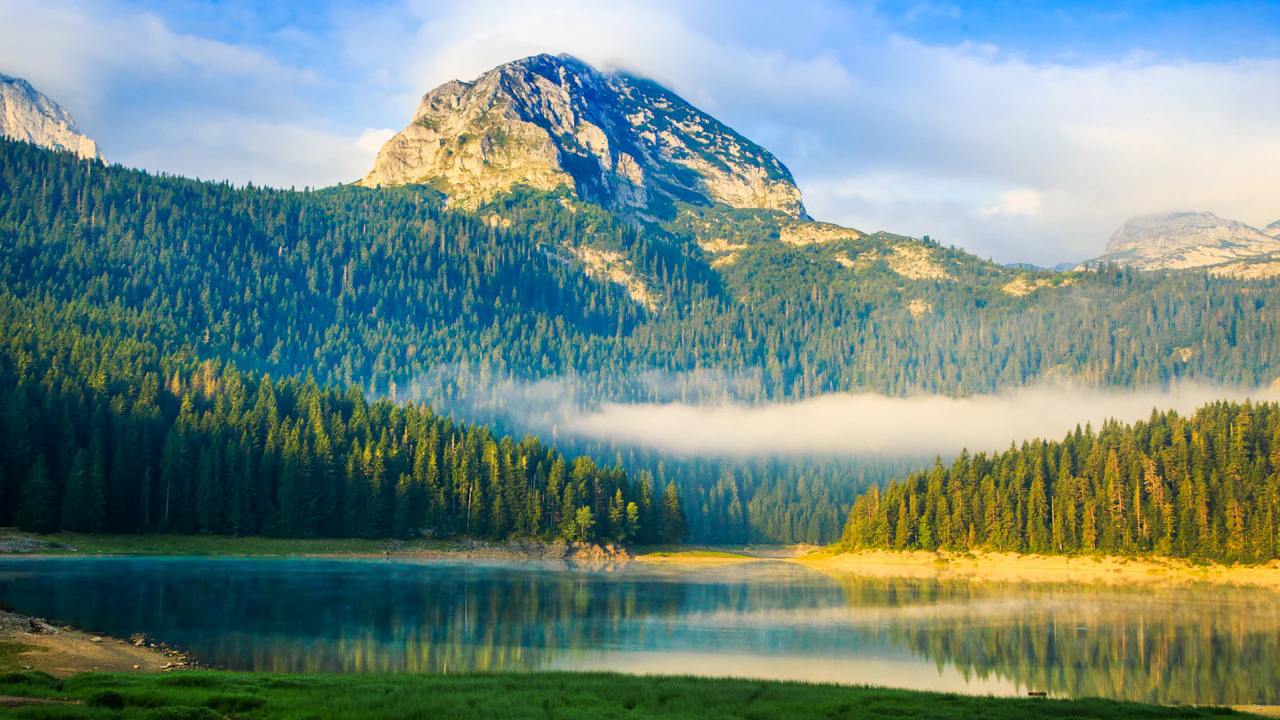
Montenegro does not belong to the European Union. Nor to the Schengen Area. It is a candidate state for accession — negotiations proceed at the pace that characterises European enlargement processes — and in the meantime it has its own visa policy that is, in practice, quite generous for travellers from most Western countries.
Citizens of the European Union, the European Economic Area and Switzerland can enter without a visa and stay for up to ninety days in any one hundred and eighty-day period. The same applies to citizens of the United Kingdom, the United States, Canada, Australia and a considerable number of other countries. EU citizens need only a national ID card or passport. The full list of visa-exempt countries can be verified on the Montenegrin Ministry of the Interior portal, though in practice any Western European or North American traveller can travel without worrying about this.
The entry registration: the rule nobody follows
There is a Montenegrin rule that most travellers do not know about and that in practice rarely has consequences for those who ignore it: all foreigners visiting Montenegro must register with local authorities within twenty-four hours of arrival.
In practice, this registration is handled automatically by hotels, hostels and all registered tourist accommodation, which are legally required to notify the police of their guests’ arrival. For travellers staying in legal establishments, the process is invisible: the hotel manages it and the traveller occasionally receives a copy of the registration.
The issue arises for those staying with friends or in informal rental accommodation not registered as tourist establishments. In theory, such a person should go to the nearest police station to register their stay. In practice, tourists who ignore this rule rarely face consequences: checks are sporadic and non-compliance is widespread. But the rule exists, and in a document check — which police carry out with some frequency — the absence of a registration stamp can generate an awkward conversation. The solution is to stay in legal accommodation or ensure the rental owner carries out the required registration.
Land borders
Montenegro shares land borders with five countries: Croatia, Bosnia and Herzegovina, Serbia, Kosovo and Albania. Each has different characteristics.
The Croatian border — at Debeli Brijeg, north of Herceg Novi — is the busiest for European tourists and often has queues in summer, especially on Saturdays and Sundays when tourists from the Dalmatian islands make day trips. Average wait time in high season can be one to two hours. Outside season or on weekdays, crossing is quick.
The borders with Serbia and Bosnia are quiet at the main crossings. The Albanian border — at Han i Hotit and Muriqan in the south — is straightforward for EU citizens but may be slower for other nationalities. The Kosovo border is operational but wait times vary.
The euro and currency
Montenegro unilaterally adopted the euro in 2002, before beginning EU accession negotiations. It is not formally a eurozone member, but uses the euro as its de facto currency. This means travellers from eurozone countries need not exchange money, and prices are directly comparable with other European destinations. Cash is still widely accepted in the interior and at smaller establishments; credit cards work well on the coast and at hotels.
Travel insurance
Travel insurance is not required to enter Montenegro, but is strongly recommended. Healthcare in Montenegro is public for Montenegrin citizens, but foreigners must pay for medical services. Hospital charges are not comparable to Western European levels — a basic emergency can cost between fifty and two hundred euros — but in the event of a serious accident, hospitalisation or repatriation, costs can be very significant. A standard travel insurance policy with medical cover and repatriation costs between twenty and forty euros for a two-week trip.
The emergency number in Montenegro is 112, which works throughout the country. The level of emergency services varies: in Podgorica and at the hospitals in Kotor and Bar it is acceptable for conventional emergencies; for critical situations, evacuation to a European hospital may be necessary.
The complete Far Guides Montenegro guide includes detailed routes, interactive maps and all the practical information you need to plan your independent trip.
More on Montenegro
Keep reading.
Other pieces from the same destination.
Next step
Ready for Montenegro?
The guide is for travelling.
Offline maps, itineraries and everything that doesn't fit in an article.
Get the Montenegro guide