Montenegro · 30 April 2026
Montenegro or Croatia: which to choose and why
Two Adriatic neighbours with different personalities. What each one offers and who each makes more sense for.
The question arises almost inevitably when planning a trip to the eastern Adriatic. Croatia or Montenegro. Sometimes it is framed differently: is it worth continuing down to Montenegro if I am already in Dubrovnik? Or does Montenegro have enough to stand on its own without needing its neighbour?
The honest answer is that it depends on what kind of traveller you are and what you are looking for in a trip. And the second honest answer is that the two countries are different enough that the comparison is not a competition but an exercise in clarification: understanding what each one offers helps you choose better, or combine them more intelligently.
The starting point: two different histories under the same sea
Croatia and Montenegro share the Adriatic, the karst limestone that forms their coastlines, and a history of Venetian influence in their port cities. Beyond that, their trajectories are notably different.
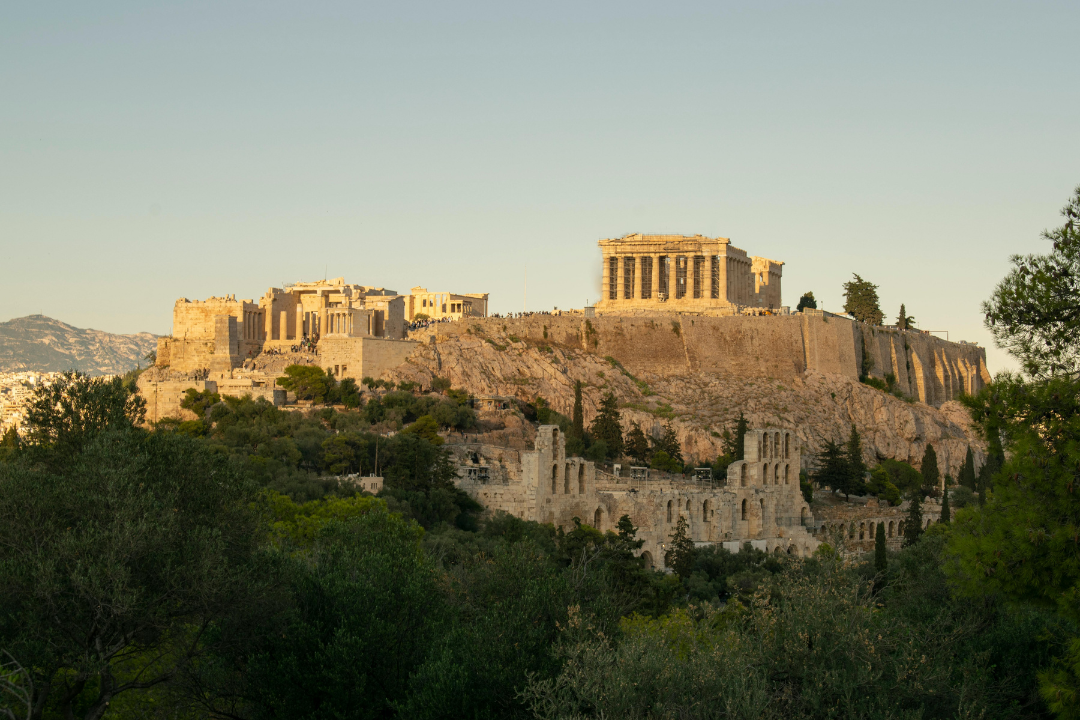
Croatia was part of the Hungarian and Austro-Hungarian sphere for centuries before entering Yugoslavia. It has a tradition of statehood and administration that is reflected in its institutions, its infrastructure and its integration into the European Union (since 2013). Dubrovnik, Zadar, Split, Hvar: these cities have accumulated centuries of urban management, Mediterranean commerce and contact with the cultural currents of Western Europe.
Montenegro had an entirely different development. Its modern history is defined by resistance: it was the only territory in the Balkans never completely subjugated by the Ottoman Empire. The clans of the interior — the Montenegrin tribes — maintained de facto autonomy for four centuries in the mountains of the Lovćen and Durmitor, with a warrior culture that became a central part of national identity. Montenegro has not joined the EU — it is a candidate but the process is slow — and has a more complex recent history: it formed part of the Federal Republic of Yugoslavia together with Serbia until 2006, when it declared independence by referendum.
That difference in trajectory is not historical anecdote. It shows up in the everyday details of travel.
The question of development: what it means in practice
Croatia is a mature tourist destination. It has been receiving millions of visitors for decades, and the infrastructure reflects this. The roads are better, the signage clearer, the accommodation more standardised and the public transport options more frequent. Dubrovnik has as dense a concentration of restaurants, bars and tourist services as any city in the western Mediterranean.
That comes at a price. Croatia — and especially Dubrovnik and the central islands, like Hvar or Brač — is expensive. In summer, accommodation prices in the most visited areas reach the level of first-tier European cities. An apartment in Dubrovnik’s old town in August can cost the same as a three-star hotel in Barcelona. The restaurants in tourist zones are expensive and often mediocre, because the volume of visitors does not demand effort. The overcrowding of Dubrovnik — which went so far as to impose quotas on cruise passengers because the old town simply could not absorb more — is a subject of political and social debate in Croatia.
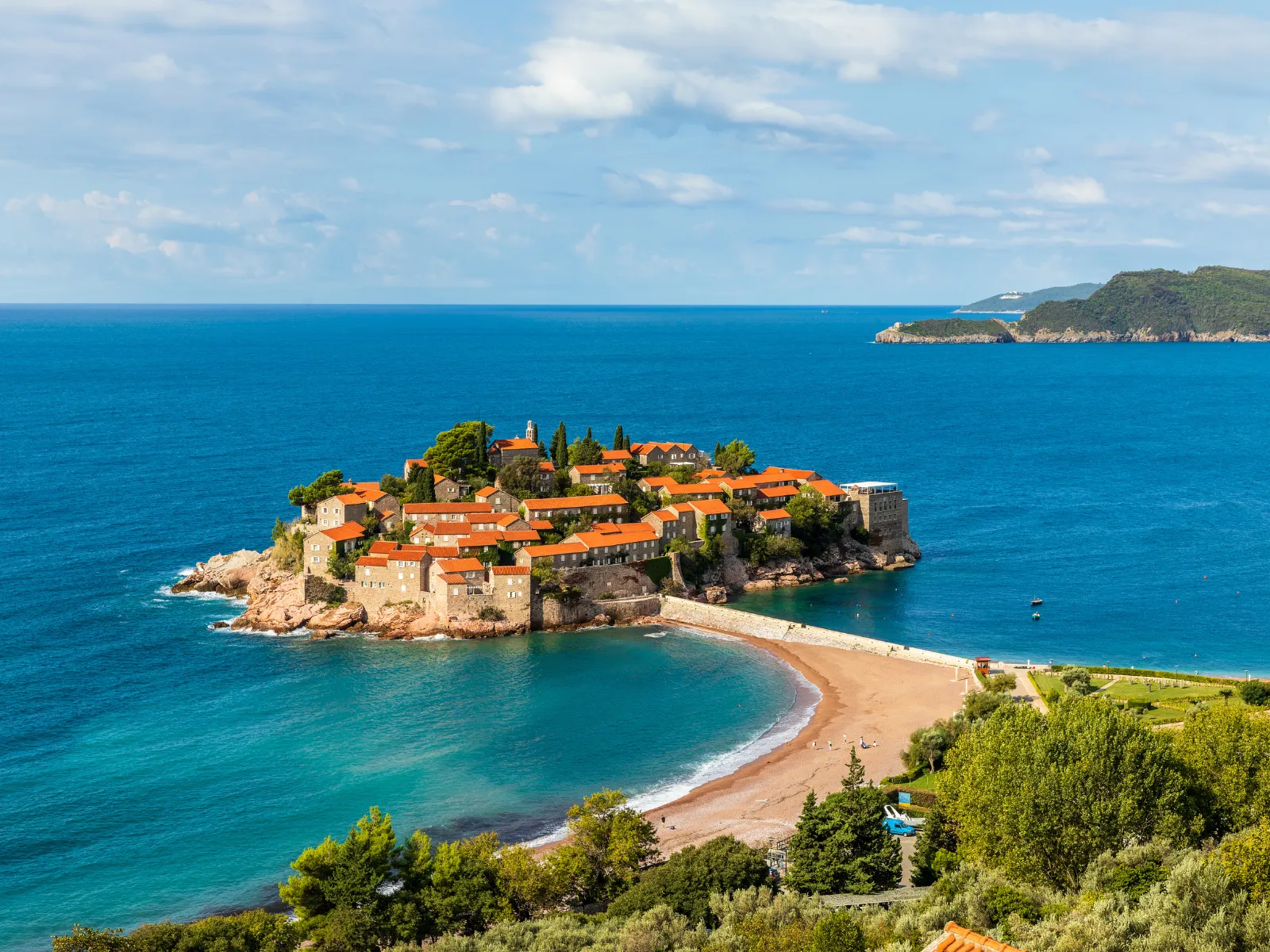
Montenegro is cheaper, consistently and in general. The difference is not marginal: eating well in Kotor costs approximately half what eating well in Dubrovnik costs. Accommodation is more affordable except in the few luxury hotels that have proliferated in the past decade. That does not mean Montenegro is cheap in absolute terms — prices rose significantly with the arrival of Russian and Arab luxury tourism in the 2010s — but the value for money is generally better than on the Croatian coast.
And Montenegro has inland areas — Durmitor, Lake Skadar, the northern canyons — that are still lightly developed destinations, where mass tourism has not arrived and prices belong to a different category.
Dubrovnik versus Kotor: the inevitable comparison
They are always compared because they are the two great walled destinations on the eastern Adriatic, and because they are less than an hour apart by car. But they are fundamentally different cities.
Dubrovnik is larger, richer in historical terms and more perfect in its architectural coherence. The old town of Dubrovnik is one of the best-preserved medieval urban ensembles in Europe, with its complete walls, its Renaissance palaces and the harmony of the white stone. It was an independent republic — the Republic of Ragusa — for centuries, and that tradition of autonomous city-state left an architecture that reflects accumulated pride and wealth. The problem with Dubrovnik is that its success has turned it into a theme park of itself: in summer there are more tourists than residents, and the experience of being in the old town can be genuinely difficult to enjoy properly.
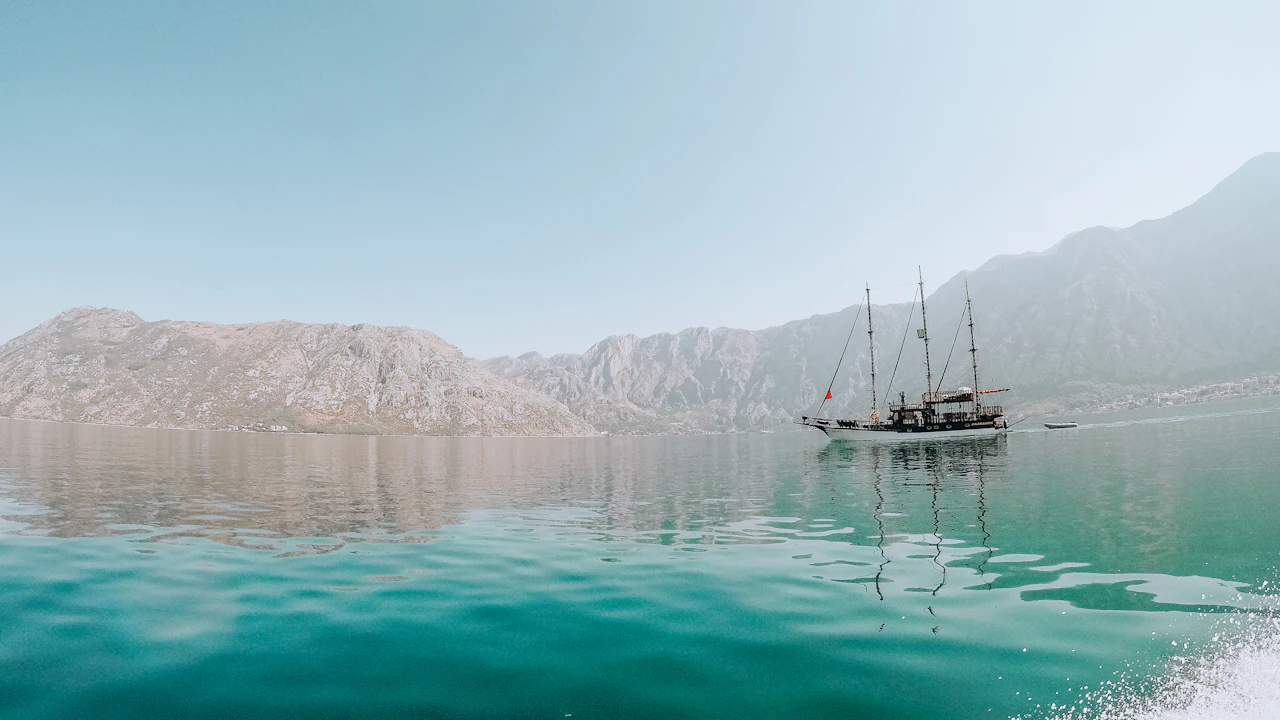
Kotor is smaller, more intimate and less even in its historical development — it has Venetian, medieval and Austro-Hungarian layers that do not always fit together elegantly — but precisely for that reason it has something Dubrovnik has been losing: the feeling that there is real life behind the tourist scenery. The bay that surrounds it adds a scale that Dubrovnik, sitting directly on the open sea, does not have. And the walls climbing the mountain to the Saint John fortress are more architecturally dramatic than anything Dubrovnik has to offer.
For the traveller seeking the perfect city, Dubrovnik. For the one seeking the city that can still be inhabited, Kotor.
The Croatian islands versus the Montenegrin coast
Here the comparison is more unequal, and in Croatia’s favour. Croatia has more than a thousand islands, with personalities, infrastructure and ferry connections that have no equivalent in Montenegro. Hvar, Vis, Korčula, Mljet, Brač: each with its own character, its villages, its vineyards, its coves. The ferry network connecting Split and Dubrovnik with the islands works well and allows you to spend days moving from island to island with relative flexibility.
Montenegro has no inhabited islands along its coast. It has the islets of the Bay of Kotor — Gospa od Škrpjela, which is a sanctuary, and Sveti Đorđe, which is a monastery — but it does not have the archipelago Croatia offers. If islands are the centrepiece of the trip, Croatia has no competition.
Montenegro compensates with the variety of its interior, which Croatia also has but which in Montenegro is on a more dramatic scale. The Tara Canyon, the Durmitor massif, Lake Skadar: these are destinations with no equivalent on the Croatian coast, which in its national park versions — Plitvice, Krka — are beautiful but of a different nature, more accessible and also more crowded.
The natural parks: Plitvice versus Durmitor and Skadar
The Plitvice Lakes are probably the most visited natural destination in the Balkans. Their terraced waterfalls and the impossible blue of the water are real and extraordinary. The problem is that everyone knows it: Plitvice has mandatory advance booking systems, daily visitor limits, and in high season you walk along wooden boardwalks following a flow of people that makes contemplation difficult. It is magnificent, but shared with the masses.
Durmitor is another experience. Rougher, less photogenic in the sense of the easy turquoise lake, it requires more physical effort — the mountain demands legs — and offers in return a solitude that the Plitvice Lakes cannot guarantee. The Tara Canyon, which surrounds the massif to the north, is a destination that can still be visited without saturation. Lake Skadar, in the south of Montenegro, is the largest lake in the Balkans and a bird sanctuary where the fishermen’s boats still dominate the landscape.
If natural parks are the central motivation for the trip, Montenegro has more to explore in terms of space and authenticity. If time is limited and you want to see something impactful with a minimum of effort, Plitvice is more accessible.
Infrastructure and the practical journey
In Croatia the trains are scarce and slow, but the intercity buses work well and connect Split, Dubrovnik, Zadar and the interior with good frequency. In Montenegro intercity public transport exists — buses between Podgorica, Kotor, Budva and Ulcinj — but it is less frequent and not always comfortable. Without a car, Montenegro is doable, but with less freedom.
Montenegrin roads are improving: the Bar-Boljare motorway, partially built with Chinese financing, connects the coast with the interior and is changing transit times. But in the mountain areas and in the Bay of Kotor, the roads remain narrow and demand patience.
Language: in Croatia there are more Spanish and English-speaking tourists and more service available in Western languages. In Montenegro English works in the main tourist destinations, but in the interior and in less visited areas Serbian/Montenegrin is the language of communication. It is not a real obstacle, but it is a detail that reflects the different degree of tourist seasoning.
Crossing the border: the most logical combination
The border between Dubrovnik and Kotor is the most frequented and easy crossing between the two countries. It is 80 kilometres that include the border crossing at Debeli Brijeg — normally quick, but in summer with queues that can last an hour — and the Kamenari ferry that crosses the Bay of Kotor.
The most common combination — and the one that makes sense for most travellers — is a base in Dubrovnik or on the Dalmatian coast combined with three or four days heading down into Montenegro. It can be done without a car — the Dubrovnik-Kotor bus works well — though with a car there is much more flexibility to explore the bay and head up into the interior.
Visas are not a problem: both countries allow entry to citizens of the EU, the United States, Canada and most Latin American countries without a visa.
Who each destination is for
Croatia makes more sense if the islands are a central part of the plan, if you are travelling with young children and prioritise infrastructure, if Dubrovnik is on your personal list of places to see before you die, or if time is limited and you need a more compact, well-trodden destination.
Montenegro makes more sense if mass tourism actively wears you out, if the interior and the mountains attract you as much as the sea, if budget is a real factor, if you are looking for an Adriatic that still has undeveloped corners, or if you already know Croatia and want to see what is on the other side of the border.
Combining the two is, honestly, the richest option. Dubrovnik deserves whatever time you want to give it. And Montenegro, right next door, offers a rougher and less polished version of the same Adriatic whose greatest value lies precisely in that difference.
If you want to go deeper into every route, city and corner of Montenegro, the Far Guides complete guide has it all: interactive maps & itineraries, information that stays up to date.
More on Montenegro
Keep reading.
Other pieces from the same destination.
Next step
Ready for Montenegro?
The guide is for travelling.
Interactive maps & itineraries and everything that doesn't fit in an article. Always the latest published version.
Get the Montenegro guide