


Montenegro · 27 July 2026
Bar: the city of the oldest olive tree in the Mediterranean
The port city connecting Montenegro to Italy has an olive tree over 2,000 years old, medieval ruins destroyed by an earthquake and a train to Belgrade.
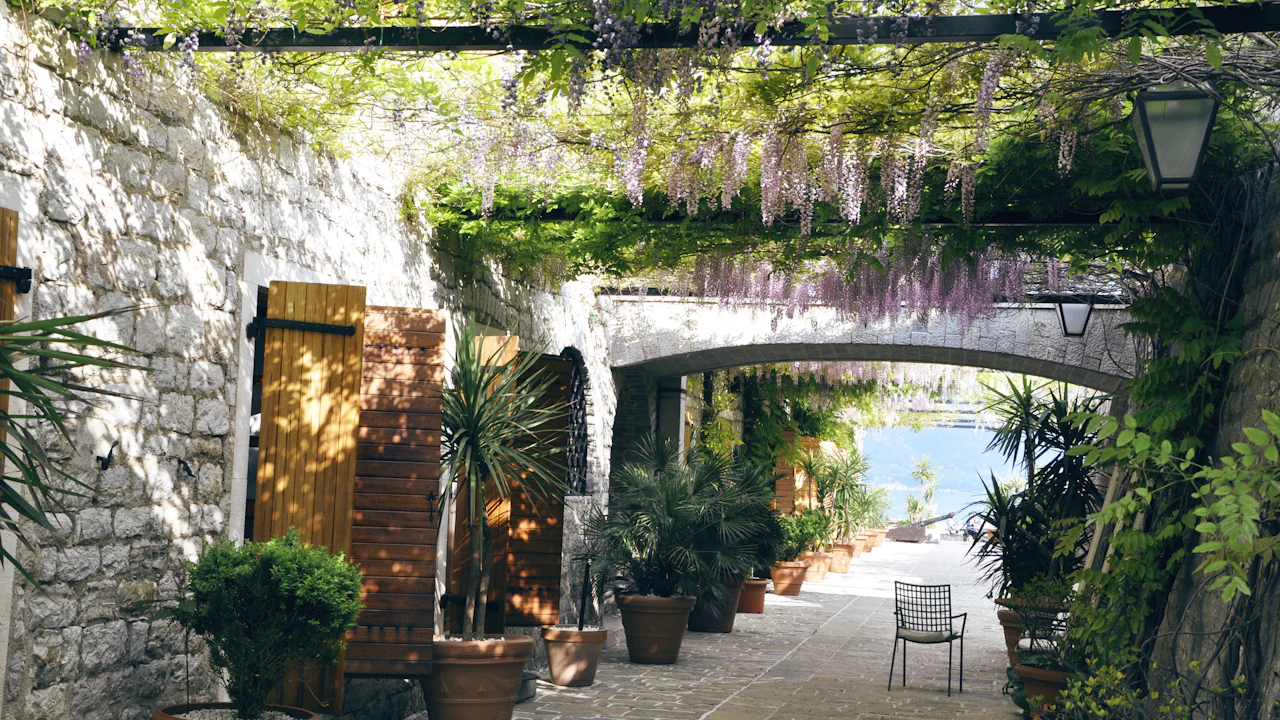
In the Mirovica neighbourhood of the municipality of Bar, there is an olive tree that has been standing here longer than any city in Montenegro. Dendrochronologists — the scientists who date trees by counting trunk rings — place it somewhere between two thousand and two thousand two hundred years old. Some independent studies have proposed even more ambitious dates. Certainty is impossible: the tree is hollow at its centre, which prevents a complete ring count. But even with the standard margins of error in this kind of dating, this tree was here when the Romans were building the first roads through the Balkans.
Local legend says it was planted by the Greeks, colonists who reached this coast several centuries before Christ. The story is unverifiable but sensorially plausible: the tree has the appearance of something that has survived millennia of droughts, wars and earthquakes with the majestic indifference of living things that measure time in centuries. The trunk is twisted in on itself in spirals that seem the result of geological forces rather than conventional plant growth. It still produces olives every autumn.
Stari Bar: the city the earthquake left behind
Four kilometres inland from Bar’s port, on a rocky hillside between hills covered with olive groves, is Stari Bar — Old Bar — or more precisely what remains of it. The 1979 earthquake destroyed parts of Stari Bar that centuries had spared, and the subsequent decision was not to rebuild but to consolidate the ruins and turn them into a visitable archaeological site.
The medieval city of Bar was founded in the ninth century and reached its peak under Venetian rule (1443-1571) and then Ottoman control (1571-1878). During those centuries it was a commercially and administratively significant regional centre: it had a cathedral, mosque, baths and Roman aqueducts. The 1979 earthquake — the same one that destroyed much of Kotor and the Montenegrin coast — affected Stari Bar unevenly: some buildings collapsed, others survived damaged, and others resisted with surprising integrity.
Today the Stari Bar enclosure is one of the most evocative archaeological sites in the Balkans. Ruins mix with centuries-old olive groves; there are cobbled streets leading to roofless houses where you can see the sky through what was once a private room. The fifteenth-century Church of St Catherine retains its carved stone facade despite having its interior open to the sky for decades. The Ottoman mosque has an intact minaret and an empty interior.
Entry costs three or four euros. The best time to visit is early morning, when the lateral light illuminates the stone of the ruins and there are no tour groups. In August the heat on the hillside can be considerable.
The port and the Bari ferry
Bar is Montenegro’s only container port and the country’s sole regular maritime connection to Western Europe. The Jadrolinija ferry between Bar and Bari, Italy, operates year-round: the crossing takes between nine and eleven hours depending on the vessel; tickets cost between forty and a hundred euros per person according to season and cabin type. For anyone travelling between Italy and Montenegro, it is an alternative to flying that allows you to take your car and experience the Adriatic crossing properly.
The port has the industrial aesthetic of a working harbour: cranes, containers, lorries. It has no charm, but it functions, which is what a port needs. The outskirts of Bar, heading north towards Budva, have the accumulation of eighties apartment blocks and commercial buildings that characterises Montenegrin cities that grew without planning during the Yugoslav era.
The Bar-Belgrade train
The railway line connecting Bar to Belgrade is one of Europe’s most extraordinary pieces of railway engineering, built between 1959 and 1976 under technical and geographical conditions that repeatedly seemed insurmountable. The numbers give the scale: four hundred and seventy-five kilometres of track, two hundred and fifty-four tunnels, four hundred and thirty-five bridges, with the route’s crest exceeding a thousand metres of altitude in the Montenegrin interior.
The Mala Rijeka viaduct — one of the route’s structures — was for several years the world’s highest railway bridge when it opened in 1976, with its pillars nearly two hundred metres above the valley floor. The train takes between ten and twelve hours to complete the full journey. There is one service per day. For anyone with time and a desire to see the Balkan interior from a train window, it is one of the continent’s most memorable rail experiences.
The complete Far Guides Montenegro guide includes detailed routes, interactive maps and all the practical information you need to plan your independent trip.
More on Montenegro
Keep reading.
Other pieces from the same destination.


Next step
Ready for Montenegro?
The guide is for travelling.
Offline maps, itineraries and everything that doesn't fit in an article.
Get the Montenegro guide