Montenegro · 10 August 2026
Kolašin and Montenegro's interior: the mountains before tourism
Seventy kilometres from the coast there is a completely different Montenegro: Biogradska Gora National Park, one of Europe's last primeval forests, and a mountain town free of the coast's tourist pressure.

The road that climbs north from Podgorica passes first through the capital’s industrial outskirts, then through the olive groves and vineyards of the Morača basin, and then, in a turn that seems to announce a new chapter, enters the Morača River canyon. Limestone walls close in over the road for kilometres, with the emerald-green river running thirty or forty metres below. And suddenly the canyon opens and you arrive in Kolašin: a mountain town at 950 metres, three or four degrees cooler than the coast, with the smell of black pine in the air.
Kolašin has four thousand inhabitants and a dual function: ski station in winter — with the Bjelasica and Sinjajevina slopes a few kilometres away — and hiking base in summer. It is not a mass tourism destination. Accommodation prices are forty to sixty percent lower than on the coast. The food offer is honest — local taverns serving lamb, cheese and Vranac wine — without the tourist menu inflation of Budva or Kotor.
Biogradska Gora National Park
About twenty kilometres east of Kolašin, Biogradska Gora National Park protects one of the three remaining primeval forests in Europe. The other two are in Białowieża — on the border between Poland and Belarus — and Perućica, in Bosnia. Biogradska Gora has around sixteen hundred hectares of forest that no axe has touched for centuries: three-hundred-year-old beeches, century-old maples, firs exceeding forty metres in height, with undergrowth so dense that in some sections it is impossible to see the sky.
The heart of the park is Lake Biograd, a glacial lake of nearly four kilometres in circumference at 1,084 metres altitude, surrounded by primeval forest on three of its shores. The lake has clear, cold water even in August. The path that encircles it — about four kilometres, flat and well-marked — is the park’s most popular walk and accessible to any level of fitness. The reflection of the forest on the water on calm days, with the peaks of the Bjelasica in the background, creates an image that photography rarely manages to capture faithfully.
There are longer trails that penetrate the primeval forest and reach the massif’s summits, with views over the Morača Canyon and, on clear days, as far as Lake Skadar. Park entry costs three euros; parking at the entrance is an additional two euros.
Morača Monastery
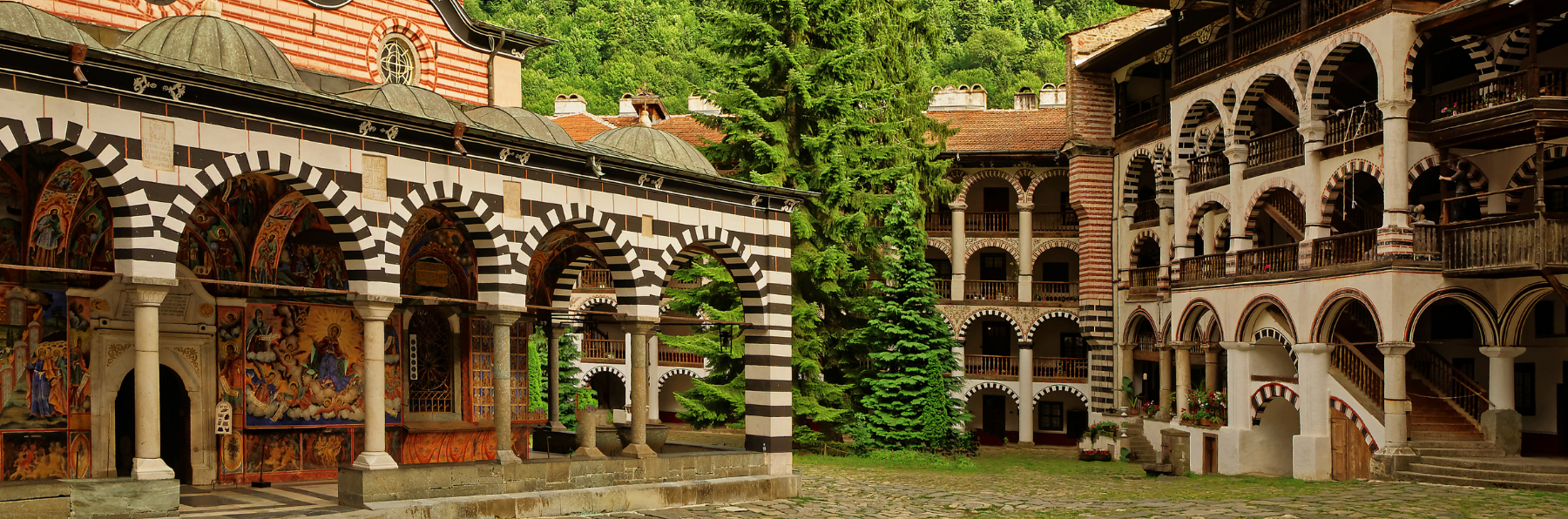
Thirty kilometres south of Kolašin, in a bend of the Morača Canyon that the afternoon sun lights with intense lateral light, Morača Monastery is one of Montenegro’s most beautiful. It was founded in 1252, making it one of the oldest in the country, and has been destroyed and rebuilt several times, though the main buildings retain medieval elements.
The sixteenth-century frescoes that decorate the interior of the main church — depicting the life of the Prophet Elijah, with a pictorial quality surprising for a mountain monastery — are the primary reason for art lovers to visit. The colour palette, the treatment of figures and the narrative capacity of the fresco cycles are comparable to the great medieval fresco ensembles of the region. The context surrounding them — the canyon’s rock walls, the river audible but invisible from inside the monastery, the silence of the place — amplifies their effect.
The train as an experience
The railway line connecting Podgorica to Kolašin — and continuing to Belgrade — is one of Europe’s most spectacular rail routes. The journey from Podgorica to Kolašin takes approximately ninety minutes and traverses the Morača Canyon from the inside, with tunnels opening onto viaducts a hundred metres above the river, before ascending to the high plateau through a series of curves that make the Swiss mountain railway seem conventional.
There is one train per day. The timetable is not always convenient for day trips from the coast, but for anyone staying in Kolašin or Podgorica it is a way of seeing the interior that the car cannot offer: the perspective from inside the canyon, with rock walls on both sides and the river at the bottom of the precipice, is completely different from that of the road running along the rim.
Kolašin is, in short, the Montenegro that coastal tourism has not yet transformed. That may change — ski and mountain tourism development projects are ambitious — but for the moment the Morača valley and Biogradska Gora forest have a quality that the coast can no longer offer.
The complete Far Guides Montenegro guide includes detailed routes, interactive maps and all the practical information you need to plan your independent trip.
More on Montenegro
Keep reading.
Other pieces from the same destination.
Next step
Ready for Montenegro?
The guide is for travelling.
Offline maps, itineraries and everything that doesn't fit in an article.
Get the Montenegro guide