

Montenegro · 4 May 2026
Lake Skadar and Perast: Montenegro's silence
A lake that is a border, a village with more churches than houses, and the side of Montenegro that doesn't make it to Instagram.
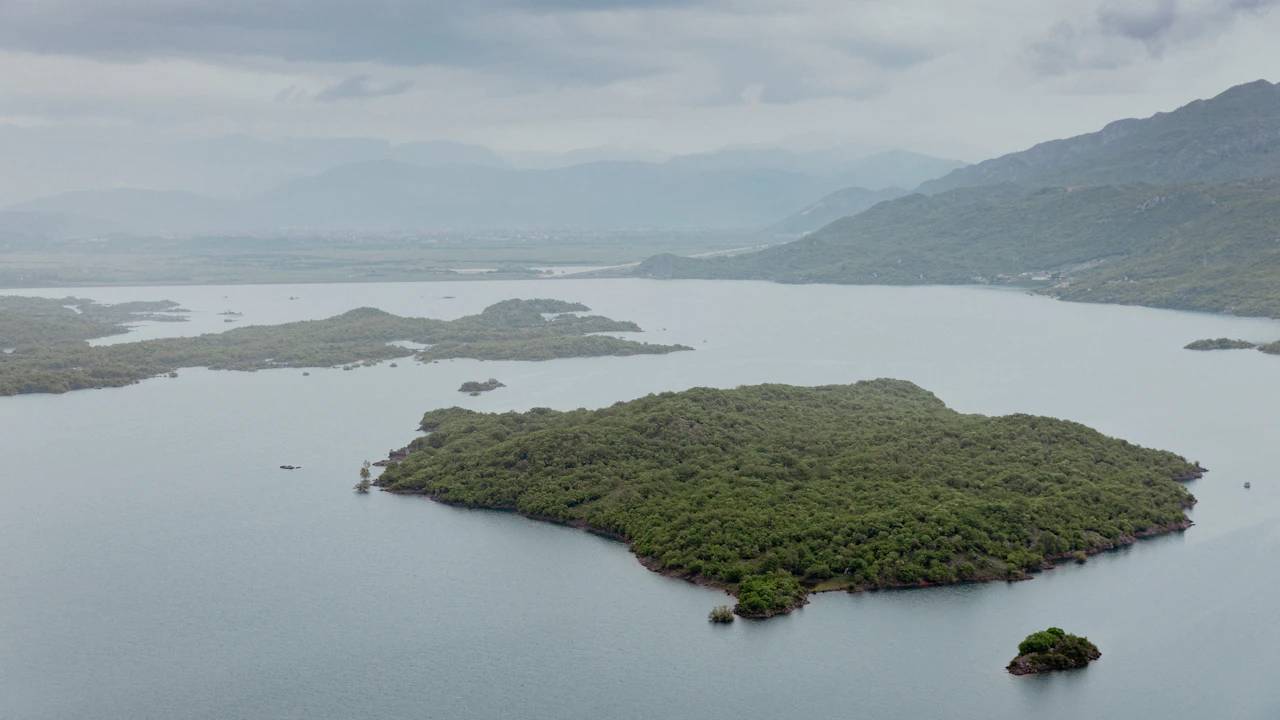
There are places that resist photography. Not because they are ugly or difficult to frame, but because what makes them valuable is something the image cannot capture: a density of silence, a stillness of the water, a relationship between time and space that the lens cannot compress into a rectangle. Lake Skadar and the village of Perast are, each in their own way, that kind of place.
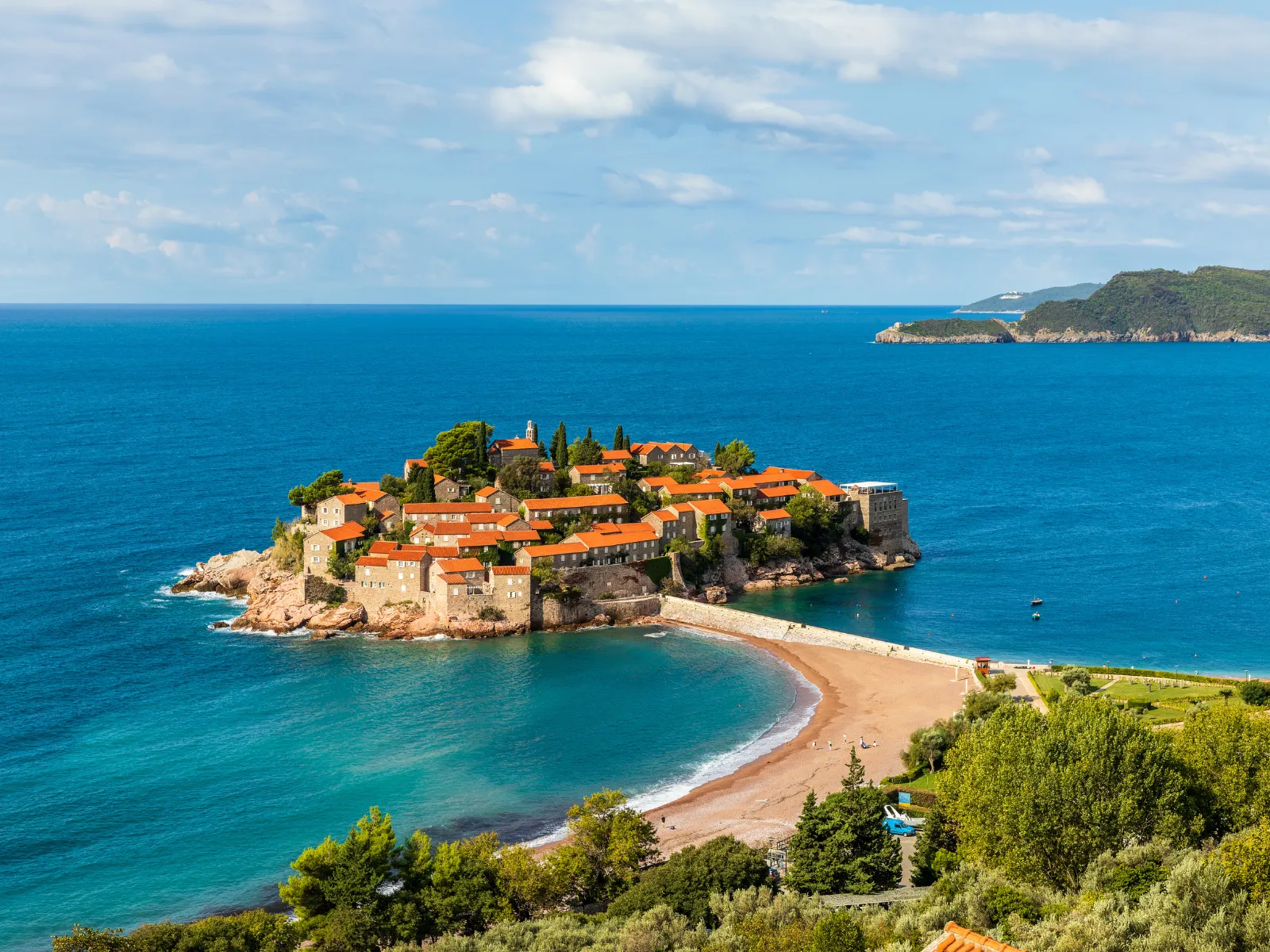
They do not appear in the most popular versions of Montenegro. The Bay of Kotor, Budva, Sveti Stefan: those are the names that get repeated. Skadar and Perast are mentioned in passing, as addenda to the main destinations, as if they were optional extras for those who have already seen the important things. This is a misunderstanding. They are, in many respects, the most important things.
The lake that is two countries
Lake Skadar — Skadarsko jezero in Montenegrin, Liqeni i Shkodrës in Albanian — is the largest lake in the Balkans. At its maximum level, covering around 370 square kilometres, a figure that varies significantly between winter and summer due to the underground water system that feeds it, it occupies a territory belonging to two countries: approximately two thirds are Montenegrin, one third Albanian.
The border on the lake is not marked with fences or checkpoints. It is marked with buoys that fishermen know and that a tourist in a boat only identifies if someone points them out. There is something revealing in that: an enormous lake that two countries share without the visible apparatus of division, because water does not understand national borders, and neither do birds.
Lake Skadar is, before anything else, a bird sanctuary. More than 280 species have been recorded on its shores and its islands — not large islands, but outcroppings of rock and vegetation that emerge from the water at different heights depending on the season — making it one of the most important sites in Europe for migratory bird observation. The Dalmatian pelican nests here: it is one of its last breeding colonies in Europe, a species whose presence on the continent is measured in hundreds of individuals, not thousands. Seeing them on the lake — enormous, slow, with that dissonant elegance that large birds have — produces the same feeling as finding something you did not expect to still exist.
The geology of the depths
To understand the lake you need to understand its geology, which is unusual. The karst — the porous limestone that forms the Adriatic coast — behaves in a particular way here: the lake is not only fed by the visible rivers that flow into it, but by underground springs that emerge directly from the lake bed. This means that the water level is unpredictable in relation to surface rainfall, and that the lake itself is partly an underground phenomenon expressing itself upwards.
On the Montenegrin shores, the main road — the one connecting Podgorica with the Albanian border — follows the northern edge of the lake, sometimes so close to the water that in winter the pastures become submerged. The villages overlooking the lake are small, with their vegetable gardens and their boats tied to the jetties, their seventeenth-century Orthodox churches and their dogs sleeping in the sun on slow September afternoons.
Access to the national park — the lake and its margins were declared a Montenegrin National Park in 1983 — can be made by car, but the right way is by boat. Boat excursions leave from several points: Virpazar, the main village on the Montenegrin side, is the most frequented. From there, two-hour routes navigate through masses of water lilies — which in June form carpets of violet flowers covering entire areas of the lake — approach the islets with their medieval monasteries and skirt the nesting zones where the pelicans let the hours pass with the unhurried manner of animals that have nowhere to be.
The monasteries of the water
The islets of Lake Skadar are not just geography. They are also religious history: several of them have Orthodox monasteries that functioned for centuries as centres of spiritual life and, in certain periods, as refuge against Ottoman invasions. The Kom monastery, founded in the fourteenth century, sits on an islet accessible only by boat, and at its moment of greatest activity it housed a small monastic community dedicated to the copying of manuscripts. The Starčevo monastery, on another islet, has a tradition of welcoming pilgrims stretching back to the thirteenth century.
These monasteries are not museums. Some are restored and have sporadic monastic presence. Others are ruins that time and humidity have been reclaiming. What all of them have in common is the relationship with water: built on an islet, surrounded by lake, visible from the shore as fixed points in a landscape that changes colour and dimension with the seasons.
The feeling of arriving by boat at one of these islets at sunset, when the light flattens across the water and the lake shifts from blue to silver, is one of those things that is hard to put into words without betraying them.
Perast: too many churches for so few people
Forty kilometres to the north of Virpazar, in the Bay of Kotor, Perast is the other end of the argument. If Lake Skadar is vast and horizontal, Perast is intimate and vertical: a village three hundred metres long, literally, wedged between the mountain and the sea.
The figure most often cited first about Perast is the churches: sixteen churches for a population that at its peak never exceeded three hundred inhabitants, and is considerably smaller today. The proportion is absurd and has an explanation that speaks of the nature of this society more than its religious devotion. In Perast — as in many villages of the Bay of Kotor — each important family had its own family church, its own pantheon, its own space for the representation of power and social distinction. The churches were not just places of worship: they were also markers of status, visible signals of the wealth and hierarchy of the families that had built and maintained them.
And the families of Perast were wealthy. Extraordinarily wealthy, for the scale of such a small village.
The sea as a profession and the men who watched the horizon
Perast’s wealth did not come from the land — there is no land to work, the village is literally wedged between the mountain and the water — but from the sea. Perast was, during the seventeenth and eighteenth centuries, one of the main centres of naval training on the Adriatic. The Perast School of Navigation was known throughout the region, and its captains sailed for Venice, for Ragusa (Dubrovnik), for the Pope.
The most singular episode in this tradition is the relationship with Peter the Great of Russia. In 1694, the Tsar — who was modernising the Russian navy with urgency, aware that naval power was the difference between European empires that were growing and those that were falling behind — hired several captains from Perast to train his officers. Savva Ivanovitch Ragusinski and several other sailors from the Bay of Kotor spent years in Saint Petersburg training the first Russian admirals. In exchange, Peter the Great donated to Perast a portrait of himself — which still hangs in the local museum — and the gratitude of an empire.
That history of sailors who watched distant horizons while their families built baroque palaces in this corner of the bay explains the monumental density of such a small place. The palazzi lined up along the Perast promenade — seventeen of them, all from the seventeenth or eighteenth century, several restored as apartments or small hotels — are the materialisation of maritime wealth: white stone from the bay, windows overlooking the sea, coats of arms on the facades.
Gospa od Škrpjela: the island men built
Five hundred metres from the shore of Perast, in the middle of the bay, there are two islets. One is natural — Saint George, with a twelfth-century Benedictine monastery and the cemetery of Perast’s captains — and the other is not entirely so.
Gospa od Škrpjela, Our Lady of the Rock, is an artificial island. Or more precisely: it is a natural reef that the sailors of Perast were enlarging stone by stone over centuries. The tradition began, according to legend, in 1452, when two sailors of the Mortesich family found an image of the Virgin on the reef and began bringing stones to establish a sanctuary. The practice became a collective ritual: every passing ship had to throw a stone, and the residents of Perast were obliged to participate in the fête de la fasinada — the sinking festival — which is still celebrated every year in July.
The church that crowns the islet — built in 1630, reformed in the eighteenth century — contains in its interior one of the most unusual artistic collections on the Adriatic: 2,500 votive silver plaques donated by sailors in gratitude for surviving shipwrecks, diseases, battles. These are not works of art in the conventional sense. They are fulfilled promises, the material representation of the gratitude of men the sea had forgiven, who needed to leave a record of it somewhere.
The ceiling of the church has a tapestry woven by Jacinta Kunić-Mijović over twenty-five years using her own hair. She began weaving it when her husband left for war and finished it when she learned he had died. It is embroidered in gold and silk thread, and at the centre is a face — a portrait of the husband, woven with her own hair. It is one of those pieces that do not work well in an art book, and which in the place where they were created and where they still remain, in that dark interior that smells of wax and water, have an intensity that is difficult to absorb without stopping.
What these places have in common
Lake Skadar and Perast seem to have nothing in common: one is vast and open, the other intimate and built; one is nature almost pure, the other is history accumulated along a single street. But they share something fundamental: they both demand slowness.
They do not work as quick visits. Lake Skadar seen from the road for twenty minutes is a large lake. Navigated for two hours at dawn, with the pelicans a hundred metres away and the sound of water against the hull, it is something else entirely. Perast walked from one end to the other in fifteen minutes — which is all its length allows — is a pretty village. Perast sat in for an afternoon, following the changes of light on the water, listening to the evening mass in one of the churches that are never closed, is one of the most peculiar places in the Mediterranean.
Montenegro sells its easiest images efficiently: the Bay of Kotor from the air, the silhouette of Sveti Stefan, the beaches of Budva. These are real and beautiful images. But the Montenegro that resists the image — the one that exists in the silence of the lake and in the silver plaques of the saved sailors — is the one that stays with you after the trip.
If you want to go deeper into every route, city and corner of Montenegro, the Far Guides complete guide has it all: interactive maps & itineraries, information that stays up to date.
More on Montenegro
Keep reading.
Other pieces from the same destination.


Next step
Ready for Montenegro?
The guide is for travelling.
Interactive maps & itineraries and everything that doesn't fit in an article. Always the latest published version.
Get the Montenegro guide