
Montenegro · 21 September 2026
Petrovac and the South Riviera: Montenegro without the crowds
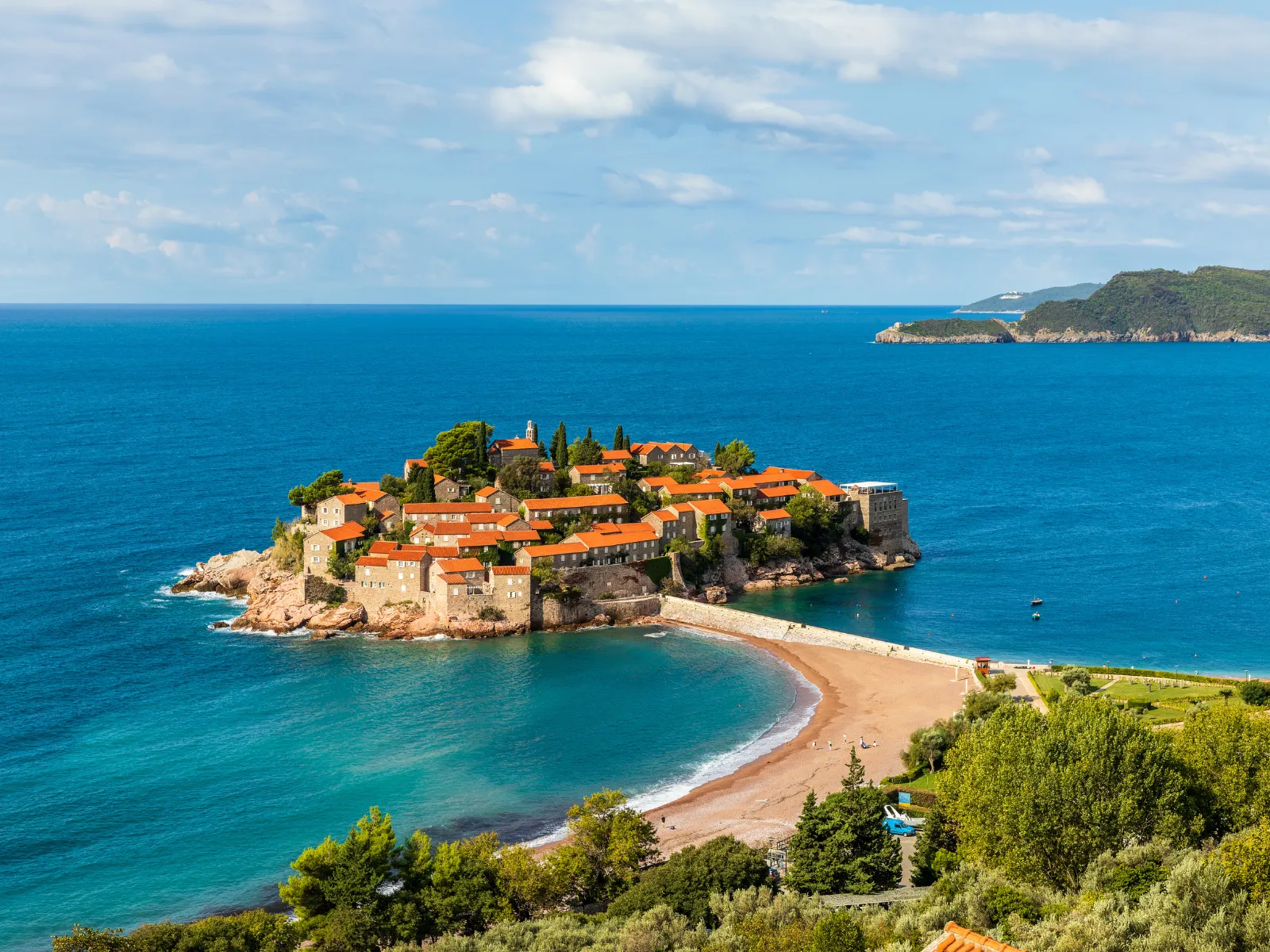
Seventeen kilometres from Budva there is a different Montenegro: fewer tourists, a pine-fringed cove, a Venetian tower and Buljarica beach just behind.

Budva and Petrovac are seventeen kilometres apart on the coastal road, which translates to about twenty minutes by car. But the difference between them is not measured in kilometres — it is measured in the kind of Montenegro they represent. Budva is the success story of Adriatic mass tourism: nightclubs, multi-storey hotels, beaches packed with sunbeds at peak-season prices. Petrovac is what the Montenegrin coast was before tourism reinvented it: a three-hundred-metre cove sheltered by pine trees, with a town of human proportions and almost nothing demanding attention beyond the quality of the water and the quality of the quiet.
The difference is not accidental. Petrovac has no harbour, no nearby airport, no walled-city history that gives Budva its narrative identity. What it has is a well-oriented beach, protected from northerly winds, with a depth that means the water warms earlier than elsewhere and a clarity that on calm days lets you see the bottom several metres down.
The cove, the tower and the island
Petrovac beach has a geometry that has resisted development: a three-hundred-metre arc of sand, fringed by Mediterranean pines at each end and with the Venetian tower on the eastern breakwater. That tower — built in the sixteenth century as a watchtower to detect the pirate and Ottoman fleet attacks that plagued this stretch of the Adriatic — is today the most recognisable historical object in the village. The interior cannot be visited, but its silhouette from the beach, backlit at sunset, has a visual quality that local photographers know well.
In front of the beach, around four hundred metres from shore, lies the island of Katič, with a small chapel at its summit. The island is reachable by swimming in normal conditions or by kayak — rentals on the beach cost around ten euros per hour — and offers a panoramic view of the cove and the village that cannot be had from land. In August, when Petrovac beach is at its busiest, the island has the quality of a destination within a destination: paddling two hundred metres from shore and looking back is to see the scene from outside.
Buljarica: the beach nobody has touched
Two kilometres south of Petrovac along a coastal road that climbs and dips through the hillside is Buljarica. Fifteen hundred metres of dark-sand beach without a single hotel in the front row, with a pine forest running to the very edge of the sand and closing the landscape behind. The water is so shallow in the northern section that at low tide you can wade a hundred metres out and still be at waist depth.
Buljarica is the beach that Petrovac keeps in reserve: when the main cove fills up — something that happens at the peak of August, though with far less intensity than in Budva — those who know the area walk down to Buljarica. There is one beach bar and sunbed rental in the northern section. The rest is free beach.
The reason Buljarica has not been developed in the manner of other Montenegrin beaches has to do with land ownership and the coastal zoning debates Montenegro has spent years not resolving. There are plans on paper — there always are — but for now the beach remains as it is, which is a rarity on the Adriatic coast.
The village at human scale
Petrovac the village follows the pattern of medium-sized Montenegrin coastal destinations: a main street with restaurants and cafés, a small morning market, a church, bars open until late in season but without the sound levels of Budva’s clubs. Accommodation is predominantly apartments and family guesthouses — no chain hotels — which shapes the visitor profile: families, couples, travellers who prefer their own kitchen to a buffet.
Petrovac’s restaurants are among the best value on the coast. The simplest places — no sea-view terrace, no five-language menu — serve fresh fish of the day at quality comparable to Budva’s more expensive options, at half the price. Mountain trout, bay mussels and skorup (local clotted cream) with cornbread are the orders that repeat among those who know the area.
The bus between Budva and Petrovac runs roughly hourly in season and takes about twenty minutes. For anyone not renting a car but wanting the contrast, it is the most effective day trip on the Montenegrin coast.
The complete Far Guides Montenegro guide includes detailed routes, interactive maps and all the practical information you need to plan your independent trip.
More on Montenegro
Keep reading.
Other pieces from the same destination.


Next step
Ready for Montenegro?
The guide is for travelling.
Interactive maps & itineraries and everything that doesn't fit in an article. Always the latest published version.
Get the Montenegro guide