Montenegro · 11 May 2026
Cetinje: Montenegro's forgotten royal capital
Montenegro's old royal capital, with its palaces, monasteries and embassies turned into museums. Why Cetinje matters for understanding the country.
Cetinje has something few cities manage: the dignity of a place that knows the world has moved on and has decided not to mind. Its centre is almost a stage set — low palaces, former embassies, wide and quiet streets — but a stage set that was real, that carried genuine weight in European diplomacy, that housed kings and consuls and negotiations during a period when Montenegro was a tiny kingdom that had, against all logic, managed to remain free.
Today it has sixteen thousand inhabitants. Podgorica, forty kilometres down the road, is the real capital — the administrative and economic centre. Cetinje has been left suspended in a kind of historical parenthesis that makes it more valuable than many functioning capitals: a physical record of what the Montenegrin state was before Yugoslav wars and globalisation dissolved everything into something else.
The kingdom nobody expected
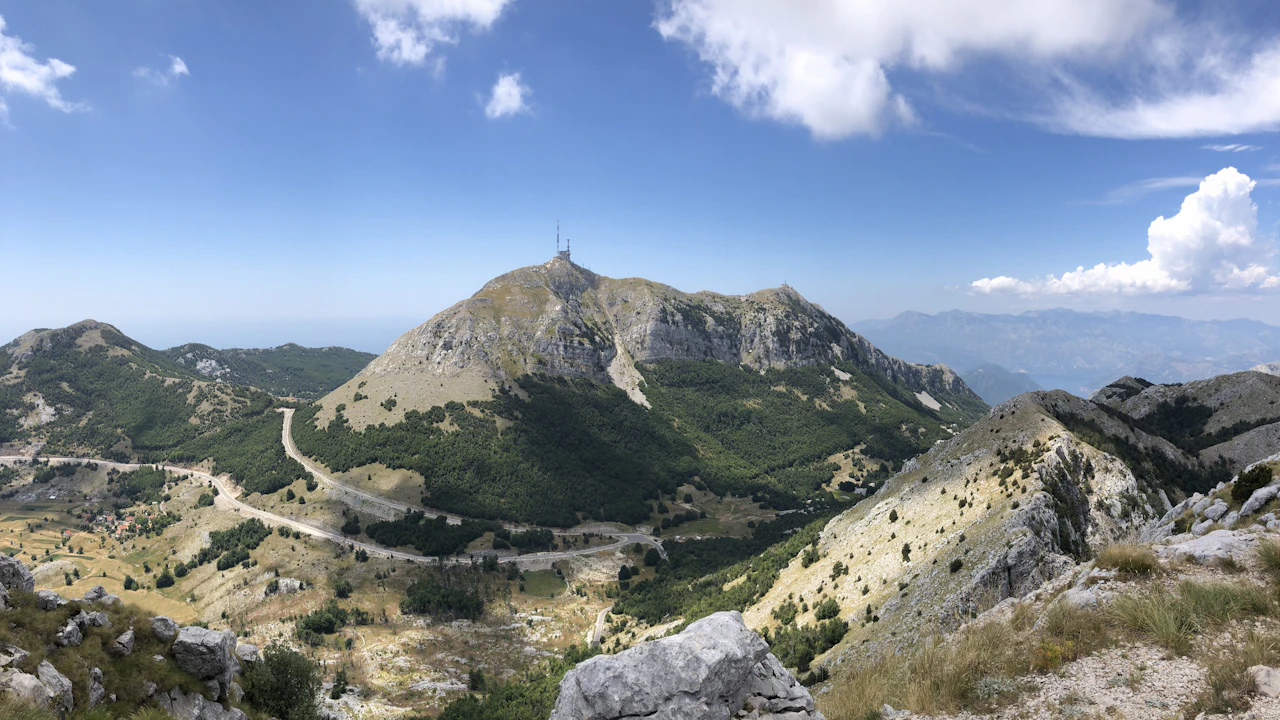
Montenegro was recognised as an independent principality at the Congress of Berlin in 1878, making it the first sovereign Balkan state formally acknowledged by the great European powers. The paradox was that it had been effectively independent for centuries: the Ottoman and Austro-Hungarian empires tried repeatedly to control the Lovćen mountains and always found that the terrain did the work for the Montenegrins. An army can conquer a plain; conquering the vertical karst of the Dinaric Alps is a different matter entirely.
Cetinje was the capital of that kingdom. King Nikola I Petrović-Njegoš — who ruled for forty-eight years, from 1860 to 1918 — built his palace here, hosted the foreign embassies that came to represent the major powers of the age, and turned the city into a diplomatic centre of gravity that was implausible given its size. Europe’s great royal families became entangled with Montenegro through King Nikola’s daughters: two married Italian princes, one married the Russian tsar, another married the King of Serbia. A mountain king who dealt his daughters out like diplomatic cards.
The Royal Palace
The palace is today the National Museum of Montenegro — or more precisely one of its sections — and deserves at least two hours. It is not a palace in the sense of Versailles or the Hofburg: it is a sober late-nineteenth-century mansion that reflects the economic constraints of a kingdom surviving mainly on Russian and Austro-Hungarian subsidies. What it has, however, is a collection of objects that narrate the history of the Montenegrin state with a honesty that larger national museums often lose when they turn history into spectacle.
The personal rooms of the king and Queen Milena have been left largely as they were. The diplomatic gifts — ceremonial Turkish weapons, Russian tableware, Austro-Hungarian military uniforms — speak of the alliances and tensions that defined the tiny kingdom’s foreign policy. There is a room containing documents from the Congress of Berlin. There are portraits in which the king appears with the slightly forced dignity of someone who needs others to take him seriously.
Cetinje Monastery and the hand of St John
Cetinje Monastery is a few minutes’ walk from the palace. It was founded in the fifteenth century by Ivan Crnojević, the feudal lord whose lineage gave Montenegro its name, and has been destroyed and rebuilt several times — the Ottomans burned it on at least two occasions. The current structure dates from the nineteenth century.
The monastery holds two relics of considerable importance in the Orthodox world: a fragment identified as a piece of the True Cross and the right hand of St John the Baptist, the prophet who baptised Jesus according to the Gospels. The second relic has an extraordinary travel history: it spent time in Byzantium, passed to the Order of Malta, was transferred to Russia under the tsars, survived the Bolshevik Revolution, and arrived in Cetinje in the 1990s after a journey that included decades in exile. The hand is small, dark, partially incomplete; it is displayed in a silver reliquary. For Orthodox Christians it is one of the most sacred objects in the Balkans. For everyone else it is an object that condenses centuries of religious and political history into a space barely a square metre in size.
The embassies: a frozen diplomatic landscape
One of Cetinje’s peculiarities is that it had more embassies per square kilometre than almost any other city in the world — when it was a capital. The buildings still stand: two-storey houses in a late Central European style, now functioning as museums or undergoing restoration. The French embassy, the Russian, the Austro-Hungarian, the British. Each has a domestic scale that is almost touching: the entire world in miniature, represented by buildings that in any other city would pass for upper-middle-class private residences.
This miniature diplomatic quarter is perhaps the most revealing thing about the city. Cetinje was not large, not wealthy, had no significant army and no natural resources to justify such international attention. What it had was a strategic position in the Balkans — whoever controlled Montenegro controlled the pass between the Adriatic and the interior — and a king who understood that his kingdom’s survival depended on making itself indispensable in the games of the great powers.
A city that knows what it lost
Walking through Cetinje on a weekday afternoon in the off-season is to understand that time does strange things to places. The city is not dead — there are cafés, young people, a provincial but not inert rhythm of life — but it has the specific stillness of somewhere that was once at the centre of things and has accepted that it no longer is. Its residents seem to carry that past with pride, not with paralyzing nostalgia but with the awareness that Cetinje has something Podgorica, for all its growth, cannot buy: history you can read in the stone.
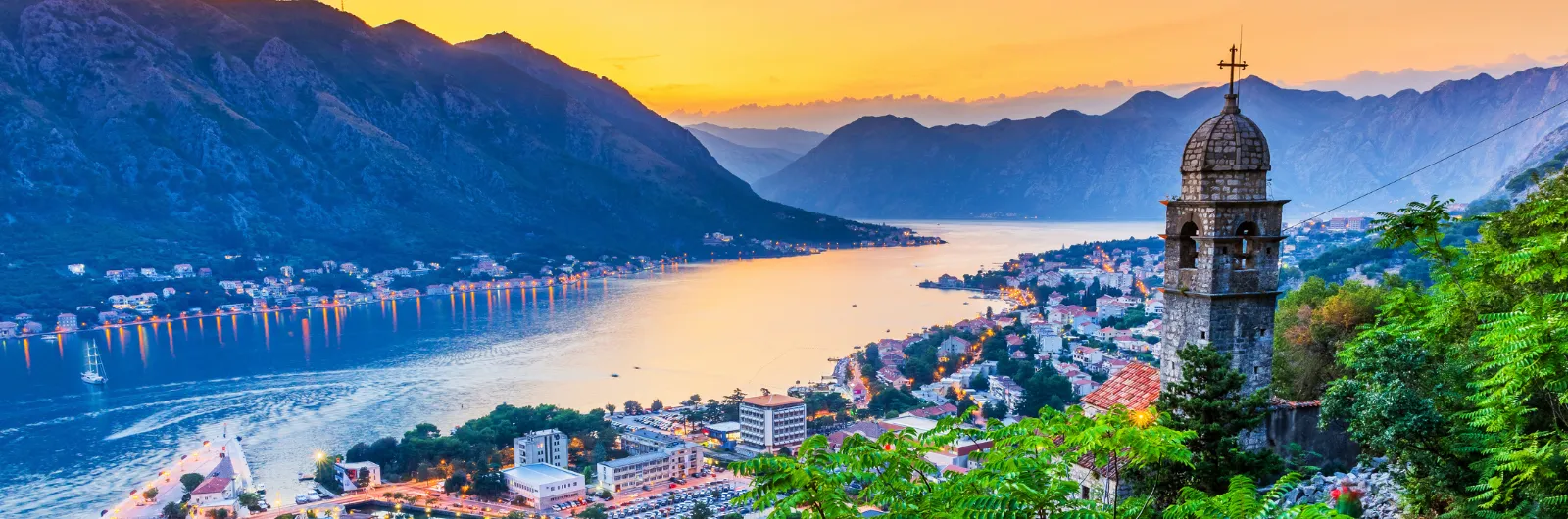
The road between Cetinje and Kotor is one of Montenegro’s most dramatic experiences: twenty-five tight switchbacks climbing from the coast to the plateau where the city sits, with views over the Bay of Kotor that open progressively as you gain altitude. Descending from Cetinje toward the sea at sunset, with the bay lit orange below the Lovćen, is one of those moments that justify the detour.
The complete Far Guides Montenegro guide includes detailed routes, interactive maps and all the practical information you need to plan your independent trip.
More on Montenegro
Keep reading.
Other pieces from the same destination.
Next step
Ready for Montenegro?
The guide is for travelling.
Interactive maps & itineraries and everything that doesn't fit in an article. Always the latest published version.
Get the Montenegro guide