Iceland · 20 September 2026
Photographing Iceland: the landscape that doesn't forgive mistakes
Iceland is Europe's most demanding photography destination. Light changes in minutes, wind is unpredictable and conditions can go from perfect to impossible in half an hour. How to prepare.

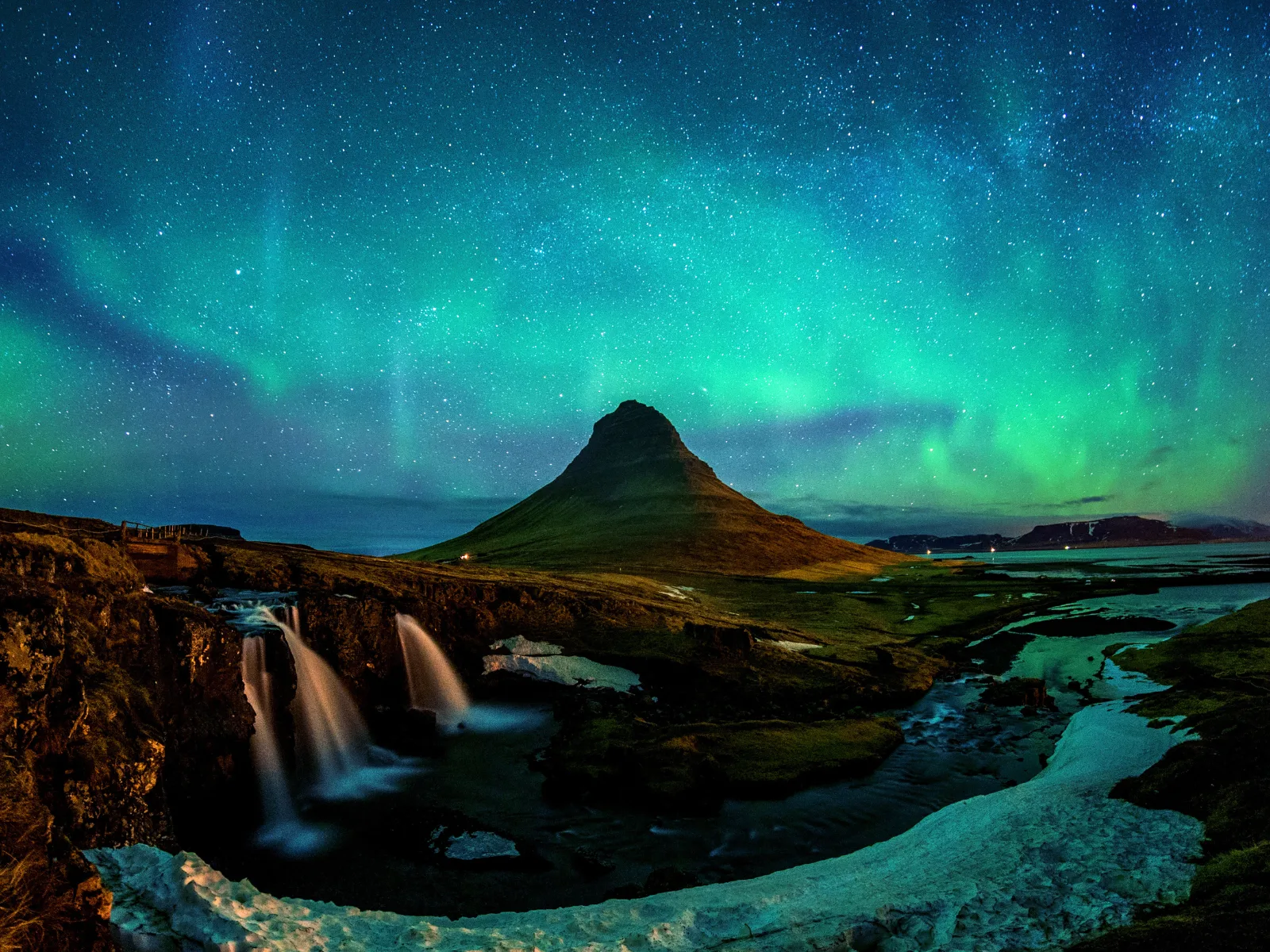
There is a type of Iceland photograph that appears in every travel magazine: golden hour over Kirkjufell volcano, with Kirkjufellsfoss waterfall in the foreground and an orange sky behind. It is a genuinely good photograph, and its ubiquity does not make it less valid. What it does not show is what surrounds it: the tripod hammered into the ground against thirty-knot gusts, the photographer in two jackets and waterproof gloves waiting for the clouds to open at exactly the right angle, and the dozen failed attempts before the one that worked. Photographing Iceland well is not technically difficult. It is difficult in the sense that the country does not wait for you to be ready.
The light that changes everything
The reason Iceland is an exceptional photography destination has less to do with its unique landscapes — which are unique — than with the angle of light. At high latitudes, the sun never reaches the zenith it achieves in the Mediterranean or tropics: even in summer, the Icelandic sun travels low on the horizon, producing the kind of lateral golden light that at lower latitudes exists only during the thirty-minute magic hour. In Iceland, that half hour can last four hours in summer, or appear in brief intervals between winter storms.
In June, the afternoon golden hour begins around ten at night and can last until midnight: the sun, which never fully sets, drops towards the northern horizon and produces the longest and most golden light possible. In September, there are two genuine golden hours — one in the morning, one in the evening — shorter but more intense in colour. In December, the sun rises at eleven and sets at four: five hours of light, all of it at low angle and high photographic quality.
The tripod is not optional
Icelandic wind can exceed 100 kilometres per hour without any meteorological alert: winds of that level are frequent enough that Icelanders regard them as normal weather. An ultralight carbon travel tripod — the kind that weighs under a kilo and folds to thirty centimetres — can become unstable in twenty-knot wind. The difference between sharp images and blurred ones on four-second exposures in front of Dettifoss or Jökulsárlón is the difference between a tripod that weighs two kilos and one that does not.
Cheap ball heads have the same problem: the friction fails under the weight of a 70-200mm lens with lateral wind. A mid-quality ball head with a good locking system is sufficient investment to ensure the tripod is not the weak link in the system.
Protecting gear from water
Icelandic waterfalls do not produce spray — they produce horizontal rain that can thoroughly wet a camera in thirty seconds from five metres away. Seljalandsfoss is the clearest case, but Skógafoss and Dettifoss have the same effect on windy days. Standard rain covers sold for camera bags are not adequate in these conditions: a dedicated camera rain cover is needed, or for cameras with weather sealing, drying the equipment immediately after each exposure to heavy moisture. Microfibre cloths in quantity are standard kit.
Cold matters too: lithium batteries lose capacity rapidly below zero degrees. Always carry spare batteries pre-warmed in inner pockets.
The filters that change landscape photography
The circular polarising filter is the most useful in Iceland: it cuts reflections on river and lagoon surfaces, saturates the colours of vegetation and sky, and is particularly effective at Jökulsárlón, where the blue of the icebergs intensifies noticeably under a polariser. It does not work with auroras (there is no light to polarise) and is ineffective with the sun directly behind the lens.
ND (neutral density) filters of 6 to 10 stops allow long exposures in full daylight — essential for smoothing the motion of water at waterfalls or clouds in movement. In summer, with so much light, making a one-second-plus exposure without burning the highlights is practically impossible without an ND filter.
Kirkjufell and the honesty of the classics
Mount Kirkjufell (463 metres, on the Snæfellsnes peninsula near Grundarfjörður) is the most photographed mountain in Iceland. Its symmetrical conical form with Kirkjufellsfoss waterfall in the foreground produces a composition that works under aurora light, summer light and winter light. That it is Iceland’s most repeated image does not mean it should be avoided — it means there is a reason everyone has made the journey there. The honest photograph of a classic location demands conditions and patience, not forced originality.
The complete Far Guides Iceland guide includes detailed routes across the whole island, interactive maps and all the practical information you need to plan your Ring Road and beyond.
More on Iceland
Keep reading.
Other pieces from the same destination.


Next step
Ready for Iceland?
The guide is for travelling.
Offline maps, itineraries and everything that doesn't fit in an article.
Get the Iceland guide