




Egypt · 22 July 2026
The Valley of the Kings: what the pharaohs' tombs conceal
For 500 years, New Kingdom pharaohs hid their tombs in a desert valley west of Luxor. The history of robberies, discoveries and what remains to be found.

In November 1922, Howard Carter made a small hole in a sealed wall and held a candle to the gap. His eyes took a few seconds to adjust to the darkness. Outside, his patron Lord Carnarvon asked whether he could see anything. Carter replied with a sentence that has entered the history of archaeology: “Yes, wonderful things.” What he saw was the antechamber of Tutankhamun’s tomb: 5,398 objects piled across four rooms, untouched for 3,245 years.
Why a valley
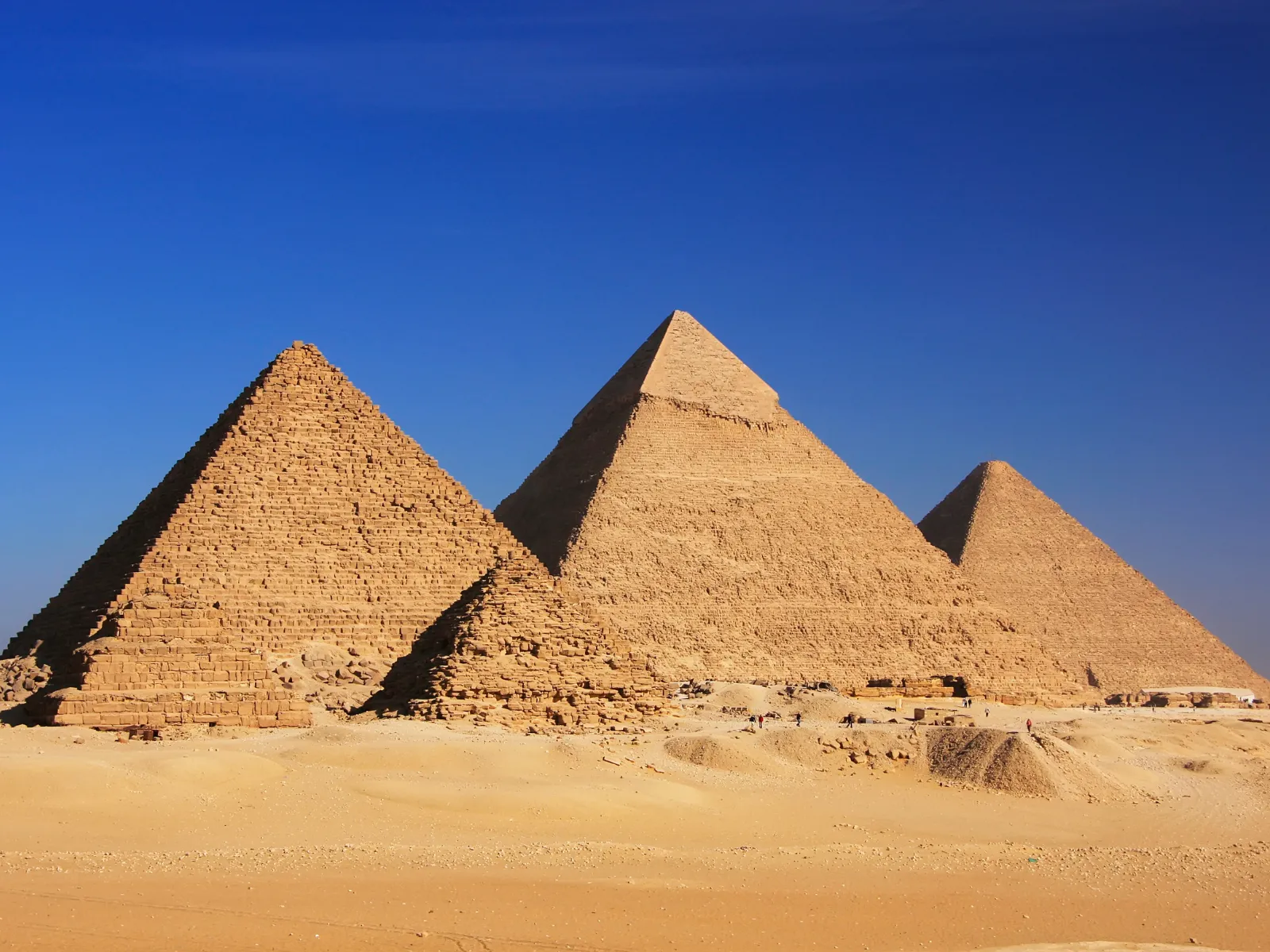
The shift from pyramids to tombs hidden in a remote valley was not arbitrary. The pharaohs of the New Kingdom understood it perfectly: pyramids were being systematically robbed. The problem was not the monument’s scale but its visibility. A pyramid is, by definition, an announcement of buried wealth. The pharaohs of the 18th Dynasty made a radically different choice: no monuments, no towers visible from kilometres away. The tombs would be cut into the rock of a desert valley on the west bank of the Nile, sealed and concealed beneath the desert dust.
The plan also required controlling information. For that purpose, Deir el-Medina was created: a workers’ village completely closed to the outside world, where the craftsmen who built and decorated the tombs lived isolated with their families across generations. The records of Deir el-Medina are extraordinarily detailed — they include the earliest known documents of industrial action, from 1170 BC, when the workers stopped because they had not been paid — but the secret of the tombs did not hold. Ninety-nine percent of the tombs in the Valley of the Kings were robbed in antiquity.
The exception that defines the place
Tutankhamun’s tomb (KV62) was found almost by accident. Carter had spent years searching the Valley, and most archaeologists of the era believed it was exhausted. Tutankhamun was a minor king: he died aged 18 or 19, his reign lasted barely a decade, and he was succeeded by a general named Horemheb who systematically erased his name from monuments because Tutankhamun had restored the cult of the traditional gods after Akhenaten’s monotheist interlude.
That historical marginalisation was, paradoxically, what saved his tomb. Nobody bothered to search for it with any great persistence. The 5,398 recovered objects — including the solid gold funerary mask weighing eleven kilograms, four canopic chests nested within each other, dismantled chariots, ceremonial animal-shaped beds, musical instruments and a dagger of meteoric iron — represent the burial goods of a pharaoh considered second-rate. The treasure of a major pharaoh would have been incomparably greater.
What to see in the Valley
The Valley of the Kings has 63 catalogued tombs, though the general ticket only includes three of the visitor’s choosing. Tutankhamun, Ramesses VI (KV9) and Merenptah (KV8) are the most visited. Tutankhamun requires a supplement of 300 Egyptian pounds (around six dollars); the visit lasts ten minutes in a small chamber where the pharaoh’s mummy still lies within his outer stone sarcophagus. The experience is more emotionally charged than visually overwhelming.
Ramesses VI offers something different: its astronomical ceilings are perhaps the most complete in the New Kingdom, with the nightly journey of the sun through the body of the goddess Nut painted along both sides in a deep blue scattered with stars, retaining the original paint nearly intact. The scale of the decoration — floor to ceiling, across every wall of corridors running for dozens of metres — is the closest thing that exists to experiencing Egyptian cosmology from the inside.
The tomb of Seti I (KV17), considered the most elaborate and beautiful in the Valley, has been closed for restoration for years. That of Nefertari (KV66), in the Valley of the Queens, is considered the finest painted tomb in Egypt, but requires a special permit costing 1,400 Egyptian pounds (around 28 dollars) and spaces are limited. It is worth booking ahead.
Heat as a variable
The Valley of the Kings in July or August is perfectly manageable if you arrive before 7 in the morning. By 11, the outdoor temperature exceeds 45 degrees Celsius. Inside the tombs the temperature is more stable, around 28 to 30 degrees, but the humidity generated by thousands of daily visitors is causing visible damage to the paintings: condensation from human breath crystallises on the surface of reliefs and causes deterioration that Egyptian authorities have been trying to control for decades without complete success.
The Ministry of Antiquities has occasionally rotated which tombs are open to the public in order to give the most visited ones a rest. The ticketing system does not allow re-entry: once you are in, you need to choose your three sites carefully.
Access to the Valley from Luxor is via the west bank, which requires crossing the Nile by ferry or by the car bridge to the south. Taxis and minibuses make the journey in about 20 minutes from the ferry landing.
The complete Far Guides Egypt guide includes detailed Nile Valley routes, interactive maps and all the practical information you need to plan your independent trip.
More on Egypt
Keep reading.
Other pieces from the same destination.


Next step
Ready for Egypt?
The guide is for travelling.
Interactive maps & itineraries and everything that doesn't fit in an article. Always the latest published version.
Get the Egypt guide