




Egypt · 31 July 2026
Nubia: the Egypt that the standard circuit doesn't reach
Historical Nubia was flooded by Lake Nasser in the 1960s. The Nubians were forcibly displaced. What remains: a millennial culture, colourful villages south of Aswan and temples rescued from the water.

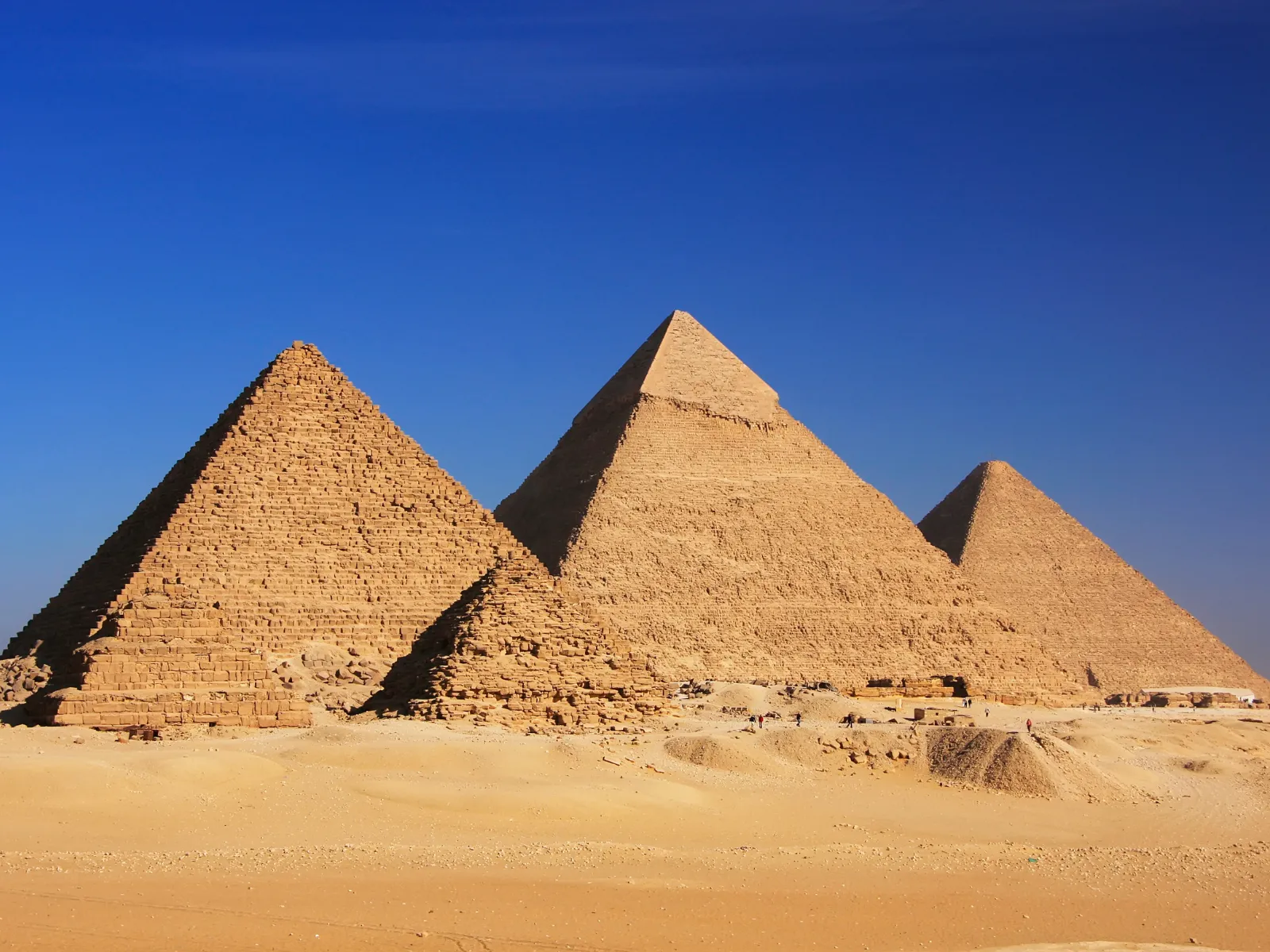
In 715 BC, a Nubian king named Piye completed the conquest of all Egypt and proclaimed himself pharaoh of Upper and Lower Egypt. He was not the first of his family to rule part of the country, but he was the one who unified it entirely. His dynasty — the 25th, known in modern historiography as the “black pharaohs” — ruled Egypt for nearly a century, until the Assyrian invasion of 671 BC pushed them back south. During that century, the Nubian kings of the Napatan dynasty built more pyramids than any other Egyptian dynasty, revived artistic traditions that Egypt had abandoned centuries earlier, and left a legacy that official history has been too slow to acknowledge.
A civilisation in its own right
Historical Nubia extended from the first cataract (present-day Aswan) to the fourth cataract, today deep inside Sudan. It was a territory with its own language — Meroitic, still not fully deciphered — its own gods, its own architecture and its own dynasties. The most common mistake when talking about Nubia is treating it as an appendage of Egypt: in reality it was for centuries an independent power that traded, conquered and negotiated with Egypt as an equal, and that at several points in history was more powerful than pharaonic Egypt itself.
Contact between the two civilisations was constant and multidirectional. The gold from Nubian mines financed much of the New Kingdom’s expansion. The trade route connecting sub-Saharan Africa with the Mediterranean passed through Nubia. Nubian mercenaries — the archers of Ta-Seti — were present in Egyptian armies from the Old Kingdom onwards. Cultural influence flowed in both directions for three thousand years.
The displacement
The construction of the Aswan High Dam between 1960 and 1970 submerged most of Egyptian Nubia beneath Lake Nasser. The lake stretches 550 kilometres and covers a strip of territory that until then had been continuously inhabited for more than six thousand years. The riverside villages — with their painted houses, their palm gardens, their temples — disappeared under the water.
Approximately 100,000 people were displaced. The Egyptian government relocated them to new settlements built in the desert, away from the river, without the palm trees or cultivable fields that had sustained their economy for generations. It was not a voluntary exodus: it was a forced relocation carried out within a few months. Families who did not leave in time were evicted by police. Some lost the bodies of their relatives in cemeteries that the water covered.
The loss was not only material. The Nubian language, architecture, songs and culinary traditions that existed bound to that specific territory suffered a rupture that is still felt today. The displaced Nubians and their descendants refer to “the world below” when speaking of the submerged villages: a geography that exists in collective memory but that nobody can return to see.
What was saved
The UNESCO monument rescue campaign of the 1960s was exceptional in its scale and international coordination. Twenty-one temples and archaeological structures were dismantled stone by stone, numbered, transported and reconstructed at higher elevations. The temples of Abu Simbel — the two complexes of Ramesses II and his wife, carved directly into the mountainside — were literally cut into blocks, raised 65 metres, and rebuilt on an artificial hill. The operation cost 40 million dollars at the time and took four years. The temples of Philae, Kalabsha, Beit el-Wali and Amada were relocated using similar procedures.
The result is paradoxical: the temples exist and are better preserved than they would have been had the lake not been created (the moisture from the Nile’s annual floods would have continued to damage them). But the cultural context that made them intelligible — the Nubian communities around them, the people who kept them alive in living memory — was destroyed.
Nubians today
On the outskirts of Aswan, the neighbourhood of Nubia al-Gharb and the villages on the north shore of Lake Nasser preserve something of traditional Nubian culture. The houses painted with geometric motifs in blue, yellow and ochre are the most visible sign. The Nubian market in Aswan, the music featuring the simsimiyya (a five-stringed lyre), and the food based on Nile fish and spices distinct from northern Egypt are fragments of a tradition struggling to maintain itself.
Boat excursions to the Nubian villages north of Aswan have become part of the standard tourist circuit: they are inevitably simplifying but are also one of the few ways to understand that Egypt does not end where the pharaonic circuit does.
The complete Far Guides Egypt guide includes detailed Nile Valley routes, interactive maps and all the practical information you need to plan your independent trip.
More on Egypt
Keep reading.
Other pieces from the same destination.


Next step
Ready for Egypt?
The guide is for travelling.
Offline maps, itineraries and everything that doesn't fit in an article.
Get the Egypt guide