


Egypt · 9 April 2026
Three days in Cairo: how to make sense of the chaos
A narrative guide to spending three days in Cairo — not a checklist, but a way of understanding the city through its layers of history, its streets and its rhythms.

Cairo does not ease you in. It hits you with noise, heat, traffic and twenty million people going about their business with an energy that can feel like an assault if you are not ready for it. Every first-time visitor has a moment of overwhelm — usually in the taxi from the airport, when the highway narrows into a street that narrows into an alley and the driver is simultaneously honking, answering his phone and offering you a mint.
But here is the thing about Cairo: the chaos is the city. It is not an obstacle to the experience. It is the experience. Three days is enough to begin understanding why Cairo is one of the most extraordinary cities on Earth — not despite its disorder, but because of it.
Before you start: orienting yourself
Cairo sprawls across both banks of the Nile and deep into the surrounding desert. The areas that matter for a visitor are more manageable than the city’s footprint suggests.
Downtown (Wust al-Balad): The nineteenth-century European quarter, built by Khedive Ismail in imitation of Paris. Faded grandeur, Art Deco buildings, the Egyptian Museum, Tahrir Square. This is where most budget and mid-range hotels cluster.
Islamic Cairo (al-Qahira): The medieval city. The mosques, the gates, Khan el-Khalili. East of Downtown, walkable if you are willing to navigate traffic.
Coptic Cairo (Old Cairo): The oldest settlement, south of Downtown. Churches, the synagogue, the Roman fortress ruins.
Giza: West bank. The pyramids, but also a vast suburban sprawl that is technically a separate city.
Zamalek: The island in the Nile. Quieter, leafier, with good restaurants and cafés. A pleasant base if you want some breathing room.
For transport, use Uber or Careem — they work well, are metered, and spare you the negotiation ritual with taxi drivers. The Cairo Metro (three lines, clean, cheap) covers the Downtown-to-Old Cairo stretch efficiently. Walking is the best way to see Islamic Cairo but requires patience with traffic and uneven pavements.
Day one: the ancient and the modern
Morning: The Grand Egyptian Museum
Start at the Grand Egyptian Museum near the Giza pyramids. Opened in stages from 2024, this is the largest archaeological museum in the world and it deserves a full morning — three hours minimum, four if you want to see Tutankhamun’s complete collection properly.
The museum is overwhelming by design: over a hundred thousand objects spanning five thousand years. The approach that works best is to pick a period or theme rather than trying to see everything. The Tutankhamun galleries are the centrepiece: the golden mask, the chariots, the canopic jars, the furniture — all displayed together for the first time. The scale of what was buried with a single eighteen-year-old pharaoh is genuinely shocking.
The Grand Staircase, with its monumental statues arranged chronologically, is the best crash course in Egyptian art history you will find anywhere. Walk it slowly.
Afternoon: The Giza Plateau
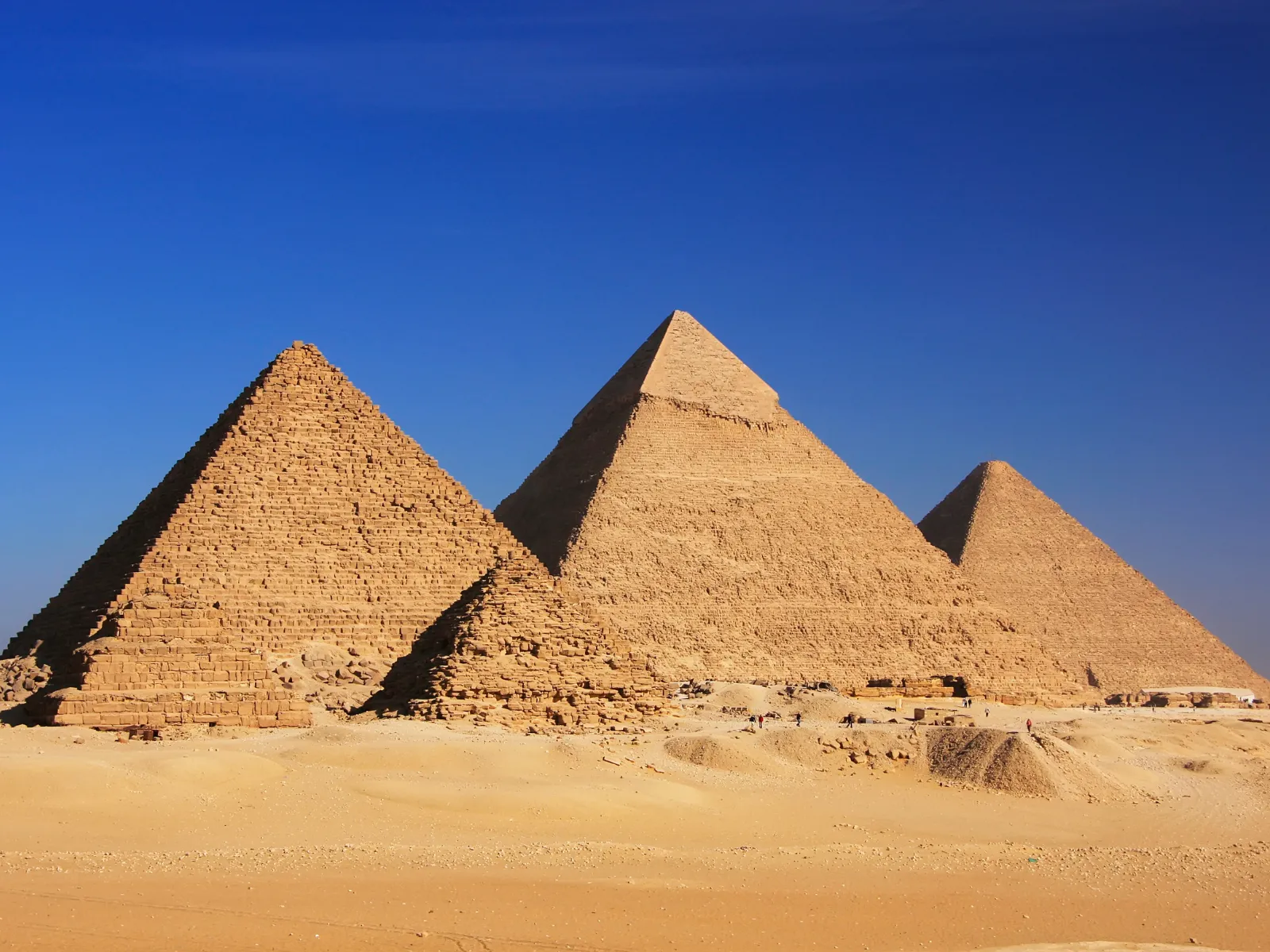
From the museum, the pyramids are a short drive. Dedicate the afternoon to Giza — the three pyramids, the Sphinx, and the panoramic viewpoint from the desert side. If you have booked a ticket for the Great Pyramid interior, go early in the afternoon before fatigue sets in.
Evening: Downtown Cairo
Return to Downtown for dinner. The area around Talaat Harb Street is lively at night: cafés, juice bars, street food. Koshary — Egypt’s national dish, a carb-loaded bowl of rice, pasta, lentils and fried onions in tomato sauce — is best eaten at a local stand where the portion costs less than a euro and tastes better than any restaurant version.
Day two: medieval Cairo
Morning: The Citadel and Muhammad Ali Mosque
The Citadel of Saladin dominates Cairo’s skyline from its perch on Mokattam hill. Built in the twelfth century by the same Saladin who fought Richard the Lionheart, it served as the seat of Egyptian government for seven hundred years. The views from the ramparts — the entire city spread below, the pyramids visible on a clear day — are the best panorama in Cairo.
Inside, the Muhammad Ali Mosque (the Alabaster Mosque) is the building that defines Cairo’s silhouette. Built in the Ottoman style in the first half of the nineteenth century, its domes and minarets are visible from across the city. The interior is vast and cool, with a carpet of patterned rugs and chains of hanging lamps that glow amber in the filtered light. Muhammad Ali Pasha, the Albanian-born ruler who modernised Egypt, is buried here.
Midday: Sultan Hassan and al-Rifa’i
Descend from the Citadel to the pair of mosques that face each other at its base. The Mosque of Sultan Hassan (1356-1363) is one of the masterpieces of Islamic architecture worldwide. Its scale is immense — the central courtyard alone is larger than many European cathedrals — and the quality of the stonework, particularly the carved entrance portal, is extraordinary. Across the street, the al-Rifa’i Mosque is newer (finished 1912) but designed to match Sultan Hassan in scale. It contains the tombs of the last Egyptian royal family and, unexpectedly, the Shah of Iran.
Afternoon: Islamic Cairo on foot
Walk north from the mosques into the heart of Islamic Cairo. Al-Muizz Street, the medieval city’s main artery, is now a pedestrianised stretch lined with mosques, madrasas, fountains and merchant houses spanning eight centuries. This walk is covered in detail in our separate article, but the highlights are the mosque of al-Hakim, the gates of Bab al-Futuh and Bab Zuweila, and the Qalawun complex — a hospital, school and mausoleum built in 1285 that some scholars consider the finest work of Mamluk architecture.
End at Khan el-Khalili, the souk that has operated on this spot since the fourteenth century. It is touristy in places, commercial everywhere, and utterly alive. The metalworkers, perfumers and spice merchants in the back alleys are not performing for visitors — they are running businesses their families have run for generations.
Evening: El Fishawy café
Sit at El Fishawy, the famous mirror-lined café in the souk, and drink a mint tea or a sahlab. It has been open continuously since 1773. The tea is average; the atmosphere is not.
Day three: Coptic Cairo and the Nile
Morning: Old Cairo
Take the metro to Mar Girgis station and walk into Coptic Cairo, the oldest continuously inhabited part of the city. The Hanging Church (al-Mu’allaqa), built atop the gatehouse of the Roman fortress of Babylon, dates in its current form to the seventh century but sits on foundations from the third. The nave, with its wooden roof carved to resemble Noah’s Ark, is intimate and moving.
The Church of Saints Sergius and Bacchus, just steps away, is built over a crypt where tradition holds that the Holy Family sheltered during their flight into Egypt. The Ben Ezra Synagogue, the oldest in Egypt, stands nearby — a reminder that Cairo’s religious history is layered in ways that modern politics tends to obscure.
The Coptic Museum, in the same compound, is small but excellent. It holds the largest collection of Coptic art in the world, including textiles, manuscripts and icons that trace the evolution of Egyptian Christianity from the Roman period onward.
Afternoon: The Nile and Zamalek
Cross to Zamalek for a late lunch. The island has some of Cairo’s best restaurants and a pace that feels almost European. Walk along the Corniche and watch the feluccas on the Nile — the same lateen-sailed boats that have plied this river for centuries. A felucca ride at sunset is a cliché, but clichés become clichés for a reason. An hour on the water costs 10-15 EUR for the whole boat and offers a perspective on Cairo that no street can match.
Evening: departure or extension
Three days gives you Cairo’s essentials, but this is a city that rewards extra time. A fourth day allows for the City of the Dead, the vast medieval necropolis where Mamluk tombs stand alongside inhabited houses; or a trip to Saqqara, where the Step Pyramid — older than Giza by a century — stands in a quieter, less visited setting.
Practical notes
Money: Egyptian pounds (EGP). ATMs are everywhere in Downtown and Zamalek. Many places accept cards but carry cash for souks, taxis and small restaurants. In April 2026, one euro is roughly 55 EGP.
Safety: Cairo is safe for tourists in the areas described above. Standard city precautions apply — watch your belongings in crowded areas, use ride-hailing apps at night. Solo female travellers may experience verbal harassment; it is unfortunately common but rarely escalates beyond words.
Heat: Summer (June-September) is brutal — 40°C and above. The best months are October to April. Even in winter, midday sun can be strong.
Tipping (baksheesh): Expected everywhere: restaurants (10-15%), hotel staff, bathroom attendants, anyone who offers unsolicited help at a monument. Keep small notes handy.
Cairo is not a city you conquer in three days. It is a city you begin in three days. The layers — pharaonic, Roman, Coptic, Islamic, Ottoman, colonial, modern — are so deep that each visit peels back another one. Three days is enough to understand that Cairo is unlike anywhere else, and to start wanting to come back.
For the full picture of every monument, route and hidden corner in Egypt, the Far Guides complete guide has it all: interactive maps & itineraries, information that stays up to date.
More on Egypt
Keep reading.
Other pieces from the same destination.


Next step
Ready for Egypt?
The guide is for travelling.
Interactive maps & itineraries and everything that doesn't fit in an article. Always the latest published version.
Get the Egypt guide