

Egypt · 18 September 2026
Where to stay in Cairo: a neighbourhood guide for independent travellers
Cairo is a city of 20 million with accommodation in every range. The key isn't the hotel but the neighbourhood. An honest guide by area.

The choice of neighbourhood in Cairo is not a secondary detail: it determines how much time you lose to transport, what you see walking in the morning, how much noise there is at night and what kind of Egypt you experience in your free hours. Cairo has more than 20 million inhabitants and a transport geography that turns certain ten-kilometre journeys into 45 minutes of traffic. The decision of where to stay has practical consequences that generic hotel search engines rarely explain.
Downtown / Wust el-Balad: the centre that smells of history
Downtown is the heart of nineteenth and twentieth-century Cairo, built by Khedive Ismail after 1863 with the ambition of creating a city as elegant as Paris. The wide boulevards, neoclassical facades and historic cafés are here. So are the great hotels of the past: Shepheard’s Hotel (the original, destroyed in a fire in 1952, was for a century the most famous hotel in the Middle East; the current one, rebuilt in the 1960s on the same site, is a chain hotel with no special character). The Continental, from 1904, survives transformed into offices.
Downtown has the highest concentration of hostels in Cairo and is the most walkable area: the Egyptian Museum at Tahrir, the Nile, the Khan el-Khalili bazaar and the mosque of al-Azhar are all within reasonable walking distance or a short metro ride. The noise is considerable: Cairo’s horns are a constant from 6 in the morning until well after midnight. Price ranges: hostel dormitory beds from 15 dollars, basic double rooms from 40.
Zamalek: the quiet island
Zamalek occupies the northern part of Gezira Island, in the middle of the Nile, and has a character radically different from Downtown. Embassies, expat residences, boutique hotels in 1940s and 1950s buildings, speciality coffee shops and international restaurants. The noise is noticeably lower. Connection to the rest of the city works via the bridges linking the island to both banks.
Zamalek hotels are mid-to-high range: doubles from 80 dollars in the mid-category, 150 to 300 in the more established boutiques. The Cairo Marriott, installed in the former Gezira Palace that Khedive Ismail had built for the inauguration of the Suez Canal in 1869 (Empress Eugénie of France was among its guests), is Cairo’s most authentically historic hotel: the original palace structure is visible in the central part of the building.
Giza / Dokki: close to the pyramids
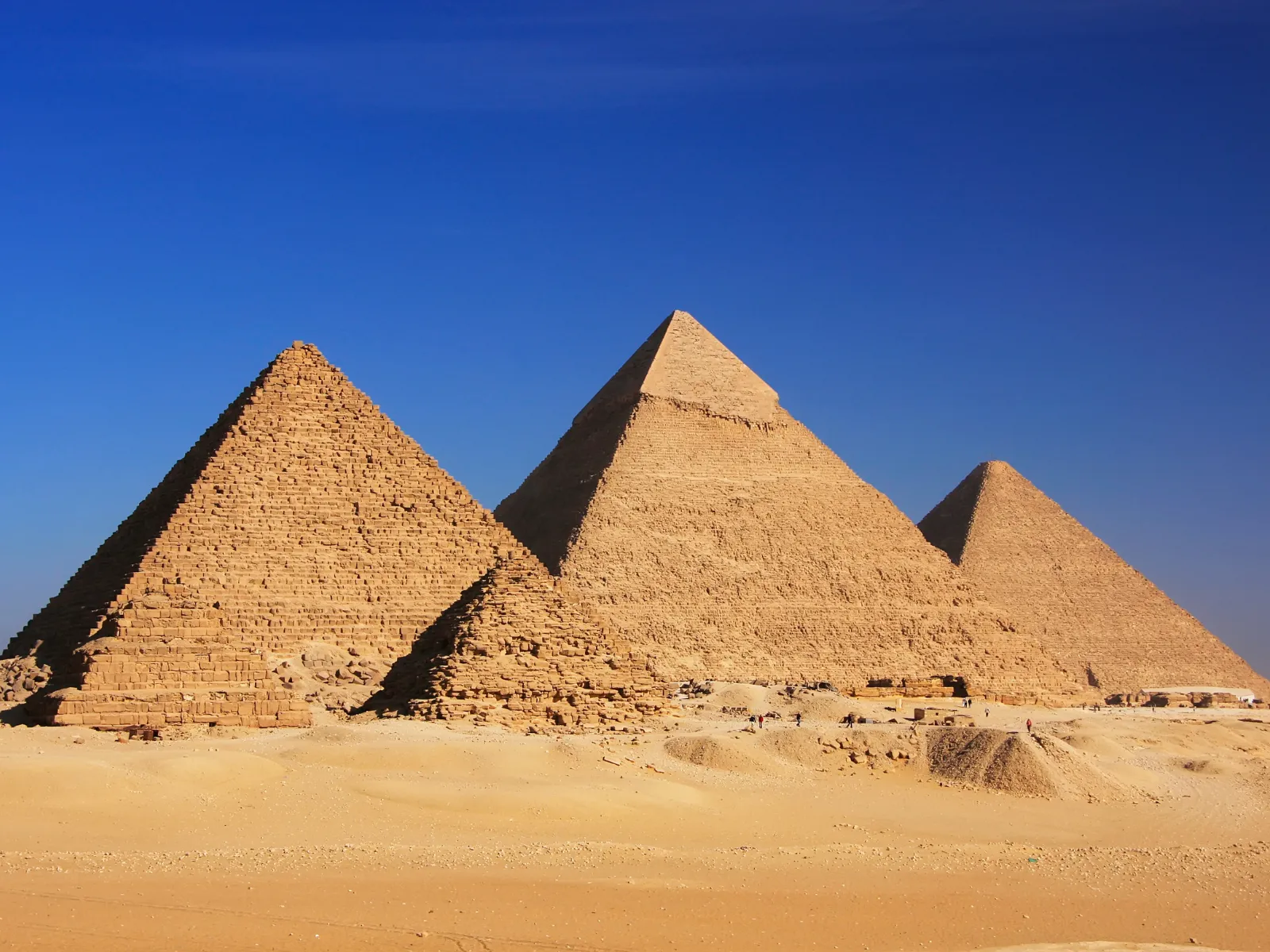
Those who want to be 20 to 30 minutes from the pyramids and prefer to pay less than in Zamalek tend to stay in the Giza or Dokki neighbourhoods, on the west bank of the Nile. The connection to Downtown is by metro (line 2, direct). Mid-range hotels offer good value for money: doubles from 50 to 70 dollars in reasonable three-star properties.
The Pyramids Road area (the avenue running from Cairo to Giza) has a concentration of hotels at every range, from large four-star complexes to budget guesthouses. It is not the most interesting neighbourhood for walking, but if the plan is to focus on Giza and the Grand Egyptian Museum, the proximity makes practical sense.
Islamic Cairo: the most intense experience
Staying in the historic Islamic quarter — in the streets around Khan el-Khalili, al-Azhar and the mosque of al-Hussein — is Cairo’s most immersive experience. Hostels with rooftop terraces overlooking the minarets of al-Hussein (the El-Hussein hostel is the best-known of this type) are cheap and offer an atmosphere that modern neighbourhoods cannot provide.
The drawback is the noise and the neighbourhood’s rhythm: traffic, vendors, the call to prayer from several minarets simultaneously. The area’s isolation (no nearby metro station) makes it less practical for those wanting to move frequently to Giza or the Egyptian Museum. But for those who come to Egypt with curiosity about urban life and not only pharaonic monuments, it is the most revealing neighbourhood.
The price range
The fall of the Egyptian pound in recent years has made Cairo extraordinarily cheap for those paying in euros or dollars. A decent four-star hotel today costs between 70 and 120 dollars a night, including breakfast in many cases. Quality hostels are between 15 and 25 dollars a night for a dorm bed. Luxury hotels with Nile views (the Four Seasons Garden City, the Semiramis Intercontinental) range from 200 to 400 dollars.
Airbnbs work well in Zamalek and Maadi for longer stays: two-bedroom apartments in Zamalek come in at 50 to 80 dollars a night.
The complete Far Guides Egypt guide includes detailed Nile Valley routes, interactive maps and all the practical information you need to plan your independent trip.
More on Egypt
Keep reading.
Other pieces from the same destination.


Next step
Ready for Egypt?
The guide is for travelling.
Offline maps, itineraries and everything that doesn't fit in an article.
Get the Egypt guide