



Egypt · 12 May 2026
How much does it cost to travel in Egypt: a real budget breakdown
A detailed, honest cost breakdown for travelling in Egypt in 2026 — accommodation, food, transport, entry fees and extras, with example budgets for 7 and 14 days.

Egypt occupies an unusual position in the cost-of-travel spectrum. The raw prices — food, transport, accommodation outside the luxury bracket — are genuinely cheap by any European or North American standard. But the tourist economy that has grown around those prices adds layers of negotiation, tipping, commission and opportunistic pricing that can make a cheap country feel expensive if you are not prepared.
This article is a detailed breakdown of what things actually cost in Egypt in 2026, with honest ranges that account for different travel styles. The numbers are based on current prices and reflect the reality that Egypt’s currency has devalued significantly in recent years, making it even cheaper for visitors paying in euros or dollars.
The currency situation
The Egyptian pound (EGP) has had a turbulent few years. In April 2026, one euro buys approximately 55 EGP. This is dramatically more favourable than five years ago and makes Egypt exceptionally good value for European travellers.
ATMs are widely available in Cairo, Luxor, Aswan and tourist areas. Visa and Mastercard work. Cards with no foreign transaction fees (Revolut, Wise) give the best rates. Carry cash for markets, small restaurants, tips and anywhere outside main tourist zones. US dollars and euros are also accepted at many hotels and tour operators, often at competitive rates.
Accommodation
Egypt’s accommodation ranges from hostel dorms to some of the most famous luxury hotels in the world, and the price spread is enormous.
Hostels: 5-10 EUR per night for a dorm bed. Cairo has the best selection; Luxor and Aswan have a few. Quality varies significantly — read recent reviews.
Budget hotels: 15-30 EUR per double room. Clean, functional, often with breakfast. In Luxor and Aswan, you can find hotels with Nile views in this range — something that would cost ten times more in a European riverside city.
Mid-range hotels: 40-80 EUR per double room. Air conditioning that actually works, decent bathrooms, often a pool. This bracket offers the best value in Egypt. The Sofitel Winter Palace in Luxor, one of the most storied hotels in the country, can sometimes be found at the top of this range in low season.
Luxury hotels: 150-500+ EUR. The Old Cataract in Aswan (where Agatha Christie wrote Death on the Nile), the Mena House in Giza (pyramid views from the pool), the Four Seasons in Cairo. If you can afford these, Egypt offers some of the most memorable luxury hotel experiences in the world.
Budget reference: A couple travelling comfortably can budget 30-50 EUR per night for a good double room with breakfast in most of Egypt. Solo travellers: 15-25 EUR.
Food
Egyptian food is abundant, flavourful and cheap. The national cuisine — ful medames, koshary, ta’ameya (Egyptian falafel), grilled meats, fresh bread — is hearty and satisfying.
Street food and local restaurants: A full meal at a local eatery — koshary, ful, ta’ameya with salad and bread — costs 1-3 EUR. Koshary from a street vendor: 0.50-1 EUR for a generous portion. A shawarma sandwich: 1-2 EUR. Fresh juice (mango, guava, sugar cane) from a juice bar: 0.50-1 EUR.
Mid-range restaurants: A sit-down meal with grilled meat or fish, sides, bread and a drink: 5-10 EUR per person. In tourist areas of Luxor and Aswan, Nile-view restaurants charge a premium: 8-15 EUR per person.
Upscale restaurants: Cairo has a serious dining scene. A good meal at a well-regarded restaurant in Zamalek or Maadi: 15-30 EUR per person. By international standards, this is still remarkably cheap for the quality.
Water: Tap water is not safe to drink. Bottled water (1.5L): 0.20-0.50 EUR. Budget a few euros per day.
Alcohol: Available but not ubiquitous. A local beer (Stella, Sakara): 1.50-3 EUR at a restaurant. Imported wine: 8-15 EUR per bottle in a restaurant.
Budget reference: 8-15 EUR per day covers three meals comfortably, mixing street food and sit-down restaurants. Eating exclusively at local places, you can manage on 5-8 EUR.
Transport
Domestic flights: Cairo to Luxor or Aswan: 50-120 EUR one way with EgyptAir. Booking in advance helps. These flights save a full day compared to the train.
Trains: The Egyptian railway is functional and cheap. Cairo to Luxor first class (sleeping car): 40-60 EUR, an overnight journey that saves a hotel night. Cairo to Aswan first class: 50-70 EUR. Second class air-conditioned: half the price. The trains are not punctual, but they work.
Nile cruise (Luxor-Aswan): 200-800 EUR for 3-4 nights depending on quality. This is both transport and accommodation, so factor it into both budgets.
Taxis and ride-hailing: Uber and Careem work in Cairo, Luxor and Aswan. Urban rides: 1-3 EUR. Cairo airport to Downtown: 5-8 EUR.
Intercity buses: The Go Bus company operates comfortable modern coaches. Cairo to Hurghada: 8-12 EUR. Cairo to Alexandria: 5-8 EUR. Cairo to Sharm el-Sheikh: 10-15 EUR.
Local transport: Microbuses within cities: 0.10-0.30 EUR. Cairo Metro: 0.15 EUR per ride.
Budget reference: Internal transport for a Cairo-Luxor-Aswan itinerary: 80-150 EUR per person, depending on whether you fly or take the train.
Entry fees and sightseeing
Egypt’s entry fees have risen in recent years but remain reasonable for what you get.
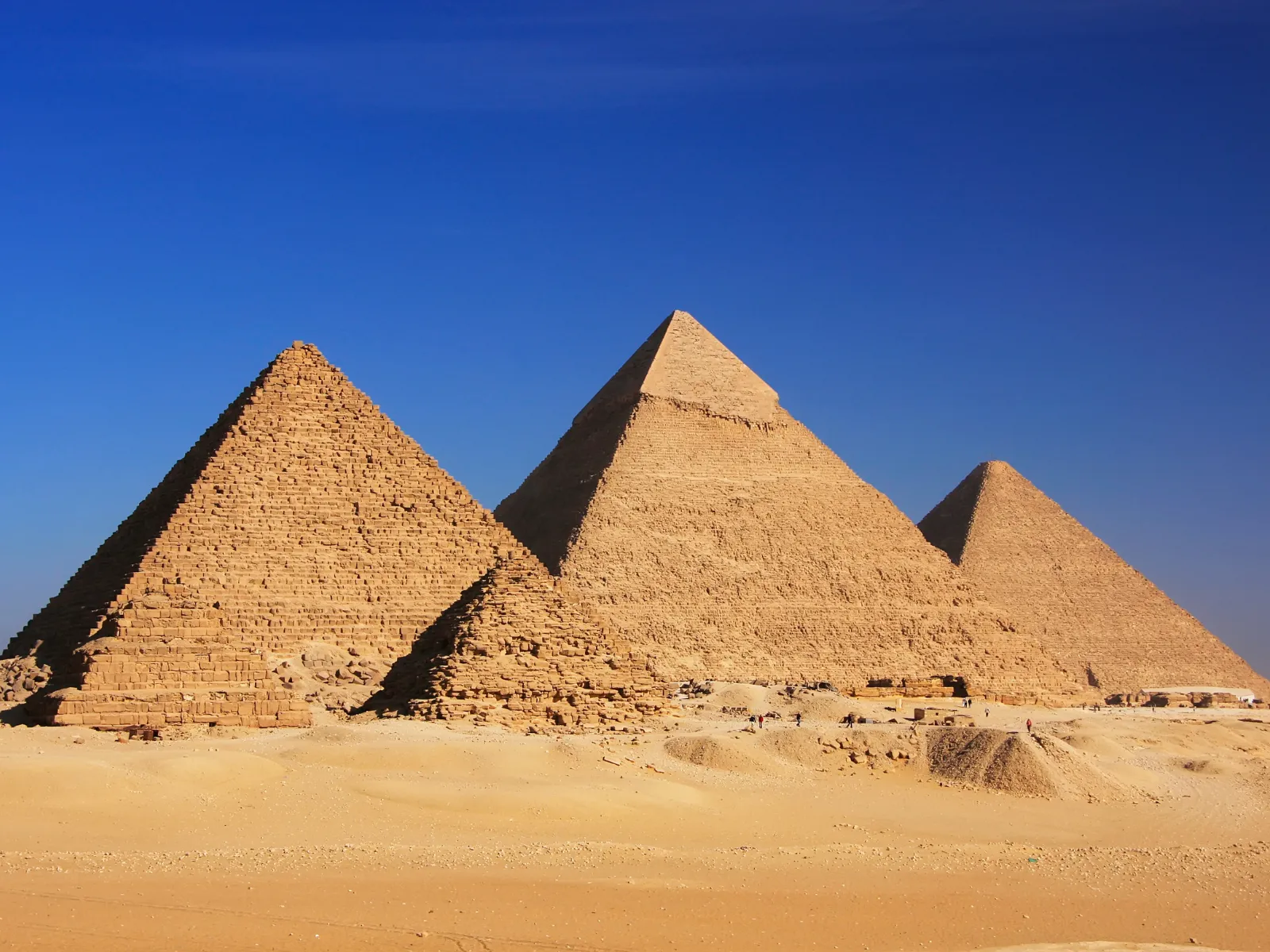
Giza Plateau: General entry: ~12 EUR. Great Pyramid interior: ~20 EUR extra. Total for the full experience: ~32 EUR.
Grand Egyptian Museum: ~20 EUR (general), ~30 EUR (with Tutankhamun halls).
Luxor East Bank: Karnak: ~10 EUR. Luxor Temple: ~8 EUR.
Luxor West Bank: Valley of the Kings (3 tombs): ~12 EUR. Tutankhamun’s tomb: ~20 EUR extra. Seti I’s tomb: ~50 EUR extra. Hatshepsut’s temple: ~6 EUR. Medinet Habu: ~5 EUR.
Aswan: Philae Temple: ~8 EUR. Abu Simbel: ~15 EUR.
Budget reference: All major sites on a Cairo-Luxor-Aswan itinerary: 80-130 EUR per person, depending on how many extras (pyramid interiors, premium tombs) you add.
Communications
A local SIM card (Vodafone, Orange, Etisalat) costs 3-5 EUR with 10-15 GB of data. Available at the airport and in city shops. 4G coverage is good in cities and along the Nile; patchy in the Western Desert.
Essential apps: Uber/Careem for taxis, Google Maps offline (download Cairo and Upper Egypt before you go), Google Translate with Arabic offline pack.
The tipping economy
Baksheesh — tipping — is a fundamental part of Egyptian economic life and the single biggest source of budget surprise for visitors. Tips are expected for: restaurant service (10-15%), hotel porters, bathroom attendants, anyone who opens a door or gives directions at a monument, taxi drivers (round up), guides, boat operators, and anyone who performs any service, however small.
Budget 3-5 EUR per day for small tips. Keep a stock of 10 and 20 EGP notes (about 0.20-0.40 EUR each) — these cover most situations. Do not tip with coins; it is considered rude.
For guides and cruise crew, budget more: 5-10 EUR per person per day for a private guide, similar for cruise staff (pooled tip at the end).
Budget for 7 days (classic route)
Route: Cairo (3) - Luxor (2) - Aswan (2)
| Item | Budget | Mid-range | Comfortable |
|---|---|---|---|
| Accommodation (6 nights) | 90 EUR | 240 EUR | 480 EUR |
| Food (7 days) | 50 EUR | 85 EUR | 150 EUR |
| Internal transport | 80 EUR | 120 EUR | 200 EUR |
| Entry fees | 80 EUR | 100 EUR | 130 EUR |
| Tips + SIM + extras | 30 EUR | 55 EUR | 80 EUR |
| Total per person | 330 EUR | 600 EUR | 1,040 EUR |
Budget for 14 days (extended route)
Route: Cairo (3) - Luxor (3) - Nile cruise to Aswan (4) - Abu Simbel day trip - Aswan (1) - White Desert excursion (2) - Cairo (1)
| Item | Budget | Mid-range | Comfortable |
|---|---|---|---|
| Accommodation (10 nights + cruise) | 250 EUR | 550 EUR | 1,100 EUR |
| Food (14 days) | 90 EUR | 170 EUR | 300 EUR |
| Internal transport | 150 EUR | 220 EUR | 350 EUR |
| Entry fees | 110 EUR | 140 EUR | 180 EUR |
| Tips + SIM + extras | 50 EUR | 90 EUR | 140 EUR |
| Total per person | 650 EUR | 1,170 EUR | 2,070 EUR |
These figures exclude international flights (250-500 EUR return from Europe) and travel insurance (30-60 EUR).
The value proposition
Egypt in 2026 is extraordinary value. The combination of a favourable exchange rate, genuinely low local prices, and a density of world-class monuments that no other country can match means that your travel budget goes further here than almost anywhere. A week in Egypt for the cost of a long weekend in Paris, and what you see is five thousand years of human civilisation rather than a queue for the Eiffel Tower.
The tipping culture and occasional tourist-price inflation are real, but they are manageable with awareness and small notes. Do not let them sour the experience. In a country where the average monthly salary is around 200 EUR, a 10 EGP tip is both insignificant to you and meaningful to the recipient.
For the full picture of every monument, route and hidden corner in Egypt, the Far Guides complete guide has it all: interactive maps & itineraries, information that stays up to date.
More on Egypt
Keep reading.
Other pieces from the same destination.


Next step
Ready for Egypt?
The guide is for travelling.
Interactive maps & itineraries and everything that doesn't fit in an article. Always the latest published version.
Get the Egypt guide