Egypt · 21 August 2026
Photographing Egypt: monuments, light and people
Egypt is one of the world's most photogenic destinations, but also one of the hardest to photograph well. Light, angles, permits and people skills make all the difference.

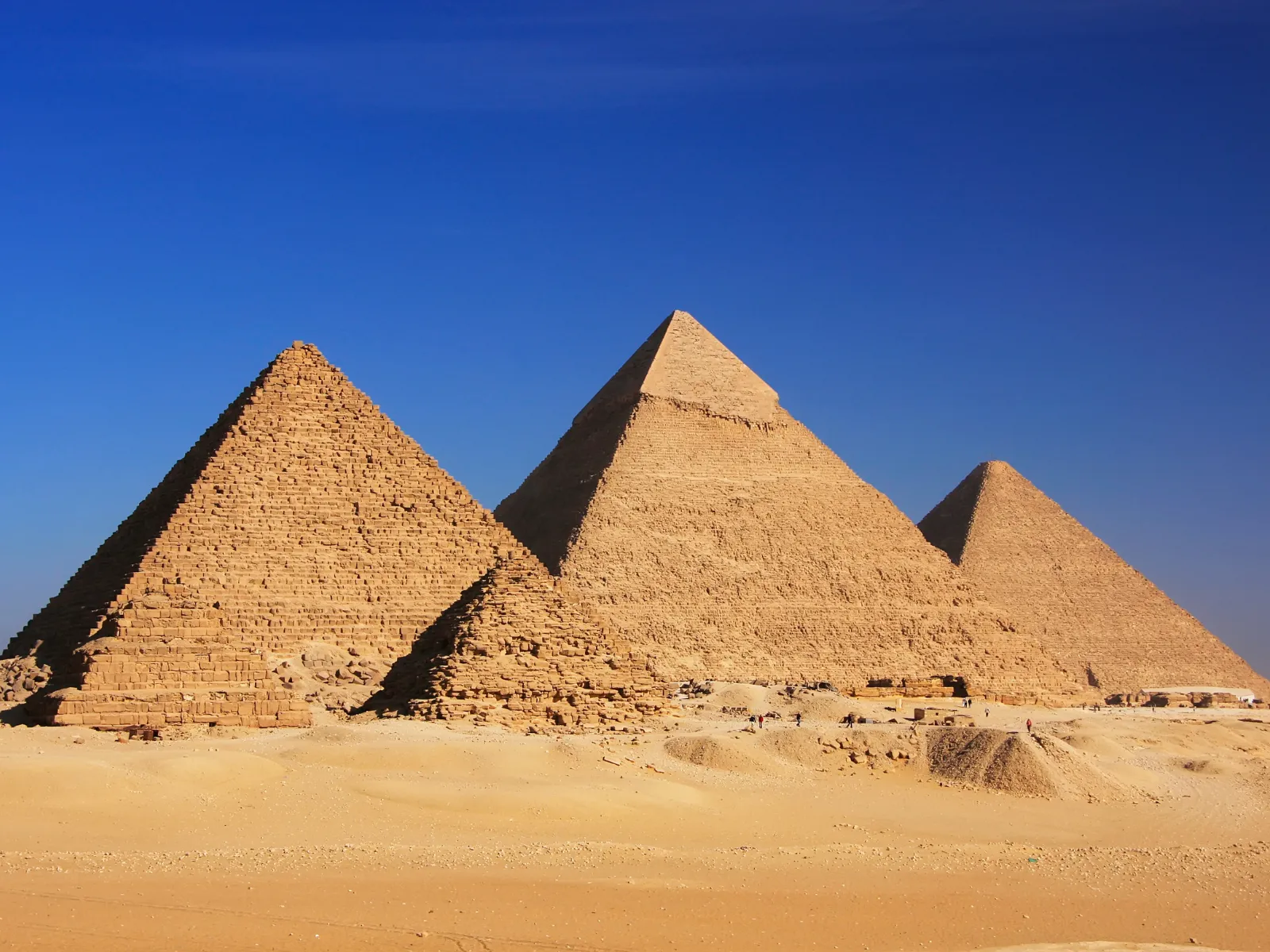
There is a photograph of the Giza pyramids that everyone knows and very few people actually take when they are there: the angle from the desert plateau, to the southwest of the complex, where the three pyramids align diagonally and the expanse of sand surrounds them with no visible city in the background. Almost everyone takes the photo from the northern road, with Cairo behind. The difference between the two images says a great deal about how tourist vision works — tending to reproduce familiar images rather than searching for ones not yet seen.
Light as the primary variable
Cairo and the Giza pyramids are a light trap: the sun rises in the east, behind the city, and during the first hours of the morning the pyramids are frontally lit if photographed from the north. The best light for the pyramids is in the afternoon, when the sun drops towards the west and the desert, and the pyramids cast long diagonal shadows. Between 4 and 6pm in summer, between 2 and 4pm in winter, Giza’s light has a golden quality that exists at no other time of day. The souvenir vendors are also less persistent at that hour because the big tour groups have already left.
Karnak has its best light between 8 and 10 in the morning. The Hypostyle Hall is oriented on an east-west axis, and during the first hours the sun creates oblique light-shafts between the columns that fill the interior with dramatic contrasts. After 11, the light is overhead and the space loses that quality. Returning to Karnak at sunset, when the sound and light show has not yet begun and the groups have gone, allows you to photograph the sphinxes and obelisks in a softness of light that doesn’t exist at midday.
What you cannot photograph
The Valley of the Kings has a rule that is enforced: photography inside the tombs is prohibited. Guards stand in each chamber with torches and apply the rule with considerable diligence. Fines for photographing without permission exist, though in practice the usual sanction is the confiscation of the photo — deleting it from your memory card in your presence. The rule is not universal: some tombs with no reliefs or minimal decoration see a more relaxed application. Outside the Valley, photography is completely free.
In Egyptian museums, especially the Egyptian Museum in Cairo and the Grand Egyptian Museum in Giza, rules vary by room. The Grand Egyptian Museum permits general photography without flash; the Tutankhamun gallery has specific restrictions worth checking before the visit.
People: how and when to ask
Markets and bazaars are photographically extraordinary and socially complex. In Khan el-Khalili and Cairo’s popular markets, vendors are accustomed to tourist cameras and many tolerate them; some explicitly ask for a tip, others simply look directly at the lens waiting for the situation to be mutually cordial.
In the villages of the inner Nile Valley the situation differs. The custom is to ask permission before photographing someone, especially older women and people engaged in private activities. In most cases the answer is positive; when it is negative, that must be respected. Children frequently ask for a tip in exchange for being photographed, and paying it creates a chain that is hard to break.
The monument guards deserve their own mention. At some sites, especially inside tombs or in restricted-access areas, guards offer special access or additional poses in exchange for baksheesh. The system is informal but routine. Prices in recent years have ranged from 50 to 200 Egyptian pounds depending on the access offered.
The equipment that works in Egypt
A wide-angle lens (between 14 and 24mm in full frame) is essential for tomb interiors, Karnak’s Hypostyle Hall and any space where scale is the main subject. A 70-200mm telephoto allows relief details from a distance without getting close enough for guards to consider it a problem. A polarising filter reduces the glare of the white midday sky and restores saturation to the Nile’s blue.
Midday light in Egypt from June to September is technically unusable: overhead sun, hard shadows and total glare that flattens any volume. The productive hours are 6 to 10 in the morning and 4 to 7 in the evening.
The complete Far Guides Egypt guide includes detailed Nile Valley routes, interactive maps and all the practical information you need to plan your independent trip.
More on Egypt
Keep reading.
Other pieces from the same destination.


Next step
Ready for Egypt?
The guide is for travelling.
Offline maps, itineraries and everything that doesn't fit in an article.
Get the Egypt guide