


Egypt · 26 April 2026
Abu Simbel: is it worth the trip?
The honest case for and against visiting Abu Simbel — what makes it extraordinary, what the journey involves, and whether it justifies the detour from Aswan.

Abu Simbel sits at the edge of Egypt, three hundred kilometres south of Aswan, near the Sudanese border, in a landscape so remote that for centuries after antiquity nobody in Europe knew it existed. When Johann Ludwig Burckhardt stumbled upon it in 1813, the sand had buried everything except the top of one colossal head. It took another four years and a team led by Giovanni Belzoni to clear the entrance. What they found was one of the most ambitious monuments of the ancient world, carved directly into a sandstone cliff by Ramesses II thirty-two centuries ago.
The question every traveller in Egypt eventually faces is: is it worth the effort to get there? The distance is real, the logistics are demanding, and the time commitment is significant. The answer depends on what you value, and it is worth examining honestly before you set the alarm for 3:00 AM.
What Abu Simbel actually is
Abu Simbel is not one temple but two, carved into the rock on the western bank of what is now Lake Nasser. The Great Temple, dedicated to Ramesses II himself (and nominally to the gods Ra-Horakhty, Amun and Ptah), is fronted by four colossal seated statues of the pharaoh, each twenty metres tall. The scale is immediately overwhelming — these figures are the height of a six-storey building, carved from living rock with a precision that makes the achievement seem almost impossible.
The interior penetrates sixty metres into the cliff through a series of halls whose walls are covered in relief carvings depicting Ramesses’s military campaigns, particularly the Battle of Kadesh against the Hittites in 1274 BC. Ramesses claimed a great victory; the Hittites claimed the same. Modern historians call it a draw. But at Abu Simbel, it is Ramesses’s version that is carved in stone — literally — and the propaganda is magnificent.
At the very back of the temple, in the innermost sanctuary, four seated figures sit in darkness: Ra-Horakhty, the deified Ramesses, Amun and Ptah. Twice a year — on 22 February and 22 October, dates believed to correspond to Ramesses’s birthday and coronation — the rising sun penetrates the entire length of the temple and illuminates three of the four statues. Ptah, god of the underworld, remains in shadow. This solar alignment was calculated and engineered thirty-two centuries ago. It is not magic; it is astronomy and architecture working in concert. It is arguably more impressive than the statues themselves.
The Small Temple, a hundred metres to the north, is dedicated to Hathor and to Nefertari, Ramesses’s principal wife. The facade has six standing figures, four of Ramesses and two of Nefertari, all ten metres tall. That Nefertari appears at the same scale as the pharaoh is unprecedented in Egyptian temple architecture and says something about either the depth of Ramesses’s devotion or the extent of Nefertari’s political influence. Probably both.
The relocation: engineering meets urgency
What makes Abu Simbel doubly remarkable is that nothing you see is where it originally stood. In the 1960s, the construction of the Aswan High Dam threatened to submerge the temples under the rising waters of Lake Nasser. In one of the most extraordinary engineering projects of the twentieth century, UNESCO coordinated the cutting of both temples into blocks — 1,036 blocks, some weighing thirty tonnes — and their reassembly on an artificial hill sixty-five metres higher and two hundred metres back from the original site.
The project took four years (1964-1968), cost forty million dollars (in 1960s money), and involved engineers, archaeologists and workers from over fifty countries. The precision was such that the solar alignment of the sanctuary was preserved, shifted by only one day from the original dates.
Walking through Abu Simbel knowing that every stone was cut, moved and replaced is a strange experience. It adds a layer of meaning: this is a monument that has been saved twice — once by the desert sand that buried and preserved it, and once by a global effort that refused to let it drown.
Getting there: the logistics
This is where the calculation begins. Abu Simbel is remote. There are essentially three ways to visit.
The dawn convoy from Aswan: Most visitors take a bus or minivan that departs Aswan at 3:00 or 4:00 AM, drives three hours through the desert, allows two to three hours at the site, and returns by early afternoon. The drive is long and the wake-up is brutal, but the desert at dawn — flat, endless, the sky turning pink — has its own austere beauty. Cost: 25-50 EUR per person for a group minivan, 100-150 EUR for a private car.
The flight from Aswan: EgyptAir operates short flights (45 minutes) that arrive mid-morning and return in the early afternoon. Cost: 100-200 EUR return. This is the comfortable option but limits your time at the site.
Overnight in Abu Simbel: There are a handful of hotels near the temples. Staying overnight lets you see the sound and light show in the evening and return to the temples at dawn, when the site is empty and the light is best. This is the option that rewards most richly, but it requires an extra night and the hotel options are limited.
Lake Nasser: If you stay overnight, take an hour in the late afternoon to walk along the shore of Lake Nasser. The lake is vast — one of the largest artificial lakes in the world — and the sight of the temples reflected in its still waters, with the desert stretching behind them, is one of the quietest and most beautiful moments available in Egypt. There are no vendors here, no touts, no noise. Just water, stone and sky. It is the Abu Simbel that the convoy visitors never see.
The case for going
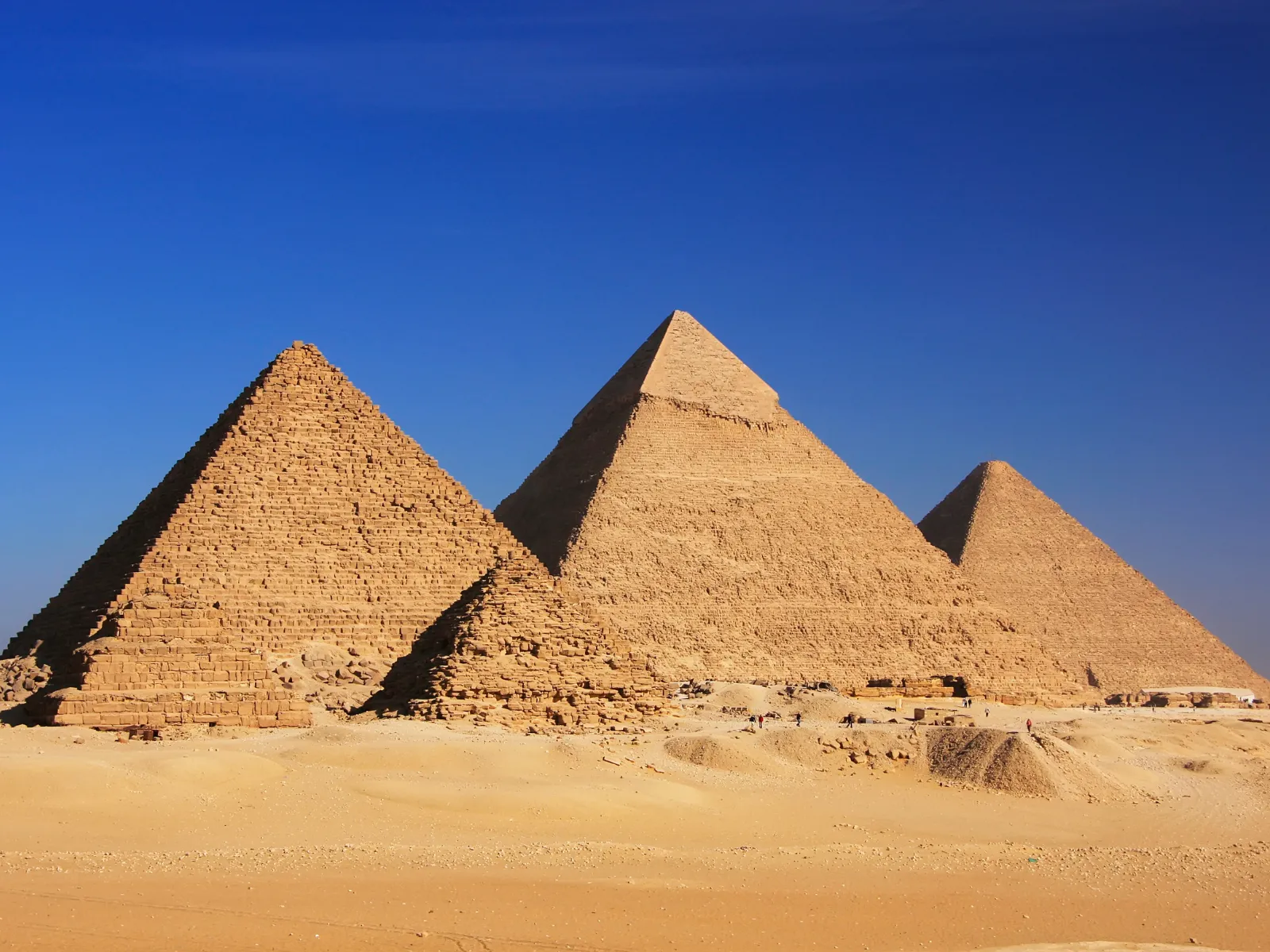
Abu Simbel is unlike anything else in Egypt. The pyramids are larger. Karnak is more complex. The Valley of the Kings is more atmospheric. But Abu Simbel has a quality that none of them match: the confrontation between human ambition and geological scale. Ramesses did not build on the landscape. He carved into it. The temple is the cliff. The cliff is the temple. The boundary between architecture and nature dissolves.
There is also the emotional weight of the relocation. Standing inside knowing that an international effort rescued this place from oblivion — that it was deemed so important that the world cooperated to save it — adds a dimension that no other Egyptian monument carries. Abu Simbel is a monument to Ramesses’s ego, yes, but it is also a monument to the idea that some things are worth saving.
And then there is the sheer spectacle. The four colossi at dawn, when the low sun turns the sandstone orange and their shadows stretch across the forecourt, are one of the great visual experiences of world travel. No photograph captures the scale. You need to stand at their feet and look up.
If you visit on or near the solar alignment dates (22 February or 22 October), the experience is amplified. Hundreds of visitors gather in the pre-dawn darkness, and when the first shaft of light penetrates the temple’s sixty-metre depth to illuminate the sanctuary statues, the collective intake of breath is genuine. It is one of the few tourist spectacles that lives up to its reputation.
The Small Temple: Nefertari’s monument
The Small Temple deserves more attention than it typically receives. Most visitors, overwhelmed by the Great Temple, give it a cursory walk-through. This is a mistake. The interior reliefs are among the finest in Egypt: Nefertari making offerings to Hathor, Ramesses smiting enemies in her honour, scenes of religious ritual rendered with an elegance and delicacy that surpass much of the Great Temple’s more bombastic decoration.
The relationship between the two temples — Ramesses’s monument to himself and his monument to his wife — creates a dialogue about power and devotion that is unique in Egyptian architecture. Nowhere else did a pharaoh build a rock-cut temple for his queen at the same scale and on the same site as his own. The dedication inscription reads: “He for whom the sun rises has made this temple by cutting into the rock of Meha, as an eternal monument, for the Chief Queen Nefertari, beloved of Mut, forever and ever.” The language of pharaonic love letters is not subtle, but it is sincere.
The case for skipping it
The journey is genuinely long and tiring, especially the dawn convoy. Six hours in a vehicle for two hours at a site is a harsh ratio. If your time in Egypt is limited — say, seven days or fewer — those hours might be better spent on a second day in the Valley of the Kings, an afternoon at Philae, or simply resting in Aswan.
The site itself, while extraordinary, is also compact. You can see both temples thoroughly in ninety minutes. There is no complex to wander, no village to explore, no additional layers to discover. You arrive, you are awed, and then you are done. Some travellers find that the payoff does not justify the effort.
And the convoy experience is not for everyone. Rising at 3:00 AM, spending three hours in a minivan with strangers, arriving at a site already populated by tour groups — it is not how everyone wants to travel.
The verdict
If you have ten days or more in Egypt and are based in Aswan, go. The logistical cost is real but manageable, and the experience is unique. If you can afford the overnight option, take it — an empty Abu Simbel at dawn is worth the extra night.
If your trip is shorter and every day is precious, it is legitimate to skip Abu Simbel without feeling you have missed something essential. The temples of Luxor and the Grand Egyptian Museum in Cairo contain more history, more art and more depth. Abu Simbel offers something different: not depth but impact. A single overwhelming moment that Ramesses designed thirty-two centuries ago and that still works exactly as intended.
He would have approved. And thirty-two centuries later, his colossal face still stares eastward across the water, waiting for the sun.
For the full picture of every monument, route and hidden corner in Egypt, the Far Guides complete guide has it all: interactive maps & itineraries, information that stays up to date.
More on Egypt
Keep reading.
Other pieces from the same destination.


Next step
Ready for Egypt?
The guide is for travelling.
Interactive maps & itineraries and everything that doesn't fit in an article. Always the latest published version.
Get the Egypt guide