Montenegro · 21 September 2026
Montenegro's monasteries: faith, history and living rock
Montenegro's monasteries are simultaneously historical archives, works of art and active pilgrimage sites. A route through the most important ones.
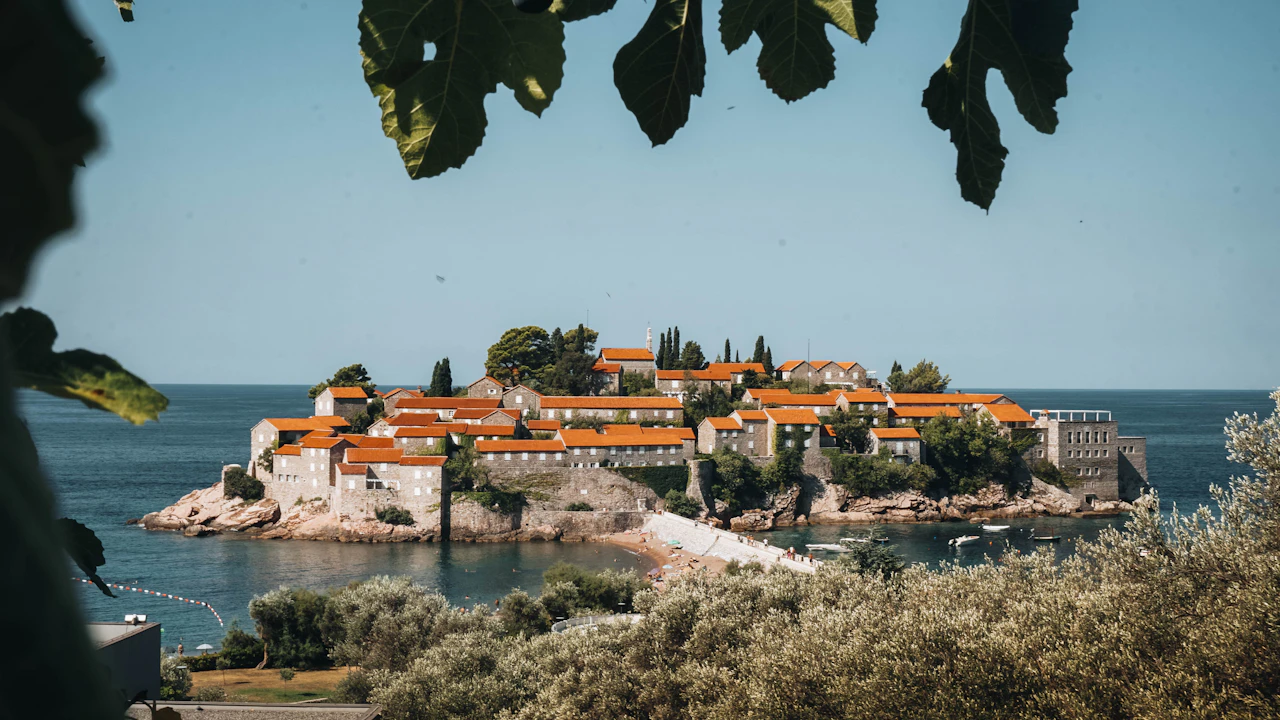
Montenegro is, by area, one of the smallest countries in Europe, but it has a concentration of Orthodox monasteries that exceeds territories many times its size. The reason is historical: during the centuries when the Ottoman Empire controlled most of the Balkans, monasteries were the only spaces where Slavic Orthodox culture, language and identity could survive with any continuity. The monk was simultaneously keeper of texts, teacher of the young, custodian of relics and intermediary between local communities and the spiritual authority that gave them cohesion.
This function explains why so many Montenegrin monasteries are in apparently impossible locations — clefts in cliff faces, inaccessible valleys, mountain summits — and also why many of them contain collections of art, manuscripts and liturgical objects of a quality that surprises anyone not expecting to find it in a Balkan mountain context.
Ostrog: faith in the rock
Ostrog is the most visited monastery in the Balkans and the inevitable reference point of any tour through Montenegro’s monasteries. Carved into the vertical rock of Ostroška Greda mountain in the seventeenth century by St Basil of Ostrog, it has a quality of experience that goes beyond architecture: it is the scale of the place, the combination of rock and whitewash, the silent queue of pilgrims waiting hours to approach the saint’s reliquary, that makes Ostrog unforgettable. The relics of St Basil — considered miraculous by the faithful of several confessions — attract Orthodox, Catholics and occasionally Muslims, which is unusual in the religious geography of the Balkans.
Cetinje Monastery: the hand of the prophet
Cetinje Monastery was founded in the fifteenth century by Ivan Crnojević and has been destroyed and rebuilt several times throughout its history. The current building, from the nineteenth century, is the seat of the Metropolitan of Montenegro and the Littoral, the highest authority of the Montenegrin Orthodox Church.
The monastery holds two relics that give it an importance disproportionate to its size: a fragment identified as a piece of the True Cross — the wood of Christ’s crucifixion — and the right hand of St John the Baptist. The latter has a travel history that could be a novel’s plot: it passed from Byzantium to the Order of Malta, from Malta to the Romanov court in Russia, from Russia to exile in Yugoslavia, and finally reached Cetinje in the 1990s after the turbulences of the twentieth century. The relic is small and kept in a silver reliquary that the faithful kiss during feast days. It is one of the most sacred objects in the Orthodox world.
Morača Monastery: the sixteenth-century frescoes
Morača Monastery, founded in 1252 in the walls of the canyon of the river of the same name north of Podgorica, is the oldest of Montenegro’s visitable monasteries and perhaps the most beautiful in terms of combined setting and artistic quality.
The frescoes decorating the interior of the Church of the Dormition are sixteenth-century and depict cycles of the life of the Prophet Elijah with a pictorial quality that specialists rank among the finest Orthodox Balkan painting of that period. The treatment of figures, the visual narrative and the preservation of colours — protected by centuries of darkness and constant temperature — make them comparable with the great Serbian frescoes of Sopočani or Mileševa. The monastery is active: the monks living there maintain the site and receive visitors with hours worth verifying before going.
Savina Monastery: facing the sea
The Savina complex in Herceg Novi is different from all the others: it sits a few metres from the Adriatic, in a garden of cypresses and pines that in spring smells of resin and wild flowers. The complex includes two churches — the smaller one from the seventeenth century and the larger from the eighteenth — and an active monastery inhabited by monks.
The larger church holds a collection of icons and illuminated manuscripts of some importance. But what makes Savina unique is not so much its artistic content as its context: the garden facing the sea, the views over the bay and Herceg Novi, the sound of the Adriatic from inside the church. It is the only monastery in Montenegro with a sea perspective.
Piva Monastery: saved from the waters
Piva deserves special mention not so much for its art — though its seventeenth-century frescoes are of quality — as for the story of its salvation. When in the 1970s the Yugoslav state built the Piva reservoir in the canyon of the same name, the monastery would have been completely flooded. The decision was to move it. Between 1969 and 1980, the monastery was dismantled stone by stone, catalogued, transported three kilometres and rebuilt in its current position on the reservoir shore. The frescoes were removed, restored and replaced on the rebuilt walls. It is an exceptional example of heritage rescue without many equivalents in Europe.
The complete Far Guides Montenegro guide includes detailed routes, interactive maps and all the practical information you need to plan your independent trip.
More on Montenegro
Keep reading.
Other pieces from the same destination.
Next step
Ready for Montenegro?
The guide is for travelling.
Offline maps, itineraries and everything that doesn't fit in an article.
Get the Montenegro guide