
Montenegro · 24 August 2026
Montenegro's best beaches: which ones, when and why
From the Budva Riviera to the sands of Ulcinj: an honest guide to Montenegro's beaches, with what nobody tells you about crowds and alternatives.
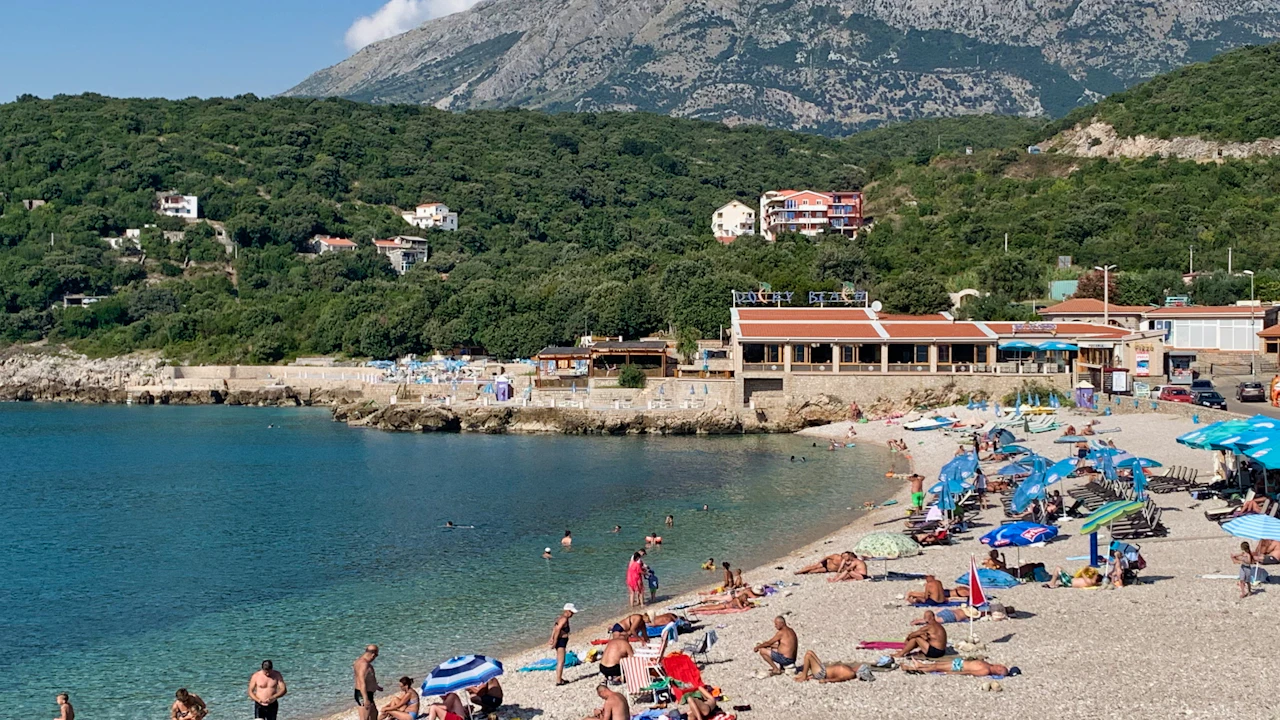
Montenegro has seventy-three kilometres of coastline, which in Mediterranean terms is not much. Greece has nearly sixteen thousand; even Croatia exceeds five thousand. But the concentration of variety in those seventy-three Montenegrin kilometres is remarkable: coves sheltered by pines, fine sand beaches facing medieval cities, long open sands with waves, remote beaches accessible only on foot or by boat. The issue is not quality but quantity: in August, demand far exceeds the capacity of the best beaches.
Knowing which beach to visit when is the difference between the experience that appears in Instagram photos and the reality of August on the Montenegrin Adriatic.
Mogren Beach (Budva): the most beautiful in the city
Mogren is actually two small coves — Mogren I and Mogren II — separated by a rock arch that can only be passed through a tunnel cut in the stone. They are ten minutes on foot from Budva’s old town along a path that follows the cliff edge, which keeps them partially apart from the most intense tourist flow, though in August there is no real escape.
Mogren I is larger and has services (sunbed and umbrella rental, bar). Mogren II is smaller, wilder and slightly less crowded. The water in both is transparent and the south-facing orientation favours afternoon sun. Mogren’s problem is that there is no easy parking: you have to arrive on foot from the old town, which is actually an advantage because it filters the heaviest traffic.
Jaz Beach (north of Budva): the biggest and most open
Jaz is three kilometres north of Budva, accessible by car or taxi from the centre. It is a long, open beach — around six hundred metres — with medium-grained sand and gentle surf. It hosts the Jaz Music Festival in July (one of the Balkans’ leading electronic music events, with international names and tens of thousands of attendees), which means there are weeks when the beach is occupied by festival infrastructure.
The rest of the summer, Jaz has more space than Budva’s central beaches and lower sunbed prices. It is not the most beautiful but it is functional and relatively accessible by public transport (taxis from Budva are cheap).
Sveti Stefan Beach: the most photogenic
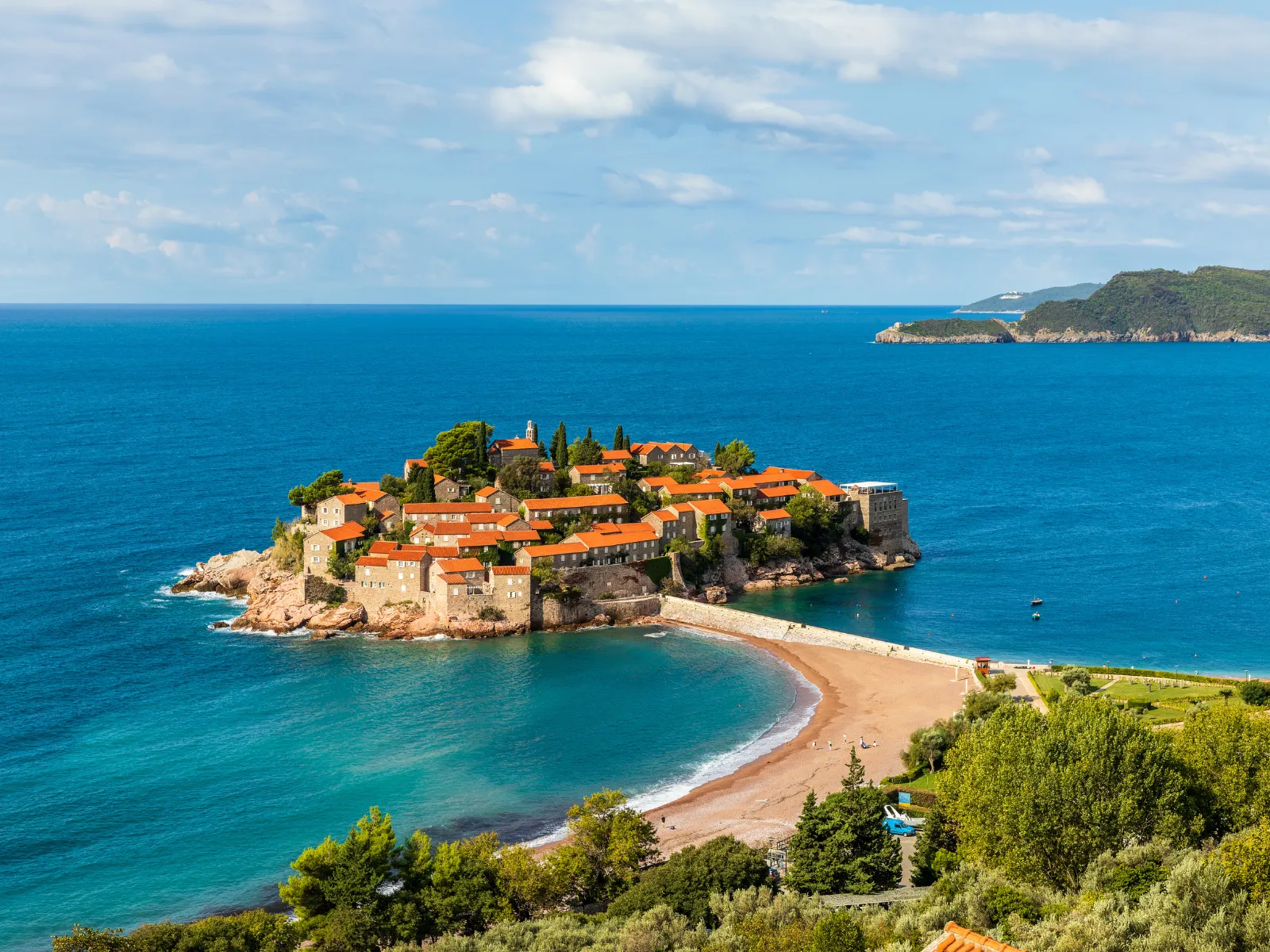
The beach facing Sveti Stefan island has an orientation and visual context found nowhere else on the coast: the pink stone island four hundred metres away, the water in shades of blue and green, the pine hills in the background. Beach access costs around twenty euros per person (sunbed and umbrella included), making it one of Montenegro’s most expensive.
Queen’s Beach, a kilometre to the north along the coastal path, is cheaper and equally beautiful, a south-facing curve of fine sand. Access is slightly more complicated — you have to descend via an unmarked path from the road — but those who find it get a beach with fewer people and the same views.
Buljarica: the quiet alternative
Already covered in the Petrovac article, Buljarica deserves mention in any list of Montenegro’s best beaches. Fifteen hundred metres of sand without hotels in the front row, with the pine forest behind. Access is straightforward from Petrovac or from Bar.
Velika Plaza (Ulcinj): the most African
Thirteen kilometres of dark sand that on windy days are reminiscent of north Atlantic beaches more than the Mediterranean. The extent absorbs a lot of people: even in August, if you walk a kilometre or two south from the beach bars at the northern end, the beach starts to empty. Unique on the Adriatic coast for its scale and colour.
When to go
The Montenegrin Adriatic reaches its maximum temperature in August (26-28°C). But August is also the peak month for visitors: the main Budva beaches are packed from eight in the morning to eight in the evening, accommodation prices double or triple compared to May, and the tranquil experience that Montenegro’s marketing sells has little to do with reality. June and September are the months of balance: the water is already warm (23-25°C in June, 25-26°C in September), prices are reasonable and visitor numbers are manageable. The moment of best quality-experience-price ratio is the second half of September.
The complete Far Guides Montenegro guide includes detailed routes, interactive maps and all the practical information you need to plan your independent trip.
More on Montenegro
Keep reading.
Other pieces from the same destination.

Next step
Ready for Montenegro?
The guide is for travelling.
Offline maps, itineraries and everything that doesn't fit in an article.
Get the Montenegro guide