


Iceland · 7 October 2026
The Northern Lights in Iceland: when, where and how to actually see them
Iceland is the world's most accessible destination for seeing the northern lights. But most people who travel to see them come back without having seen them, for entirely avoidable reasons.

Every year, thousands of people travel to Iceland specifically to see the northern lights and come home without having seen anything. Not because the phenomenon is rare, and not because Iceland is a poor choice — Iceland is probably the most accessible place on earth to see the aurora borealis, with direct flights from across Europe and a tourism infrastructure that functions even in January. The problem lies elsewhere, and it is entirely avoidable if you understand before buying your ticket what conditions need to align and why none of them are guaranteed.
Three conditions that must coincide
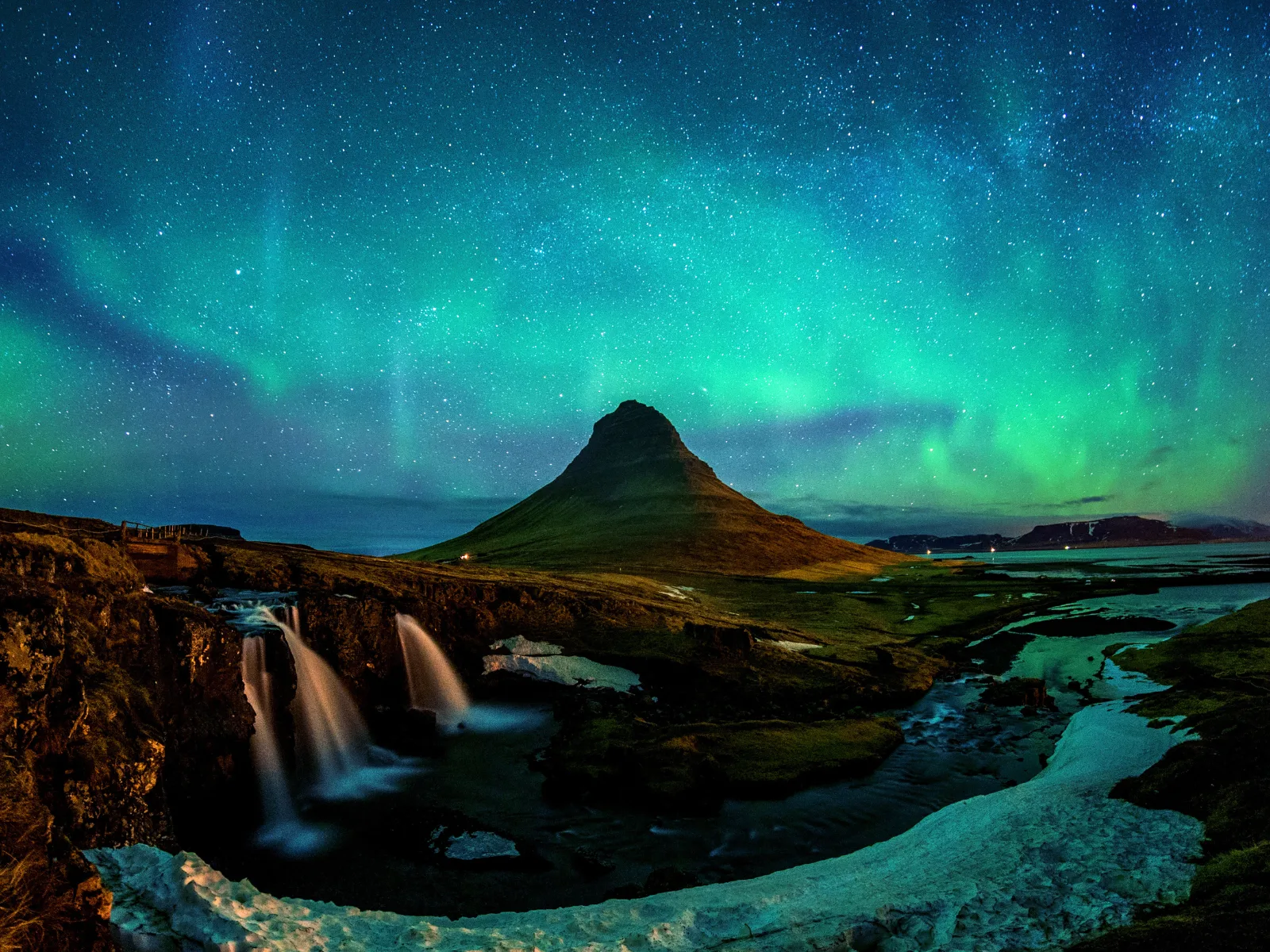
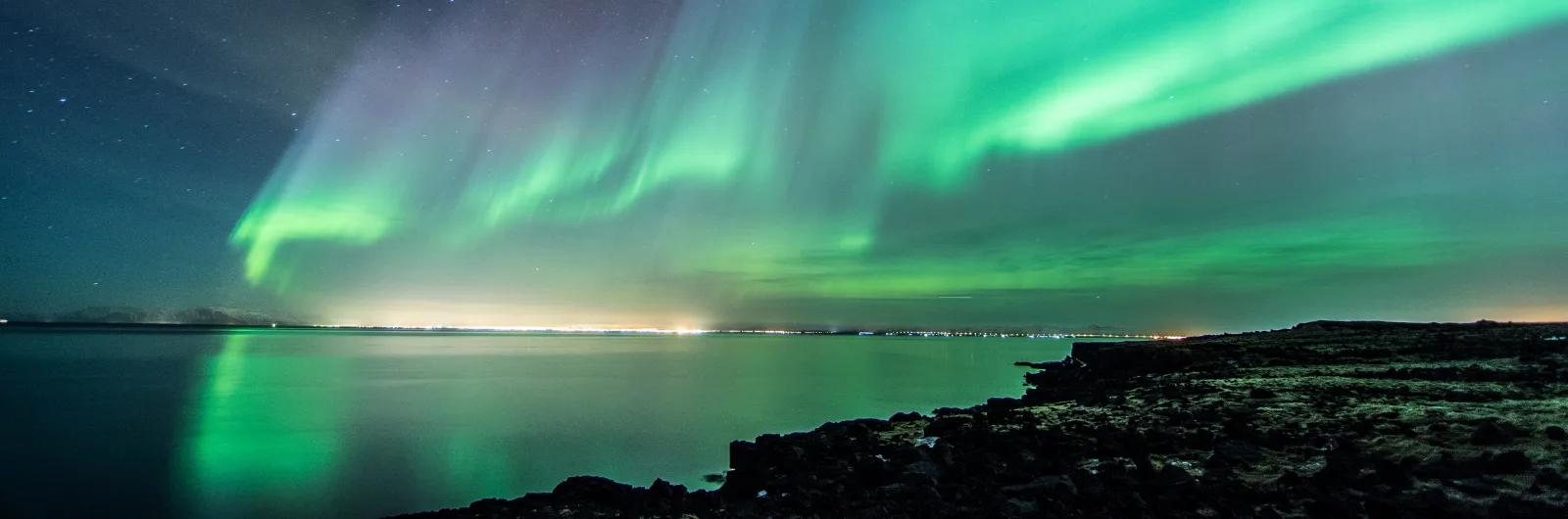
The aurora borealis — aurora australis in the southern hemisphere — is produced by charged particles emitted by the sun interacting with the earth’s atmosphere as they enter through the magnetic poles. The result is visible: curtains of light, usually green, sometimes pink, violet or white, moving across the sky like something between flame and liquid. Seeing it from the ground requires three conditions to occur simultaneously: sufficient darkness, a clear sky, and enough solar activity.
The first condition rules out the Icelandic summer entirely. From May to August the sun does not set in Iceland. There is light for twenty-four hours, which means no visible aurora regardless of solar activity. The useful period runs from September to March, with the peak between November and February, when nights in Reykjavík exceed sixteen hours and in the north can reach twenty.
Solar activity follows eleven-year cycles. The current solar maximum, which began around 2023 and will extend to approximately 2026, is one of the most intense in recent decades: auroras are more frequent, brighter, and visible at lower latitudes than usual. This is an exceptionally good period to try, which does not mean success is guaranteed.
The KP index and how to use it
The KP index measures geomagnetic activity on a scale of 0 to 9. At KP3 or KP4, auroras are visible from Iceland under clear skies. At KP5 or higher, they are visible even from northern Europe, and in extreme cases from latitudes as southerly as northern Spain. The apps Space Weather Live and My Aurora Forecast show the index in real time and provide forty-eight-hour forecasts with reasonable reliability.
The challenge is not the solar activity. It is Iceland’s atmospheric weather, which is completely unpredictable and changes within hours. A forecast of clear skies at nine in the evening can become a cloud front by ten. The only useful strategy is to be ready to go outside at any moment, rather than planning an aurora evening the way you would plan a restaurant booking.
Where to position yourself
The light pollution from Reykjavík does not prevent aurora viewing on high-KP nights, but moving twenty or thirty kilometres outside the city — north or east — significantly improves the sky. The area around Þingvallavatn, the western fjords, or the south coast between Selfoss and Vík are options that locals know well. Any dark hillside away from street lights will do.
Aurora apps also show cloud cover in real time: the cloud map matters as much as the KP index. A KP6 night with total cloud cover is useless. A KP3 night with a completely clear sky can produce a faint but real and memorable aurora. The most common mistake is checking the KP index and forgetting to check the clouds.
Photographing the aurora
Modern phones with night mode can capture auroras that the naked eye barely perceives. This has advantages and disadvantages. The camera can see more than the eye on low-activity nights, but on high-activity nights a phone is not enough to capture the movement and scale of the phenomenon. A camera with manual control, a stable tripod and patience to adjust ISO and exposure are what separates a photograph of the aurora from a photograph of what looks like green fog.
The optimal exposure for fast-moving auroras is two to four seconds at ISO 800 to 3200, depending on intensity. For more static displays, exposures of ten to twenty seconds give more detail but require that the aurora is not actively moving. A tripod is not optional: in extreme cold, hands are not steady enough.
What will not work
Waiting in the hotel for someone to tell you to go out. Going for a single night and expecting to see something. Trusting organised aurora-chasing tours without independently checking conditions. Travelling in December without having looked at the meteorological record: December and January have the longest nights but also the highest rate of overcast days along the south coast, where most tourism is concentrated.
The most honest strategy is this: plan at least five nights, between October and February, with some flexibility to move north or east if conditions are better there. With those parameters, the probability of seeing aurora at least once exceeds eighty percent. With two nights in July, the probability is exactly zero.
The complete Far Guides Iceland guide includes detailed routes across the whole island, interactive maps and all the practical information you need to plan your Ring Road and beyond.
More on Iceland
Keep reading.
Other pieces from the same destination.
Next step
Ready for Iceland?
The guide is for travelling.
Interactive maps & itineraries and everything that doesn't fit in an article. Always the latest published version.
Get the Iceland guide