Iceland · 22 April 2026
Reykjavik in 2 Days: What to See and What to Understand
A two-day itinerary for Reykjavik: the smallest city that feels like a capital, caught between culture, nature, and a unique identity.
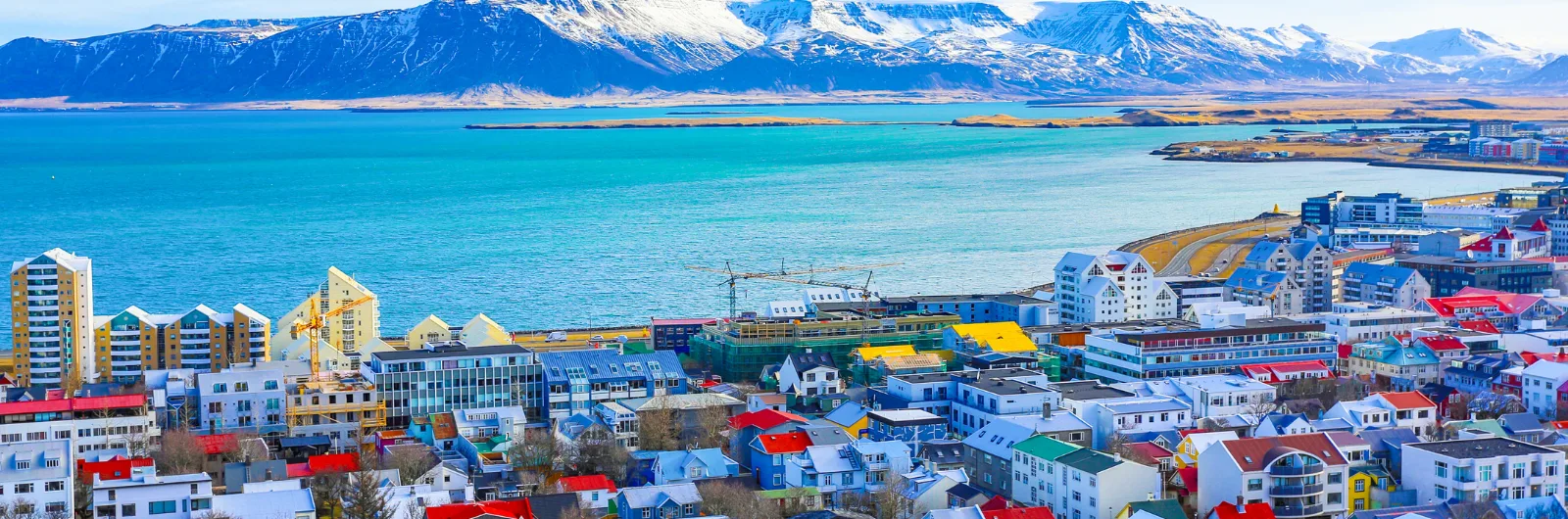
Reykjavik has a hundred and forty thousand people. It is, by a wide margin, the smallest capital in western Europe. And yet, after a few hours walking through it, you do not feel that anything is missing. It has serious museums, a music scene out of all proportion to its size, restaurants that could hold their own in Copenhagen, cafes where people read for hours, and a relationship with the landscape that no other European capital can replicate: twenty minutes from the centre there are mountains, and on clear days you can see glaciers from the harbour.
The city was founded — according to tradition — by Ingolfur Arnarson in the year 874, when the Norse settler cast the carved pillars of his high seat into the sea and vowed to settle wherever the current carried them. The pillars washed ashore in a bay where steam rose from the earth, and Arnarson named it Reykjavik: the smoky bay. It is an origin story that says a great deal about the Icelandic temperament: a momentous decision left to chance, followed by absolute stubbornness to make it work.
For centuries, Reykjavik was little more than a farm with ambitions. The modern city was born with independence from Denmark in 1944 and the American military presence during the Cold War, which brought infrastructure, dollars, and rock and roll. Today it is a cultural capital that produces more music, more literature, and more design per capita than any city of its size. That is not marketing: it is a verifiable fact.
Day 1: The Centre, the History, and the Harbour
Hallgrimskirkja and the View That Explains Everything
Start from above. Hallgrimskirkja is the Lutheran church that dominates the Reykjavik skyline from every angle, its seventy-five-metre concrete tower imitating the basalt columns found throughout Iceland’s nature. The architect Gudjon Samuelsson designed it in 1937, but it was not completed until 1986 — nearly half a century of construction for a church in a country where half the population doubts the existence of God. That says something about the Icelandic relationship with their projects: they start them and they finish them, even if it takes generations.
Go up to the tower viewing platform. The entrance costs 1,000 ISK and is worth every krona. From above you can see all of Reykjavik: the coloured rooftops of the centre, the bay, Mount Esja to the north, and the Atlantic stretching west. What becomes immediately clear is that the city is small. You can see where it ends. That is rare for a capital and it defines the experience of being here: everything is walkable, everything is close, everything is on a human scale.
In front of the church stands the statue of Leif Erikson, a gift from the United States in 1930 for the thousandth anniversary of the Althing. Erikson, son of Erik the Red, reached North America five hundred years before Columbus. Icelanders do not make much noise about this fact, but they do not forget it either.
Laugavegur: The Street That Is the Centre
Walk down from Hallgrimskirkja along Skolavordustigur — the street of design shops and galleries — to Laugavegur, the main artery of the centre. The name means “washing road”: it was the route women took to carry their laundry to the hot springs. Today it is the city’s most important commercial street, but it retains something of its original scale: there are no dominant international chains, just small shops, independent cafes, and bars that transform into live music venues at night.
Have a coffee at Reykjavik Roasters or Mokka Kaffi — the oldest cafe in the city, open since 1958, where Icelanders discovered espresso. The coffee culture in Reykjavik is serious: this is not chain-shop territory, it is people sitting for hours with a book and a cup of filter coffee. In a country where winter lasts months and the darkness is total, hot coffee in a lit room has a meaning that goes beyond caffeine.
The National Museum: A Thousand Years in One Building
The National Museum of Iceland (Thjodminjasafn) is a ten-minute walk from Laugavegur. It is a small museum but an extraordinarily well-curated one. The permanent exhibition covers a thousand years of Icelandic history from the Viking settlement to independence, with objects that tell concrete stories: the carved church door from Valthjofsstadur, dating to the thirteenth century, with scenes of knights blending Norse and European traditions. The tools of the first settlers. The medieval manuscripts. And the section on centuries of Danish rule, which explains why the independence of 1944 was not an abstract political act but the culmination of a cultural movement that had spent a century building the idea of what it meant to be Icelandic.
Allow at least ninety minutes. It is the kind of museum that makes everything you see afterwards make more sense.
The Old Harbour and Harpa
Walk toward the harbour. The Old Harbor (Grandi) was for decades the economic heart of Reykjavik: this is where the cod, the herring, and the whale were unloaded. Today the fish warehouses are restaurants, breweries, and museums, but the smell of the sea and the activity of the boats maintain the connection to what it once was.
Harpa, the concert hall, sits at the edge of the old harbour. It is a building by Henning Larsen and Olafur Eliasson: a glass structure with a facade of hexagonal panels that shift colour with the light. Inside it is home to the Iceland Symphony Orchestra and the Opera. Outside it is the most photographed building in the city. It is worth entering even if there is no performance: the lobby is an open public space with views of the harbour and Mount Esja.
For dinner, stay in the old harbour area. Grillid is the reference restaurant if the budget allows. For something more reasonable, Messinn serves the catch of the day in cast-iron pans — simple and excellent. And the Fish Market (Fiskmarkadurinn) offers an Icelandic-Japanese fusion that sounds unlikely but works.
Day 2: The Other Reykjavik
Perlan: The Dome on the Hill
Perlan is a peculiar building: a glass dome built on top of the hot water tanks that supply the city’s geothermal heating. Inside there is a natural science museum with an artificial ice cave, a planetarium, and exhibitions on volcanoes and glaciers. It is more interesting than its shopping-centre appearance suggests: the exhibition on Iceland’s geological forces is good preparation for the rest of the trip. And the observation platform, which is free, offers a 360-degree panorama of Reykjavik, the bay, and the mountains.
Sundhollin: Swimming Like an Icelander
If you do one local thing in Reykjavik, make it a thermal pool. Not Blue Lagoon — that is a geothermal theme park for tourists, forty minutes from the city and priced accordingly. Go to Sundhollin, the oldest public pool in Reykjavik, renovated in 2017, right in the centre. Or Vesturbaejarlaug, in the western neighbourhood, where Icelanders go after work.
The thermal pool culture in Iceland is not a tourist attraction: it is the social fabric of the country. Icelanders go to the pool the way Spaniards go to the bar: to meet, to talk, to be. The hot pots — the tubs of hot water at different temperatures — are the true Icelandic public space. The rules are simple: shower without a swimsuit before entering (Icelanders are strict about this, and rightly so), choose your temperature, and stay as long as you like.
Entry costs 1,150 ISK. It is the best investment you will make in Reykjavik.
The Grandi District and the Harbour Museums
Spend the morning in the Grandi district, the western extension of the old harbour that has become the most interesting area of Reykjavik. Here you will find the Marshall House, a former herring warehouse converted into a contemporary art centre: the studio of artist Olafur Eliasson occupies the ground floor, and the upper galleries hold rotating exhibitions of Icelandic and international art.
Whales of Iceland is the largest whale museum in Europe: twenty-three life-size models of the species found in Icelandic waters, suspended from the ceiling of a darkened hall. It is impressive in scale — standing beneath a twenty-five-metre blue whale model recalibrates your sense of size — and in information: Iceland’s relationship with whales is complex, caught between the whaling tradition, the international moratorium, and the whale-watching industry that has partially replaced the hunt.
For lunch, Grandi Matholl is a food hall in a former harbour warehouse: diverse food stalls, from fish and chips to ramen, at reasonable prices for Reykjavik (1,500-3,000 ISK per dish).
The Afternoon: Tjornin and the House of Power
Walk south from the centre, where the lake Tjornin reflects the government buildings and the cathedral. This is the quietest Reykjavik: ducks and swans on the water, families on the benches, and the view of the modernist city hall leaning over the lake. Here too is the Althingi House, the seat of the Icelandic parliament — a modest dark basalt building that looks more like a gentleman’s residence than a parliament. Iceland governed from an open field for centuries; that its modern parliament is a humble building is consistent.
If you still have energy, the Saga Museum near Perlan offers wax figures depicting key episodes from Icelandic history. It is kitsch, but the narrative content is solid, and if you have not read the sagas, it is a decent introduction to the characters and events that define the country’s culture.
The Night: Music and Runtur
Reykjavik has more musicians per capita than any city in the world. That is not a metaphor: this is a country of three hundred thousand people that has produced Bjork, Sigur Ros, Of Monsters and Men, Kaleo, and dozens of bands that fill venues across Europe. On Friday and Saturday nights, the bars in the centre — Kex Hostel, Kaffibarinn, Hurra, Gaukurinn — have live music. The tradition of the runtur (the night round) consists of moving from bar to bar until the night is over. Icelanders go out late — eleven, midnight — and the night can stretch until four or five in the morning.
Beer was illegal in Iceland until 1989. That is not a joke: the beer ban lasted seventy-four years, until it was lifted on 1 March, a date now celebrated as Beer Day. Today there are dozens of microbreweries. Skuli Craft Bar has the best selection of Icelandic beers.
What Reykjavik Is Not
Reykjavik is not a city of monuments. It is not a city of neighbourhoods layered with centuries of accumulated history like Rome or Istanbul. It has no metro, no skyscrapers, no grand boulevards. What it has is something rarer: an identity entirely its own that imitates no other European capital. It is a city where nature is visible from every corner, where culture is produced in absurd proportion to the population, and where social life revolves around hot water and coffee.
Two days are not enough to know it, but they are enough to understand it. And understanding Reykjavik is understanding Iceland: a small, isolated, improbable place that decided to do things its own way and has succeeded.
Practical Notes
Getting around. The entire centre is walkable. For Perlan and Grandi, walking also works (twenty minutes from Laugavegur). There are city buses (Straeto) but for two days you will not need them.
Money. Card for everything. Literally everything. Some establishments do not accept cash. The Icelandic krona fluctuates: check the exchange rate before you travel.
Weather. Unpredictable all year round. It can be sunny, rainy, snowy, and sunny again in the same morning. Layers and a waterproof windbreaker. Wind is the most constant factor.
Food. Generous breakfasts at accommodations. Lunch at food halls or bakeries (Sandholt is the best bakery in the centre). Dinner: book at popular restaurants, especially on Friday and Saturday nights.
Accommodation. Stay in the centre or within a ten-minute walk. Hotels are expensive (30,000-60,000 ISK per night). Hostels and guesthouses are the smart option (8,000-15,000 ISK). Airbnb is legal and plentiful.
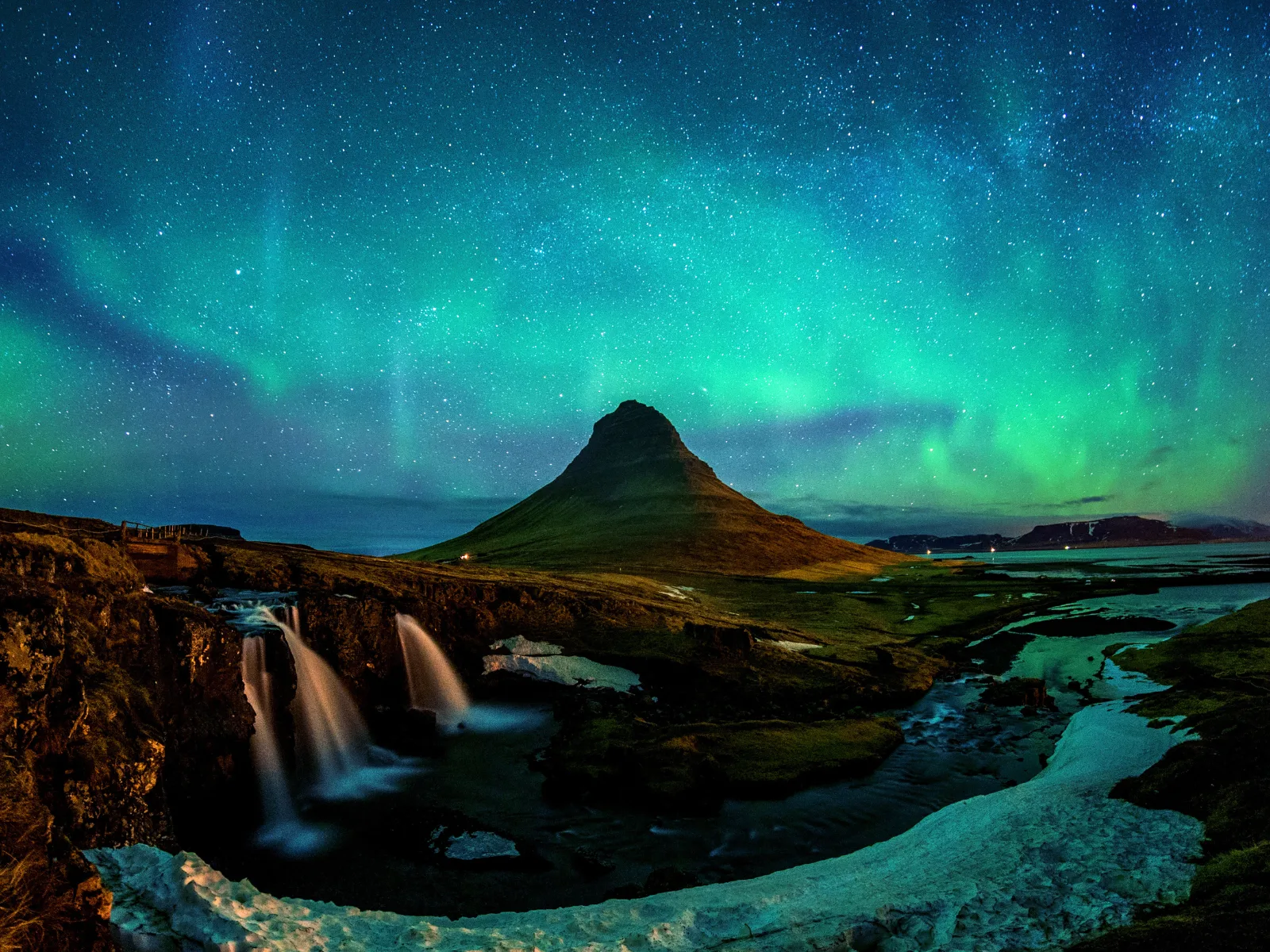
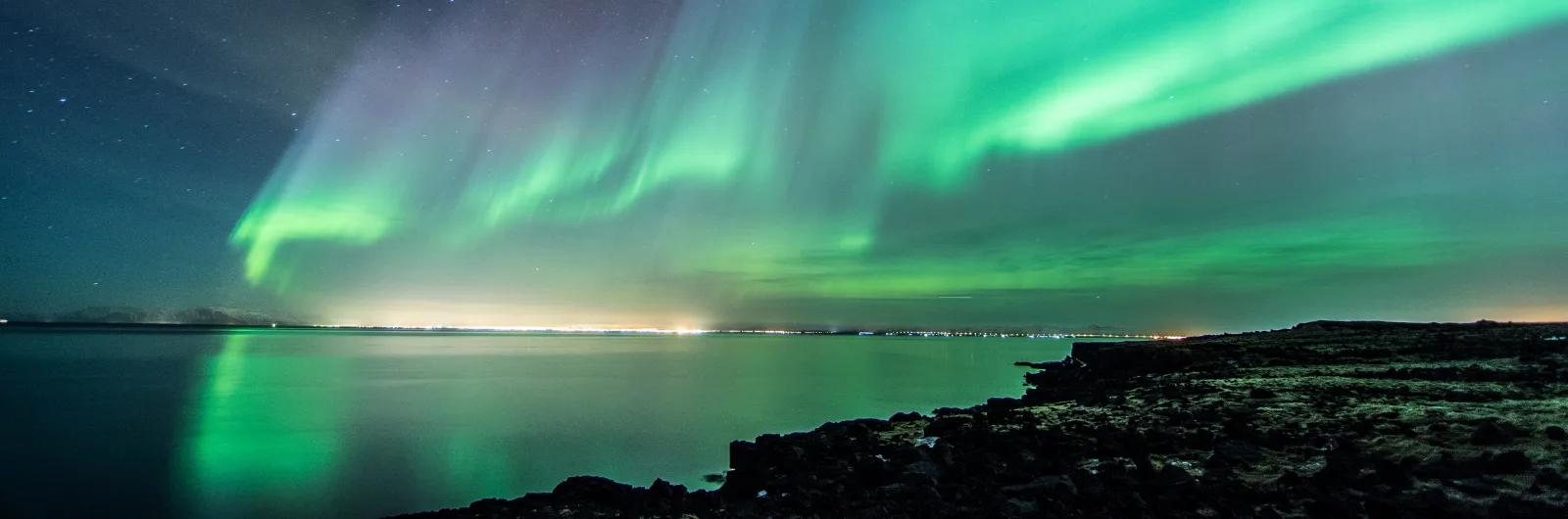
When to go. June to August for perpetual light and outdoor terraces. September to October and February to March for the northern lights. December to January for the deep winter experience, but with barely four hours of daylight.
More on Iceland
Keep reading.
Other pieces from the same destination.

Next step
Ready for Iceland?
The guide is for travelling.
Interactive maps & itineraries and everything that doesn't fit in an article. Always the latest published version.
Get the Iceland guide