Uzbekistan · 4 September 2026
Uzbekistan in autumn: why September and October are the best months
Uzbekistan's summer exceeds 40°C and turns monument visits into endurance tests. Autumn brings perfect temperatures, extraordinary fruit and the country at its best.

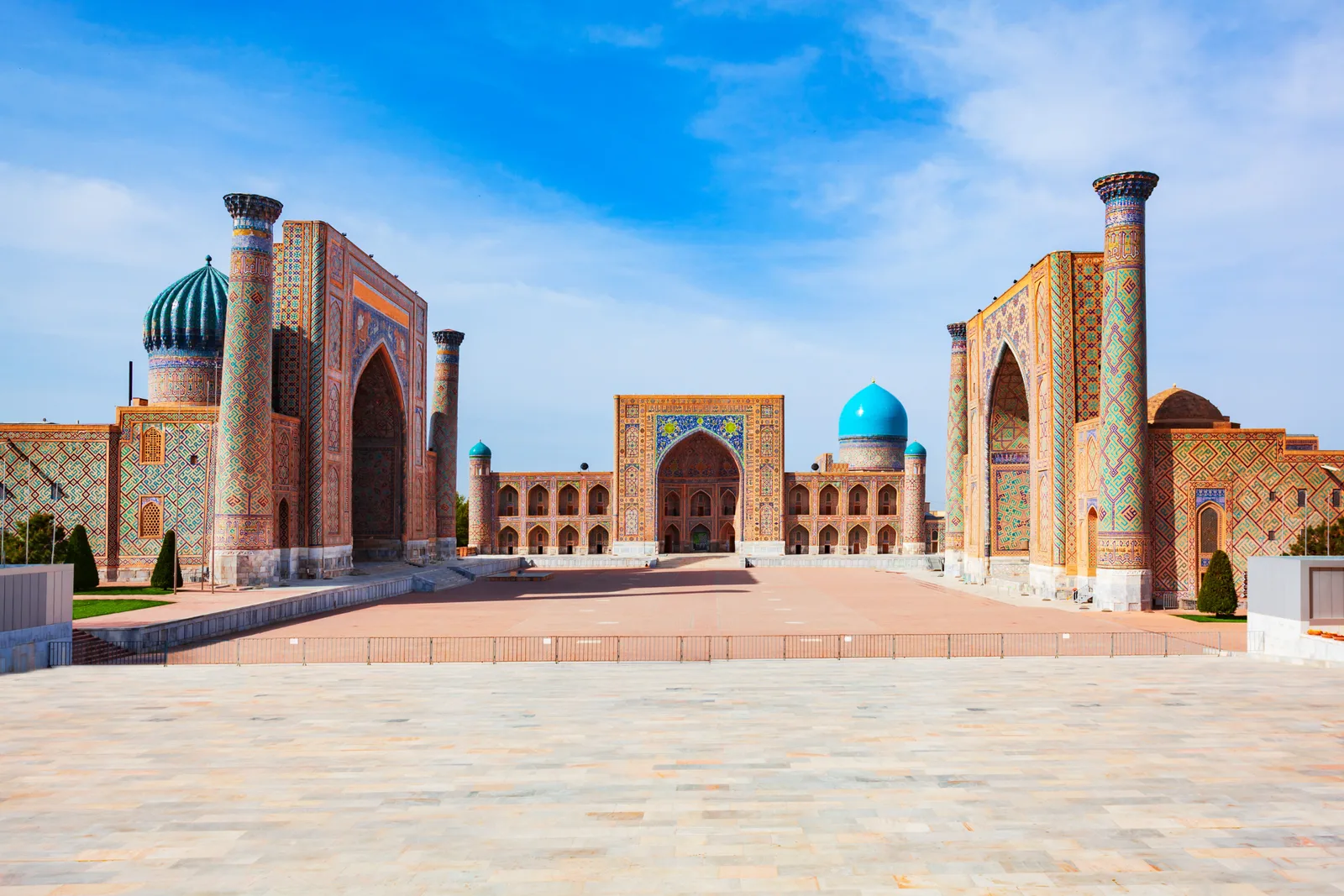
In late July, the Registan in Samarkand reaches forty-two degrees at midday. The plaza’s paving stones have been absorbing heat since eight in the morning and radiate it for hours. Tourists arriving in organised buses at eleven stay ten minutes, take the photograph and retreat to air-conditioned coaches. The grandest monument in Central Asia becomes a test of physical endurance.
That does not happen in September. In September, Samarkand sits at twenty-eight degrees at midday, the sky has the specific clarity of a Central Asian autumn, and the tourist groups have started to thin. The Registan at seven in the morning in September, with the light coming in low and lateral across the portals and domes with no one around but a postcard vendor still setting up his stall, is an entirely different experience.
Heat as a genuine planning factor
The Uzbek summer — June, July, August — has temperatures that are not merely uncomfortable but genuinely affect the travel experience. Timurid architecture, designed for an extreme climate, has intelligent natural ventilation mechanisms: the interior courtyards of the madrasas create air currents that reduce temperatures several degrees below the outside. But outside, under the summer sun, visiting monuments that require walking between open spaces becomes pure effort.
Travellers who go in summer are not wrong, and the country has its August reasons: the Fergana Valley in full melon production, bazaars overflowing with fruit, warm evenings in guesthouse courtyards. But for those who can choose, autumn has advantages that summer cannot compensate.
September: the perfect balance
September is the month with the best combination of temperature, fruit, light and tourist numbers. Temperatures in the main cities — Tashkent, Samarkand, Bukhara — hover between twenty-five and thirty-two degrees during the day and drop to sixteen or eighteen at night. The heat is entirely manageable, even at midday, with some planning: visits in the early morning and late afternoon, rest during the central hours.
The bazaars in September are, for a traveller with gastronomic interest, reason enough to choose this month. Grapes arrive in dozens of varieties — some the size of small plums, with a sugar concentration that bears no comparison to what reaches European supermarkets — and the Fergana melons are at their peak. Samarkand’s Siab bazaar at eight in the morning on a September day, with the autumn light on mounds of grapes, split pomegranates and yellow quince, has a visual quality and gastronomic perfection that no other month can match.
October: the month for travellers who know
October is the month for those who want Uzbekistan without the crowds. Tourist numbers drop noticeably from mid-October: organised tours reduce their frequency, accommodation prices ease slightly, and the monuments recover a quietness that in high season is hard to find.
Temperatures in October range from eighteen to twenty-five degrees in the southern cities — Bukhara, Samarkand — and somewhat colder in Tashkent, which is further north and has a more pronounced continental climate. Autumn clothing is sufficient for the day; October nights in Samarkand require something warm.
October light has a quality photographers know well: lower in the sky, warmer in spectrum, with a golden hour that in summer lasts minutes and in autumn extends for nearly an hour. The Timurid tiles — designed to capture and reflect light with precision — reveal a range of tones in October’s light that summer’s vertical sun flattens entirely.
The downside: shorter days
The only factor that speaks against October is the shortening of the day. In Samarkand, the sun sets around half past six in October, meaning the window for photographing in natural evening light is narrower than in September. Someone wanting photographs of the Registan in the six o’clock golden light has about fifteen minutes in October and over an hour in September.
In November, winter begins to make itself felt. Temperatures in Tashkent can drop to five degrees at night, and the country’s north — Khiva, in Khorezm — enters a cold that makes visits uncomfortable. Bukhara and Samarkand in November have a specific beauty — the empty madrasas, the winter light entering laterally across the mosaics, a silence that does not exist in high season — but they require more layers and a tolerance for discomfort that not everyone has.
When not to go: winter and the height of summer
December, January and February have sub-zero temperatures in the north and travel conditions that are not ideal for the monumental circuit. Open-air archaeological sites — Afrasiab, Khiva’s tell — are difficult in winter. The southern cities (Termez) are milder, but access is more complicated.
The conclusion is simple: for most independent travellers who need to choose between available dates, September is the ideal month and October is the alternative for those seeking fewer tourists even at the cost of some seasonal fruit and some daylight.
The complete Far Guides Uzbekistan guide includes detailed Silk Road routes, interactive maps and all the practical information you need to plan your independent trip.
More on Uzbekistan
Keep reading.
Other pieces from the same destination.


Next step
Ready for Uzbekistan?
The guide is for travelling.
Offline maps, itineraries and everything that doesn't fit in an article.
Get the Uzbekistan guide