


Egypt · 14 August 2026
Karnak: the temple that took Egypt 2,000 years to build
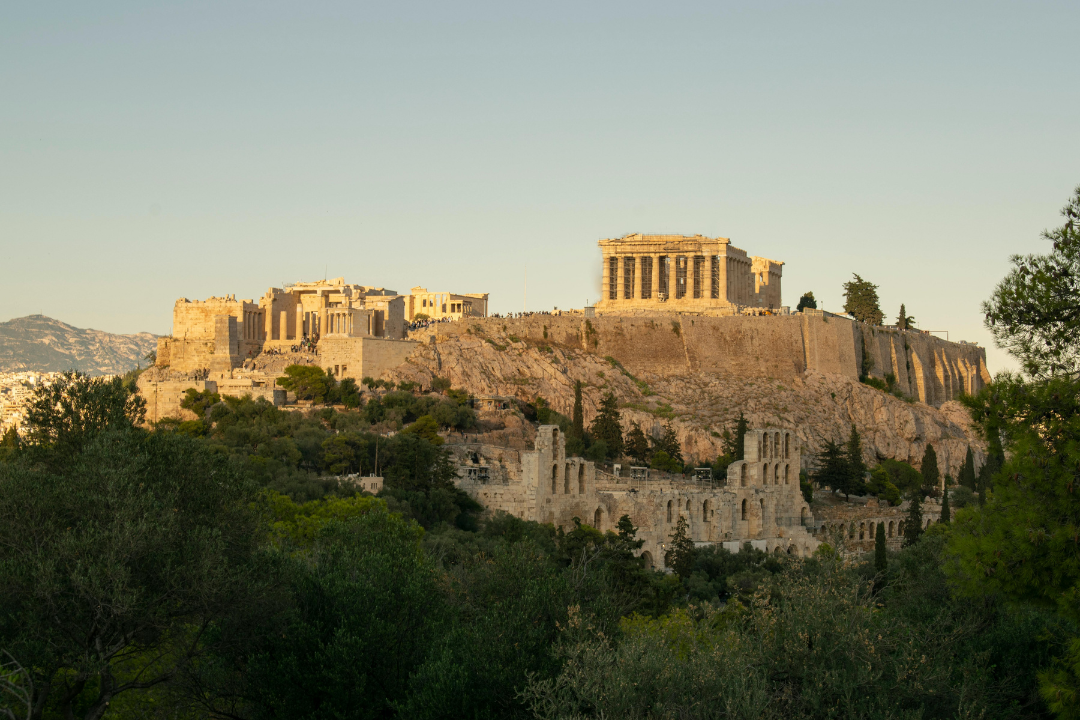
Karnak is not a temple: it is a 100-hectare religious city that 30 different pharaohs expanded over 2,000 years. The scale makes the Parthenon look like a small building.

There is a moment, when you pass through Karnak’s first gateway and the temple axis opens before you, when scale stops being an abstract concept and becomes something physical. It is not that the columns are tall: it is that the horizon fills with columns. There are 134 in the Hypostyle Hall, the twelve central ones rising 21 metres each, and they stand so close together that light arrives between them in oblique strips that bring to mind the interior of a very old forest. Ten Notre-Dame cathedrals would fit within Karnak’s walled enclosure. This is not a tourist guidebook metaphor: it is comparative geometry.
An institution, not a building
The Egyptians called this place Ipet-sut, “the most sacred of places.” Modern archaeologists call it a complex, because calling it a temple would be imprecise. What exists here is the result of two thousand years of cumulative building: from the pharaohs of the Middle Kingdom (twentieth century BC) to the Ptolemaic period (third to first centuries BC), thirty different pharaohs added, expanded, demolished and rebuilt parts of this ensemble. Each new ruler wanted to leave his mark, which turned Karnak into an architectural palimpsest of extraordinary complexity.
The heart of the complex is the Great Temple of Amun-Ra, the principal deity of Thebes and, during the New Kingdom, the principal deity of all Egypt. Amun was the god of wind and the hidden, later fused with Ra, the solar deity, in the syncretic figure of Amun-Ra. The power of the Amun priesthood at Karnak grew so great during the New Kingdom that it came to rival the pharaoh’s own authority: the temple’s priests controlled lands, armies and vast fortunes. The pharaoh Akhenaten, in the mid-fourteenth century BC, attempted to suppress the cult of Amun precisely to break that power. He failed, and his successor Tutankhamun restored everything.
The Hypostyle Hall
The great nave of the Hypostyle Hall was built mainly by Seti I and completed by Ramesses II in the thirteenth century BC. Its dimensions are 102 metres long by 53 metres wide. The reliefs covering every centimetre of the columns and walls were originally painted in brilliant colours: blue, green, ochre, red. What few travellers know — and what makes the visit today somewhat more melancholy than it might be — is that as recently as the mid-nineteenth century these colours still existed in large part. The draughtsmen of nineteenth-century scientific expeditions recorded chromatic combinations that tourism and outdoor exposure have gradually erased. What one sees today is a faded version of what once existed.
The best light in the Hypostyle Hall occurs between 8 and 10 in the morning, when the sun is still low enough to enter between the columns along the east-west axis and create those interior light-shafts that make the space photographically unique. After 11, the light is overhead and the space loses some of its drama.
The sacred lake and the details
The sacred lake — a rectangular pool that priests used for ritual purification before ceremonies — lies in the southern part of the complex, bordered by columns and with a large stone scarab on a circular plinth. The scarab represents Khepri, the god of the rising sun. Local tourist tradition holds that you must walk seven times around the plinth for your wishes to be granted. There is no ancient documentation to support this practice, but the wear on the ground around the plinth is eloquent.
The obelisks of Queen Hatshepsut — two originally, one still standing — measure 29 metres and are the tallest in Egypt. Hatshepsut had them sheathed in electrum, an alloy of gold and silver, so that the rays of the dawn sun would illuminate them from a distance. Tuthmosis III, her successor and stepson who hated her with an intensity that led him to systematically erase her image from every monument, had them surrounded by stone walls to prevent them being seen. The walls have vanished; the obelisks still stand.
The Avenue of Sphinxes
Karnak and the Temple of Luxor, three kilometres to the south, were connected by an avenue flanked by ram-headed sphinxes, the sacred animal of Amun. During the Opet festival, the god’s statue would travel from Karnak to the Temple of Luxor in procession, escorted by the pharaoh and the priesthood. The avenue was excavated and largely restored in the 1990s and can now be walked end to end, though the nocturnal visit to Karnak (the sound and light show) gives a sense of its scale that the daytime view does not always convey as fully.
Arriving at Karnak before the cruise groups — before 8 in the morning — is the difference between experiencing the place and enduring its crowds.
The complete Far Guides Egypt guide includes detailed Nile Valley routes, interactive maps and all the practical information you need to plan your independent trip.
More on Egypt
Keep reading.
Other pieces from the same destination.


Next step
Ready for Egypt?
The guide is for travelling.
Interactive maps & itineraries and everything that doesn't fit in an article. Always the latest published version.
Get the Egypt guide