Uzbekistan · 22 May 2026
The Silk Road cities: Samarkand, Bukhara and Khiva compared
Three legendary cities, three different personalities. An honest comparison of Uzbekistan's Silk Road trio to help you understand what each one offers — and why you need all three.

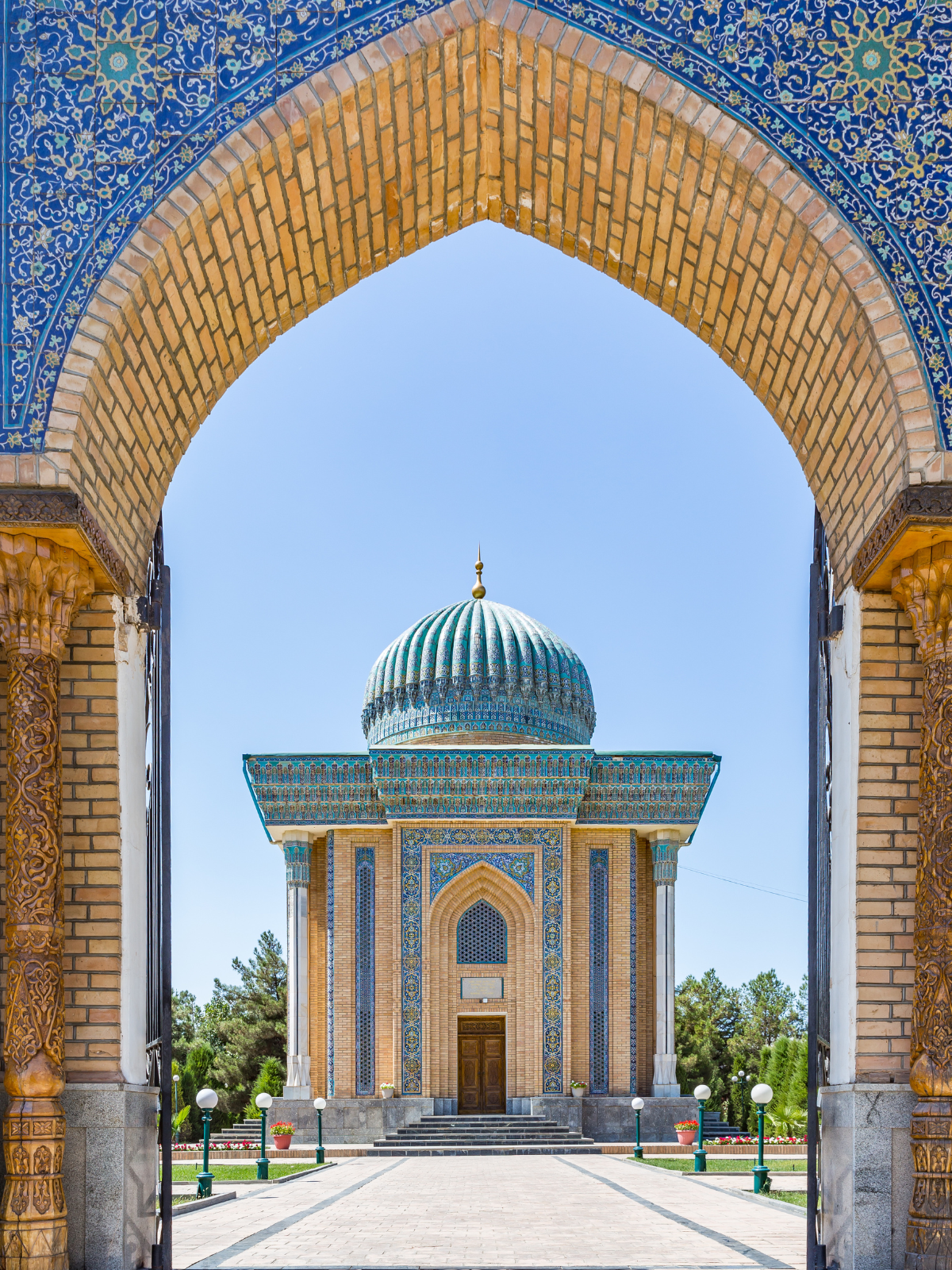
The three cities that define Uzbekistan in the traveller’s imagination — Samarkand, Bukhara, Khiva — share a common origin in the Silk Road and a common visual language of turquoise domes, tiled facades and geometric patterns. It would be easy, from photographs, to conclude they are variations on a single theme. They are not. Each city has a distinct character shaped by its geography, its history and its relationship to the modern world. Understanding those differences before you arrive makes the experience of each one richer.
This is not a ranking. All three are essential. But they are essential for different reasons, and knowing what to expect from each allows you to calibrate your time and attention.
Samarkand: power made visible
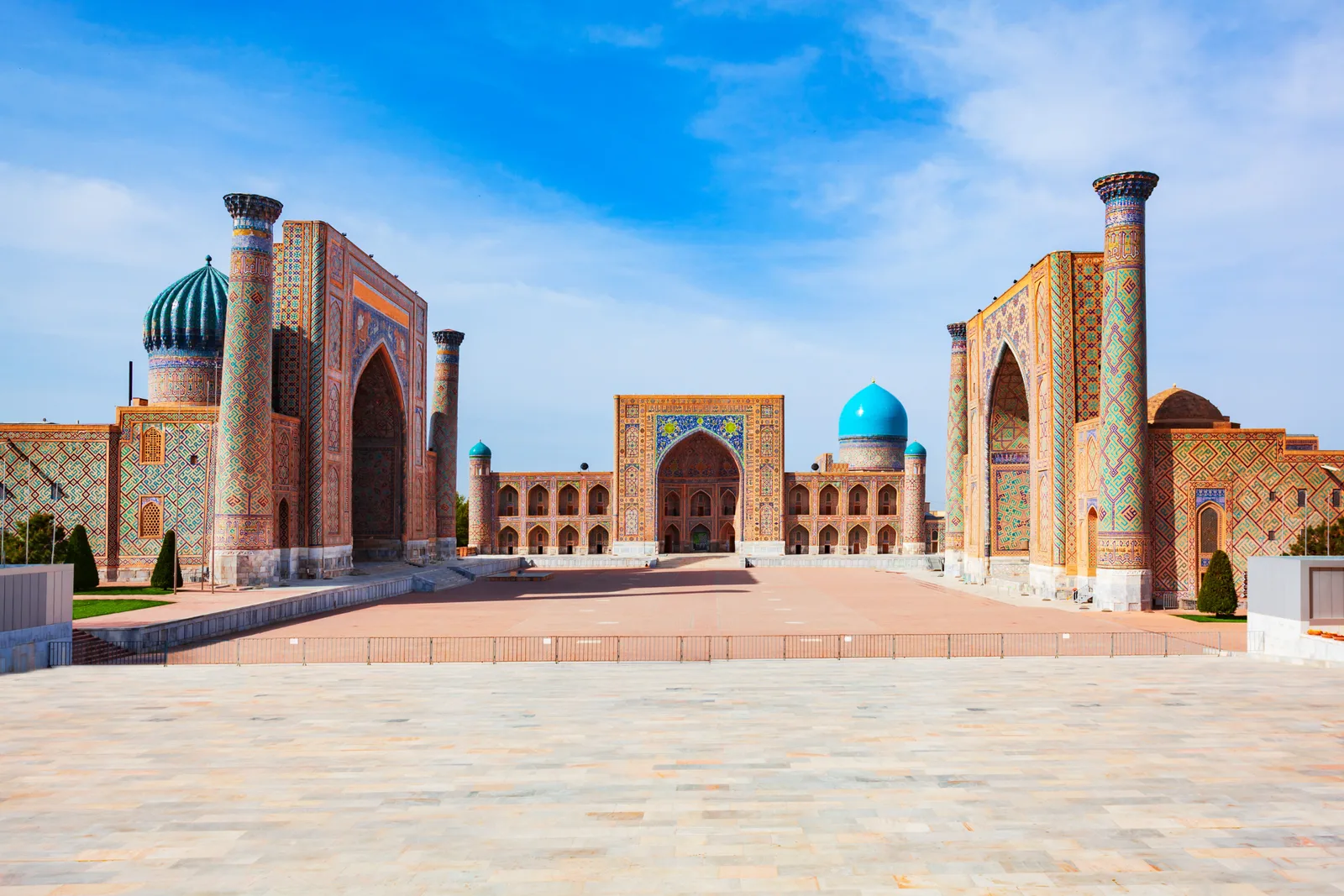
Samarkand is the city of empire. It was Tamerlane’s capital, and everything about it reflects the ambitions of a conqueror who wanted his city to be the centre of the world. The scale is monumental. The Registan — three massive madrasas facing each other across a public square — is the single most imposing architectural ensemble in Central Asia. Bibi-Khanym was designed to be the largest mosque in the Islamic world. Gur-e-Amir, Tamerlane’s mausoleum, announces its importance with a dome visible from across the city. Shah-i-Zinda, the necropolis, is an avenue of ceramic virtuosity where Timurid nobles competed in death as they had in life.
The impression Samarkand creates is one of deliberate magnificence. These buildings were designed to overwhelm, and four centuries later, after earthquakes, Soviet restorations and the passage of time, they still do. The turquoise and cobalt blue tilework against the dry Uzbek sky produces a colour combination that seems to have been calculated to photograph well — which it was, except the calculation was made six hundred years before photography existed.
Samarkand’s character: Grand, assertive, vertical. The monuments dominate the city rather than emerging from it. There is a clarity to Samarkand’s visual impact that makes it the easiest of the three cities to appreciate immediately.
The flip side: Samarkand is also the most restored of the three, and the restorations — particularly the Soviet-era work — are sometimes heavy-handed. The Registan’s tiles include significant modern replacement. The area around the monuments has been cleared and landscaped in ways that create a park-like setting pleasant to visit but historically inauthentic. Modern Samarkand is a half-million-person Uzbek city with Soviet-era avenues and apartment blocks that do not appear on tourist postcards. The distance between the monumental centre and the everyday city is greater here than in Bukhara or Khiva.
Best for: First-time impact, photography, understanding the Timurid Empire at its zenith, the Registan at sunset, the ceramics of Shah-i-Zinda, the Siab Bazaar.
Time needed: Two to three days.
Bukhara: the city that breathes
If Samarkand is the city of the conqueror, Bukhara is the city of the scholar, the merchant and the mystic. Its identity was shaped not by a single great ruler but by centuries of accumulated learning, trade and religious authority. In the medieval period, Bukhara was one of the intellectual capitals of the Islamic world: its madrasas produced theologians, scientists and poets; its bazaars connected China to the Mediterranean; its Sufi brotherhoods attracted seekers from across the Muslim world.
That layered history is visible in the city’s fabric. Where Samarkand has discrete monuments set in open space, Bukhara has a continuous old city where one monument flows into the next through covered bazaars, narrow lanes and public squares. The Poi-Kalon ensemble — the great minaret, the mosque, the madrasa — is spectacular, but it is the walk to reach it that makes Bukhara special: through the trading domes of Taki-Zargaron, past the Ulughbek Madrasa, along streets where medieval caravanserais have become carpet shops without changing their architecture.
The Ark fortress, Bukhara’s oldest structure, sits at the western edge of the old city like a raised platform — which is what it is, an artificial mound built up over two thousand years of continuous habitation. The last emir of Bukhara was deposed here in 1920 when the Red Army arrived. The Bolo-Hauz mosque, opposite the Ark, has a columned portico reflected in a pool that is one of the most photographed scenes in Uzbekistan — and one of the few that is even more beautiful in person.
Bukhara’s character: Intimate, layered, walkable. Bukhara is a city you explore on foot, turning corners, discovering monuments that appear without warning. It rewards slow movement and repeated walks — the same street looks different at dawn, at noon and at dusk.
The flip side: Bukhara’s old city has been heavily adapted for tourism. Carpet shops, souvenir stalls and rooftop restaurants occupy many of the historic buildings. The tourist infrastructure is excellent — the best guesthouses in Uzbekistan are here — but the commercial presence can feel overwhelming in the central squares. The balance between preservation and commercialisation tilts in certain spots.
Best for: Walking, atmosphere, understanding the Silk Road as a system of trade and ideas, the finest guesthouses in the country, evening drinks on a rooftop with minaret views, the Chor-Minor’s four miniature domes, the Jewish quarter.
Time needed: Two to three days.
Khiva: the city as museum
Khiva is the most visually coherent of the three cities and the one that most closely resembles the Silk Road of imagination. The entire inner city — Ichan-Kala — is enclosed within crenellated mud-brick walls that survive essentially intact. Inside, the density of monuments is extraordinary: mosques, madrasas, minarets, palaces, harems and public baths packed into an area you can walk across in fifteen minutes. The uniformity of material — everything is mud-brick and wood, with tilework accents — gives Ichan-Kala a visual consistency that neither Samarkand nor Bukhara can match.
The Kalta Minor, the squat unfinished minaret covered in turquoise tiles, is the icon of Khiva and of Uzbekistan generally. It was meant to be the tallest minaret in Central Asia, but the khan who commissioned it died before completion. The minaret stands as a monument to interrupted ambition — the opposite of the Registan’s triumphant completion.
The Kunya-Ark, the khan’s fortress within the fortress, contains a throne room, a mint, a harem and a watchtower with views across the entire walled city. The Islam Khodja complex — the tallest minaret (forty-five metres) and the smallest madrasa in Khiva — offers the best panoramic view if you climb the minaret’s narrow interior staircase.
Khiva’s character: Self-contained, photogenic, frozen in time. Ichan-Kala feels like a complete world — small, walkable, enclosed. There is a clarity to the experience that makes Khiva the most immediately graspable of the three cities.
The flip side: Khiva can feel like a stage set. The population of Ichan-Kala has dwindled as residents have moved to the outer city, and by evening the walled city empties of both tourists and locals, becoming eerily quiet. The restorations, while generally respectful, have given many buildings a scrubbed uniformity that mutes the patina of age. And the flip side of visual coherence is visual repetition — by the second day, the mud-brick-and-tile aesthetic can start to feel monotonous.
Best for: Photography (the most photogenic city in Uzbekistan), the experience of a complete walled city, sunset from the city walls, the Juma Mosque with its forest of 212 carved wooden columns, the feeling of stepping into another century.
Time needed: One and a half to two days.
The honest comparison
Architecture: Samarkand has the most impressive individual monuments. Bukhara has the most impressive urban fabric. Khiva has the most impressive ensemble.
Atmosphere: Bukhara is the most atmospheric. Samarkand is the most dramatic. Khiva is the most photogenic.
Tilework: Samarkand wins. Shah-i-Zinda alone is the finest collection of ceramic art in Central Asia.
Walking: Bukhara is the best walking city. Khiva is the most compact. Samarkand requires transport between sites.
Food: Similar across all three. The Fergana Valley is better for food than any of them.
Tourism intensity: Bukhara has the most developed tourist infrastructure. Khiva is the most visited relative to its size. Samarkand absorbs tourists most easily because of its scale.
Accommodation: Bukhara has the finest guesthouses. Khiva has charming options within the walls. Samarkand’s accommodation is adequate but less characterful.
The route question
The classic route runs Tashkent to Samarkand to Bukhara to Khiva, following the Silk Road southwest to northwest. This works well logistically (the Afrosiyob train connects Tashkent, Samarkand and Bukhara; shared taxis or a flight cover the Bukhara-Khiva desert crossing) and emotionally (the cities build on each other, with Khiva’s intimate scale offering a counterpoint to Samarkand’s grandeur).
The reverse route — Khiva to Bukhara to Samarkand — also has advocates. Starting with Khiva’s contained perfection and ending with the Registan at sunset provides a crescendo that some travellers prefer.
Either way, do not skip any of the three. The temptation to cut one for time is understandable — distances are real, and every day counts on a two-week trip. But the three cities are not interchangeable. Each reveals a different facet of Central Asian civilisation: the imperial ambition of Samarkand, the intellectual depth of Bukhara, the self-contained beauty of Khiva. Together, they form a triptych. Remove one panel and the picture is incomplete.
For the full picture of every city, route and hidden corner in Uzbekistan, the Far Guides complete guide has it all: interactive maps & itineraries, information that stays up to date.
More on Uzbekistan
Keep reading.
Other pieces from the same destination.

Next step
Ready for Uzbekistan?
The guide is for travelling.
Interactive maps & itineraries and everything that doesn't fit in an article. Always the latest published version.
Get the Uzbekistan guide