

Thailand · 28 April 2026
Real budget for Thailand in 2026: figures by tier and by region
What it really costs to travel Thailand in 2026 with updated figures: accommodation, food, transport, activities and differences between Bangkok, the north and the islands.

Thailand has changed more than many travel blogs acknowledge. The 2015 benchmarks — ten euros for a room, one euro for a plate of pad thai, five euros for an hour of massage — are now nostalgia. Thailand remains a cheap country compared with Europe, but it is not the ultra-cheap country of a decade ago. Building a realistic 2026 budget requires updating figures and, above all, understanding where the regional differences sit.
The three tiers: backpacker, mid-range, comfortable
Dividing the Thai budget into three tiers helps plan with order. The tiers are not rigid — you can eat at a street stall and sleep in a mid-range hotel — but they are useful as overall reference.
Backpacker tier (€25-35 / day): dorm in a hostel or basic guesthouse room, food in markets and street stalls, public transport and walking, one or two paid activities per week. This is the typical budget for those travelling several months in a row, with a light backpack and priority on experience over comfort. It works perfectly in the north and mainland; on the southern islands during high season it can fall short.
Mid-range tier (€55-80 / day): private double room in a two or three-star hotel with air conditioning, a mix of meals in local restaurants and street stalls, some Grab rides, entries to monuments and a couple of group excursions per week. This is the tier of most European travellers who do not want to give up certain comforts but also do not want a premium trip. It includes the option of occasional more expensive dinners or spas.
Comfortable tier (€120-180 / day): boutique hotels or four-star, full-menu restaurants, long taxi rides when useful, private excursions instead of groups, cooking classes at recognised schools. Above €180 a day you enter pure resort range, with five-star hotels, private transfers and curated experiences. Thailand has a very strong luxury offer — Bangkok competes with any Asian capital — and prices remain reasonable compared to Europe at the same level.
By region: the differences that matter
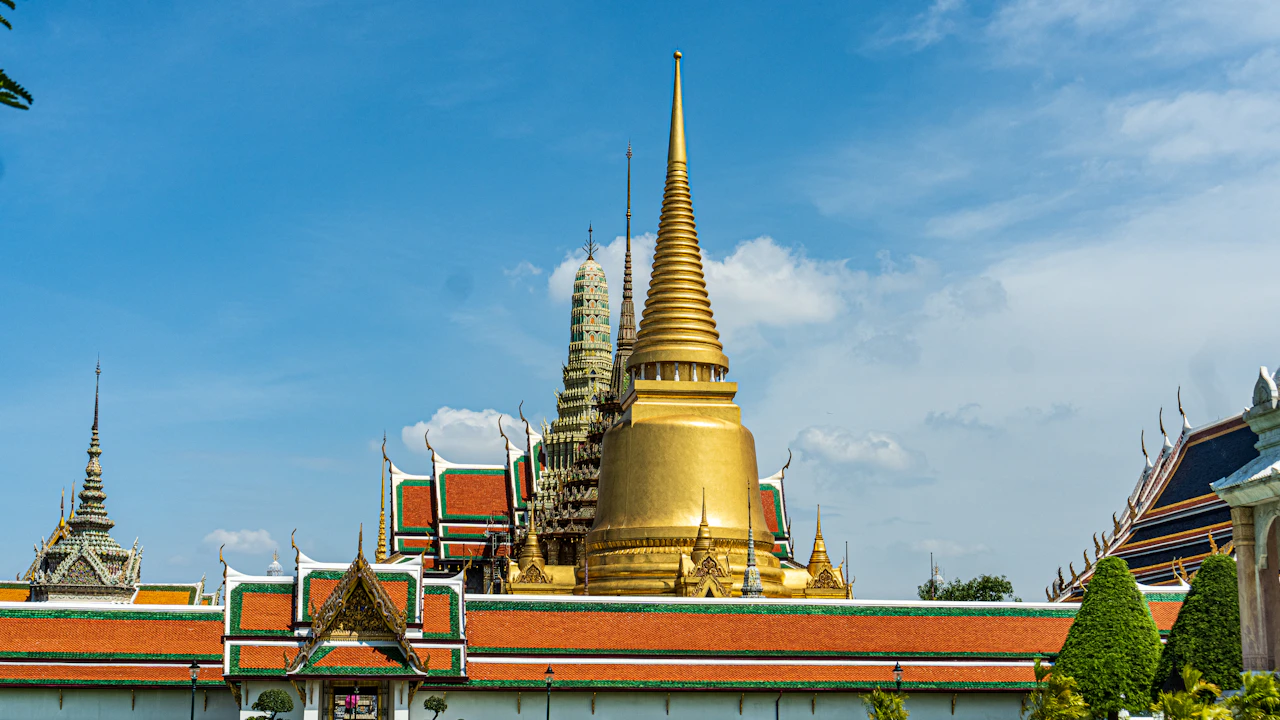
Bangkok. Mid-range hotel: €35-55 per night in neighbourhoods like Sukhumvit, Silom or Rattanakosin. Tourist-restaurant dinner: €10-15; street stall: €2-4. Metro (BTS/MRT): €0.50-1.50 per ride. Long taxi across the city: €3-6 on Grab. Entries: Grand Palace €14, Wat Pho €6, Wat Arun €3. Average daily spend for a mid-range traveller in Bangkok is around €65-75.
Chiang Mai and north. Mid-range hotel: €25-40 per night, markedly cheaper than Bangkok. Food: same scale, with more market and stall variety. Rented motorbike (with caution): €5-8 per day. Ethical elephant experience (Elephant Nature Park): €80-100 per day. Cooking class at recognised school: €35-50. The north is the cheapest region for long stays; mid-range daily spend drops to €55-65.
Ayutthaya and historical centre. Similar to the north for lodging and food but with less premium offer. Bike rental: €1.50 per day. Entry to main temples: €2-3 per monument. It is the cheapest zone of the country in many aspects.
Phuket, Krabi and the Andaman. Here prices go up. Mid-range hotel in Phuket: €45-80 in high season, €30-50 in low; on less commercial islands like Koh Lanta or Koh Kood, €30-60 and €25-45 respectively. Food: prices roughly double compared to the north. Inter-island ferries: €10-25 per leg. Small-group private boat to nearby islands: €50-80 per person. Daily mid-range spend on the Andaman is €80-100.
Koh Samui, Phangan and Tao (Gulf). Similar to the Andaman with more variability. Koh Tao is notably cheaper than Samui; Phangan varies hugely between the quiet side (Thong Nai Pan) and Haad Rin during Full Moons. Open Water dive course on Koh Tao: €280-350, one of the cheapest in the world. Mid-range hotel in Samui: €50-90 high season. Local taxi transfers: notoriously expensive on the islands, €8-15 for short distances if Bolt or Grab are not used.
What each thing actually costs
Food. Street stall dish (pad thai, khao pad, som tam): 50-80 THB (€1.30-2.15). Local restaurant dish: 120-200 THB (€3.20-5.40). Mid-range restaurant with AC: 250-450 THB (€6.70-12). Dinner at premium restaurant: from 800 THB (€21.50). Speciality coffee: 80-150 THB. Chang beer in bar: 80-120 THB in market, 150-250 THB in tourist bar, 300-500 THB on a rooftop. Bottled water: 10-15 THB at 7-Eleven.
Transport. Overnight train Bangkok-Chiang Mai (second class AC berth): 600-900 THB (€16-24). VIP bus Bangkok-Chiang Mai: 500-750 THB. Domestic flight Bangkok-Phuket (booked ahead): 900-1,500 THB (€24-40). Krabi-Phi Phi ferry: 400-600 THB. Grab in central Bangkok: 80-150 THB.
Accommodation. Hostel dorm: 250-500 THB (€6.70-13.50). Basic guesthouse room: 500-900 THB. Three-star hotel with AC: 1,200-2,000 THB (€32-55). Boutique design hotel: 2,500-4,500 THB. Luxury resort: from 6,000 THB.
Activities. Traditional Thai massage, one hour: 300-500 THB downtown, 150-300 THB in neighbourhoods. Oil massage, one hour: 500-800 THB. Half-day cooking class: 1,300-1,800 THB. National park entry (Khao Yai, Doi Inthanon): 400 THB foreigners, 40 THB Thais. Similan day boat trip: 1,800-2,500 THB full day.
The fixed trip costs
Beyond the daily, the budget must cover fixed costs: international flight London-Bangkok return runs €600-900 in mid-season (November, January, March), €1,100-1,400 at Christmas and Easter. Medical insurance with cover for risk activities (diving, motorbikes): €60-90 per month. Local SIM with one-month unlimited data: €10-15. Visa if applicable: €40-200 depending on type.
How to lower spend without losing experience
The biggest saving is in accommodation and avoiding seasonal mistakes. Booking outside Christmas-New Year on the islands halves the spend. Combining hostels and hotels (two or three nights of each) allows adjustment by city. Eating in night markets — Chang Phueak in Chiang Mai, Talad Rot Fai in Bangkok — means dining for three or four euros with better quality than most tourist restaurants.
Avoiding negotiated tuk-tuks saves a lot; the same trip on Grab or metro costs half or less. Buying a Rabbit card for the Bangkok BTS (50 THB issue fee) speeds things up and lowers cost. Inter-island ferries are cheaper bought directly at the counter or from the operating company than through hotels or intermediary agencies (typical 20-40% mark-up).
What a typical two-week trip costs
A fourteen-day trip through Bangkok, the north and a Gulf island, mid-range tier, in January:
- Flights: €800
- Accommodation (14 nights × €45 average): €630
- Food and drink (14 days × €25): €350
- Internal transport (overnight train + domestic flight + ferries + local): €220
- Activities (cooking class, massages, elephant sanctuary, boat trip): €280
- Visa and insurance: €60
- Extras and contingency: €150
Total: €2,490 per person. On the backpacker tier the same trip can drop to €1,600-1,800; on the comfortable tier it rises to €3,800-4,500. These figures are real for 2026, and correspond to what a traveller with moderate planning actually ends up spending. The full Far Guides Thailand guide breaks these down week by week and region by region in tables that make it easy to adjust the budget to the specific trip.
More on Thailand
Keep reading.
Other pieces from the same destination.


Next step
Ready for Thailand?
The guide is for travelling.
Interactive maps & itineraries and everything that doesn't fit in an article. Always the latest published version.
Get the Thailand guide