
Thailand · 11 May 2026
Chiang Mai: a guide to understanding the capital of northern Thailand
What to see, where to eat and how to move around Chiang Mai: the walled old town, the mountain temples, the night markets and the ethical elephant sanctuaries.

Chiang Mai is the necessary counterbalance to Bangkok. Where the capital is dense heat, traffic and verticality, Chiang Mai is a gentler climate, slower pace, mountains close by and a culture — the Lanna — that feels like a distinct country inside the country. Anyone reducing Chiang Mai to an elephant stop is missing the point: it is Thailand’s second city, with seven centuries of its own history, a northern gastronomy that has nothing to do with that of the centre, and a temperament you only grasp when you spend more than three days here.
What Chiang Mai was and is
The kingdom of Lanna is founded in 1296 with Chiang Mai — literally new city — as its capital. Over the following centuries it is an autonomous state that maintains its own language, alphabet, architecture and relationships with Burma, Laos and Yunnan China. The central Siam, from Ayutthaya first and Bangkok later, only definitively absorbs Chiang Mai at the end of the nineteenth century. This separate trajectory explains what you see: temples with Burmese-style stacked roofs, murals with Lanna calligraphy, food with Shan and Yunnanese influence, and a local character that southern Thais themselves describe as khon muang — city people — with its own pride.
Today Chiang Mai is a city of around a million inhabitants with a double life: the old town inside the walls, temples and markets, and the modern city sprawling through Nimmanhaemin, a neighbourhood of speciality coffee shops and coworkings where digital nomads live. This double nature — old Chiang Mai and contemporary Chiang Mai — coexists without contradiction and is part of the charm.
The old town: how to organise the walk
The old town is a near-perfect 1.5-kilometre square, surrounded by a moat and wall remnants. Inside there are more than thirty temples, each with its own story, and it pays to select rather than try to see them all.
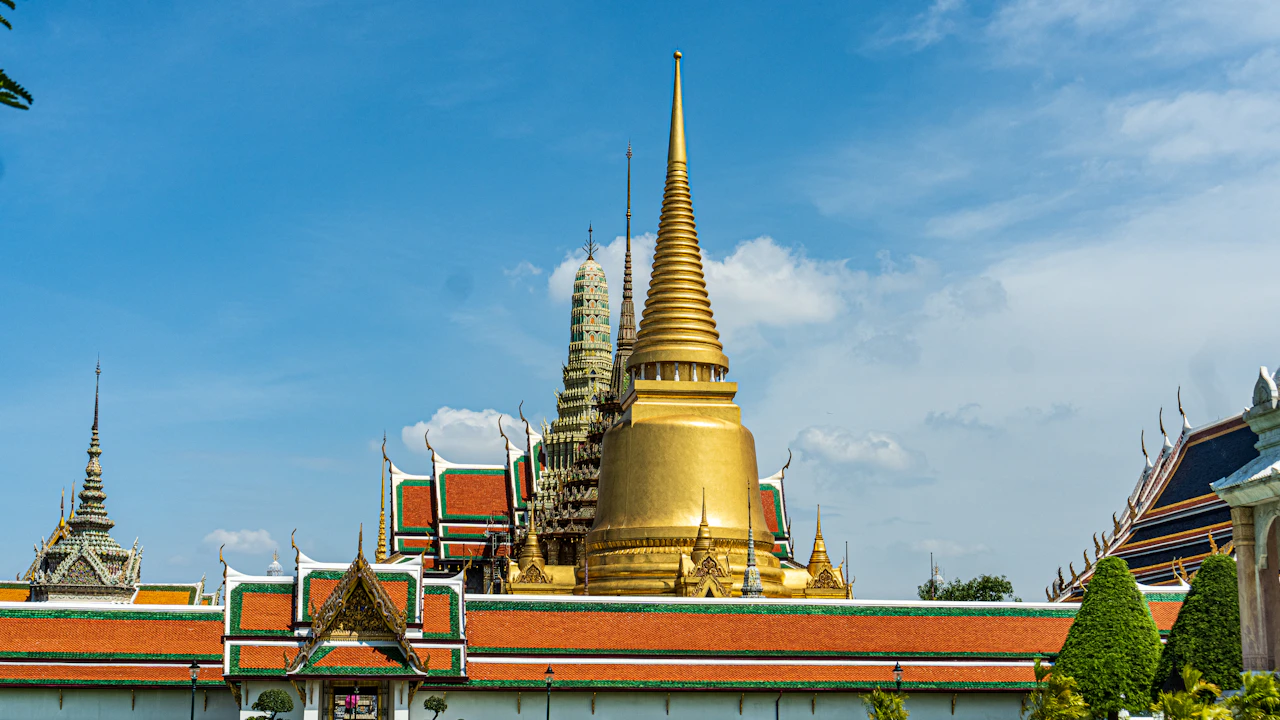
Wat Phra Singh, at the western end, is the city’s main temple and houses the fourteenth-century Lion Buddha image. The Phra Singh chapel has murals with scenes of nineteenth-century Lanna daily life that are an extraordinary historical document. Entry 40 THB.
Wat Chedi Luang, at the centre of the old town, is the most striking ruin: a sixty-metre chedi destroyed by the 1545 earthquake, partially restored but with its collapsed shape visible and majestic. The Emerald Buddha was kept here before travelling to Laos and Bangkok. The complex includes the Viharn Luang, with a huge standing Buddha, and a corner with a centuries-old tree protected by yellow cloth. Entry 40 THB.
Wat Phan Tao, next to the previous one, is small but architecturally the most authentic: dark-wood viharn built in 1846, with unpainted teak columns. Free entry, very lightly visited, ideal first thing in the morning.
Wat Chiang Man, the oldest temple in the city (founded 1297, the year of the city itself), contains the Crystal Miracle Buddha, a small piece with centuries of history behind it. Free entry.
The rest — a walk through the Somphet market at dawn, climbing the Tha Phae bastions, cafés along the moat — is done on foot. Old Chiang Mai can be walked end to end in a day.
Doi Suthep and the mountain temples
Sixteen kilometres from the city, crowning the mountain, Wat Phra That Doi Suthep is the iconic temple of northern Thailand. The winding ascent ends at the entrance of the three hundred and six naga-guarded steps, at the top of which there is a gilded complex with views over the whole Chiang Mai valley. It is a compulsory visit — except for those who have done too many compulsory visits already — and works well first thing in the morning: 7-8 am avoids the bulk of groups and the side light is the best.
To get there: shared red songthaew from Pratu Chang Phueak (40-60 THB per person if there is a group), private taxi 500-700 THB, or — recommended — motorbike if you have a licence. The climb by bike is a beautiful route; ride with caution because there are tight curves and tour buses coming down fast.
Further up, Wat Pha Lat, a forest temple halfway up the ascent, is one of Chiang Mai’s best-kept secrets. Meditative, little visited, with moss-covered statues and the sound of the stream. There is a monks’ path — the Monk’s Trail — that connects the city with Pha Lat in an hour and a half of easy hiking.
Elephant sanctuaries: what is ethical and what is fake
The elephant industry in Chiang Mai is one of the most ethically complicated things to navigate as a traveller. Of the more than a hundred sanctuaries advertised, only a handful are authentic. The test to identify them:
- No riding. Sitting on an elephant damages its spine. A real sanctuary never offers riding.
- No show. No drawings, no balls, no dances.
- No elephant baths with tourists. Constant bathing on groups’ request is stressful for the animal.
- Respectful observation. The visitor watches, learns about the elephant’s life, feeds it natural vegetation and walks alongside.
Sanctuaries with solid reputations are Elephant Nature Park (the historic reference, founded by Lek Chailert), Boon Lott’s Elephant Sanctuary (smaller, in Sukhothai), and Burm and Emily’s Elephant Sanctuary. The price is around 2,500-4,000 THB per day including transport. It is more expensive than unethical competitors; that is the proof they are covering real animal welfare costs.
Reject any offer including riding or shows, even if ethical appears in the name.
Nimmanhaemin: contemporary Chiang Mai
West of the old town, separated by the moat and Chiang Mai University, is Nimmanhaemin (Nimman to locals). It is the young Chiang Mai neighbourhood: speciality coffee shops (Graph, Akha Ama, Ristr8to), local design stores, galleries, craft beer bars, coworkings. A coffee costs 80-150 THB, a brunch 200-350, a contemporary restaurant menu 350-600.
Nimman has grown on digital nomadism — Chiang Mai is one of the world’s most established remote worker hubs — and reflects a cosmopolitan taste you will not find in the old town. Dedicating half a day to it (morning or afternoon) balances the visit.
Eating in the north: flavours that are not the centre’s
Northern food is different from generic Thai. Less spicy, more Burmese and Yunnanese-influenced, with cured soups and grilled meats. The must-tries:
- Khao soi. Yellow coconut curry with fried and raw egg noodles, chicken or beef. The emblem dish of the north. Reference: Khao Soi Khun Yai (near Wat Phra Singh) and Khao Soi Mae Sai.
- Sai ua. Northern pork sausage with herbs: lemongrass, kaffir lime, chili. Warorot and Somphet markets.
- Nam prik ong and nam prik noom. Two northern dips: one with tomato and pork (ong), another with green chili (noom). Eaten with raw vegetables and rice.
- Gaeng hang lay. Burmese-style curry with pork, ginger and tamarind. SP Chicken and Huen Phen do it well.
The Sunday Walking Street (pedestrianised old town street every Sunday evening) is a gastronomic festival: dozens of stalls with local dishes at 40-80 THB each. It is the ideal Sunday dinner.
When to go and where to stay
The best time is November to mid-February: dry, cool at night (10-16 degrees), clear days. Between late February and late April the north is in agricultural burning season with high pollution levels; avoid. The monsoon (June-October) is viable with an umbrella and far fewer tourists.
For lodging, the options by area:
- Inside the old town: the most picturesque, with restaurants and temples on foot. Low prices. Recommended for a first trip.
- Nimmanhaemin: modernity, cafés, coworkings, nightlife.
- Ping riverbanks: luxury hotels with river views, quieter.
- Santitham: local northern neighbourhood, low prices, real local experience.
The full Far Guides Thailand guide includes detailed routes through Chiang Mai with exact temple addresses, verified elephant sanctuaries, neighbourhood maps and a specific chapter on Lanna culture.
More on Thailand
Keep reading.
Other pieces from the same destination.


Next step
Ready for Thailand?
The guide is for travelling.
Interactive maps & itineraries and everything that doesn't fit in an article. Always the latest published version.
Get the Thailand guide