
Thailand · 11 September 2026
From Sukhothai to Bangkok: the kingdoms that founded Siam
A thousand years of Thai history in a single account: Sukhothai, Ayutthaya, Thonburi and the Chakri of Bangkok. Why Thailand is what it is today.

Understanding Thailand as a country begins by understanding that Thailand did not exist as such until 1939. Until then, what we know today as Thailand was called Siam, a term that evoked, more than a modern nation-state, a succession of kingdoms in the Chao Phraya basin that kept expanding, merging and losing each other over eight centuries. This guide runs through that history briefly, because what is visited today — from the ruins of Sukhothai to the Grand Palace of Bangkok — only makes sense if you understand where it comes from.
Before the Thais: Dvaravati and Khmer
The current territory of Thailand has been inhabited for tens of thousands of years (sites like Ban Chiang in Isaan show Bronze Age civilisation), but the first organised kingdoms appeared around the 6th century. The Mon kingdom of Dvaravati dominated the central plain between the 6th and 11th centuries, with major centres at Nakhon Pathom and U-Thong. It was Theravāda Buddhist, culturally influenced by India.
From the 11th century, the Khmer Empire (of present-day Cambodia) expanded westward and dominated central and northeastern Thailand for almost three centuries. The temple-mountains of Phimai (Isaan) and Phanom Rung (Buriram) are Khmer heritage in Thailand, and their structures are lesser sisters of Angkor Wat.
The Tai — the ethnic group to which Thais belong — arrived from southern China, in today’s Yunnan, during the 10th-13th centuries, probably pushed by Mongol expansion. They infiltrated the northern valleys as semi-sedentary peoples until, in the 13th, they began to found their own kingdoms.
Sukhothai: the foundational myth (1238-1438)
In 1238, two Tai princes — Pho Khun Bang Klang Hao and Pho Khun Pha Muang — rebelled against the Khmer garrison of Sukhothai and founded the Kingdom of Sukhothai, traditionally considered the first Thai nation. The most celebrated of its kings was Ramkhamhaeng the Great (reigned 1279-1298), credited with:
- The invention of the current Thai alphabet, adapted from the old Khmer alphabet (the famous 1292 stone inscription describes his reign as a utopia of justice: “in the waters there are fish, in the fields there is rice, the king does not collect taxes”).
- Adoption of Theravāda Buddhism as official religion, bringing monks from Sri Lanka.
- Territorial consolidation as far as the southern Malay peninsula, the Burmese border and the Mekong.
- Sukhothai art, one of the most appreciated periods of Asian Buddhist sculpture, with Buddhas of elegant lines, serene smiles and walking poses.
The kingdom declined after Ramkhamhaeng’s death. In 1438 it was absorbed by its successor.
Today the Sukhothai Historical Park, 430 km north of Bangkok, preserves the ruins of the original capital and is a UNESCO heritage site. Wat Mahathat and Wat Si Chum (with its enormous seated Buddha inside a semi-open mandapa) are essential.
Ayutthaya: the 400 glorious years (1351-1767)
While Sukhothai declined, a prince named U Thong founded in 1351 the city of Ayutthaya, on an island formed by the confluence of three rivers, 80 km north of present-day Bangkok. For 417 years, Ayutthaya would be the capital of a kingdom that became one of the world’s richest and most populous cities in the 16th-17th centuries, with a population of one million (more than any European city of the time).
Milestones of the Ayutthaya kingdom:
- Conquest of Angkor in 1431. The Thais sacked Angkor and brought Khmer artisans to Ayutthaya, influencing its architecture and art.
- Massive international trade. Portuguese, Dutch, French, British, Japanese and Persians had factories in the city. Thailand controlled trade routes between India and China.
- Relationship with Louis XIV. King Narai (1656-1688) established diplomatic contacts with Versailles and French envoys lived in Ayutthaya. A Greek, Constantine Phaulkon, became his chief advisor.
- Arts and architecture. The Ayutthaya architectural style — bulbous chedis, viharns with stepped roofs, mosaics — defines the later Thai tradition.
The fall. In 1767, the Burmese under King Hsinbyushin sacked Ayutthaya after a 14-month siege. The city was razed, the royal archives destroyed, the king fled and the Burmese deported tens of thousands. It was a national catastrophe that still defines Thai memory: the monuments of Ayutthaya, seen today, have their Buddha heads decapitated, torn off by the invaders.
Thonburi: the restoration (1767-1782)
After the fall, General Taksin, son of a Chinese father and Thai mother, gathered southern forces and expelled the Burmese. He founded a new capital at Thonburi (west bank of the Chao Phraya, today part of the Bangkok metropolitan area) in 1767 and proclaimed himself king.
Taksin was an extraordinary reunifier: in 15 years he reconquered Siamese territory and extended influence over Laos and Cambodia. But his reign ended in tragedy: he became progressively more despotic and possibly psychotic (he proclaimed himself Buddha), and was deposed and executed (by tradition, in a velvet bag, so as not to spill royal blood) in 1782.
Bangkok and the Chakri dynasty (1782-present)
The general who led the deposition, Chao Phraya Chakri, was crowned as Rama I and moved the capital to the east bank of the Chao Phraya, founding what we know today as Bangkok (full official name: Krung Thep Mahanakhon Amon Rattanakosin Mahinthara Yutthaya Mahadilok Phop Noppharat Ratchathani Burirom Udomratchaniwet Mahasathan Amon Piman Awatan Sathit Sakkathattiya Witsanukam Prasit, the world’s longest official city name).
The Chakri dynasty has governed Siam/Thailand since then. Key milestones:
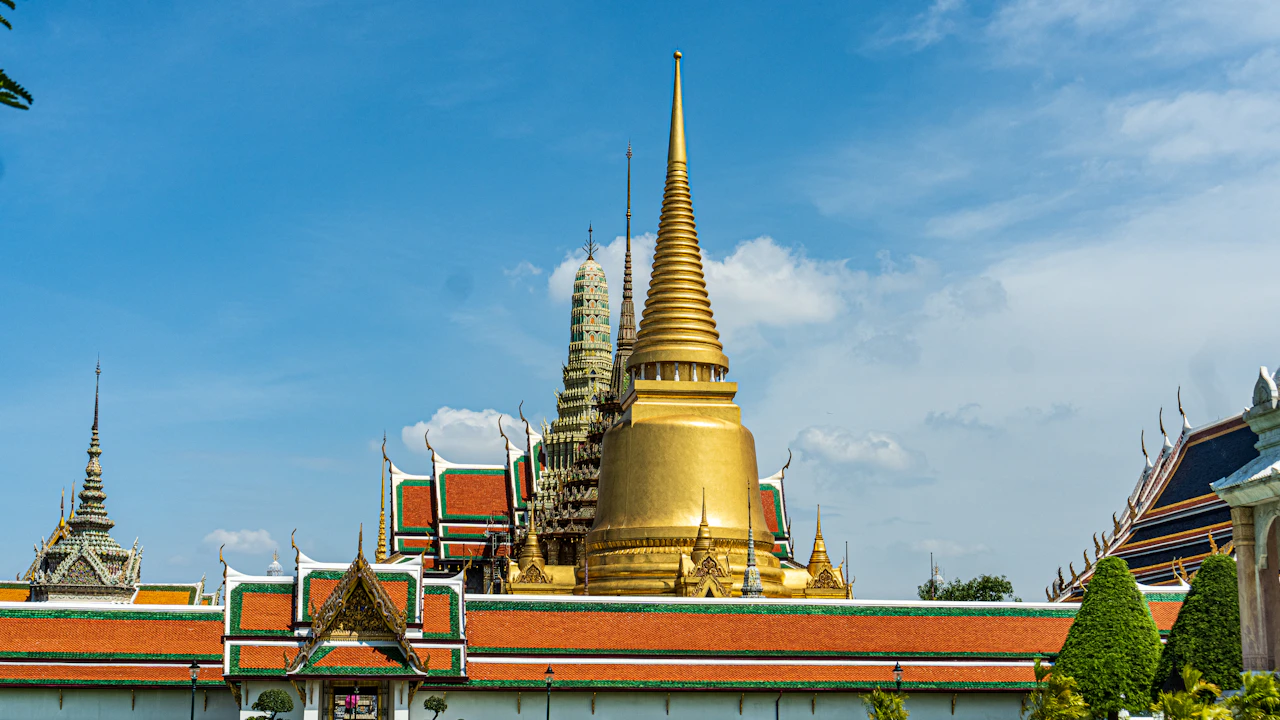
- Rama I (1782-1809). Reconstruction of the kingdom, building of the Grand Palace and Wat Phra Kaew, transfer of the Emerald Buddha to Bangkok.
- Rama IV (Mongkut, 1851-1868). The king of The King and I. Moderniser, scholar. Signed unequal treaties with European powers to avoid colonisation.
- Rama V (Chulalongkorn, 1868-1910). The great moderniser. Abolished slavery, reformed administration, built railways. Travelled through Europe in 1897 and 1907. Probably the most venerated king in Thai history.
- 1932. Partially bloodless revolution ending absolute monarchy and establishing constitutional monarchy.
- 1939. The country’s official name changes from “Siam” to “Thailand” (Prathet Thai, land of the free), under Prime Minister Phibunsongkhram, as part of a nationalist project.
- Rama IX (Bhumibol, 1946-2016). The longest reign in Thai history (70 years). Venerated as a fatherly figure. His death in 2016 prompted a year of national mourning.
- Rama X (Vajiralongkorn, 2016-present). Contested and controversial reign.
The Thai peculiarity: non-colonisation
Thailand is the only Southeast Asian country never colonised by European powers. Kings Mongkut and Chulalongkorn manoeuvred diplomatically (ceding marginal territories to the British and French, modernising the country, unequal free trade treaties) to maintain sovereignty.
This has visible consequences today:
- Architecture and urbanism. There is no Ho Chi Minh or Yangon-style “colonial quarter”. Bangkok was built with a mixed Thai-European language of the late 19th century.
- Cultural identity. Thais proudly refer to their non-colonisation as the foundation of national identity.
- Absence of French/English as widespread second language. Unlike Vietnam, Laos, Burma or Malaysia.
What to visit to understand this history
- Sukhothai Historical Park (Sukhothai). Full morning or day.
- Ayutthaya Historical Park (80 km from Bangkok). Day from Bangkok.
- Grand Palace and Wat Phra Kaew (Bangkok). Half day.
- Wat Arun and Wat Pho (Bangkok). Afternoon.
- Bangkok National Museum. Half day. Extraordinary collection of Thai art by period.
- Phimai and Phanom Rung (Isaan). To understand the Khmer presence. Two days.
The full Far Guides Thailand guide includes a detailed chronology, maps of the successive kingdoms and specific routes to follow history in key archaeological sites.
More on Thailand
Keep reading.
Other pieces from the same destination.


Next step
Ready for Thailand?
The guide is for travelling.
Offline maps, itineraries and everything that doesn't fit in an article.
Get the Thailand guide