
Thailand · 16 May 2026
Chiang Rai and the White Temple: what to see in Thailand's far north
Chiang Rai goes far beyond Wat Rong Khun. A guide to the White Temple, the Blue Temple, the Black House, the Golden Triangle and the hill tribe villages.

Chiang Rai is the city most travellers know from a single image: Wat Rong Khun, the White Temple, with its staircases surrounded by pleading hands and its sun-glinting surfaces. That image, turned Instagram icon, hides the Chiang Rai problem: the city has been sold as a day trip from Chiang Mai, reducing an entire province — borders with Laos and Burma, high mountains, tribal villages, early Lanna history — to a single temple. This guide treats Chiang Rai as a destination in its own right deserving two to four days, not an express excursion.
The White Temple: contemporary art dressed as a temple
Wat Rong Khun is a work by the artist Chalermchai Kositpipat, who in 1997 began building what he himself describes as my creation, my offering to Lord Buddha. It is not a historic temple. It is a work of contemporary art in the shape of a temple, entirely white outside, with mirror fragments that make it sparkle under the sun, and interior scenes that mix Buddhist iconography with comic-book superheroes, astronauts, Michael Jackson and Neo from the Matrix.
The entrance bridge crosses a moat from which hundreds of sculpted hands emerge representing souls in hell. Whoever crosses the bridge — without looking back, by convention — has symbolically accepted the passage towards enlightenment. Inside, the murals blend the Buddha with planes hitting the Twin Towers, references to the Iraq war, and fantastic creatures.
This mix is the temple’s very point: Chalermchai argues that contemporary religious art must incorporate twenty-first-century concerns. Visitors expecting a traditional Buddhist temple will leave confused; those who grasp it as an auteur project will carry a much richer experience.
Operational details: entry 100 THB, open 8:00-17:00, better first thing to avoid big groups. Bare shoulders or knees not allowed. Interior photography forbidden. Free parking.
The Blue Temple and the Black House
If Chiang Rai were only the White Temple, it would fill three hours. The trick is that there are two artistic counterweights just minutes away by motorbike or taxi.
Wat Rong Suea Ten (Blue Temple) is five kilometres north of the old town. Built in 2016 by Phuttha Kabkaew, a disciple of Chalermchai, it follows the same contemporary-art-as-temple logic but in deep cobalt blue with gold accents. The white Buddha inside contrasts violently with the blue background. Free entry. Takes 45 minutes.
The Baan Dam Museum (Black House) is the work of Thawan Duchanee, another Thai artist, who died in 2014. It is not a temple but a set of forty black buildings spread through a forest, each housing the artist’s collections: elephant hides, buffalo horns, skulls, traditional instruments, sculptures. It is a dark, visceral museum, very different from the solar register of the two temples. Entry 80 THB. Allow two hours.
The three — White Temple, Blue Temple, Black House — form what agencies call the three-colour route: a sequence of contemporary Thai art that can be done in half a day by motorbike or with a hired taxi (1,200-1,500 THB for the three stops).
The old town and the night
Compared with Chiang Mai, Chiang Rai city is small: 50,000 inhabitants inside the old town. It has the interest of the clock tower, a gilded sculpture lit at night with music on the hour, and Wat Phra Kaew, a small temple where the original Emerald Buddha (the one now in Bangkok) was found in 1434. Wat Phra Kaew has a local replica and a museum with Lanna pieces.
The Saturday Night Market (Thanalai street, Saturdays 18-24h) is one of the best night markets in the north: Lanna food stalls, traditional music, local crafts, low prices. If you are in Chiang Rai on a Saturday, it is the compulsory dinner.
Accommodation: Le Méridien if seeking luxury, The Legend Boutique Resort if seeking charm, and twenty or so guesthouses in the old town at 500-900 THB. The city is very cheap compared to Chiang Mai.
The Golden Triangle: the reality behind the name
An hour north by car is the Golden Triangle, the point where Thailand, Laos and Burma converge on the Mekong. The name comes from the opium era: for decades this was the world’s leading producer of heroin that fed Western markets in the 1970s and 80s. Today opium cultivation has largely moved to Burma and the Thai side is tourism with museums.
The Opium Museum (Hall of Opium) at Sop Ruak documents this history seriously: it covers production, trafficking, the Thai intervention of the 1990s with crop-substitution programmes led by Princess Srinagarindra. Entry 200 THB. Worth far more than it sounds.
The Golden Triangle viewpoint itself is a quick photo: the Mekong, the three borders, Lao market boats crossing. If you go, combine with an hour’s riverboat ride (500 THB).
Chiang Saen, ten kilometres south of Sop Ruak, is a thirteenth-century walled historic city that was the Lanna capital before Chiang Mai. Today it has temple ruins in the middle of the village, a modest but interesting archaeological museum, and far fewer people than any other northern site. If the Golden Triangle fills half a day, Chiang Saen fills the other half.
The northern villages: what is ethical and what is performative
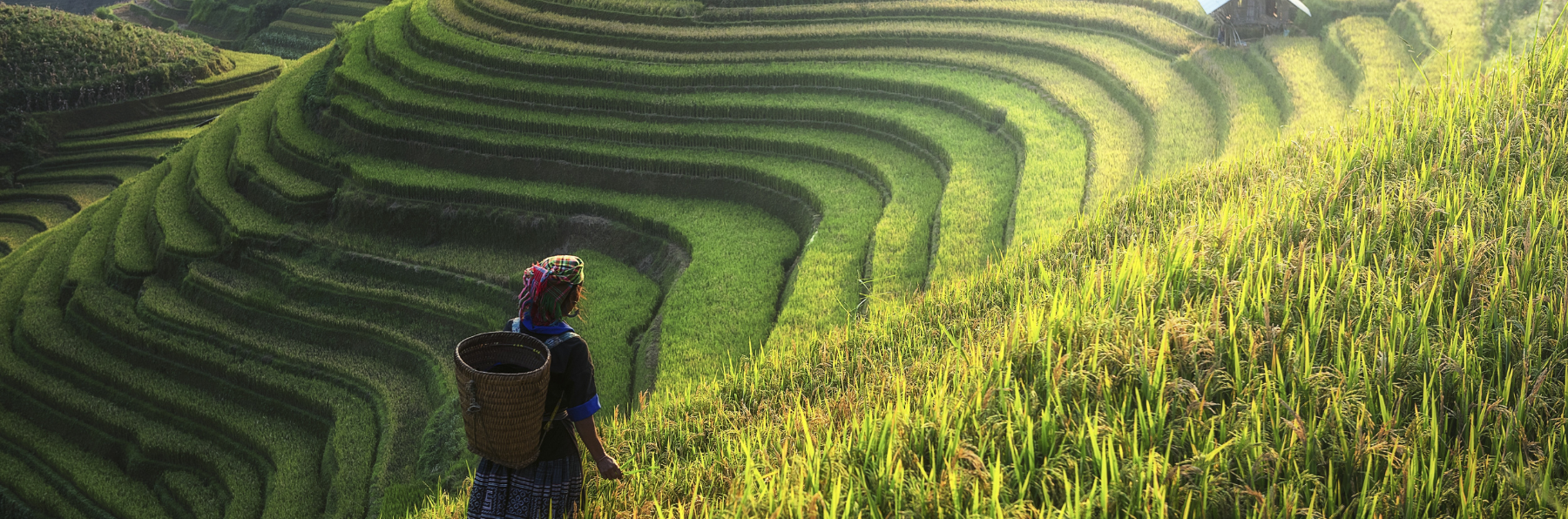
Chiang Rai province is home to hill tribe communities: Akha, Lahu, Karen, Hmong. Tourism has turned some of these communities into problematic attractions, with special emphasis on the so-called giraffe women (Padaung) — Burmese refugees who wear bronze neck rings as cultural tradition and in many tourist villages are exhibited as a show.
The consensus among human rights organisations is clear: avoid show-visits to Padaung villages. The economic model is extractive, income rarely reaches the community, and the context of stateless Burmese refugees makes them particularly vulnerable to exploitation.
Alternatives with more legitimacy: trekking excursions with village overnight stays organised by cooperatives such as Mirror Foundation (Chiang Rai) or Anurak Community Lodge. Here the host community sets the terms, income stays in the village, and the experience is coexistence rather than observation.
How to get there and move around
From Chiang Mai: Green Bus first-class buses every hour, 3 hours, 200-280 THB. More comfortable than the minivans.
From Bangkok: AirAsia, Thai AirAsia and Nok Air flights to Chiang Rai (1,200-2,800 THB one way, 1h20m). Faster than the train via Chiang Mai.
Within the province, renting a motorbike (200-300 THB/day) is the ideal transport if you have a licence. Northern roads are spectacular and in good condition. If not, hiring a taxi with driver for a day costs 1,500-2,000 THB and covers any reasonable itinerary.
The full Far Guides Thailand guide includes a detailed three-day itinerary through Chiang Rai, the Golden Triangle and Chiang Saen, with maps, recommendations of ethical cooperatives and the historical context of the northern border.
More on Thailand
Keep reading.
Other pieces from the same destination.


Next step
Ready for Thailand?
The guide is for travelling.
Interactive maps & itineraries and everything that doesn't fit in an article. Always the latest published version.
Get the Thailand guide