



Greece · 26 May 2026
How much does it cost to travel in Greece: a real budget breakdown
A detailed cost breakdown for travelling in Greece in 2026 — islands, mainland, ferries, food and accommodation. With example budgets for 10 and 14 days.

Greece occupies a peculiar position in the European travel cost spectrum. It is cheaper than Western Europe — substantially so in many categories — but it is not the bargain it was a decade ago. The islands, in particular, have seen prices rise sharply as international tourism has recovered and exceeded pre-pandemic levels. The result is a country where your daily budget can range from remarkably affordable to genuinely expensive, depending almost entirely on where you go and when.
This article breaks down what things actually cost in Greece in 2026, with honest ranges that account for mainland versus islands, high season versus shoulder season, and the different tiers of the Greek island hierarchy. The numbers are based on current prices and reflect a country that uses the euro — no currency conversion needed for eurozone travellers, which is both convenient and means no favourable exchange rate to exploit.
The cost geography of Greece
The single most important factor in your Greece budget is not what you do but where you do it. The price difference between the mainland and the expensive islands is dramatic.
Mainland Greece (Athens, Peloponnese, Thessaloniki, northern Greece): Genuinely affordable by European standards. Comparable to Portugal or southern Spain.
Mid-tier islands (Naxos, Paros, Crete, Rhodes, Corfu): Moderately priced. Comparable to mainstream Mediterranean destinations.
Premium islands (Santorini, Mykonos, Hydra): Expensive. Comparable to the French Riviera or the Amalfi Coast, sometimes exceeding both.
The same meal — a Greek salad, grilled fish, bread and a glass of wine — can cost 12 EUR in a Peloponnese taverna, 20 EUR on Naxos, and 35 EUR on Santorini. The food is often identical; you are paying for the view and the postcode.
Accommodation
Accommodation is the budget item with the widest variance and the one most affected by seasonality. Greek accommodation prices can double or triple between June and August compared to May or October.
Hostels: 15-25 EUR per night in a dorm. Available in Athens, Thessaloniki and the larger islands. Limited elsewhere. Quality is generally good.
Budget hotels and guesthouses: 40-70 EUR per double room in shoulder season. 70-120 EUR in high season. On the mainland, the lower end of this range gets you a clean room with a balcony. On mid-tier islands, it gets you something similar. On Santorini or Mykonos, it gets you a small room without a view.
Mid-range hotels: 80-150 EUR per double room. This is the sweet spot for the islands — a room with a view, a pool, decent design. On the mainland, this range gets you something genuinely lovely.
Boutique and luxury: 150-500+ EUR per night. Santorini caldera hotels start here and go much higher. Mykonos boutique hotels are similar. On less famous islands, 150 EUR buys something exceptional.
Villas and apartments (Airbnb, Booking): Often the best value for couples or groups. A one-bedroom apartment on Paros or Naxos: 60-100 EUR per night in shoulder season. A villa with a pool on Crete: 120-200 EUR (sleeps four to six, making the per-person cost very reasonable).
Budget reference: A couple can budget 50-80 EUR per night for decent accommodation on the mainland and mid-tier islands in shoulder season. In August on a popular island, expect to double that.
Food and drink
Greek food is one of the great pleasures of any Mediterranean trip, and the cost is reasonable if you eat where the locals eat.
Taverna lunch or dinner: A full meal — Greek salad, a main dish (moussaka, grilled meat, fresh fish), bread and a carafe of house wine — costs 12-18 EUR per person at a neighbourhood taverna on the mainland or a non-touristy island spot. At a waterfront tourist restaurant: 20-30 EUR. At a Santorini caldera restaurant: 35-50 EUR.
Gyros and souvlaki: The universal Greek fast food. A gyros pita (meat, tomato, onion, tzatziki, fries, wrapped in a pita) costs 3-4 EUR anywhere in Greece. It is a complete meal. Two gyros and a beer: 10 EUR.
Bakeries (fournos): Greek bakeries are exceptional and cheap. A spanakopita (spinach pie): 2-3 EUR. A tiropita (cheese pie): 1.50-2.50 EUR. A koulouria (sesame bread ring): 0.50 EUR. Breakfast at a bakery with a coffee costs 4-6 EUR.
Coffee: Greeks take coffee seriously. A freddo espresso or freddo cappuccino (iced, the default in summer): 2-4 EUR. A coffee at a fancy Athens café: 4-5 EUR. Sitting at a harbour café occupying a table for two hours over a single coffee is culturally acceptable and actively encouraged.
Wine and beer: House wine at a taverna: 5-8 EUR per half litre. A glass of decent wine: 4-7 EUR. A local beer (Mythos, Fix, Alfa): 3-5 EUR at a restaurant, 1-2 EUR at a supermarket.
Fish: Fresh fish is the one expensive item in Greek dining. Priced by the kilo at most tavernas: 40-70 EUR per kilo for popular species. A portion of grilled fish with sides can easily cost 25-35 EUR per person. Ask the price before ordering — this is standard practice and no one will be offended.
Budget reference: 20-35 EUR per day per person covers three meals comfortably, mixing tavernas, bakeries and the occasional gyros. On the mainland, 15-25 EUR is achievable.
Ferries
Ferries are the connective tissue of a Greek island trip and a significant budget item. The Greek ferry system is extensive, generally reliable, and variable in price depending on the type of vessel and the route.
High-speed ferries (catamaran): Fast but expensive. Piraeus to Naxos: 45-60 EUR one way (3.5 hours). Piraeus to Santorini: 55-70 EUR (5 hours). Inter-island hops: 20-40 EUR.
Conventional ferries: Slower but cheaper, and often more pleasant — the ships are larger, more stable, and have outdoor decks where you can watch the islands pass. Piraeus to Naxos: 25-35 EUR (5.5 hours). Piraeus to Crete (Heraklion): 30-45 EUR (7-8 hours, or overnight).
Short hops: Between neighbouring islands (Paros-Naxos, Santorini-Ios, Mykonos-Tinos): 10-20 EUR, 30-90 minutes. These can be done as day trips.
Car ferries: If you bring a car, add 40-80 EUR per crossing depending on the route and the vehicle size.
Budget reference: A Cyclades island-hopping trip (Piraeus-Paros-Naxos-Santorini-Piraeus) costs 120-200 EUR in ferry tickets per person, depending on vessel choices.
Booking: Book in advance for August and for high-speed ferries. Conventional ferries in shoulder season can usually be bought at the port. FerryHopper and Direct Ferries are the best booking platforms.
Transport on land
Athens Metro: 1.20 EUR per ride, 4.10 EUR for a 24-hour pass. Clean, efficient, covers the airport (one-way airport ticket: 9 EUR).
Intercity buses (KTEL): The bus network covers the mainland thoroughly. Athens to Nafplio: 15 EUR (2 hours). Athens to Thessaloniki: 35-45 EUR (5.5 hours). Buses are modern and air-conditioned.
Car rental: The best way to explore the Peloponnese, Crete or the larger islands. From 30-50 EUR per day in shoulder season for a small car. In August, 50-80 EUR. Fuel: approximately 1.70 EUR per litre. Tip: book well in advance for island rentals in summer — availability evaporates.
Scooter/ATV rental on islands: 15-25 EUR per day. The classic island transport. A valid licence is technically required; enforcement varies. Helmets are mandatory but not always worn. Be cautious — Greek island roads are narrow, often unpaved, and scooter accidents are the most common cause of tourist injury in Greece.
Taxis: Athens airport to centre: 40 EUR (fixed fare). Urban rides in Athens: 5-15 EUR. On islands, taxis are scarce and expensive — Uber does not operate on most islands.
Sightseeing and entry fees
Greek archaeological sites and museums charge entry fees that are modest by European standards.
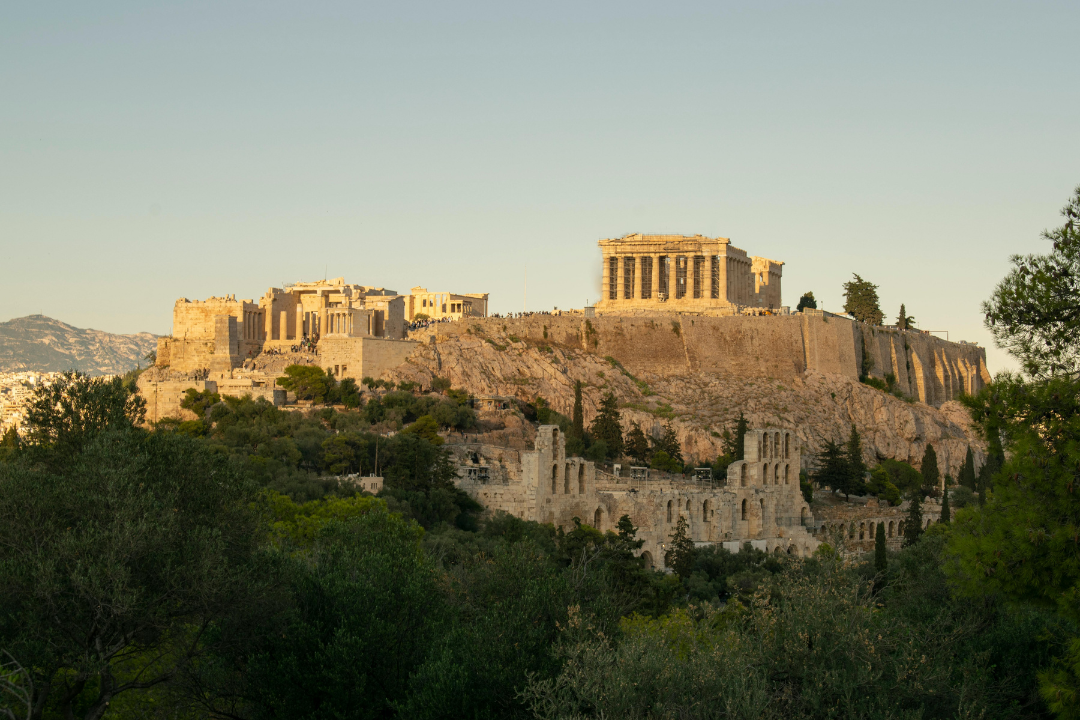
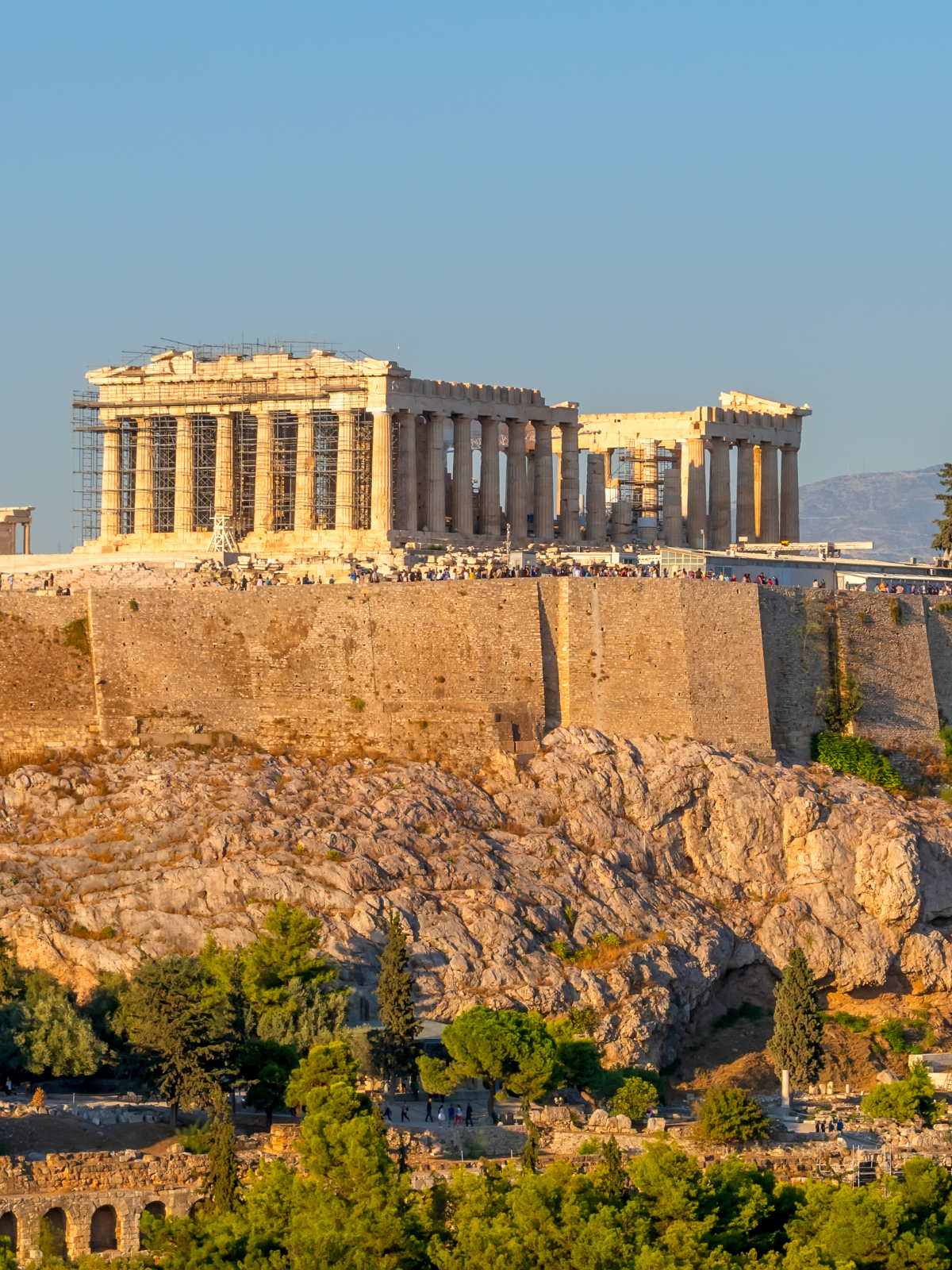
Acropolis (Athens): 20 EUR (combined ticket with six other sites: 30 EUR, valid 5 days — excellent value).
Major archaeological sites: Delphi: 12 EUR. Olympia: 12 EUR. Knossos (Crete): 15 EUR. Epidaurus: 12 EUR. Mycenae: 12 EUR.
Museums: National Archaeological Museum (Athens): 12 EUR. Heraklion Archaeological Museum: 12 EUR. Most smaller museums: 4-8 EUR.
Free days: EU citizens under 25 and all visitors on the first Sunday of each month (November to March) enter free. Students with an ISIC card get 50% off.
Budget reference: All major sites on a two-week mainland-and-islands trip: 60-100 EUR per person.
Budget for 10 days (islands focus)
Route: Athens (2) - Paros (3) - Naxos (3) - Athens (2)
| Item | Budget | Mid-range | Comfortable |
|---|---|---|---|
| Accommodation (9 nights) | 360 EUR | 630 EUR | 1,100 EUR |
| Food (10 days) | 200 EUR | 300 EUR | 450 EUR |
| Ferries | 100 EUR | 130 EUR | 160 EUR |
| Local transport | 40 EUR | 80 EUR | 140 EUR |
| Entry fees + activities | 40 EUR | 60 EUR | 100 EUR |
| Total per person | 740 EUR | 1,200 EUR | 1,950 EUR |
Budget for 14 days (mainland + islands)
Route: Athens (3) - Peloponnese by car (4) - Athens (1) - Santorini (3) - Naxos (3)
| Item | Budget | Mid-range | Comfortable |
|---|---|---|---|
| Accommodation (13 nights) | 520 EUR | 910 EUR | 1,700 EUR |
| Food (14 days) | 280 EUR | 420 EUR | 630 EUR |
| Ferries | 120 EUR | 160 EUR | 200 EUR |
| Car rental (4 days) + fuel | 180 EUR | 240 EUR | 320 EUR |
| Local transport | 50 EUR | 90 EUR | 150 EUR |
| Entry fees + activities | 60 EUR | 90 EUR | 140 EUR |
| Total per person | 1,210 EUR | 1,910 EUR | 3,140 EUR |
These figures exclude international flights (typically 80-250 EUR return from European cities) and travel insurance.
The timing equation
The single most effective way to reduce your Greece budget is to go in shoulder season: May, early June, late September, October. Prices drop 30-50% across accommodation, and the experience improves — fewer crowds, cooler temperatures, the sea still warm enough to swim (especially in September and October).
August is the most expensive month, and also the most crowded, the windiest (the Meltemi can strand ferries and make beaches uncomfortable), and the hottest. Unless August is your only option, avoid it.
The value verdict
Greece in 2026 is not the cheap destination it was in the crisis years of 2012-2015. But it remains excellent value by Western European standards, especially on the mainland and the less fashionable islands. The combination of food quality, archaeological wealth, natural beauty and that particular quality of Greek light makes it hard to think of a destination where your money buys a better overall experience.
The key is calibration: match your budget to your destinations. A fortnight mixing the mainland (cheap) with mid-tier islands (moderate) delivers an extraordinary trip for a fraction of what the same time on Santorini and Mykonos alone would cost. Greece rewards the traveller who looks beyond the obvious. It always has.
For the full picture of every island, route and hidden corner in Greece, the Far Guides complete guide has it all: interactive maps & itineraries, information that stays up to date.
More on Greece
Keep reading.
Other pieces from the same destination.


Next step
Ready for Greece?
The guide is for travelling.
Interactive maps & itineraries and everything that doesn't fit in an article. Always the latest published version.
Get the Greece guide