Greece · 23 September 2026
Mykonos without the filter: what's worth it and what isn't
Mykonos is the most expensive and most Instagram-filtered destination in the Mediterranean. An honest look at what's real, what's constructed and whether it's worth the price.

A studio apartment in Mykonos in the first week of August 2025 cost between €400 and €800 per night. Dinner at one of the harbour restaurants — not the most expensive, a reasonably decent one — ran to about €120 per person including a mid-range bottle of wine. A coffee with sea views: €9. Two sunloungers at Platis Gialos beach: €60 per day.
These prices are not a complaint. They are simply the starting point for an honest conversation about Mykonos: an island that made a conscious decision about what it wanted to be, executed that decision with considerable effectiveness, and now charges exactly what the market accepts. The question is not whether it is expensive — it clearly is — but whether what it offers justifies what it charges. The answer is: it depends what you’re looking for.
What is genuine
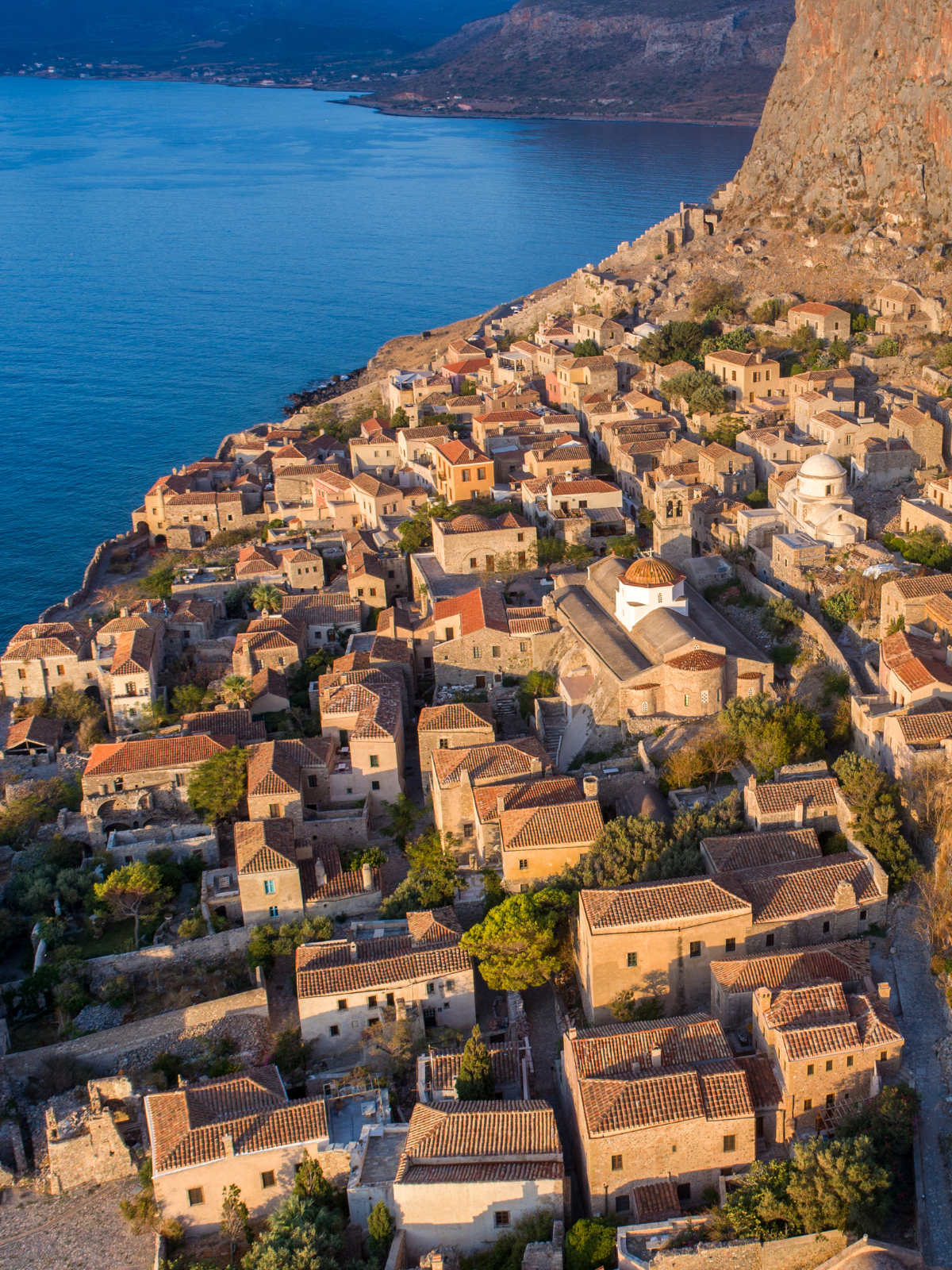
The old town of Mykonos, Chora, is authentic. The whitewashed streets, the wooden balconies painted in blue and red, the small churches that appear on every corner (there are over three hundred across the island), the labyrinth of alleys supposedly designed to confuse pirates: none of this was built for tourism. It is eighteenth and nineteenth-century Cycladic vernacular architecture that survived because there was never any reason to demolish it.
The windmills on the hill above Chora date from the sixteenth century, built by the Venetians to grind grain from neighbouring islands. They have not functioned for decades — the activity ceased in the twentieth century when industrial flour made artisanal milling obsolete — but their silhouette against the sea is real, not a stage set installed for photographs. The Little Venice neighbourhood, the houses that overhang directly above the sea on the western edge of Chora, is also genuine: eighteenth-century fishermen built their houses this way so they could load directly from their boats.
The pelicans wandering the harbour have a history. The first, Petros, arrived injured on the island in the 1950s and was adopted by the fishermen. When he died in 1985, the island received replacement pelicans from zoos in several countries. The current pelicans are the heirs of that tradition: they are real, not installed for the photographs, though it has to be admitted that the photographs are inevitable.
What doesn’t justify the price
The problem with Mykonos is not the authenticity of the old town. The problem is that around that genuine core, a luxury industry has grown up that in many cases delivers less than it promises. The southern beaches — Paradise, Super Paradise — have a mythical reputation dating from the 1980s and 90s, when they genuinely were beaches of free-spirited creativity. Today they are business operations: sunloungers at €30 each, cocktails at €20, music at a volume that prevents conversation, an atmosphere designed for visible consumption rather than actual pleasure. The beach itself — the water, the sand — is identical to that of dozens of Greek islands that cost a tenth of the price.
The harbour restaurants have genuine sea views and price lists that do not always reflect the quality of what they serve. The value-for-money ratio on Mykonos is structurally worse than on any neighbouring island, not because it is impossible to eat well — it is — but because demand consistently outstrips supply, which removes the incentive to do better.
The alternatives within the island
The smart approach on Mykonos is to avoid the beaches in all the photographs. Agios Sostis beach, in the north of the island, has no sunloungers, no bars, no facilities: just sand, water and the meltemi wind. Getting there requires a fifteen-minute walk from the end of the road. That alone is what keeps it quiet. Fokos beach, also in the north, requires three kilometres of dirt track that serves as an effective filter. Armenistis beach, in the far northwest, has a small, discreet bar and an atmosphere that recalls what Mykonos was before it became what it is.
The northern tip of the island, toward the Armenistis lighthouse, is the best place to understand why anyone would have chosen to live here before there was tourism: the arid landscape, the intensely blue sea, the wind that never stops. This is a beautiful island. Nobody manufactured that.
When to go, if you go
The difference between Mykonos in August and in September is substantial. Prices drop by 30 to 40% after 31 August. The Aegean water is at its warmest in September — 26-27°C — the sun is still full, and the island returns to a human scale. Restaurant terraces have available tables. The streets of Chora can be walked without brushing against other tourists.
The inevitable comparison is with Paros, forty minutes away on a fast ferry. Paros has equally beautiful beaches, an equally authentic Chora, better value restaurants, and costs roughly half as much for accommodation. It is the island that people who know the Cyclades well choose. Mykonos is the one that people who know it from Instagram choose. Both are valid decisions, provided they are made with information.
The complete Far Guides Greece guide includes detailed routes across the mainland and islands, interactive maps and all the practical information you need to plan your independent trip.
More on Greece
Keep reading.
Other pieces from the same destination.

Next step
Ready for Greece?
The guide is for travelling.
Interactive maps & itineraries and everything that doesn't fit in an article. Always the latest published version.
Get the Greece guide