Iceland · 19 June 2026
Best Time to Visit Iceland: A Month-by-Month Guide
Every month offers a different Iceland. Midnight sun, northern lights, open or closed roads. A guide to choosing when to go.
There is no perfect month to visit Iceland. There is a perfect month for what you want to do in Iceland, which is a different question entirely. The country changes dramatically between January and July — not just the weather, but the light, road access, wildlife, prices, and the very experience of being there. Choosing when to go is, in practice, choosing which Iceland you want to see. This guide walks through the calendar month by month so that decision is informed, rather than simply the result of when you found cheap flights.
Why Iceland changes so much between seasons
Before getting into the monthly detail, it is worth understanding why seasons matter so profoundly in Iceland. The island lies between 63 and 66 degrees north latitude — the Arctic Circle grazes its northern tip at the island of Grimsey. At those latitudes, the tilt of the Earth’s axis produces extreme variations in daylight hours.
At the summer solstice on June 21st, the sun barely sets. In Reykjavik there are roughly twenty-one hours of direct sunlight, and the remaining three are a perpetual twilight that never fully darkens. In the north, the sun literally does not set: the midnight sun is a real phenomenon, not a tourism metaphor. The physics is straightforward: when the northern hemisphere tilts towards the sun, points near the pole receive sunlight even during the Earth’s nocturnal rotation.
At the winter solstice on December 21st, the opposite occurs. Reykjavik gets about four hours of dim light — the sun rises at half past eleven and sets at half past three, never climbing high in the sky. In the north, darkness is nearly total. This darkness is what makes the northern lights possible: you need dark skies to see them, and in summer those dark skies simply do not exist.
The weather, for its part, is less predictable than the seasons suggest. Iceland has a saying that every traveller hears at least once: “if you do not like the weather, wait five minutes.” It is not a joke. The island sits at the confluence of polar and subtropical air currents, producing rapid and often violent meteorological changes. A sunny morning can become an afternoon of horizontal rain and clear again before dinner. This happens in any month of the year.
January and February: the dark Iceland
January is the darkest and coldest month. Temperatures in Reykjavik hover around zero degrees Celsius, with lows of minus five or minus ten. In the interior and the north, temperatures can drop much further. Daylight hours increase gradually from four in early January to eight or nine by the end of February.
What January and February offer is unique: ice caves. The natural ice caves within the glaciers — especially the Vatnajokull — are only accessible between November and March, when temperatures keep the ice stable. These translucent blue ice caverns are an experience that does not exist at any other time of year. Guided tours (mandatory for safety) depart from Jokulsarlon and cost between one hundred and fifty and two hundred euros.
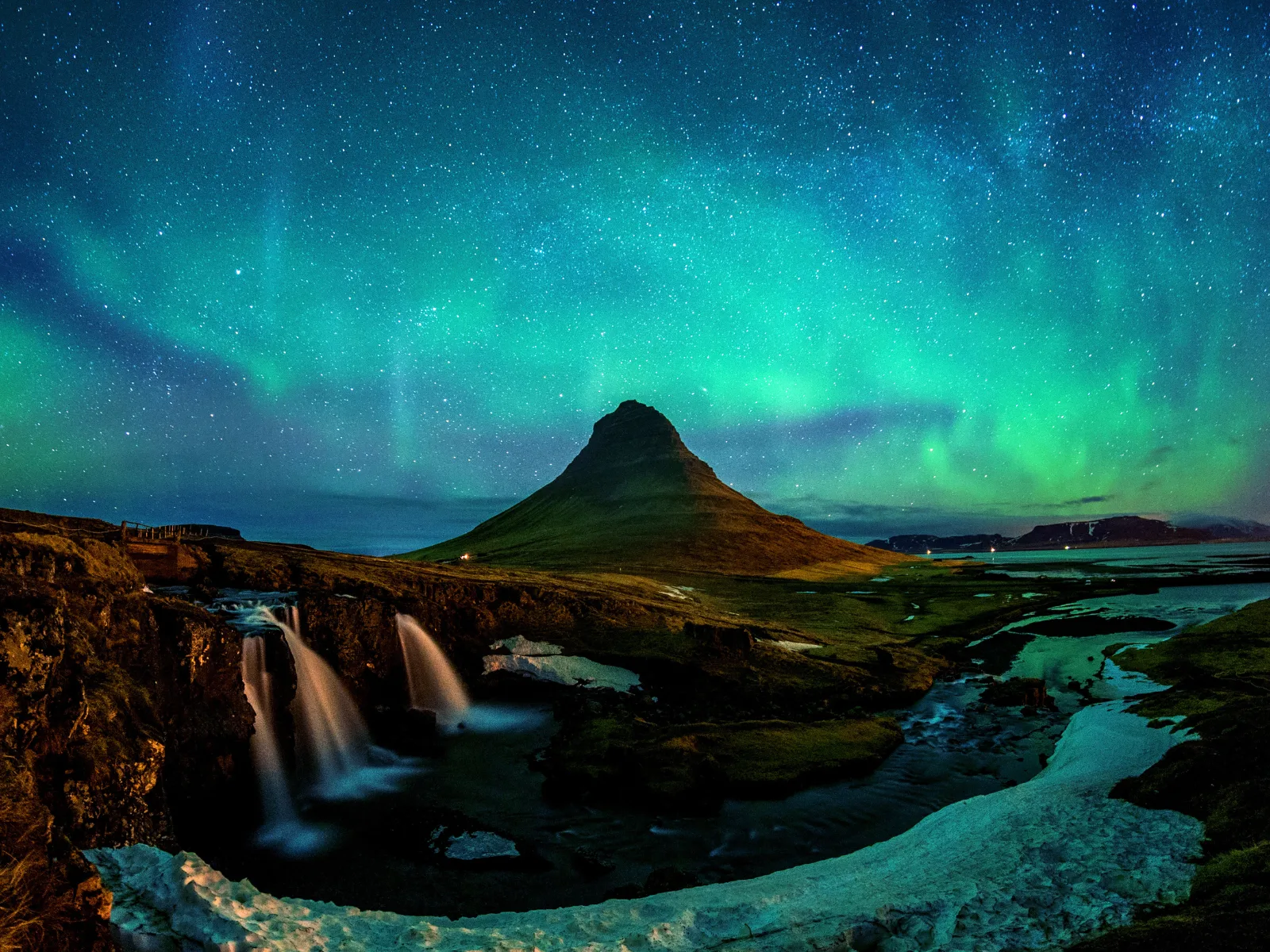
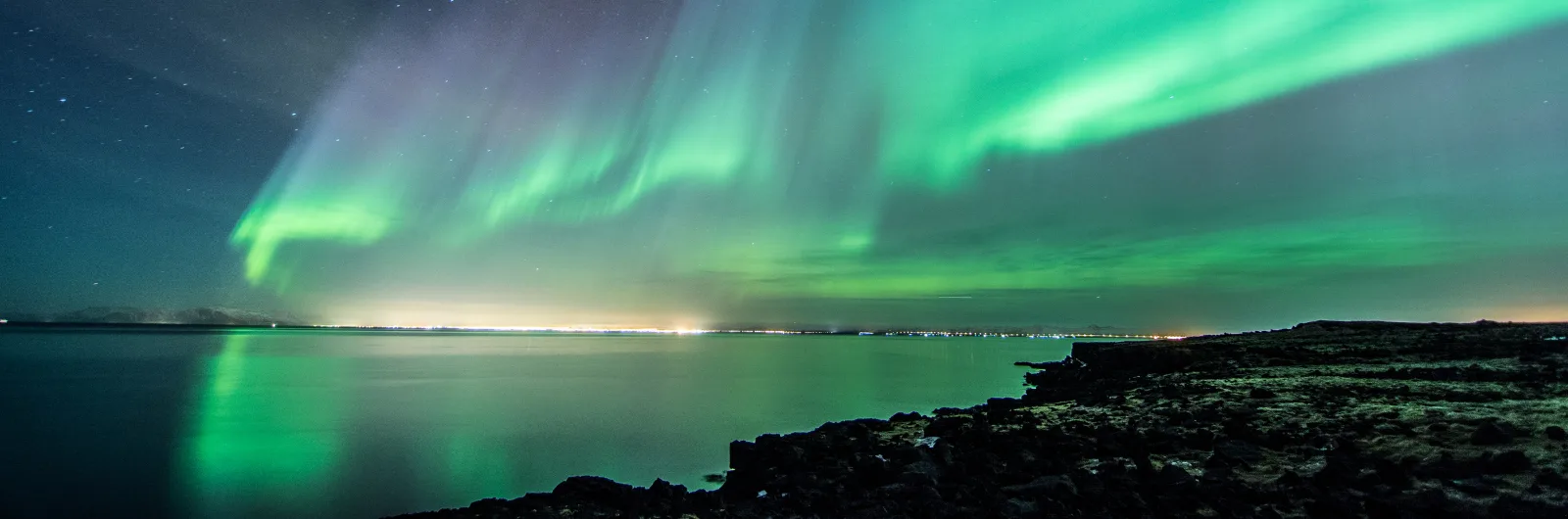
The northern lights are at their peak. Long dark nights and frequent geomagnetic activity in the winter months create optimal conditions. What they do not guarantee is clear skies: clouds are the real enemy of aurora observation, more so than lack of solar activity. Apps like My Aurora Forecast and vedur.is combine magnetic activity forecasts with cloud cover predictions to maximise your chances.
The Ring Road is generally open in winter, but conditions vary enormously from one day to the next. Roads in the north and east may close temporarily due to snow or wind. F-roads are closed without exception. A 4x4 is practically mandatory, and winter driving requires respect and preparation.
Prices are the lowest of the year: cheap flights, accommodation at fifty per cent of summer rates, rental cars at their minimum. The trade-off is obvious: short days, real cold, and limited accessibility.
March and April: the transition
March marks the beginning of change. Daylight hours increase rapidly — from nine at the start of the month to thirteen by the end — and temperatures begin to rise, though zero degrees remains the norm. March still allows you to see the northern lights and visit ice caves (until roughly mid-month), making it a good compromise between winter experiences and reasonable daylight.
April is a transition month defined by inconsistency. You can have spring-like days and snowstorms in the same week. Roads begin to improve but F-roads remain closed. Snow retreats gradually from coastal areas but persists in the mountains. Puffins begin arriving at the coasts in late April, though they are not yet nesting.
Prices begin to rise in April, especially around Easter, which is peak season for Icelanders travelling domestically. Flights and accommodation for Easter sell out well in advance.
May: the awakening
May is, for many experienced travellers, the best month to visit Iceland. Daylight hours are already very long — from sixteen to twenty hours over the course of the month — temperatures climb to between five and ten degrees, and mass tourism has not yet arrived. The landscapes have a particular quality: snow recedes but still covers the mountains, rivers run strong with meltwater, and the light has a golden quality that photographers chase.
Main roads are open and in good condition. Some secondary roads and most F-roads remain closed, which limits access to the interior but does not affect the Ring Road or the main attractions. Puffins are on the coasts but not yet at nesting colonies.
Prices are below the summer peaks: accommodation costs twenty to thirty per cent less than in July, and availability is better. The trade-off is that some summer activities (certain mountain trails, interior excursions) are not yet operational, and the weather can be unpredictable, with rainy, windy days that remind you that Icelandic spring is not Mediterranean spring.
June: midnight sun and lupins
June is the month of the midnight sun. The summer solstice falls on June 21st, and for weeks around that date, darkness simply does not arrive. In the north, the sun remains visible for all twenty-four hours. In the south, it dips briefly below the horizon for an hour or two, but the twilight glow never fades. The experience of driving at midnight in perpetual sunset light is difficult to describe and harder to forget.
June is also the month of the lupins. Lupinus nootkatensis — a species introduced to combat erosion of the volcanic soil — carpets vast areas of the south and east in intense violet. Their presence is controversial among Icelanders: some consider them an invasive species displacing native flora, others value them for their role in stabilising the soil. For the traveller, they are a visual spectacle that peaks between mid-June and mid-July.
F-roads begin to open in late June, depending on snow conditions. The F35 (Kjolur) is usually the first to open, with others following gradually. Before planning an interior route, check road.is for current status.
Puffins are in full nesting season. The most accessible colonies are at Latrabjarg (Westfjords), Dyrholaey (south coast), Borgarfjordur Eystri (east), and the Vestman Islands. June and early July is the best time to see them.
Prices reach their peak alongside July and August. Accommodation outside Reykjavik fills quickly and rental cars become scarce. Booking three or four months ahead is practically mandatory.
July: full high season
July is Iceland’s warmest month, with temperatures hovering between ten and fifteen degrees on the coast and occasionally reaching twenty on exceptional days. All roads, including most F-roads, are open. Mountain trails are accessible. It is the month of maximum functionality for the traveller.
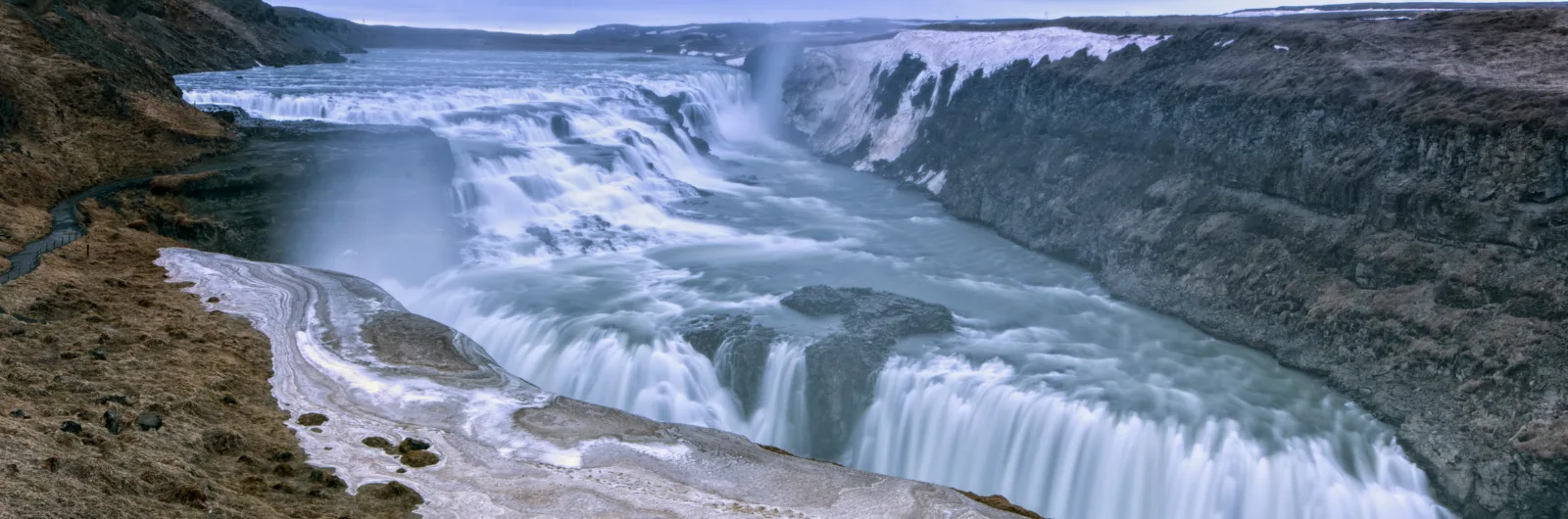
It is also the month of maximum crowds. The most popular sites — Geysir, Gullfoss, Seljalandsfoss, Skogafoss, Jokulsarlon, Reynisfjara — receive thousands of visitors per day. The Ring Road carries more traffic than you might expect on an island of three hundred and eighty thousand people. Campsites fill up, guesthouses are fully booked, and the sense of isolation that defines Iceland fades at the most visited spots.
The strategy in July is temporal: visit popular sites first thing in the morning or late in the evening (with the advantage that there is still light). Less-known places — the eastern fjords, the Snaefellsnes peninsula away from Arnarstapi, the interior of the Westfjords — remain calm even at the height of the season.
Landmannalaugar, with its multicoloured rhyolite mountains and natural hot springs, is accessible from late June through September. July is the best month to hike the Laugavegur trail, one of Europe’s most celebrated treks, connecting Landmannalaugar to Thorsmork over four days.
August: the gradual turn
August maintains good conditions, but the change begins to show. Nights return: at the start of the month darkness falls briefly, and by the end there are two or three hours of real darkness. This return of night has a practical consequence: from mid-August onwards it is possible to see the northern lights, though the probability is still low.
Temperatures hold between eight and thirteen degrees. Puffins begin leaving their nesting colonies by late August. F-roads remain open but the closure calendar draws closer. Accommodation and car rental prices begin a gradual decline in the second half of the month.
August has a specific advantage: the rettir, the traditional sheep roundup, begins in late August in some parts of the country. It is a deeply rooted community event in which farmers and volunteers gather the sheep that have grazed freely during the summer. Participating as a visitor is possible on some farms and offers a perspective on the country that no waterfall can provide.
September: the golden transition
September is the other compromise month that many seasoned travellers prefer. The summer crowds vanish, prices drop significantly, autumn colours transform the landscape — blueberry bushes turn red, pastures yellow, mosses intensify their green against dark rock — and the northern lights become frequent from the second half of the month onwards.
Main roads are in good condition. F-roads begin closing during September: some at the start of the month, others at the end, depending on the year. If you want to access the interior, the first week of September is usually the last reliable window.
Daylight hours decrease from fifteen at the start to twelve at the end, which is still more than enough for driving and exploring during the day. Temperatures drop to between three and eight degrees, and the chance of rain and wind increases. It is a month for layered clothing and flexibility.
September prices are twenty to forty per cent lower than July. Availability of accommodation and cars is good without needing to book months in advance (though it is still advisable).
October and November: the return of darkness
October marks the start of the winter season in practical terms. Temperatures fall to between zero and five degrees, the first snowfalls reach the mountains and gradually the lowlands, and daylight hours shrink sharply — from twelve in October to six in November. F-roads are closed.
The northern lights are frequent and the long nights increase opportunities for observation. Ice caves become accessible from November onwards, depending on glacier conditions. October still allows you to drive the Ring Road in reasonable conditions, though roads in the north may start to deteriorate. November is already a winter month: a 4x4 is needed, extreme caution is required, and you must accept that conditions dictate plans.
Prices are low and visitor numbers minimal. Iceland in November is a solitary, dark place with a severe beauty that is not for everyone but rewards those who seek it.
December: deep winter
December has four hours of daylight at the solstice. Temperatures hover around zero on the coast and well below in the interior. Storms are frequent. It is, objectively, the most challenging month to travel.
What December has in its favour: northern lights at their most spectacular, ice caves open, the lowest prices of the year, and the experience of Reykjavik at Christmas — a small city illuminated against the darkness, with a culture of celebration that includes the thirteen Icelandic Yule Lads who arrive one by one during the thirteen nights before Christmas. And New Year’s Eve in Reykjavik, with its display of private fireworks that lights up the entire city without any official organisation, is one of the most singular New Year celebrations in Europe.
The highlands: a calendar within the calendar
Iceland’s interior — the highlands, the volcanic desert that occupies most of the island — has its own calendar. F-roads open between late June and September, with annual variations. Outside that window, the interior is inaccessible by road.
This means that experiences like Landmannalaugar, Askja, Kerlingarfjoll, Sprengisandur, and Kjolur are available for a maximum of three months per year. If the interior is a priority, July and August are the safe months. Late June and early September are possible but require verifying the specific conditions of each year.
The question of specific interests
Beyond the general month, certain interests have defined windows.
Puffins: mid-May to mid-August, peaking in June and July. Best colonies: Latrabjarg, Dyrholaey, Borgarfjordur Eystri, Vestman Islands.
Northern lights: September to March, with the statistical peak between October and February. They require darkness (not visible in summer) and clear skies (unpredictable).
Ice caves: November to March. Require sustained low temperatures. Tours are cancelled if conditions are unsafe.
Lupins in bloom: mid-June to mid-July. Especially visible in the south and east.
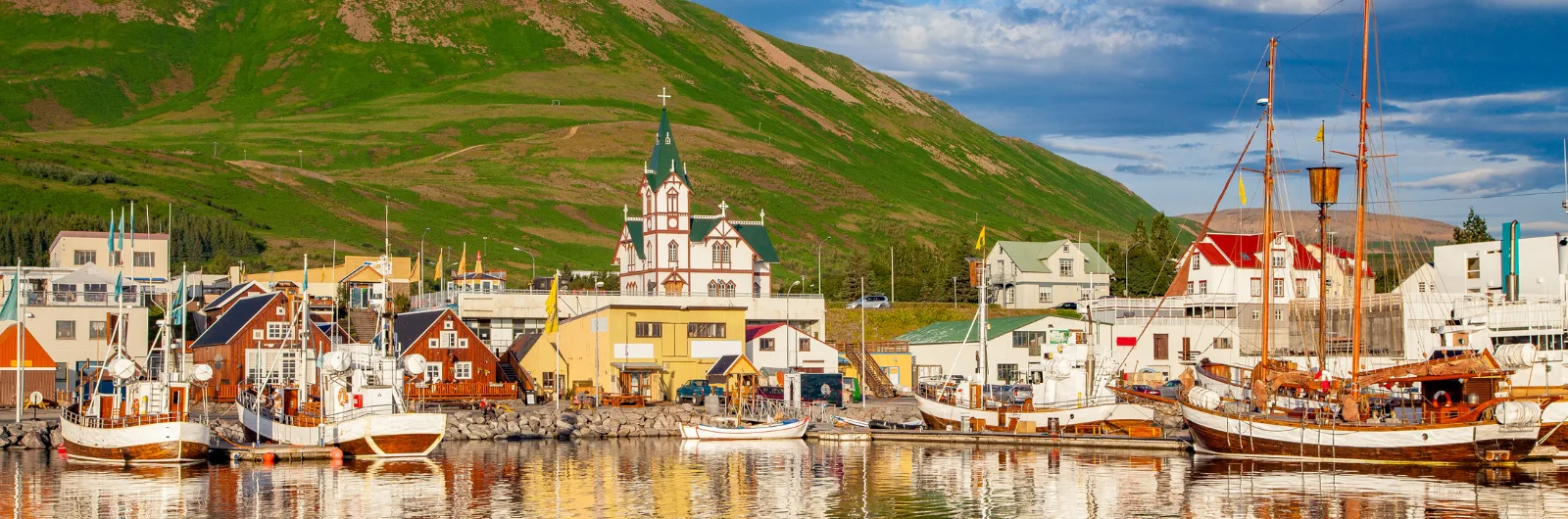
Whales: April to October, peaking in June, July, and August. Husavik is Iceland’s whale-watching capital.
Long-distance trekking (Laugavegur): late June to mid-September. Trail huts are open approximately from June 20th to September 15th.
The honest answer
If forced to choose a single month, I would say June for a first summer trip and February for a first winter trip. June has the midnight sun, puffins, lupins, roads opening up, and a particular energy that exists only when darkness vanishes from a country that lives in it for half the year. February has ice caves, frequent auroras, enough light to drive for several hours a day, and a winter Iceland that is beautiful in a way that summer photographs do not prepare you for.
But if I could choose more freely, I would choose September. Fewer people, reasonable prices, autumn colours, auroras becoming possible, roads still open, and that particular feeling of a country preparing for winter: gathering the sheep, closing the interior roads, shortening the days. It is the Iceland you understand best when you visit, because you see it in transition, and in transition the character of a place reveals itself.
More on Iceland
Keep reading.
Other pieces from the same destination.

Next step
Ready for Iceland?
The guide is for travelling.
Interactive maps & itineraries and everything that doesn't fit in an article. Always the latest published version.
Get the Iceland guide