Uzbekistan · 1 April 2026
How to travel independently in Uzbekistan in 2026
Everything you need to know to plan an independent trip to Uzbekistan: visas, transport, budget, safety and the reality on the ground.
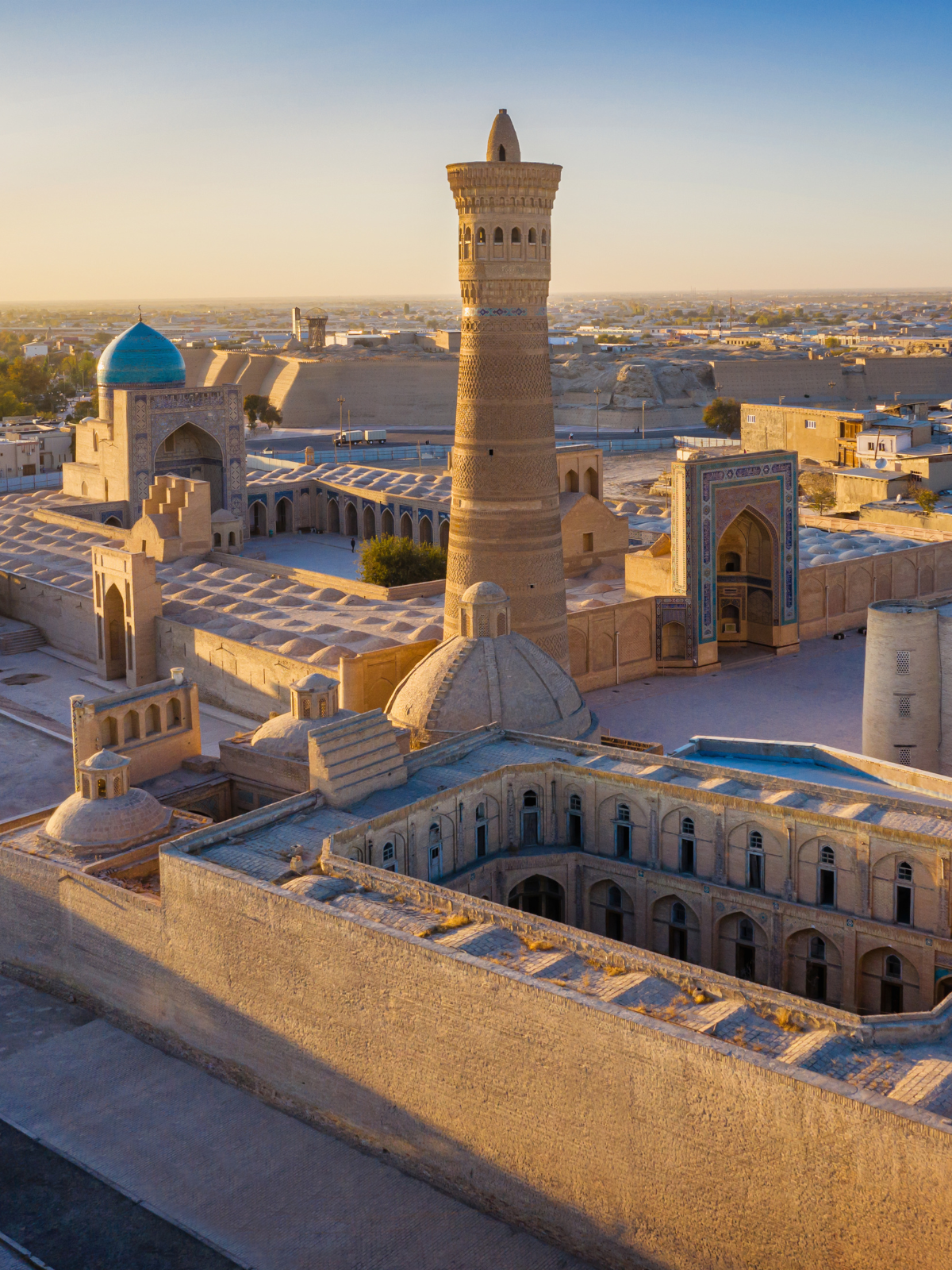
There comes a moment, usually a few weeks before booking the flight, when Uzbekistan stops being an idea and starts becoming a logistical problem. The doubts pile up: whether you need a visa, whether it’s safe, whether there are trains or only battered buses, whether the language barrier is insurmountable. That’s normal. Uzbekistan is not Thailand or Portugal. There is no massive tourist infrastructure to hold your hand. But that is precisely why it’s worth going independently: because the country reveals itself in a completely different way when there are no intermediaries.
This article is what I would have wanted to read before my first trip. It’s not a list of hacks or a rigid itinerary, but an honest explanation of how things work on the ground.
Visas: the best news first
Let’s start with the easiest part. Since 2018, Uzbekistan has been progressively eliminating visa requirements for a growing number of nationalities. In 2026, citizens of the United States, Canada, the United Kingdom, the European Union, Australia, and most Latin American countries can enter visa-free for up to 30 days. All you need is a passport valid for at least six months.
If your nationality is not on the exemption list, an electronic visa (e-visa) can be processed online in about 3-5 business days and costs around 20 dollars. The process is straightforward and requires no invitation letter or complex documentation.
When you arrive at Tashkent airport, passport control is quick and hassle-free. Nobody will ask for your itinerary, hotel booking or return ticket. Uzbekistan wants tourists, and it shows at the border.
When to go: climate rules everything
Uzbekistan has an extreme continental climate. This means summers are brutal — over 45C in Bukhara and the desert — and winters are dry and cold, with temperatures below freezing across most of the country.
There are two ideal windows:
Spring (April-May): Pleasant temperatures, the Fergana Valley fields are green, trees in bloom. The best time for walking cities. April may bring occasional rain, but nothing that ruins a trip.
Autumn (September-October): The summer heat retreats, the bazaars are bursting with seasonal fruit — melons, pomegranates, grapes — and the light turns golden. For many, the finest time of year.
If you travel in summer, brace yourself for dry, relentless heat. You can do it, but you’ll need to adjust your schedule: wake up very early, rest during the midday hours, and head out again at dusk. In winter, the cities are empty of tourists and prices drop, but the days are short and the cold can be biting.
Getting around: trains, shared taxis and the logic of the country
Transport between cities is the backbone of any trip through Uzbekistan, and here there’s good news: the Afrosiyob high-speed train connects Tashkent with Samarkand in just over two hours and with Bukhara in about four. It’s punctual, comfortable, air-conditioned, and costs between 8 and 15 euros depending on class. You can book online through the Uzbekistan Railways website (uzrailpass.uz) or directly at the station.
The Afrosiyob is the most civilised option, but it doesn’t reach everywhere. For the Bukhara-Khiva stretch, there is no high-speed service: there’s an overnight train (slow but functional) or the most common option, the shared taxi.
Shared taxis deserve their own explanation because they are the true nervous system of Uzbek transport. Here’s how they work: you go to the station or the designated departure point, say your destination, get assigned a car (usually a Chevrolet Lacetti or similar), and wait until all four seats are filled. When the car is full, it leaves. There are no fixed schedules. The price is negotiated before you get in, though it’s usually fairly standardised.
Bukhara to Khiva by shared taxi costs around 150,000-200,000 sum (roughly 11-15 euros) and takes about 6-7 hours by road. It’s a long ride but an interesting one: you cross the Kyzylkum Desert and watch the landscape shift from steppe to dunes. If you’d rather not share, you can pay for all four seats and leave immediately.
Within cities, Yandex Go (Central Asia’s Uber) works perfectly in Tashkent and reasonably well in Samarkand and Bukhara. Fares are laughably low: you’ll rarely pay more than a euro for an urban trip.
Money: sum, dollars and the death of the black market
There was a time when travelling to Uzbekistan meant carrying stacks of dollars and exchanging them on the black market at a parallel rate. That ended in 2017 with the liberalisation of the exchange rate. Today the Uzbek sum (UZS) is exchanged at the official rate at any bank, exchange office or ATM.
ATMs work with Visa and Mastercard cards in all major cities. The recommendation is to carry a card with no foreign exchange fees (Revolut, N26, Wise or similar). It’s also worth bringing some cash in dollars or euros as backup, especially if you’re heading to rural areas or the desert.
Credit cards are accepted at mid-to-upper-range hotels, some restaurants and tourist shops, but day-to-day life still runs on cash. The bazaars, local transport, family guesthouses: it’s all cash.
A practical note: the largest banknote is 200,000 sum, which is worth about 15 euros. Don’t be alarmed by thick wads of bills — it’s perfectly normal.
Accommodation: from boutique to family B&B
Accommodation in Uzbekistan has improved enormously over the last decade. In Samarkand, Bukhara and Khiva you’ll find a wide range, from boutique hotels set up in restored ancient madrasas to family-run guesthouses (B&Bs) with interior courtyards, breakfast included and a warmth that borders on familial.
Guesthouses are, without question, the best option for an independent traveller. For 15-30 euros per night in a double room with breakfast, you stay in traditional houses with carved wooden ceilings, courtyards with divans, and a hostess who will probably insist you have seconds at breakfast. Booking.com works well for reservations, though many places also appear on Google Maps.
In Tashkent, the offer is more urban: modern hostels, Airbnb apartments and chain hotels. Prices are similar or slightly higher than in the other cities.
A tip: during high season (April, September, October), the best places in Bukhara and Samarkand fill up fast. Book at least two weeks in advance.
Safety: the pleasant surprise
Uzbekistan is an extraordinarily safe country for travellers. Street crime is virtually non-existent in tourist areas. You can walk through the centre of Samarkand or Bukhara at night without any concern. Women travelling alone report very positive experiences, met with the usual Uzbek hospitality and no harassment.
The police have a visible but non-intrusive presence. Years ago it was common for them to ask tourists for documentation; today that hardly happens. Carry a copy of your passport just in case.
The only real risk is traffic. Uzbek drivers have a creative relationship with traffic rules. If you rent a car (which I don’t recommend unless you have nerves of steel), drive with extreme caution.
The language barrier: more manageable than it seems
Uzbek is the official language. Russian is still widely spoken, especially by older generations and in urban settings. English is growing among young people, but outside tourist hotels and restaurants, it’s uncommon.
Does that mean you need to speak Uzbek or Russian? No. Google Translate with the Uzbek and Russian offline packs downloaded covers 90% of situations. Learn five words — rahmat (thank you), salom (hello), ha (yes), yoq (no), qancha (how much) — and watch how people’s attitude changes.
Uzbeks are, by cultural nature, overwhelmingly hospitable. The language barrier doesn’t stop them from inviting you for tea, offering you fruit, or helping you find your way. Quite the opposite: the effort of communicating without a shared language creates moments you wouldn’t have in a country where everything runs in English.
Planning the route: the geographical logic
The classic Uzbekistan route follows an almost inevitable logic, because the historic cities are aligned from east to west:
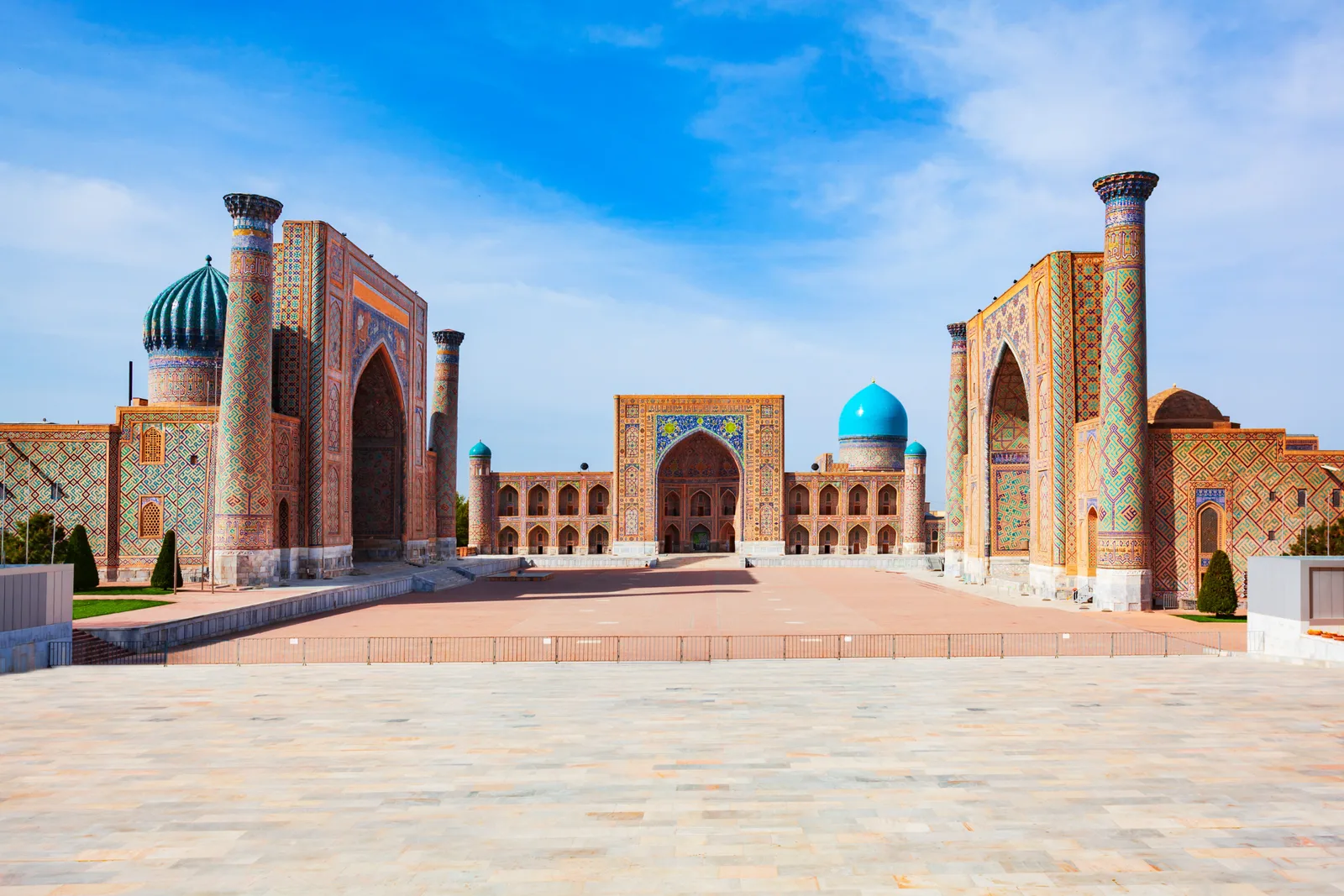
Tashkent - Samarkand - Bukhara - Khiva
This is the path that follows the ancient Silk Road and the one connected by the high-speed train (Tashkent-Samarkand-Bukhara) plus the road stretch to Khiva. Most travellers do this route in one direction and fly back to Tashkent from Urgench (the nearest airport to Khiva) for about 30-50 euros.
The minimum reasonable time is 9 days: 2 in Tashkent, 2-3 in Samarkand, 2 in Bukhara, 2 in Khiva. With 14 days you can add the Fergana Valley, spend more time in each city and not feel like you’re rushing.
Don’t try to do everything. Uzbekistan rewards slowness. An entire afternoon at the Bukhara bazaar will tell you more about the country than three monuments visited at a trot.
Food: better than you expect
Uzbek cuisine is hearty, flavourful and cheap. Plov (rice with lamb, carrots, chickpeas and spices) is the national dish and varies from city to city. Samarkand’s is not the same as Tashkent’s, and Uzbeks debate which is better with the same passion that a Neapolitan talks about pizza.
Other essentials: samsa (flaky pastry filled with meat and onion, baked in a tandyr), shashlik (lamb skewers grilled over coals), laghman (hand-pulled noodles with vegetables and meat) and manti (steamed dumplings).
A full meal at a local restaurant costs 2-4 euros. At a tourist restaurant, 6-10 euros. Breakfast at the guesthouses — freshly baked bread, homemade jams, eggs, fruit, endless tea — is generally included.
The reality on the ground
Travelling independently in Uzbekistan is not difficult. It doesn’t require prior experience in challenging destinations or a special tolerance for discomfort. The main cities are well connected, accommodation is plentiful, the food is good and safety is excellent.
What it does require is an open mindset. Things don’t always work like they do in Europe: schedules are approximate, shared taxis leave when they’re full, queues don’t always follow visible logic. But that’s not a problem — it’s part of the experience.
Uzbekistan is a country changing fast. Every year the infrastructure improves, new accommodation opens, more travellers arrive. But it still holds on to that authenticity that disappears when a destination becomes mass-market. Going now, independently, is the best way to find it.
For the full picture of every city, route and hidden corner in Uzbekistan, the Far Guides complete guide has it all: interactive maps & itineraries, information that stays up to date.
More on Uzbekistan
Keep reading.
Other pieces from the same destination.


Next step
Ready for Uzbekistan?
The guide is for travelling.
Interactive maps & itineraries and everything that doesn't fit in an article. Always the latest published version.
Get the Uzbekistan guide