



Egypt · 28 August 2026
Egypt in two weeks: temples, desert and river
Two weeks in Egypt lets you go beyond the classic circuit. This route includes Cairo, the Nile, Alexandria and a night in the White Desert.

Two weeks in Egypt is the minimum time needed to step beyond the standard circuit without feeling rushed by the pace. With ten days you do the classics with a certain calm; with two weeks you can add Alexandria, the White Desert and stops at sites that organised groups never reach. The route below is arranged north to south and back, with internal transfers calculated to minimise time lost to transport.
Cairo: four days worth not compressing
Arriving in Cairo has its own adaptation rhythm. The city has 20 million inhabitants, the most chaotic traffic in the Mediterranean and a concentration of world-class sites that no other city on earth can match. Four days is not too many.
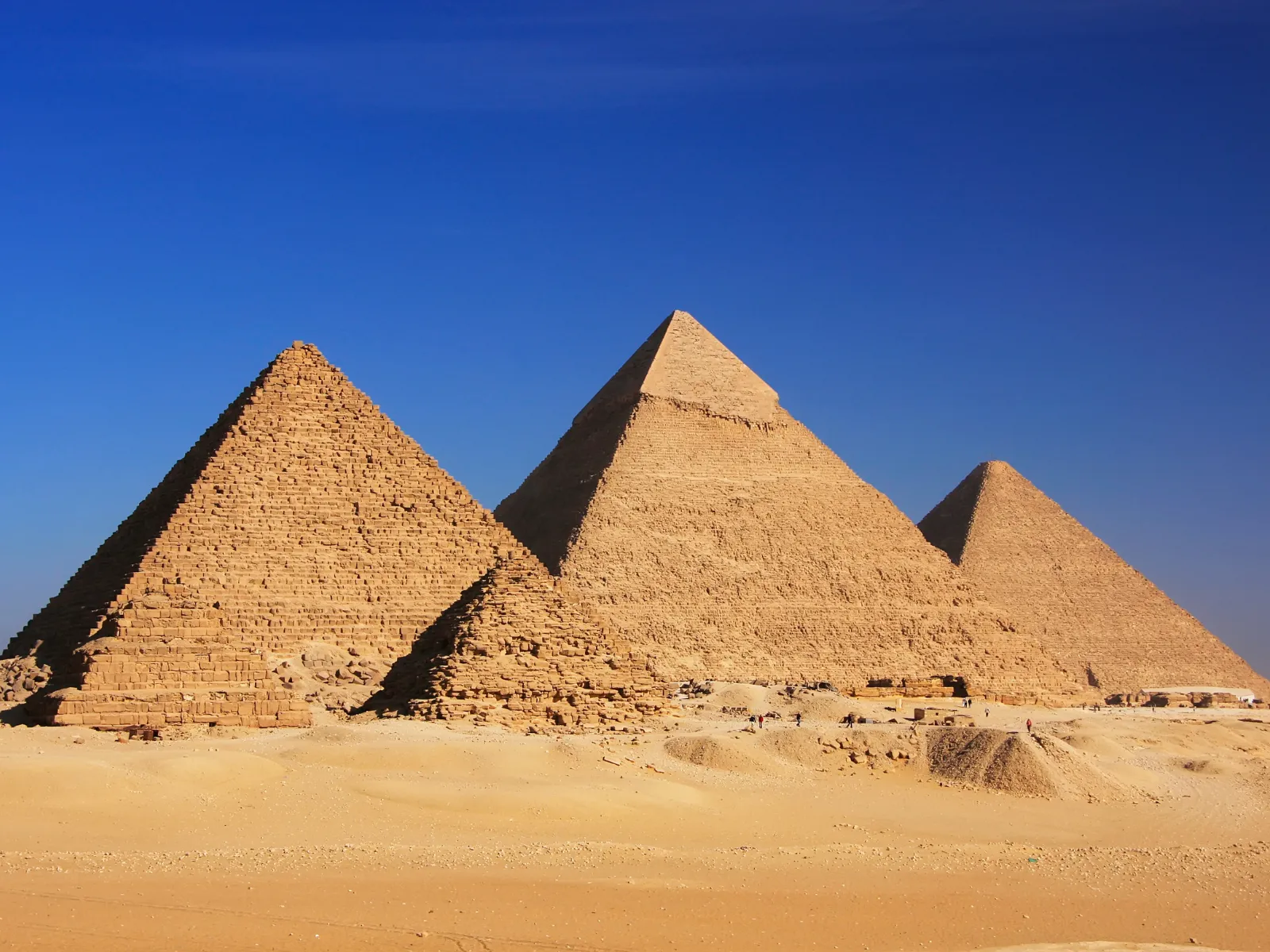
Day one, for the Grand Egyptian Museum in Giza. Completed definitively in 2023, it is the largest antiquities museum in the world by floor space, and it contains the complete Tutankhamun collection — all 5,398 pieces — in a gallery designed specifically for them, something the Egyptian Museum in Tahrir Square was never able to offer. The afternoon: the Giza pyramids in the golden late light.
Day two, the Islamic quarter: the mosque of al-Azhar (the oldest Islamic university in the world, founded in 970 AD), the bazaar of Khan el-Khalili, the mosque of Ibn Tulun (ninth century, Abbasid, the oldest in Cairo). The Citadel of Saladin at the end of the afternoon, when the light falls across historic Cairo from the viewpoint.
Day three, south Cairo: Memphis and Saqqara. The Step Pyramid of Djoser (2,650 BC), the Bent Pyramid of Dahshur (the first attempt at a straight-sided pyramid, which had to be corrected mid-construction). The Saqqara necropolis is much larger than it appears on maps: tombs open and close according to the season, and some of the most vivid Old Kingdom paintings are in the side mastabas that groups don’t visit.
Day four is for Alexandria (train from Ramses Station, two and a half hours). The Bibliotheca Alexandrina, the Citadel of Qaitbay, the Corniche and seafood at the port. Return to Cairo in the late evening.
The White Desert: two days of parenthesis
Rather than going directly to Luxor, this route includes a detour to the west. Day five: private car from Cairo to Bahariya (4 hours). The village is small and quiet, with natural open-air hot springs where locals bathe in the afternoon. The afternoon can be used to visit the Black Desert (volcanic basalt, dark hills) half an hour from Bahariya.
Day six is the White Desert. The 4x4 jeep excursion includes a night in the desert: bring a sleeping bag (in winter nights drop to 5 to 10 degrees), and the nocturnal sky of the Egyptian Sahara without light pollution is one of the trip’s most compelling visual arguments. Day seven: return to Cairo and fly to Luxor.
Luxor: three days from bank to bank
The Luxor circuit by this stage is broadly known: Karnak early (before 8), the Temple of Luxor at sunset, the west bank on the second day (Valley of the Kings, Hatshepsut, Colossi of Memnon). Day three: the excursion to Dendera.
What the longer stay adds is slower rhythm: renting a bicycle on the west bank and cycling through the wheat fields between temples, visiting the craftsmen working in the village of Gurna, taking the local ferry (not the tourist one) to cross the Nile in the morning alongside farmers.
Aswan: two days plus Abu Simbel
The train from Luxor to Aswan takes three and a half hours. Aswan deserves two days: Philae on the first afternoon (when the groups have left), the High Dam and granite quarries on the second morning. Abu Simbel falls on day thirteen or fourteen depending on the arrangement: a 45-minute flight from Aswan or the 4am car convoy (the cheaper option, around 25 to 30 dollars in a shared taxi).
The final day: flight from Aswan to Cairo for the international connection. Or, if the return is flexible, one more night in Cairo for the Coptic quarter — the Hanging Church, the Catacombs of Kom el-Shoqafa — which the pace of the trip’s beginning doesn’t always allow.
The complete Far Guides Egypt guide includes detailed Nile Valley routes, interactive maps and all the practical information you need to plan your independent trip.
More on Egypt
Keep reading.
Other pieces from the same destination.


Next step
Ready for Egypt?
The guide is for travelling.
Offline maps, itineraries and everything that doesn't fit in an article.
Get the Egypt guide