Greece · 3 April 2026
Greek islands: which one to choose based on your travel style
Not all Greek islands are the same. An honest guide to choosing between Santorini, Crete, Naxos, Milos, Paros and more based on what you're looking for.
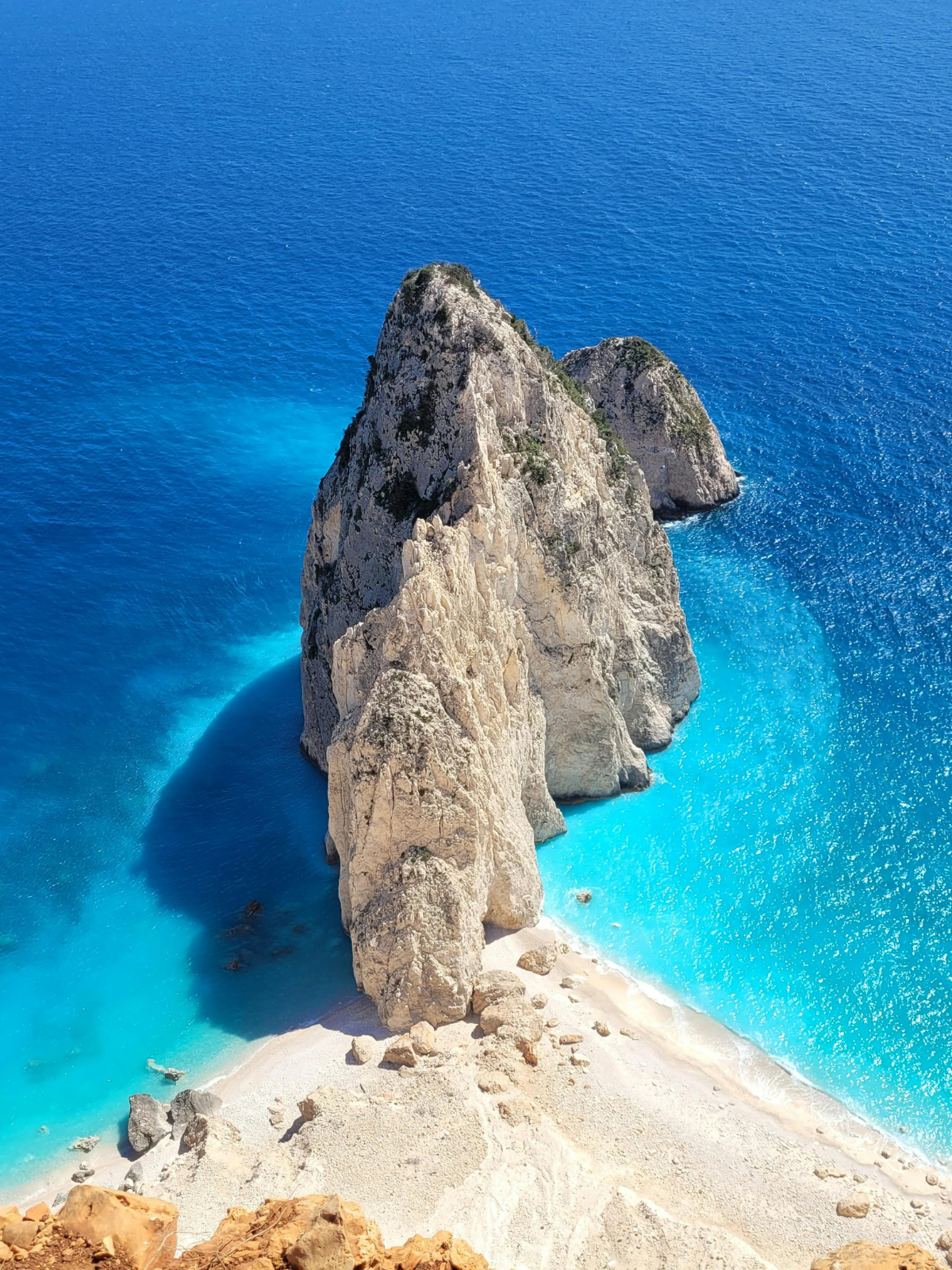
There comes a moment, while planning a trip to Greece, when every traveller faces the same map and the same impossible question: there are over six thousand islands, two hundred inhabited, and summer is not infinite. The temptation is to choose by the image, by the Instagram algorithm, by whatever sounds familiar. Santorini. Mykonos. Maybe Crete, because someone said it was worth it.
But Greek islands don’t work that way. They don’t rank from best to worst. Each archipelago has its own geological logic, its own history, its own rhythm of life. And the island that transforms a trip for one person can be exactly the wrong one for another. What follows is not a ranking. It’s an honest attempt to explain what each island offers and who it makes sense for.
Santorini: the postcard and what lies behind it
Let’s start with the most famous, because it needs to be addressed with clarity. Santorini is spectacular. That’s not up for debate. The volcanic caldera that forms its inner bay is one of the most dramatic landscapes in the Mediterranean: a semicircle of three-hundred-metre cliffs plunging into the sea, with white villages clinging to the edge as if defying gravity. There’s a reason half the world wants to go there.
The problem is that half the world does. Santorini receives over two million visitors a year on an island of fifteen thousand inhabitants. Oia, the village of the famous sunset, becomes in high season a human funnel where one-metre-wide streets turn into pedestrian traffic jams. Accommodation prices double or triple those of any other Aegean island. A hotel with caldera views in July can cost more than an entire apartment in Naxos for a month.
That said: if you go in May or October, if you stay in Fira or Imerovigli instead of Oia, if you spend time at Akrotiri — the Minoan ruins that are the Pompeii of the Aegean — and at the Assyrtiko wineries on the interior plateau, Santorini is still worth it. The caldera at sunset is real, not a filter. But you need to know what you’re going to find: an island that has turned its beauty into an industry. If what you’re after is authentic Greece, keep reading.
Santorini is for you if: you want the most impressive volcanic landscape in Europe, you’re interested in wine, you can go outside July-August, and you accept that it’s an expensive and crowded experience.
Crete: a country within a country
Crete is not an island. It’s a miniature continent. The largest island in Greece has mountains reaching two thousand five hundred metres, gorges that rival those of the Alps, beaches ranging from the pink sand of Elafonisi to the cliffs of Loutro, and a history that begins with the Minoan civilisation — the first in Europe — four thousand years ago.
The problem with Crete is that many people treat it as just another island and give it three days. That’s a mistake. Crete needs a week at minimum, and even then you won’t see it all. The distance from Heraklion to Chania is two and a half hours by car. The south coast, the wildest part, demands mountain roads where every bend is a negotiation with the precipice.
What Crete offers that no other island can is depth. Knossos and the Minoans, yes, but also the Venetian fortress of Rethymno, the monasteries of the resistance against the Ottomans, the mountain villages where raki is served free with anything you order. Cretan cuisine is probably the best in Greece, which is already saying a lot. And the Samaria Gorge, sixteen kilometres descending from the White Mountains massif down to the Libyan Sea, is one of the most spectacular hikes in the Mediterranean.
Crete is for you if: you want to combine beach, mountain, history and gastronomy in a single trip; if you have at least a week; if you don’t mind driving on winding roads; if you’re looking for an island where you could live, not just holiday.
Naxos: the island where Greeks go
There’s an unwritten rule in the Aegean: if you want to know which islands are truly worth it, watch where the Greeks themselves spend their summers. The answer, consistently, includes Naxos. And there are reasons for that.
Naxos is the largest island in the Cyclades and also the most fertile. While Santorini and Mykonos are volcanic or granitic rock where almost nothing grows, Naxos has green valleys, its own cheese production (Naxos Graviera is one of the best in Greece), citrus fruits, potatoes exported across Europe. It’s an island that feeds itself, and you notice it at the table.
The beaches on the west coast — Plaka, Mikri Vigla, Alyko — are vast stretches of fine sand, with dunes and turquoise waters that have nothing to envy the Caribbean. And yet, even in August, you can find space. In the interior, mountain villages like Halki and Apiranthos maintain a life that has been running the same way for centuries: squares with plane trees, tavernas with four tables, Byzantine churches with medieval frescoes.
The Portara, the gateway of the unfinished Temple of Apollo that dominates the harbour, is perhaps the most beautiful image in all the Cyclades. A marble frame six metres tall through which you see the Aegean. It was built in the 6th century BC and never completed. There’s something profoundly Greek about that idea.
Naxos is for you if: you want excellent beaches, good food, a relaxed atmosphere, a touch of history, and an island that doesn’t depend on tourism to exist.
Milos: the lunar landscape of the Aegean
If Santorini is the island of fire, Milos is the island that fire left behind. The volcanic activity that formed Milos created something that exists nowhere else in the Mediterranean: a coastline of seventy beaches where each one looks like it belongs to a different planet. Sarakiniko, with its formations of eroded white rock that resemble the surface of the moon. Kleftiko, the sea caves accessible only by boat that served as pirate hideouts. Tsigrado, reached by climbing down a ladder wedged into a crack in the cliff face.
Milos was for centuries a mining island. You can still see it: there are villages with houses carved into the volcanic rock, syrmata (fishermen’s garages at the water’s edge) painted in colours that look chosen by a child with a full box of crayons. The village of Plaka, atop the hill, has the best sunset in the Cyclades after — and according to some, including — Santorini’s. Without the crowds.
The Venus de Milo was found here in 1820, in a farmer’s field. Today it sits in the Louvre, and all that remains on Milos is the story and a reproduction. There’s something in that anecdote that sums up Greece’s relationship with its own treasures.
Milos is growing in popularity, but it still maintains a human scale. You need to rent a car or scooter to get around — public transport is minimal — and in July-August the pressure is already noticeable. But in June or September, Milos is one of the most singular experiences in the Aegean.
Milos is for you if: you’re fascinated by geological landscapes, you want unique beaches, you prefer islands that haven’t yet been conquered by mass tourism, and you don’t mind getting around on your own.
Paros: the connector island
Paros occupies a strategic position in the Cyclades: it’s connected by ferry to almost every other island. That makes it the perfect base for an island-hopping trip, but also a destination that sometimes gets undervalued for that logistical role.
That’s a mistake. Paros has one of the most beautiful old towns in the Cyclades in Parikia, with the church of Panagia Ekatontapiliani — the one of a hundred doors — which has been standing since the 4th century. Naoussa, the fishing village in the north, has grown but retains a charm that Mykonos lost years ago. And the beaches on the east coast, sheltered from the meltemi wind, are excellent.
The best thing about Paros is perhaps its balance: it has nightlife without being chaotic, beaches without being just a beach island, history without being a museum. It’s the island where travellers who don’t know exactly what they want tend to find what they needed.
Paros is for you if: you want a base for exploring several islands, you’re looking for a balance between village life, beach and a bit of nightlife, or you simply can’t decide and want a safe bet.
Sifnos: the island you eat
If there’s one island in Greece where gastronomy is reason enough to go, it’s Sifnos. This small island in the western Cyclades has a culinary tradition that goes far beyond standard Greek food. Mastelo (lamb cooked in a sealed clay pot with dough), revithokeftedes (chickpea fritters), honey-and-almond sweets made in the monasteries: Sifnos cooks as if cooking were an art form, which it probably is.
Nikolaos Tselementes, the chef who codified modern Greek cuisine in the 20th century, was from Sifnos. And the island carries that with quiet pride: there are no Michelin-starred restaurants or gourmet pretensions, just tavernas where grandmother still does the cooking and what arrives at the table left the garden that morning.
Beyond the food, Sifnos has cobblestone paths connecting villages, whitewashed churches on every hillside, and a tranquillity that in summer is already hard to find in the more popular Cyclades.
Sifnos is for you if: food is a fundamental part of how you travel, you’re looking for real tranquillity, and you prefer islands where tourism hasn’t rewritten the identity of the place.
Serifos: the raw island
Serifos is the island for those who’ve already seen the Cyclades and want something different. There are no famous monuments, no beaches with a trendy chiringuito, no influencers posing in the Hora. What there is: an island of miners — the iron mines operated until the 1960s — with a hilltop village that seems to defy all urban logic, beaches reached by dirt tracks, and a silence that on August nights feels almost disconcerting.
The Hora of Serifos, the main village, is a cascade of white houses on a rocky ridge that from a distance looks impossible and up close turns out to be a labyrinth of steep stairways and cats sleeping in the sun. Psili Ammos beach, in the south, is one of the most beautiful in the Aegean, and in September you can have it practically to yourself.
Serifos is not for everyone. It doesn’t have Paros’s infrastructure, or Sifnos’s restaurants, or Naxos’s organised beaches. But if what you’re after is Greece stripped bare, with no additives, Serifos is one of the last islands that offers it.
Serifos is for you if: you’ve already seen the main islands, you seek real solitude, you like walking, and you don’t need an island to entertain you.
So, which one to choose
There is no universal answer. But there are questions that help:
If it’s your first trip to Greece and you want maximum visual impact, Santorini remains hard to beat. If you want a complete island where you could spend two weeks without getting bored, Crete. If you want beaches and authenticity in equal measure, Naxos. If geology fascinates you and you want something different, Milos. If you want flexibility and balance, Paros. If the table is your compass, Sifnos. If what you’re after is the rawest, least polished version, Serifos.
And if you have time, the answer is always to combine. A ferry in the Aegean is more than a means of transport: it’s a transition between worlds. Watching the landscape change, the colour of the rock, the shape of the houses as you move from one island to the next is to understand that Greece is not a country, but an archipelago of identities. And that each island, however small, has something to say that the others cannot.
For the full picture of every island, route and hidden corner in Greece, the Far Guides complete guide has it all: interactive maps & itineraries, information that stays up to date.
More on Greece
Keep reading.
Other pieces from the same destination.


Next step
Ready for Greece?
The guide is for travelling.
Interactive maps & itineraries and everything that doesn't fit in an article. Always the latest published version.
Get the Greece guide