Introduction to Romania
A hinge country between Central Europe and the Black Sea — and why it pays to understand it before traveling through it.
Romania is the largest country in the Balkans and, at the same time, the one that feels least Balkan. It is Latin in a Slavic sea, Orthodox on a map where Rome was always Catholic, and its national identity was built late — in the 19th century — on a mixture that does not quite fit any European category. Understanding that anomaly is the best preparation for traveling through it.
This section is not a list of must-see places: it is the map of coordinates that makes everything that follows — the painted monasteries, the Saxon citadels, the wooden villages of the north, the delta that fills with pelicans in spring — comprehensible as part of the same story. Because Romania, like few European countries, only makes sense when read in layers.
Three countries in one
Romania has existed as a unified state since 1859, and in its current form since 1918. Before that they were three separate principalities — Wallachia, Moldavia and Transylvania — with separate histories, different tutelary empires, and culturally very different populations. That legacy has not dissolved: it is still visible in the architecture, the food, the accent, and even in how roofs are built.
- Area 238,397 km²
- Population 19 million
- Carpathians a third of the territory
- Language Romanian (Eastern Romance)
- Currency leu (RON)
- EU since 2007, air Schengen 2024
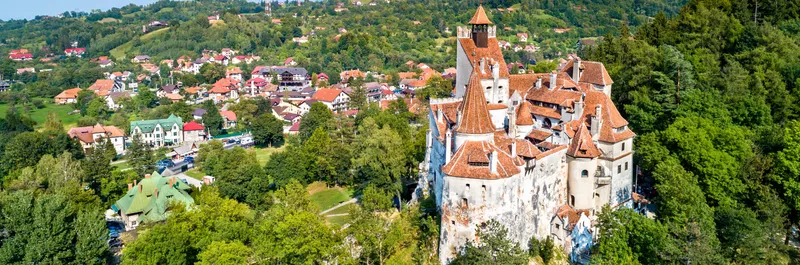
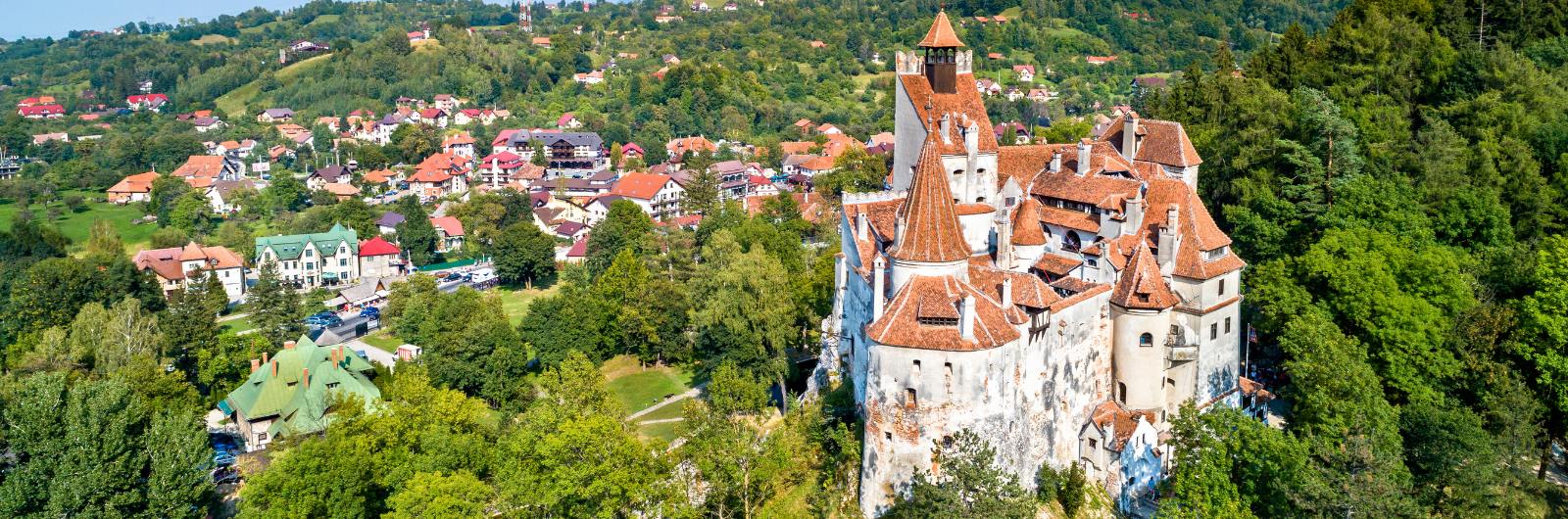
Wallachia is the south: plains, direct contact with the Ottomans for four centuries, small Orthodox churches decorated inside, Bucharest as late capital. Moldavia is the northeast: gentle hills, painted monasteries, oriented for centuries toward Kyiv and Constantinople rather than Vienna. Transylvania is the center-west: plateau ringed by the Carpathians, Saxon and Hungarian architecture, medieval citadels, Catholicism and Protestantism next to Orthodox rite. When you enter Romania from Hungary and exit into Bulgaria, you cross the entire country passing through those three distinct logics.
A Latin language in a Slavic continent
Romanian is the fourth Romance language in the world by number of speakers — after Spanish, Portuguese and French — and the only one that survived the eastern half of Rome’s Latinity. Trajan’s conquest of Dacia in 106 AD was brief (less than 170 years), but enough to Latinize the region sufficiently to resist the later waves of Goths, Huns, Slavs and Magyars.
For the traveler the consequences are concrete: a Spanish, Italian or French speaker understands more than expected. Street signs, street names, menus — often read almost directly. Do note: the orthography has four diacritic letters (ă, â/î, ș, ț), and some everyday words are Slavic loans (da for yes, bună dimineața for good morning). English is spoken reasonably well in Bucharest, Cluj, Brașov and Sibiu; less so in rural areas.
Orthodoxy with its own iconography
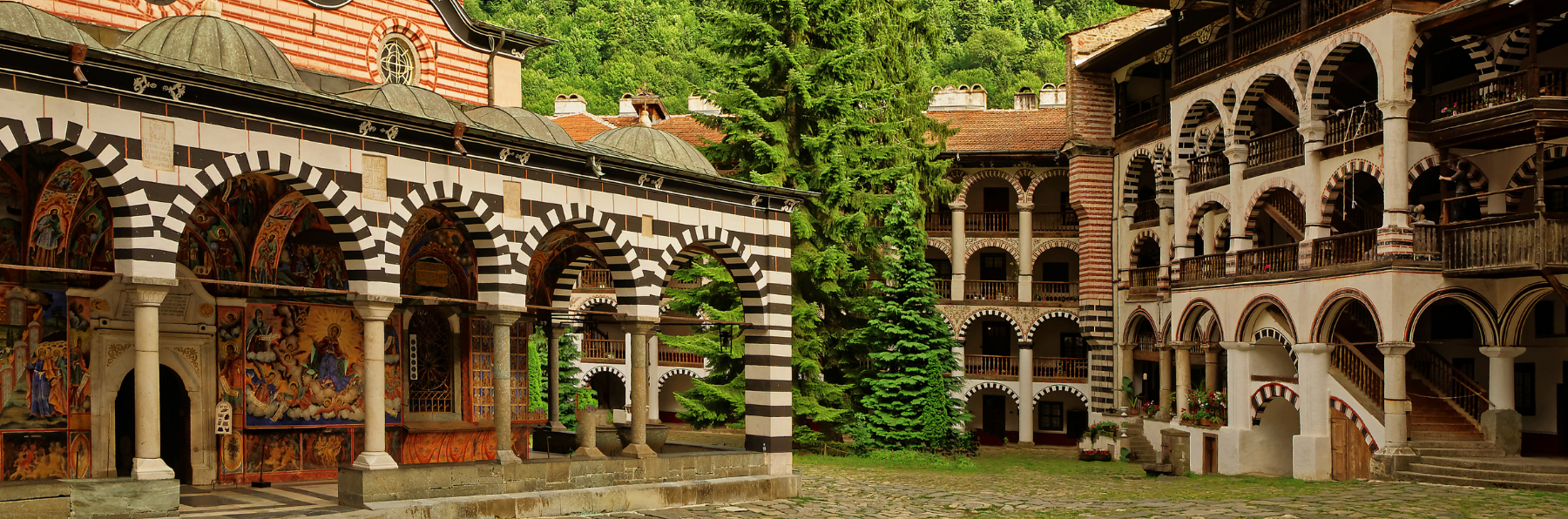
Romania is 81% Orthodox — the second largest national Orthodox community in Europe after Russia’s — but with peculiarities that clearly distinguish it from the Greek, Russian or Serbian traditions. The liturgy has been celebrated in Romanian since the 17th century (unusually early in the Orthodox world, where Church Slavonic dominated until the 19th). And the iconography developed, in Bucovina, a unique tradition: monasteries painted on the outside.
In Transylvania there also coexist Roman Catholics (Hungarians and Germans), Greek Catholics (the church united with Rome that keeps the Eastern liturgy) and Lutherans (the Saxons). In Maramureș, wooden Orthodox churches with Gothic spires survive — an architectural syncretism without parallel. There is no — and it bears underlining — memory of religious conflict in Romania in the last century. Tensions have been ethnic, not confessional.
The long shadow of Ceaușescu
The most personalist dictatorship of the bloc
Between 1965 and 1989, Nicolae Ceaușescu built a personality-cult regime with North Korean echoes: demolition of Bucharest's historic center to erect the Palace of the Parliament, ban on abortion, omnipresent Securitate. Romania isolated itself not out of ideology but out of megalomania.
A country of two speeds
Thirty-five years later, Romania has Cluj as Eastern Europe's most dynamic tech city and, at the same time, Carpathian villages where fields are still ploughed with horses. Countryside and city live in different centuries. That inequality is not an accident: it is the signature of the Romanian 20th century.
The December 1989 revolution — the only one in the Soviet bloc that ended with the dictator executed — left physical traces still readable: the bullet holes on Bucharest façades, the unfinished and monstrous Palace of the Parliament, the communist blocks on every periphery. But it also left a particular sensibility: mistrust of politics, pragmatism toward the state, and a civic culture that in 2017 produced the largest citizen protest of post-communist Romania against corruption.
The Palace of the Parliament: the most expensive public work in Europe
To build what Ceaușescu called the "House of the People", 7 km² of Bucharest's historic center were demolished between 1984 and 1989: 19 Orthodox churches, 3 monasteries, 2 synagogues, 6 hospitals and the homes of 40,000 families. The finished building — the second-largest administrative building in the world after the Pentagon — has 3,100 rooms, a kilometer of marble corridors, and weighs so much that it has changed the underground geology of the district. 70% of its halls are unused. The real cost was never published, but it equals two decades of the country's healthcare spending. It can be visited by reservation: seeing it is the best lesson in political economy you can receive in a morning.
What it means to travel to Romania in 2026
Romania is at a hinge moment. Cluj-Napoca has become a European tech reference with salaries rising 15% a year; Bucharest is living a serious gastronomic boom; Brașov and Sibiu fill with digital nomads. At the same time, Maramureș remains a region where hay is still cut with a scythe and the dead are buried under a cobalt-blue cross with an epitaph in verse. The contrast is not picturesque: it is structural.
For the independent traveler, this is a wide but not eternal window. Infrastructure has improved radically in ten years — renovated trains, boutique hotels across Transylvania, motorways finally starting to close the circle. Prices, though still among the lowest in the EU, are rising with European convergence. What’s worth seizing now is not scarcity — it no longer exists — but authenticity: Romania is still untamed by mass tourism. For now.
How to use this guide
The sections follow a geographic, not alphabetical, logic. We start with history — essential to understanding why the three regions are so different — and then move down the route: Bucharest (capital, south), the Transylvanian citadels from east to west (Brașov, Sighișoara, Sibiu, Alba Iulia, Cluj), the wooden north of Maramureș, the painted monasteries of Bucovina, and finally, the Danube Delta.
Practical information is at the end by design: reference material — transport, budget, seasons, safety — you return to when you need to solve something specific. You don’t need to read it before traveling. You need to know it’s there.
The rest is Romania.