

Thailand · 12 August 2026
Phuket: an honest guide to not getting the zone wrong
Phuket is a big island with very different areas. What to expect from Patong, Kata, Karon, Nai Harn, Rawai and old Phuket Town, and where to stay based on traveller profile.

Phuket has an image problem. For many travellers, Phuket is Patong: go-go bars, international restaurant chains, large-scale party, saturation. That perception is correct for a specific neighbourhood, but deeply unfair to the island as a whole. Phuket is large — 540 km², Thailand’s biggest island, a surface similar to Ibiza — and has completely different zones: from chaotic Patong to the quiet southern coves with luxury family resorts, via the historic Phuket Town of Sino-Portuguese architecture that almost nobody visits.
This guide starts from that basic fact: in Phuket you choose a zone, not an island. Picking the right zone determines 90% of the experience.
Why Phuket exists: a bit of history
Phuket did not develop through tourism. Well into the twentieth century it was a tin mining centre, with Hakka and Hokkien communities who arrived from China to work the mines from the eighteenth century. The colonial architecture of Phuket Town — two-storey Sino-Portuguese houses with wooden balconies, shophouses with Portuguese-influenced pillars — is a legacy of that golden era. Tin financed family mansions like Baan Chinpracha, today a museum.
Mass tourism begins in the 1980s with early backpackers discovering Patong and, above all, with the Australian and European boom of the 90s when Phuket positions itself as the Mallorca of Southeast Asia. After the 2004 tsunami, which devastated Patong and Kamala, reconstruction was fast and changed the profile: less backpacker, more family and resort.
Today Phuket is a dual island: mass tourism concentrated on the west coast, rural interior with rubber plantations, and the local population living mostly in the centre and east coast.
The zones: what each one is
Patong. The best-known zone, 3 km of sand in a broad bay. Decent but crowded beach, rough sea in dry season (red flags several times a month). Bangla Road nightlife is one of Southeast Asia’s most commercial and explicit spectacles: go-go bars, cabarets, Ping Pong Shows and neon. A good place for one night if you want to see the phenomenon; a bad place to sleep more than two nights if you want rest.
Kata. 3 km south of Patong. Better beach, gentle breaks ideal for beginner surf (board 250-400 THB/hour). Balanced atmosphere: restaurants, contained nightlife, many European families. Kata Noi, at the end of the bay, is quieter with boutique hotels. My recommended zone for a first time in Phuket if you do not want the wildest option.
Karon. Between Patong and Kata. Very long beach (3 km), good sea, less nightlife. Medium to large hotels, highly family clientele. If you just want beach and calm at mid-range prices, Karon is a good option.
Nai Harn. Far south of the island. Small bay with local village, inland lagoon, local-priced restaurants. More authentic than the central trio. Very clean beaches, gentle waves. Perfect for couples wanting off-the-beaten-path without giving up infrastructure.
Rawai. East of Nai Harn. Not a beach zone (the sea is rocky and unsuitable for swimming), but an expat and fisherman area. Hostels, local fresh fish market, seaside restaurants with local prices. Relaxed atmosphere, perfect as a motorbike base for exploring.
Phuket Town. The administrative and cultural centre, 20 minutes east of Patong by motorbike or car. Here is historic Phuket: Thalang, Dibuk and Krabi streets with Sino-Portuguese houses, Torry’s Ice Cream café in an old house, Kaset food market, the Sunday Walking Street. Practically no tourists sleep here and it is the most culturally interesting zone of the island. I recommend at least a full day and considering one night’s sleep.
Kamala, Surin, Laem Singh, Bang Tao. West coast north of Patong. Kamala is quiet family; Surin and Laem Singh are more exclusive beaches with 4-5 star resorts; Bang Tao is the Laguna Phuket zone, huge resorts with artificial lagoons. High price range.
Nai Yang and Mai Khao. Far north, near the airport. Very long beaches, little tourism, national park at the end. Mai Khao is the beach where planes land directly overhead. Places for those wanting isolated luxury resort.
What to do in Phuket
Beyond the beach, Phuket has reasonable activities:
Phuket Town and Sino-Portuguese walk. Combine Thalang Road, Soi Romanee, the Shrine of the Serene Light temple and Kaset market in a 2-3 hour walk. Essential to understand the island.
Big Buddha. 45-metre white marble Buddha on top of Nakkerd Hill. Excellent views over the south of the island. Free entry. 30 minutes up by motorbike on a steep but paved road.
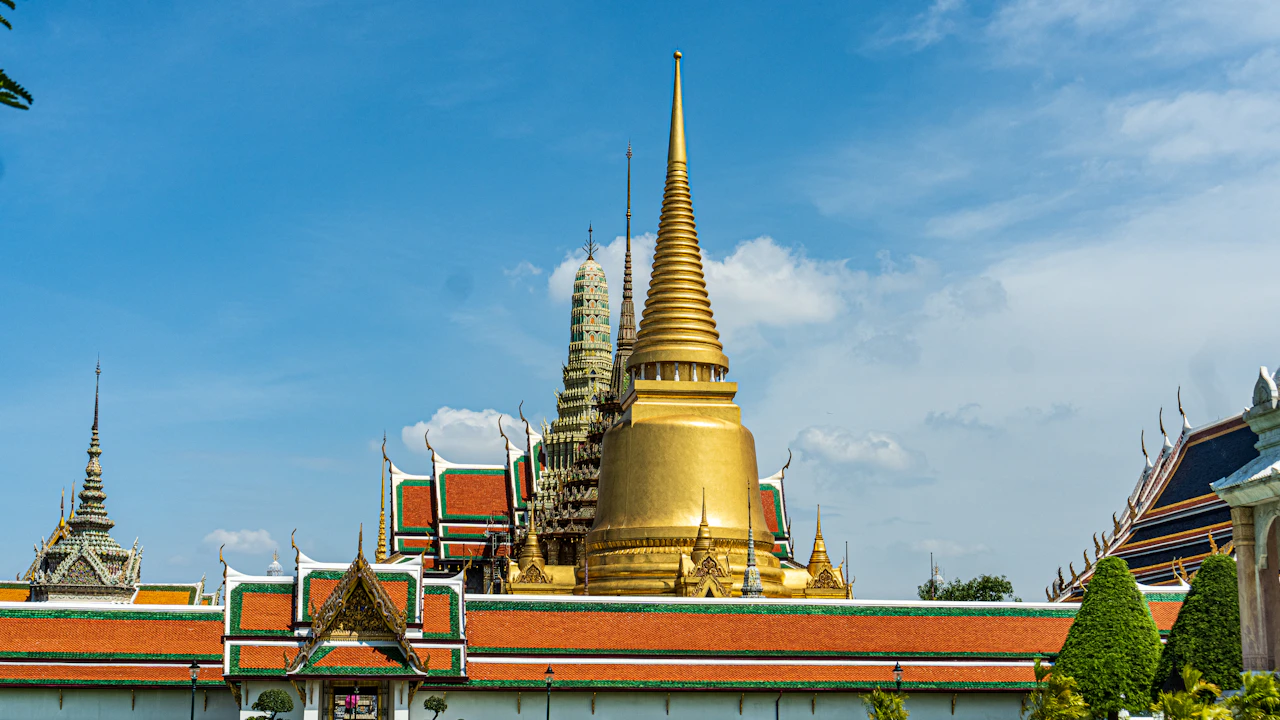
Wat Chalong. The main Buddhist temple on the island. Wide complex with golden chedi in the centre. Free entry. 30-45 minutes.
Phang Nga Bay excursion. Day trip (boat from Phuket) to Ao Phang Nga National Park: the spectacular karst islets, James Bond Island (Khao Phing Kan), the floating Muslim village of Koh Panyee, kayaking through sea caves. 1,200-2,500 THB per person. Highly recommended.
Similan Islands. From Khao Lak (2 hours north by car), speedboats depart to the Similan archipelago, one of the best snorkel/diving spots in the world. Day trip 2,500-4,000 THB. Operational November-April only.
Phuket Elephant Sanctuary. One of the few genuinely ethical sanctuaries on the island. No riding, no show, observation only. 3,500-4,500 THB day.
Getting around: Phuket’s big problem
Phuket has the most expensive and worst-organised transport of all Thailand’s tourist islands. Local taxis maintain an informal mafia that prevents Grab and Bolt from operating normally; negotiated prices are very high (500-1,000 THB between neighbouring zones).
Options:
- Grab/Bolt: they work but with fewer drivers than in Bangkok. Reasonable prices. Essential to have both apps installed.
- Own motorbike: 250-400 THB/day. The best option to move, with an international licence.
- Songthaew: no regular lines but negotiable by stretch. Cheaper than taxi, less comfortable.
- Taxi with full-day driver: 1,500-2,500 THB. Reasonable for group travel.
From the airport: official minibus to the hotel 150-200 THB (shared), private taxi 600-900 THB, Grab 500-700 THB.
When to go
November to April: dry season, calm sea, high season. Best stretch: January-February. December has price peaks for Christmas.
May to October: rainy season. Prices 40-60% lower. Heavy downpours but with sun windows. Sea with swell: watch red flags, especially in Patong and Karon. Many island excursions are cancelled.
How many days
Phuket as sole destination: 5-7 days to see the main zones and do excursions.
Phuket as base to explore Andaman: 2-3 days in Phuket + ferries to Phi Phi, Krabi or Koh Yao.
Phuket as stop in a broader Thai circuit: 3 days are enough combined with Krabi.
The full Far Guides Thailand guide includes a detailed Phuket map by zone, addresses of recommended hotels in each, the Sino-Portuguese circuit of Phuket Town and tables with verified excursion prices.
More on Thailand
Keep reading.
Other pieces from the same destination.


Next step
Ready for Thailand?
The guide is for travelling.
Interactive maps & itineraries and everything that doesn't fit in an article. Always the latest published version.
Get the Thailand guide