Bulgaria · 13 July 2026
Rhodope Mountains: the Bulgaria that speaks Thracian, not Slavic
Canyons, caves, villages with unique architecture, Pomak minority. Why the Rhodopes are Bulgaria's most singular cultural region, unknown to European travellers.

The Rhodope Mountains are Europe’s most mythological range. Orpheus descended here to find Eurydice. Dionysus had his principal sanctuary in these mountains. The Thracians — pre-Greek, pre-Slavic — left tombs, sanctuaries and the memory of a culture that never spoke Slavic. Today the region is Bulgaria’s least-known area for European travellers, and precisely for that reason the most interesting: vertiginous canyons, caves 300 m deep, white-stone villages clinging to slopes, and a Bulgarian Muslim minority — the Pomaks — whose identity defies all Balkan classification.
What the Rhodopes are
Range of 14,500 km² (larger than Slovenia) between Bulgaria (83%) and Greece (17%). Summits between 1,500 and 2,191 m (Golyam Perelik), landscape of black pine forests, karstic canyons, pastoral plateaus. Climate milder than Rila/Pirin thanks to Aegean proximity.
Three sectors:
- Western Rhodopes: higher, river basins (Chepelare, Dospat).
- Central Rhodopes: the Thracian/Pomak heart (Smolyan, Shiroka Laka).
- Eastern Rhodopes: lower, drier, Mediterranean vegetation.
- Highest peak Golyam Perelik 2,191 m
- Best season May-October
- Budget/day 50-80 BGN
- Stay 3-4 days
The three essentials
1. Wonder Bridges (Chudnite Mostove)
Two natural stone arches 100 m tall, sculpted by an ancient underground river. Upper arch 96 m span, lower 60 m. Access by forest road from Zabardo (signposted). Free. 1.5 h between them. Stunning.
2. Yagodinska Cave
10 km karstic cave, 1,500 m visitable with guide. Stalactites, stalagmites, underground lakes. 6 BGN entry + guide (40 min). Bring warm clothing — constant 6 ºC.
3. Trigrad Gorge + Devil’s Throat Cave
The Trigrad gorge: 2 km of vertical 300 m walls above a river that vanishes underground into the Devil’s Throat Cave (Dyavolsko Garlo). Local legend: Orpheus descended to Hades here. Guided visit — 400 metal steps inside the cavity. 10 BGN. Spectacular.
Villages with unique architecture
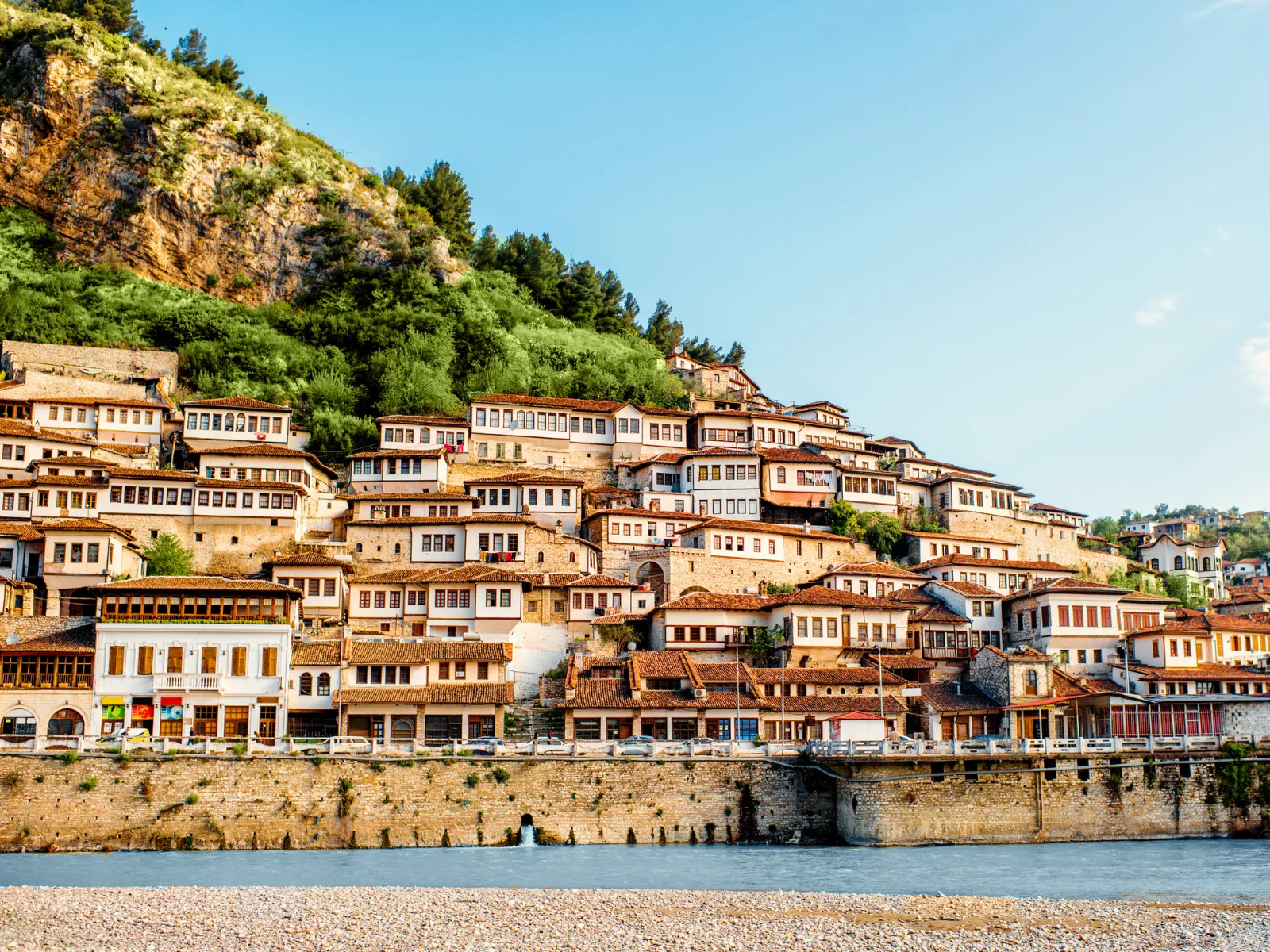
The Rhodopes developed their own domestic architecture: stone ground floors, cantilevered white-wood upper storeys, slate roofs. Three villages are open-air museums:
Shiroka Laka
18th-19th c."The wide bend": village of 800 inhabitants with 200 protected houses. National school of Bulgarian folklore. Bagpipe concerts on Fridays.
Kovachevitsa
18th centuryUnpaved stone village, 150 inhabitants. Used as film set for numerous Bulgarian historical films.
Leshten
Restored 1990sAbandoned village restored as eco-village. Houses converted into quality rural lodgings. 20 permanent inhabitants.
The Pomaks: the minority that breaks Bulgaria
The Pomaks are ethnic Bulgarians of Muslim faith, descendants of Bulgarians who converted to Islam under the Ottoman Empire (16th-18th c.). They speak Bulgarian (not Turkish), dress differently from Turkish Muslims, and hold an identity that fits no standard Balkan category. Roughly 220,000 live mainly in the central Rhodopes.
Under communism (1960-1989) they suffered forced assimilation — forced to swap Turkish/Arabic names for Bulgarian ones, mosques shut. After 1989 they recovered names and mosques. Today they’re an integrated but culturally distinct community: more Turkish cuisine, more Ottoman music, traditional dress at weddings.
Visit: Smolyan (capital city of the Rhodopes, 30,000 inhabitants), Momchilgrad (80% Pomak), Devin (spa town with strong Pomak presence).
Bachkovo Monastery
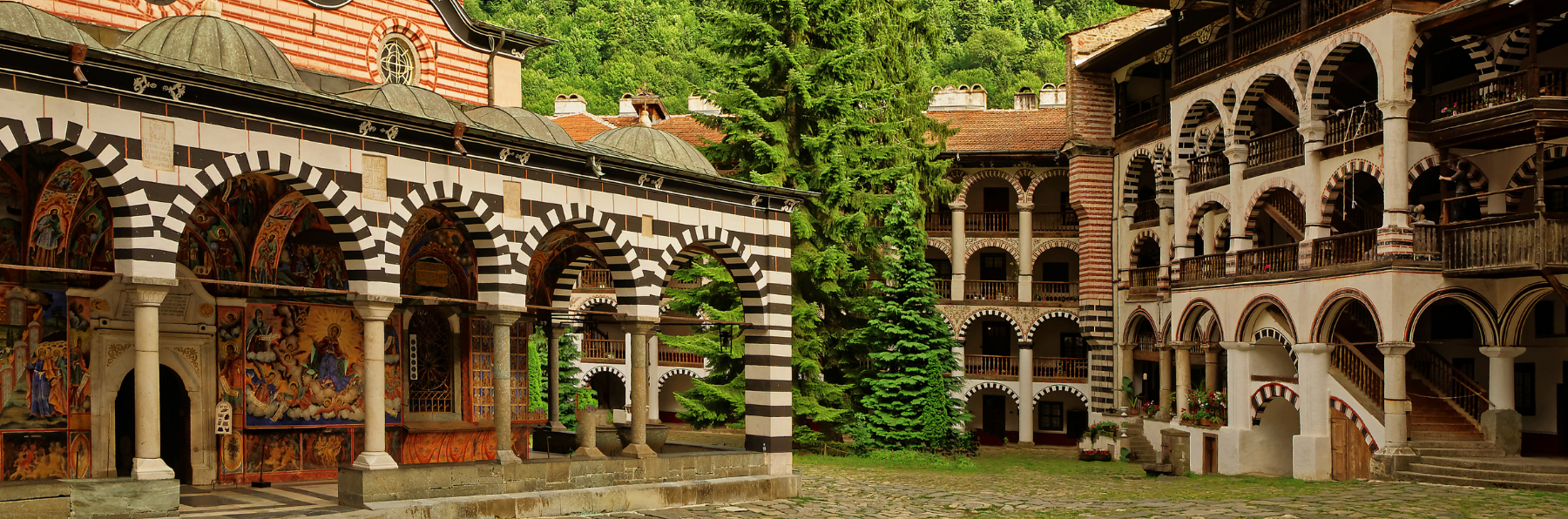
30 km south of Plovdiv, the second-largest monastery in Bulgaria after Rila. Founded in 1083 by two Byzantine-Georgian brothers, survived 900 years. Spectacular 17th-century frescoes, miraculous icons, active monastic life. Free. Mandatory stop entering/leaving the Rhodopes from Plovdiv.
Rhodope cuisine
Different from the rest of Bulgaria:
- Patatnik: grated potato omelette with cheese and mint. Typical Pomak.
- Cheverme: whole lamb slow-roasted. Village feast.
- Klin: savoury cheese and spinach pastry.
- Smilyanski fasul: Smilyan beans, designated origin.
- Plum rakia: stronger than Thracian grape rakia.
Taverns: Mehana Manastira (Shiroka Laka), Starata Kushta (Smolyan), Raiska Gradina (Devin).
Getting around
Without a car it’s tough. The Rhodopes have no modern rail network (exception: the narrow-gauge Rhodope Line Septemvri-Dobrinishte — 125 km on narrow-gauge track, 5 h, memorable experience). Public buses connect the larger villages but with 1-2 departures per day.
Recommended: rental car from Plovdiv, 4 days, roughly 600 km.
4-day route
- Day 1: Plovdiv → Bachkovo → Devin. Night in Devin.
- Day 2: Trigrad gorge + Devil’s Throat + Yagodinska. Night in Shiroka Laka.
- Day 3: Smolyan + Wonder Bridges + Pamporovo. Night in Kovachevitsa or Leshten.
- Day 4: return via Velingrad (thermal baths) to Plovdiv/Sofia.
The complete Bulgaria guide from Far Guides dedicates a section to the Rhodopes with a detailed map of the three sub-regions, Pomak ethnographic analysis and hiking routes.
More on Bulgaria
Keep reading.
Other pieces from the same destination.


Next step
Ready for Bulgaria?
The guide is for travelling.
Interactive maps & itineraries and everything that doesn't fit in an article. Always the latest published version.
Get the Bulgaria guide