



Vietnam · 7 August 2026
Vietnamese coffee: how a communist country became the world's #2 producer
Robusta over arabica, egg coffee, salt coffee. Why Vietnamese coffee doesn't resemble anything you've tried and where to drink it properly.

Vietnam is the world’s #2 coffee producer (after Brazil) and the world’s #1 robusta exporter. It produces 1.8 million tonnes annually. And yet Vietnamese coffee doesn’t resemble anything you’ve drunk: served with condensed milk, made with an individual metal filter (phin), drunk iced even at 10 ºC, and with local variants — egg coffee, salt coffee, coconut coffee — invented out of historical necessity and now turned into identity.
Why Vietnam produces so much coffee
The French introduced coffee in 1857, in Jesuit missions in the north. They experimented with arabica in the highlands of Da Lat and Buon Ma Thuot. It worked under colonial rule, but production collapsed after the war (1975).
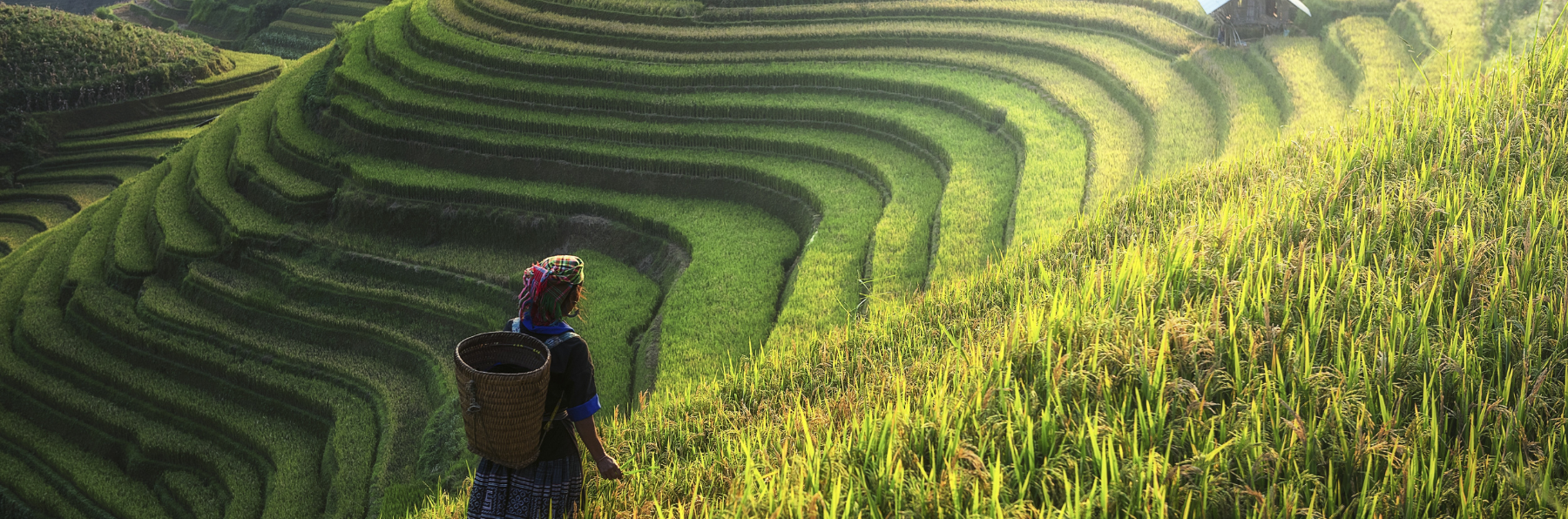
1986: Doi Moi — the economic opening reforms allow private cultivation. The government bets on robusta (pest-resistant species, triple productivity over arabica) in the Central Highlands (Dak Lak, Gia Lai, Kon Tum). Result: production rises from 6,000 tonnes in 1980 to 1,800,000 in 2020 — a 300x increase in 40 years.
Today:
- 95% of production is robusta (stronger, more caffeine, more bitter).
- 5% is arabica (in Da Lat and Son La, mountainous).
- 30% of the world’s cups are Vietnamese coffee.
- Nestlé, Starbucks, Lavazza buy here at scale.
- Production 1.8M t/year (#2 worldwide)
- Dominant species Robusta 95%
- Highlands Buon Ma Thuot, Da Lat
- Cup price 20-40,000 VND
The phin: the tool that defines everything
The phin is an individual metal filter placed on the cup. 3 parts: lower chamber for ground coffee, press to compact it, lid. Hot water is poured; coffee drips slowly for 5-8 minutes.
Why it works: Vietnamese robusta is very dark and bitter. Slow filtering maximises aromatics while leaving less residue. The result is thick, concentrated, almost coffee syrup.
The three classics
Ca phe sua da
TraditionalCoffee with condensed milk over ice. The most common. Condensed milk was invented out of necessity — no refrigerated fresh milk under the colony. Today it's identity. 25-40,000 VND.
Ca phe trung
Hanoi, 1946Coffee with egg yolk whipped with condensed milk. Invented at the Sofitel Metropole during a milk shortage. Tastes like liquid tiramisu. Giang Café (Hanoi) is the original temple.
Ca phe muoi
Hue, 2010sCoffee with a pinch of salt that lifts the sweetness. Originated in Hue, spread to Saigon in 2020. Recent innovation but already as Vietnamese as the phin.
Coffee in Hanoi vs. Saigon
Like pho, coffee too has north and south:
- Hanoi (north): stronger, less sweet coffee. Pure robusta. Egg coffee. Traditional cafés with low stools, contemplative vibe.
- Saigon (south): sweeter, colder coffee. More ice, more condensed milk, more innovation (coconut coffee, yoghurt coffee). Modern cafés with wifi and air-con.
The mythic cafés
In Hanoi:
- Giang Café (39 Nguyen Huu Huan): the original egg coffee since 1946. 35,000 VND.
- Cafe Pho Co (11 Hang Gai): secret café with view of Thap Bat pagoda, in a traditional house.
- Cong Caphe: chain with “communist nostalgia” aesthetic and backpacker vibe. Good.
In Saigon:
- The Workshop (27 Ngo Duc Ke): modern third-wave, Vietnamese specialty coffee.
- Shin Coffee (13 Nguyen Thiep): precision-capsule, own roast.
- Phuc Long: reliable Vietnamese chain.
In Da Lat (highlands, production):
- Visit the plantations (40 km from the city). Tours 300-500,000 VND with tasting.
Trung Nguyen: the Vietnamese Starbucks
Trung Nguyen is Vietnam’s #1 coffee brand, with 1,000+ national cafés. G7 is its iconic instant product. They’ve attempted internationalisation (Singapore, US) with moderate success. For comparison: Vietnam vs. Starbucks is a case study in how a local brand resists globalisation better than McDonalds.
Buying coffee in Vietnam
2026 prices:
- Traditional ground coffee pack (250 g): 60-100,000 VND.
- Buon Ma Thuot robusta (specialty): 150-250,000 VND.
- Da Lat arabica: 200-350,000 VND.
- Weasel coffee (civet coffee): 2-5 million VND/kg — controversial due to animal cruelty, avoid.
Where to buy: Highlands Coffee (chain) for safe gift. BK Coffee or Sonpi Coffee for specialty. Avoid airports (50% pricier).
Is the phin worth bringing home?
Yes. Costs 60-150,000 VND (€3-6). Takes little space. Makes the best condensed-milk coffee outside Vietnam — if you also buy the Vietnamese condensed milk tin (Ong Tho).
The complete Vietnam guide from Far Guides dedicates a section to coffee with a map of mythic cafés, plantation analysis and gift-purchase strategy.
More on Vietnam
Keep reading.
Other pieces from the same destination.


Next step
Ready for Vietnam?
The guide is for travelling.
Interactive maps & itineraries and everything that doesn't fit in an article. Always the latest published version.
Get the Vietnam guide