Albania · 25 May 2026
Gjirokastra: the grey-stone Ottoman city
The castle, the kullë, Kadaré's birthplace and the bazaar: what to see in the most cinematic UNESCO city in southern Albania.

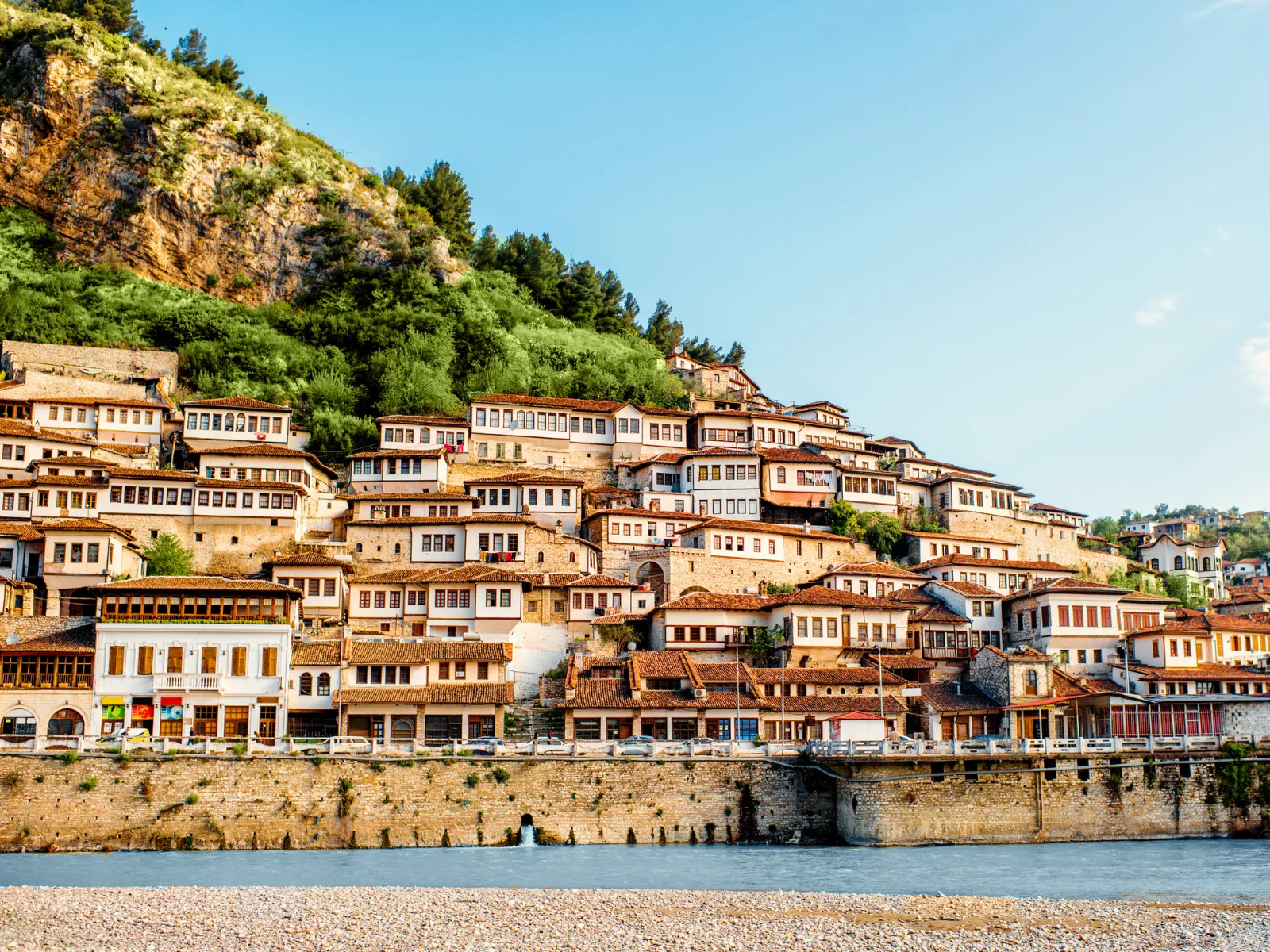
Gjirokastra is Berat’s southern twin, but built in different stone and different light. Where Berat is white and transparent, Gjirokastra is leaden grey, terraced on a steep slope descending toward the Drino valley. Its roofs — slate slabs the size of a table — create from afar the impression of a single stepped roof, earning the nickname “stone city” (Gur, in Albanian). A UNESCO site since 2005, birthplace of both Enver Hoxha and Ismail Kadaré, today it’s one of the heritage stops no informed traveler skips on a southern itinerary.
The castle: the massive Ottoman fortress
Gjirokastra’s castle dominates the city from above, with walls dating to the 12th century and structures added by Ali Pasha of Tepelenë in the 19th. You climb through the old town’s lanes (20 min, steep) or drive the access road. Inside, three concrete things: the National Weapons Museum (in the vaulted halls, impressive collection), the American spy plane — a Lockheed T-33 shot down in 1957 during the Cold War, displayed outdoors as a trophy — and the panoramic views over the valley. Entry 300 LEK, budget 2-3 hours.
The kullë: the stone tower-houses
The singular element of Gjirokastra are the kullë, tower-houses from the 17th-19th centuries built by the powerful Ottoman families: 80 cm stone walls, few defensive windows on the lower levels, ornate domestic spaces upstairs. Several are museums open to visitors.
The Skënduli House and the Zekate House are the two best. The Zekate House (largest and best preserved, built 1812) shows the typical structure: three floors, inner courtyard, main hall with carved-wood ceiling. Entry 300 LEK each. Combined, three or four hours.
The Kadaré House — where Ismail Kadaré was born in 1936, Albania’s most important 20th-century novelist — has been closed since a 2018 fire; restoration is planned but in 2026 it was still not visitable. It can be seen from outside.
The bazaar and the old town
Gjirokastra’s bazaar is one of the few in Albania that preserves its original function: there are still copper workshops, textile craft shops (the qilim, the typical wool rugs), and above all a concentration of excellent restaurants in a very small area. Taverna Kuka and Odaja are the two most recognised. A plate of kukurec (stuffed intestines, a local specialty) runs 600-800 LEK; a full meal with wine 1,500-2,000 LEK.
Walking the old town is half a day. Streets are paved with polished stone — literally slippery when wet — and demand proper-soled footwear. Elevation changes are significant: Gjirokastra is not a flat city.
Excursions from Gjirokastra
Two essential half-day visits:
Blue Eye (Syri i Kaltër): 20 km north, a karst spring of electric-blue water of unknown depth. Entry 150 LEK, parking 100 LEK. Two hours including travel.
Antigonea: archaeological site 15 km away, an Epirote city of the 4th century BC founded — according to tradition — by Priam’s son. Scattered ruins, views over the valley, free entry. Two hours by car.
Logistics and lodging
Gjirokastra connects with Berat (3 h) to the north and with Sarandë (1 h) to the south. Furgons available both ways; Sarandë-Gjirokastra, 500 LEK. Parking in the upper town is tricky: there’s public parking below, then you walk up or take a taxi (300 LEK).
Accommodation in traditional houses inside the old town: Kalemi Hotel, Stone City Hostel (budget), Hotel Gjirokastra. 30-60 € double in shoulder season. Minimum two nights if you want to combine city + Blue Eye + Antigonea.
Far Guides’ complete Albania guide includes an old-town route with numbered kullë, current castle timings and half-day excursion recommendations.
More on Albania
Keep reading.
Other pieces from the same destination.


Next step
Ready for Albania?
The guide is for travelling.
Interactive maps & itineraries and everything that doesn't fit in an article. Always the latest published version.
Get the Albania guide