
Romania · 16 September 2026
Bucovina's painted monasteries: guide to the five UNESCO sites
Voroneț, Sucevița, Moldovița, Humor and Arbore: how to visit Bucovina's painted monasteries, the medieval treasure of northern Romania.

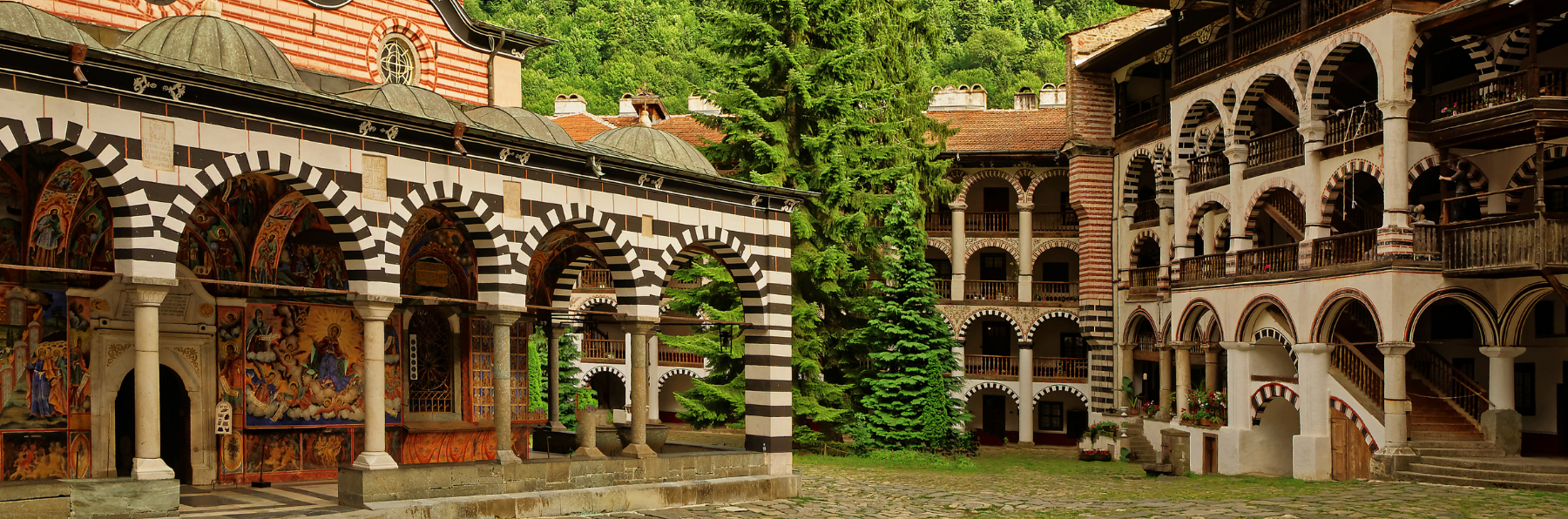
In Romania’s far north, east of the Carpathians and at the foot of the Ukrainian border, lies Bucovina: the historic “land of beech forests”, territory of medieval Moldavia and setting for one of Eastern Europe’s most singular artistic episodes. Between the late 15th and mid-16th centuries, under Moldavian princes Ștefan cel Mare and his son Petru Rareș, the exterior walls of several monasteries were fresco-painted with complete iconographic cycles: Last Judgement, Tree of Jesse, Siege of Constantinople, lives of saints. Not interior murals: the entire façade, stone to spire, covered in scenes. Seven are UNESCO-listed. This guide explains how to visit the five most visitable in three days.
Why they exist
Moldavia in the late 15th century was under constant pressure from the Ottoman Empire, which had just taken Constantinople (1453) and was advancing through the Balkans. Ștefan cel Mare (1457-1504) fought 36 battles against Turks and Tatars and won nearly all of them. After each victory he built a monastery. His son Petru Rareș continued the tradition, adding the exterior frescoes as a didactic tool — teaching the Bible to an illiterate population who prayed outside the temple when it was small — and political — explicitly depicting the defence of Christendom against Islam, with scenes of the siege of Constantinople where the attackers are turbaned Turks.
The pictorial technique withstands five centuries of Carpathian weather. Researchers still debate the exact composition of pigments and mortar. What is certain is that Voroneț’s blues remain intact.
The five essentials
Voroneț (1488) — “the Sistine Chapel of the East”
The most famous. 36 km from Suceava. Built by Ștefan cel Mare after the battle of Vaslui. The west façade hosts the Last Judgement most elaborate in Europe: four horizontal registers with Christ Judge, apostles, rivers of fire, resurrection of the dead, Turks and Jews as damned, Moldavians as saved.
The Voroneț blue is world-famous: an intense blue obtained with lapis lazuli or azurite, still not recreated in laboratory. Entry: 15 lei. 1 h.
Sucevița (1584) — the last one
The latest and largest. Fortified with 6 m walls and four towers — it’s a monastery-fortress, built when the Ottoman threat still loomed. The “Ladder of virtues” on the north façade shows 30 steps towards heaven, with angels helping the righteous and demons dragging sinners to hell. Nuns still live here. Entry: 15 lei. 1-1.5 h.
Moldovița (1532)
15 km from Sucevița. Its Siege of Constantinople on the south façade is explicitly political: it depicts the fall of the Byzantine capital in 1453 with Persian troops (medieval iconography) but the contemporary audience understood “Turks”. Active monastery, serene atmosphere. Entry: 15 lei.
Humor (1530)
Smaller and less visited — which is an advantage. The dark reds and more intimate compositions give Humor a more sober character than the previous ones. Entry: 10 lei.
Arbore (1503)
The only one that isn’t a monastery but a parish church commissioned by Luca Arbore, a local nobleman. Greens are its visual signature. Small, often empty. Entry: 10 lei.
3-day route from Suceava
Suceava (historic capital of Moldavia) is the best base. Airport with flights to Bucharest and Bacău. From Bucharest by train: 6-7 h.
Day 1 (arrival): Suceava. Visit the Fortress of Suceava (Ștefan cel Mare’s castle, 14th c., well restored) and the Bucovina Village Museum (open-air ethnographic museum). Meal with sarmale, mămăligă and mici.
Day 2 (northern route): Suceava → Sucevița (1 h) → Moldovița (30 min) → Voroneț (1 h). Night in Gura Humorului (base town for Voroneț and Humor).
Day 3 (southern route + Arbore): Humor (15 min from Gura Humorului) → Arbore (45 min) → return to Suceava or next destination.
Without a car: private tours from Suceava, €70-100/day with guide, or irregular local buses. Your own or rented car is much better.
When to go
May-June and September-October: pleasant temperatures, well-lit frescoes, fewer tourists. July-August: more visitors but nice atmosphere, full Carpathian summer. Winter: the monasteries are open, with snow they are even more spectacular, but rural roads are tricky.
Standard hours: 08:00-19:00 summer, 09:00-17:00 winter. On Sundays there are morning liturgies (08:00-10:00) — you can attend if you respect the silence.
Protocol
- Modest clothing: shoulders and knees covered, scarf available for women at the entrance (free).
- Photography: allowed outside, restricted inside.
- Silence: these are active monastic communities, not museums.
- Donations: beyond entry, donations for maintenance are welcome.
Where to sleep and eat
Suceava: decent urban hotels, 150-300 lei (€30-60). Gura Humorului: ideal base, family guesthouses 120-200 lei with breakfast. Vatra Moldoviței: more rural, next to Moldovița.
Bucovina cuisine is hearty: tochitură (stew with polenta and fried egg), sarmale (stuffed cabbage rolls), balmoș (polenta with melted cheese), trout from Carpathian streams. Local liqueur: afinata (blueberry liqueur).
Far Guides’ complete Romania guide includes a map with opening hours of the seven UNESCO monasteries, a 4-day route with stops and selected guesthouses.
More on Romania
Keep reading.
Other pieces from the same destination.


Next step
Ready for Romania?
The guide is for travelling.
Interactive maps & itineraries and everything that doesn't fit in an article. Always the latest published version.
Get the Romania guide