


Romania · 11 May 2026
What to see in Brașov: Transylvania's medieval capital in 2 days
Sfatului Square, Black Church, Rope Street, Tâmpa mountain: Brașov guide with itinerary and excursions to Bran, Râșnov and Peleș.

Brașov is the largest and most touristically developed Saxon city in Transylvania. Founded in 1211 by the Teutonic Knights, fortified by Saxon colonists in the 13th century, it prospered as a commercial enclave between the Holy Roman Empire and the Ottoman Empire for five centuries. Today it’s the ideal base for exploring central Transylvania: well connected to Bucharest by motorway (170 km, 2.5 h) and by direct train (2.5-3 h), surrounded by castles, mountains and Saxon villages. This post explains what to do in two days without missing anything essential.
Day 1 — The city
Piața Sfatului is the historic centre and one of the best-preserved medieval urban ensembles in Romania. The Council House (1420, now Museum of County History) dominates the square with its 48 m tower. Surrounding buildings are Saxon Renaissance and Baroque, with pastel façades restored in recent years.
From the square depart the three historic commercial streets. Walk down Strada Republicii, pedestrian, full of cafés and shops. Mandatory stop: Casa Tzel Mare (Strada Michael Weiss), former merchant house with visitable interior courtyard.
Black Church (Biserica Neagră) is the jewel: Late Gothic, built between 1385 and 1477, the largest Lutheran church in Eastern Europe. Name from the 1689 fire, when Habsburg troops set the city alight. The blackened walls haven’t been cleaned by aesthetic decision. Inside, the Ottoman Anatolian carpet collection (110 pieces, the largest outside Turkey) donated by Saxon merchants to the church between the 15th and 17th centuries. Entry 20 lei (4 €).
Rope Street (Strada Sforii): 1.2 m wide alley, one of Europe’s narrowest. Connects Strada Cerbului with Strada Poarta Șchei, 80 metres of pure curiosity. Mandatory photo.
Bastions and walls: the city preserved most of its 14th-century walled enclosure. Walk through the Weavers’, Blacksmiths’ and Carpenters’ bastions, connected by the Under-the-Walls Promenade.
Tâmpa ascent (955 m): mountain dominating the city. Cable car from the lower station, 20 lei round trip, 3 minutes. Up top, the BRAȘOV sign (Hollywood style) and views over the whole city. Alternative: on foot by marked trail, 1 hour up.
Dinner: Sergiana (traditional Romanian restaurant, vaulted cellar, good for ciorbă and sarmale) or La Ceaun (more casual, home cooking).
Day 2 — Excursions from Brașov
With Brașov as base, the three essential destinations are under 45 minutes by car.
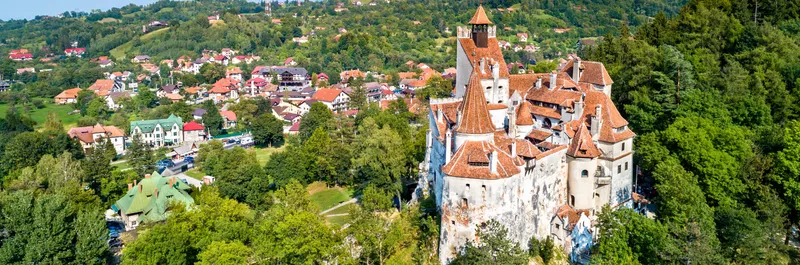
Bran Castle (30 km, 40 min): the “Dracula Castle”, though the Vlad Țepeș connection is tenuous (he was probably briefly held here, no more). Built in 1377 as a customs fortress. Now a museum with furniture of Queen Marie of Romania (she lived here in the 1920s). Entry 70 lei (14 €). In high season, 1-1.5 h queue: go first thing (08:00) or last (16:00). Two hours are enough.
Râșnov Castle (15 km from Bran, 12 from Brașov): 13th-century peasant fortress, far less touristy than Bran, restored in 2002. The interior is a fortified village with dwellings, chapel, well. Better preserved architecturally than Bran, without the crowds. Entry 20 lei. 1-1.5 h. Spectacular views.
Peleș and Pelișor in Sinaia (45 km, 50 min, toward Bucharest): summer residence of Romania’s Hohenzollern kings, built 1873-1914. Extraordinary German neo-Renaissance style, with 160 rooms, secret library with concealed door, spectacular arms collection. Pelișor, adjacent small castle of Queen Marie, more intimate and Art Nouveau. Entries: Peleș 60 lei + Pelișor 30 lei. Full visit 3-4 h including travel. Spend the morning here and eat in Sinaia (charming mountain town, ski resort in winter).
Suggested Day 2 itinerary:
- Morning: Peleș + Pelișor + lunch in Sinaia.
- Afternoon: Râșnov.
- Return to Brașov, dinner.
With a third day: Bran + fortified churches of Prejmer and Hărman.
Getting there and around
From Bucharest: direct train (IR, Regio) every 1-2 h, 2.5-3 h, 45-70 lei. Flixbus, 2.5 h, 40 lei. Car via motorway A3 (in works but functioning) + national road, 2.5 h.
From Cluj: train 6 h, car 3.5 h (250 km).
In the city: on foot (the entire historic centre is pedestrian). Bolt/Uber for longer trips and to Sinaia/Bran.
Where to sleep
Within the historic enclosure there’s good hotel and apartment supply. Casa Wagner or Bella Muzica (boutique). Cheaper and quieter: Poiana Brașov (12 km, ski area) or Schei (Romanian historic, below Tâmpa).
Far Guides’ complete Romania guide includes a detailed Brașov map with 30+ verified addresses and an excursions map with real times and costs.
More on Romania
Keep reading.
Other pieces from the same destination.


Next step
Ready for Romania?
The guide is for travelling.
Interactive maps & itineraries and everything that doesn't fit in an article. Always the latest published version.
Get the Romania guide