Albania · 30 April 2026
Best time to visit Albania: month by month, north and south separately
Albania is two overlapping climates. When to go to the Alps, to the Riviera and to the Ottoman cities — with the optimal window for combining all three.

The question we get most about Albania isn’t what to see but when to go, and it has a less obvious answer than it seems. Albania is two climates glued together: the northern Alps — Theth, Valbona, Kelmend — follow an alpine calendar with closed winters and a short summer window; the Riviera and the southern Ottoman cities run on a Mediterranean calendar with six long months of good weather. Planning an itinerary that mixes both without checking the month is the most common planning mistake.
Optimal window if you combine mountains, cities and beach
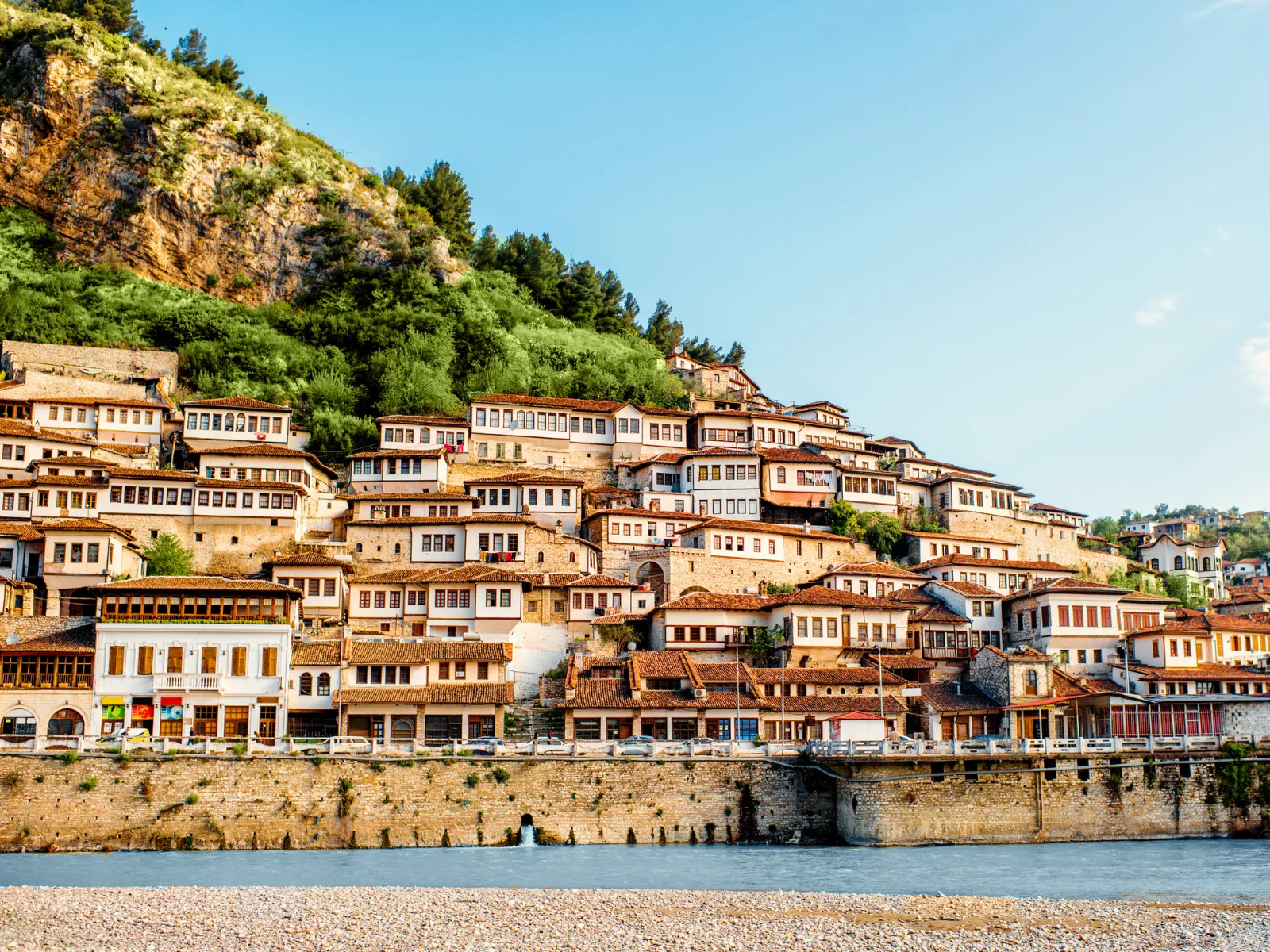
If you want what most travellers want — Tirana, Berat, Gjirokastra, Riviera and a few days in the north — the optimal window is 10-25 June and the first half of September. These are the two strips where everything works at once: the Alps are open, the Riviera warm, the cities without extreme heat, and prices in the mid tier before or after the August peak. That recommendation solves 80% of typical planning problems.
Month by month
April-May. Excellent for cities and non-beach coast. Berat, Gjirokastra, Tirana, Shkodra sit at 18-24 °C, parks bloom, prices are at the year’s low. The Alps still hold snow in the passes until late May: Valbona-Theth isn’t practicable before 1 June most years. The Riviera is cool for swimming but perfect for driving through.
June. The balanced month. First half: Alps just open, Riviera at 22-25 °C, water still cool but swimmable. Second half: everything warm, prices starting to climb, tourism still manageable. June 15-25 is probably the best week of the year for a complete trip.
July. Full Riviera, high prices, 30-34 °C on the coast. The Alps at their peak — clear trails, deep green, mountain temperatures — but also when the most people come. Butrint and Apollonia are tolerable with sun protection early in the morning, unbearable at midday.
August. The month to avoid if you can. Saturated Riviera (prices x1.5, SH8 gridlocked between Vlorë and Sarandë, apartments require 4-month advance booking), Alps packed with Albanian diaspora, cities on fire. If you have to go in August, book everything months ahead and accept both price and density.
September. The revelation. First half: sea at 25 °C (its yearly peak), tourism collapsed, prices 30-50% below August’s. Second half: season is winding down but still ideal. The Alps hold perfect conditions until late September. If we could only go to Albania one month, we’d go in September.
October-November. Spectacular for cities and culture, very quiet. The Riviera empties by mid-October (many hotels close), the Alps shut access in early November. Ideal for an urban-and-heritage trip; not for beach or high mountain.
December-February. Cities only. Tirana remains alive (5-12 °C), Berat and Shkodra hold up in the cold. The Alps are closed to general tourism, the Riviera effectively shut. Going in winter is a cultural choice, not a coastal one.
The August contradiction: Alps full, Riviera saturated, simultaneously
Many travelers assume that if the Riviera is full, the Alps will be empty — but they aren’t. In August Albania receives three flows at once: new international tourism (Italians, Germans, Poles, Spaniards), Albanian diaspora on holiday (2.5 million Albanians living abroad), and domestic urban tourism. The diaspora splits between coast and ancestral land — a lot of it in the north — which is why Valbona’s guesthouses (40-50 beds total) book a year in advance. There’s no decompression zone in Albania in August.
Far Guides’ complete Albania guide includes a detailed calendar by region and a specific section on how to plan for August if you can’t move dates.
More on Albania
Keep reading.
Other pieces from the same destination.


Next step
Ready for Albania?
The guide is for travelling.
Interactive maps & itineraries and everything that doesn't fit in an article. Always the latest published version.
Get the Albania guide